
Affiliate disclosure: We may earn a commission when you use our links to make a purchase. This does not affect our editorial recommendations, which are finalized before any affiliate link is applied. Read our full disclosure →
This article was researched and drafted with AI assistance, then reviewed and fact-checked by our editorial team before publishing. How we research →
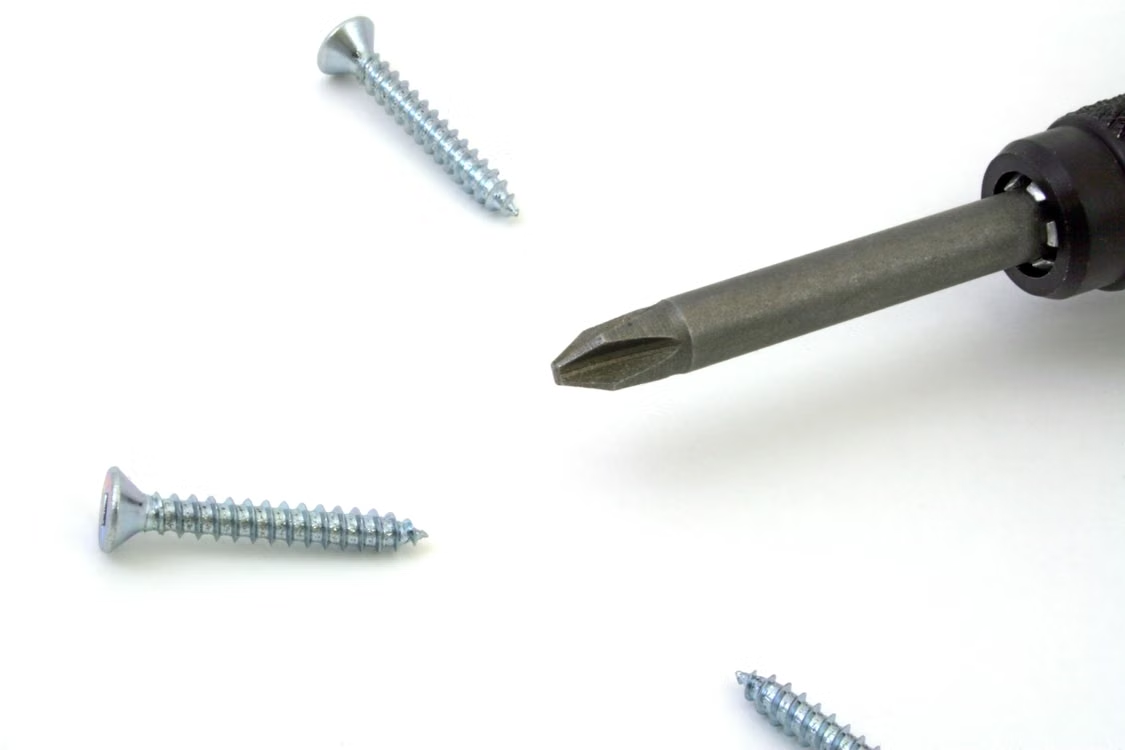
You're standing in the hardware store aisle holding a $149 cordless impact driver, and all you need to do is rehang a single interior door. The packaging promises 2,000 inch-pounds of torque. You already own a perfectly good Phillips screwdriver at home.
Most tool guides won't help you here. They'll tell you which impact driver is best—not whether you need one at all.
The short answer: three variables decide the right tool every time—how often you'll use it, what material you're working with, and how much precision the task demands. Everything else—brand loyalty, cool specs, "future-proofing"—comes second.
Here's how those variables play out across five scenarios you're likely to face, followed by a clear-eyed look at the 2026 tools market, brand-by-brand breakdowns, and a starter kit guide built around actual use cases.
How this guide was researched: This guide is based on 2026 market data from industry research firms, manufacturer specifications, trade-specific expert sources, and verified buyer feedback. It does not reflect hands-on testing by Trusted Buyer Report. We synthesize multiple sources so you don't have to—read our methodology.
Power Tool vs. Hand Tool: Head-to-Head Across 5 Real Workshop Scenarios
Scenario 1: Driving 10 Screws vs. 200 Screws
Replacing a single door hinge with four screws? A hand screwdriver gives you better feel, zero setup time, and no risk of over-driving into soft wood trim. Installing 40 cabinet hinges across a full kitchen renovation? A cordless impact driver—the Milwaukee M18 FUEL or DeWalt 20V MAX—saves your wrist and cuts the job time by roughly 70%.
The tool is justified by volume, not by the task itself. This is the mistake most first-time buyers make: they match the tool to the task description, not to how many times they'll repeat that task.
Scenario 2: One Shelf Cut vs. Building a Deck
A Japanese pull saw makes a cleaner, quieter, and faster single crosscut on a pine shelf than setting up a circular saw. For a deck requiring 200 cuts through pressure-treated 2×6 lumber, the DeWalt 60V FlexVolt circular saw pays back its cost in the first afternoon.
According to Alibaba SmartBuy's 2025 market analysis, cordless tools now represent 68% of all power tool sales globally—a shift driven precisely by this kind of volume-dependent value calculation.
Scenario 3: Finish Carpentry and Joinery
This is where hand tools reclaim ground that power tools cannot take. Cutting a dovetail joint to a 0.1mm tolerance requires a sharp chisel and a shoulder plane—a Lie-Nielsen or Veritas model, specifically. No router jig replicates the feedback loop between a sharp edge and a craftsman's hand for final paring.
Power tools rough out the material. Hand tools finish the fit. Both have a role in the same project—they're not interchangeable.
Scenario 4: Concrete and Masonry
There is no hand tool equivalent for drilling a ¾-inch anchor hole into a concrete foundation. The Milwaukee M18 FUEL 1-inch SDS Plus Rotary Hammer (model 2912-20) is the professional standard. For contractors working under OSHA dust compliance requirements, the version with integrated dust extraction (2912-22DE) is not a luxury—it's a regulatory necessity. This is one category where the power tool simply has no meaningful hand tool competition.
Scenario 5: Emergency Home Repairs
At 11 PM with a burst pipe bracket to reattach and a cordless drill on a dead battery, your hand tool kit is what actually fixes the problem. A basic set—claw hammer, adjustable wrench, multi-bit screwdriver, utility knife, tape measure—handles the majority of urgent home repairs without requiring a charged battery or a nearby outlet.
Reliability under unplanned conditions is a real advantage. Power tools cannot claim it.
The core principle across all five scenarios: frequency of use, material hardness, and required precision determine the right tool. Price and brand reputation are secondary.
The 2026 Tools Market: What the Numbers Tell DIYers and Pros
Understanding where the industry is heading helps you avoid trend-driven buying. According to Hardware Tools Industry Statistics 2026 via WorldMetrics, the hand tools market is growing at a steady 3.8% CAGR, reflecting consistent professional demand rather than consumer hype cycles. Power tool accessories are growing faster, at 5.2% CAGR—and that gap matters to your wallet.
The global tool accessories market is valued at $42.1 billion, representing 17.2% of all hardware tool sales worldwide. Batteries and blades alone make up 50% of that accessory revenue. When you commit to a cordless platform, you're committing to an ongoing accessory spend that most sticker prices don't advertise.
Tool storage is its own $20.7 billion segment—8.3% of global hardware tool sales. That's a significant industry built around a simple fact: disorganized tools get damaged, lost, and replaced. A $50 pegboard at the start of a workshop build genuinely reduces long-term tool spend.
The broader DIY tools market—tracked by Fortune Business Insights across drills, saws, sanders, grinders, hammers, and wrenches—is forecast to grow substantially through 2034. The research identifies 45% of consumers as active DIYers, a demand base that keeps both power and hand tool segments healthy.
What this means practically: the tools market is not a zero-sum competition. Both categories are growing. The smarter question is not which category is "winning" but which category solves your specific problem at the lowest total cost of ownership.
Power Tool Brand Hierarchy in 2026: Hilti, Milwaukee, DeWalt, and Makita Compared Honestly
Brand loyalty in power tools is expensive when it's misapplied. A framing contractor and a weekend woodworker don't need the same brand. Paying for industrial-grade engineering on a tool you'll use six times a year is a poor investment.
Here is where the major brands actually sit in 2026, based on trade-specific performance rather than marketing positioning.
Hilti — Tier 1: Heavy Industrial
According to Tend Industrial Supplies' 2026 brand analysis, Hilti remains the undisputed standard for heavy industrial construction. Their Nuron 22V battery platform has standardized what was previously a fragmented lineup—one battery system now powers tools that previously required cords. The Fleet Management subscription service covers repair, replacement, and tool tracking, making Hilti a systems decision for large contractors rather than a simple tool purchase.
The trade-off: Hilti's pricing is genuinely premium. For a homeowner or small contractor, that premium buys capabilities you will never use.
Milwaukee Tool — Tier 1: Professional Trades
Milwaukee's M18 FUEL ecosystem is the broadest cordless lineup of any brand in 2026—from the M18 FUEL 1-inch SDS Plus Rotary Hammer for concrete work to compact drill-drivers for finish carpentry, all under a single battery system.
The honest negative: Milwaukee's pricing has increased significantly as the brand has moved upmarket, and their entry-level M18 tools vary more in quality than the brand identity suggests.
DeWalt — Tier 2: Carpentry and General Construction
DeWalt's 60V FlexVolt system gives it a clear edge in high-draw tools—circular saws, table saws, and miter saws—where battery power has historically struggled to match corded performance. Framing contractors remain strongly loyal to the yellow brand, per Tend Industrial Supplies' contractor feedback.
The parent company context matters: as noted by Yandangshan Tools' 2026 Buyer's Guide, Stanley Black & Decker owns DeWalt, Craftsman, MAC Tools, and Stanley. DeWalt is positioned as the professional job-site brand within that family, built to a higher specification than the Craftsman or Stanley lines that share some manufacturing DNA.
Makita — Tier 2: Durability and Ergonomics
Makita's 40V XGT platform reached full maturity in 2026. The brand's reputation is built on long-term durability rather than feature announcements, and tradespeople who prioritize ergonomics and tool longevity over ecosystem breadth consistently choose it.
The honest limitation: Makita's marketing investment is lower than Milwaukee's or DeWalt's, which means their innovations are often underrecognized until a tool has been in field use for a year or two.
| Brand | Platform | Best For | Key Limitation |
|---|---|---|---|
| Hilti | Nuron 22V | Heavy industrial, large contractors | Premium pricing; overkill for DIY |
| Milwaukee | M18 FUEL | Professional trades, broadest selection | Price increases; entry tools vary in quality |
| DeWalt | 60V FlexVolt / 20V MAX | Carpentry, framing, high-draw tools | FlexVolt batteries are expensive |
| Makita | 40V XGT / 18V LXT | Durability, ergonomics, finish trades | Smaller ecosystem than Milwaukee |
Hand Tool Brand Guide 2026: Which Brands Lead by Trade
Generic "best hand tools" lists tend to collapse into the same five brand names regardless of the task. The more useful question is which brand leads in the specific trade you're working in—because the engineering priorities for an electrician's pliers are entirely different from those of a framing carpenter's hammer.
Pliers and Gripping Tools: Knipex
Knipex, based in Wuppertal, Germany, sets the manufacturing benchmark for jaw tolerance precision in professional pliers. For electricians and plumbers, jaw tolerance determines grip security on fittings and conductors under torque—not an aesthetic quality. A cheaper plier with loose jaw tolerances slips, damages fittings, and creates safety risk.
Per Yandangshan Tools' 2026 Buyer's Guide, Knipex's dominance in the professional pliers category comes from manufacturing precision that budget alternatives have not matched.
Screwdrivers and Fastening: Wera
Also from Wuppertal, Wera has focused its engineering on the interface between driver bit and fastener head. Their Hex-Plus geometry increases the contact surface between bit and fastener, reducing cam-out—the slipping that strips screw heads and damages surrounding material.
For high-torque fastening applications, this is a measurable performance difference, not a marketing claim. The trade-off is price: Wera screwdrivers cost two to three times more than comparable-looking alternatives.
Hammers for Demolition and Framing: Estwing
According to Wolverine Hand Tools' 2026 professional brand analysis, Estwing's one-piece forged steel construction eliminates the head-to-handle joint—the failure point that causes traditional hammers to shed heads under heavy use. On demolition sites, a flying hammer head is a serious safety incident. Estwing removes that failure mode entirely. The single-piece design also transfers energy more efficiently, reducing fatigue on high-volume striking work.
Hammers for Finish Carpentry: Vaughan
Vaughan, founded in 1869 and manufacturing 95% of its tools in Bushnell, Illinois, uses triple-zone heat treating across its hammers—different hardness specifications for the striking face, claws, and eye of each tool. For a finish carpenter driving 500 nails per day, the balance and hardness calibration of the striking face directly affects accuracy and wrist fatigue. Vaughan offers both hickory and fiberglass handle options, each with different vibration characteristics that matter over a full working day.
Electrical Trade Hand Tools: Klein Tools
Klein's insulated tools are individually tested to 10,000V and carry VDE certification—a third-party safety standard, not a self-reported marketing claim. Generic "insulated" labeling on cheaper alternatives often refers to a rubber coating that provides grip rather than genuine electrical insulation. For work on live circuits, that distinction is the difference between a safe tool and a dangerous one.
The Hidden Cost of Tool Ownership: Batteries, Blades, and the Accessory Trap
A $89 cordless drill is not an $89 purchase.
Add a second battery ($45–$85), a fast charger ($35), and a quality bit set ($25–$50), and your real entry cost is $194–$259 before you've driven a single screw. According to WorldMetrics' Hardware Tools Industry Statistics 2026, the global tool accessories market has reached $42.1 billion, representing 17.2% of all hardware tool sales—and the accessories market is growing faster than the tools market itself, at 5.1% CAGR.
Batteries and blades account for 60% of power tool accessory sales. The industry's growth engine is not the tools—it's the consumables that follow every tool purchase.
Battery Platform Lock-In
Choosing between Milwaukee M18, DeWalt 20V MAX, and Makita 18V LXT is a long-term financial commitment. Batteries are not cross-compatible between brands, and a quality 5.0Ah battery costs $80–$120. Build your platform decision around the broadest tool selection you'll need over five years, not just your first purchase.
Blade Quality and Motor Longevity
Cheap circular saw blades don't just produce worse cuts—they increase motor load, generating heat that degrades brushless motor windings over time. A quality blade (Diablo, Freud, or Irwin) costs $25–$45 and lasts significantly longer than an $8 bulk blade while protecting the motor of a $200+ saw. The math on blade quality almost always favors the better blade when total cost of ownership is the metric.
When Corded Still Makes Sense
For stationary workshop tools—table saws, bench grinders, drill presses—corded remains the correct choice. Zero battery cost, consistent power delivery, and lower upfront pricing make corded tools the rational option when the tool doesn't need to move. The 68% cordless dominance in overall power tool sales reflects job-site and portable use cases—not a universal verdict that corded tools are obsolete.
Building a Starter Workshop in 2026: Minimum Viable Tool Kits by Use Case
The most expensive workshop mistake is buying tools in anticipation of projects that never materialize. The one-tool-at-a-time principle—acquiring tools in direct response to specific projects—prevents the accumulation of unused equipment and forces you to understand what a tool actually does before you own it.
Use Case 1: Homeowner Maintenance and Repairs
- Claw hammer (16 oz, Estwing or Vaughan)
- Tape measure (25 ft, Stanley FatMax)
- Multi-bit screwdriver (Klein or Wera)
- Adjustable wrench (10-inch)
- Utility knife with spare blades
- Combination square
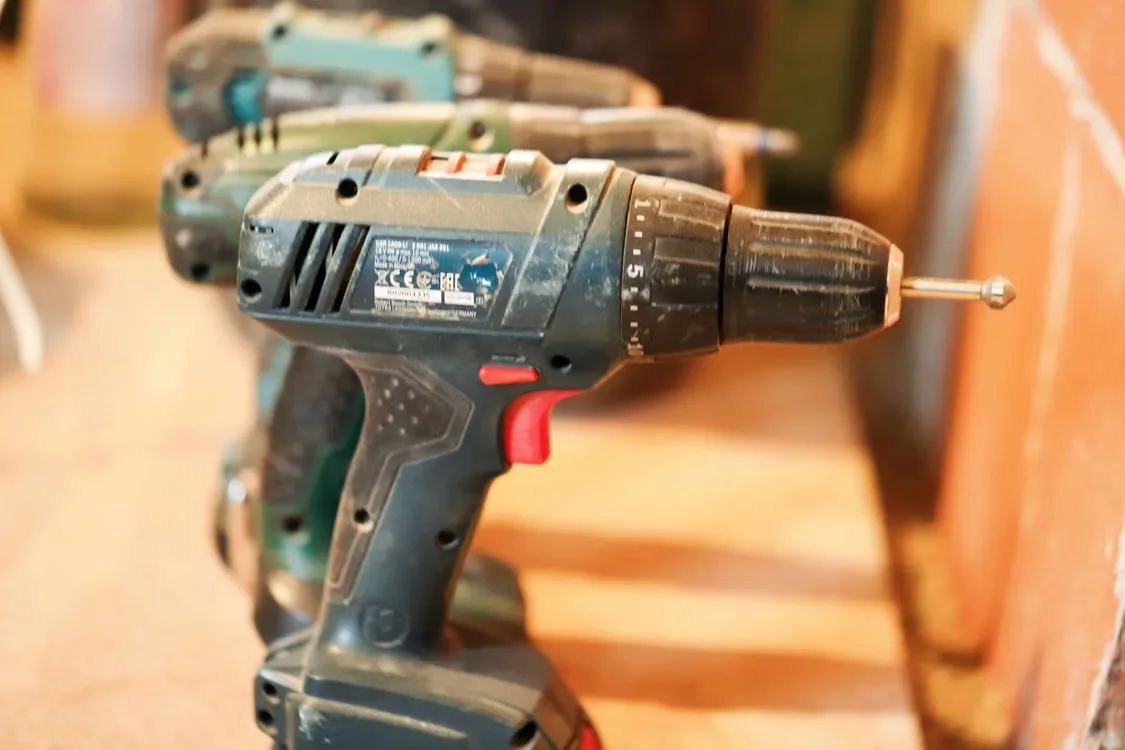
- Cordless drill-driver (DeWalt 20V MAX or Milwaukee M18)
- Safety glasses and hearing protection
This 8-item kit handles the vast majority of home maintenance tasks. Total cost: approximately $300–$450 buying mid-range quality. A cordless drill-driver is the only power tool in this list because it covers drilling, driving, and mixing—three distinct task types in a single tool.
Use Case 2: Woodworking Hobbyist
Start with hand tools before investing in stationary power equipment. A marking gauge, a set of bench chisels (¼-inch and ¾-inch minimum), a No. 4 bench plane, and a quality hand saw give you the capability to make furniture to tight tolerances before you spend $600–$1,200 on a table saw.
Add power tools as specific bottlenecks emerge—a thickness planer when hand-planing rough lumber becomes your slowest step, a router when joinery jigs would dramatically speed up repeated cuts. Don't build the power tool shop first and then wonder what hand skills you're missing.
If you're pursuing woodworking seriously, you'll also want a dedicated space—and that means thinking about your walls and surfaces too. A good interior paint job using quality brands can protect your workshop walls from moisture and make the space more functional long-term.
Use Case 3: Light Fabrication and Metalwork
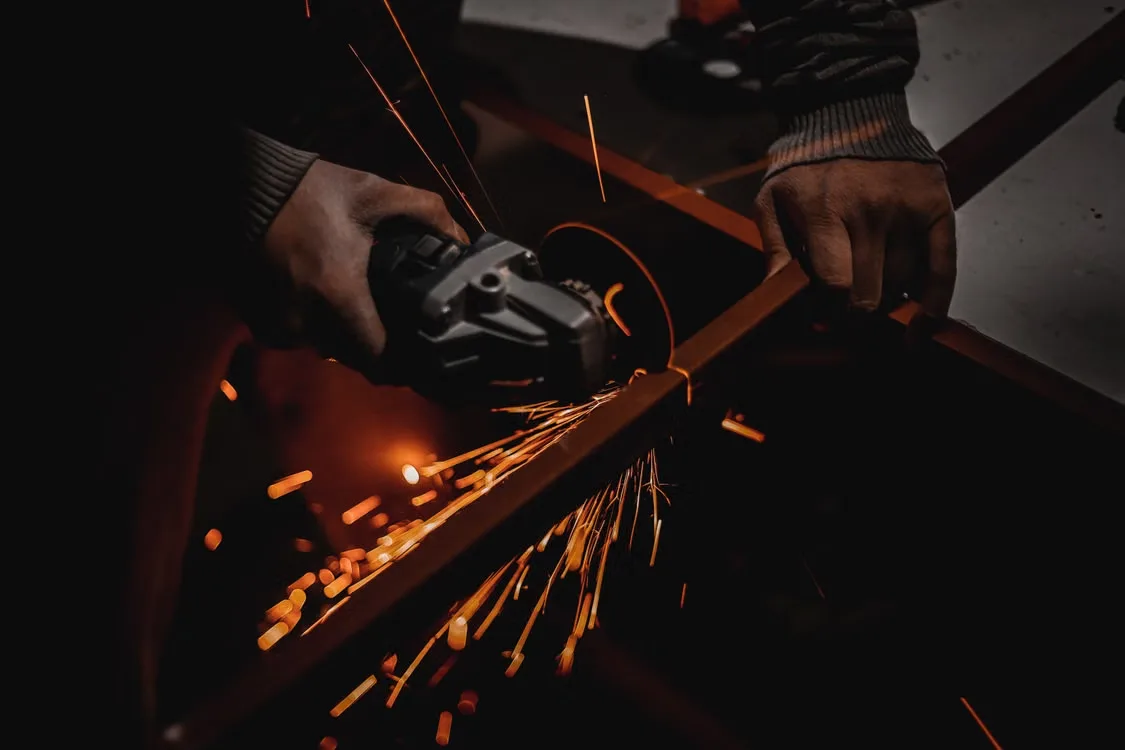
For light metalwork—cutting, grinding, and welding thin steel or aluminum—the minimum kit is an angle grinder (Metabo or DeWalt, 4½-inch), a set of grinding and cutting discs, C-clamps, a wire brush set, and MIG welding equipment if joining metal is the goal. Hand tools for metal fabrication—files, hacksaws, and layout tools—remain essential for finishing and fitting work that a grinder would overcut.
Use Case 4: Sewing and Fabric Crafts (Workshop Adjacent)
Not every home workshop centers on wood or metal. If your creative space involves fabric, upholstery repair, or soft goods, the tool calculus is entirely different—and a good machine matters as much as a good drill. If you're setting up that kind of workspace, our guide on the best sewing machines for beginners applies the same framework: match the tool to your actual project volume and material type, not to aspirational use.
Frequently Asked Questions
Should I buy into one cordless platform or mix brands? Build around one platform for tools you'll use heavily. Mix brands only for stationary tools (where corded makes more sense anyway) or for highly specialized tools your primary brand doesn't make well. Splitting a cordless collection across two brands means doubling your battery investment.
Are harbor freight tools worth buying? For occasional-use hand tools—clamps, layout tools, basic wrenches—Harbor Freight's quality is often adequate and the savings are real. For power tools you'll use daily on demanding materials, the motor and switch quality of budget brands typically fails under sustained load. Match tool quality to use frequency and material hardness.
How do I know when a hand tool is the right choice? Three signals: the job involves a single cut or a handful of fasteners (volume is low), the material is soft enough that hand tools can work it efficiently, or the precision requirement exceeds what power tools can deliver without expensive jigs and setups. Dovetail joinery, fine paring work, and quiet late-night projects all favor hand tools.
What's the best first cordless drill for a homeowner? The DeWalt 20V MAX DCD777 (brushless, compact) and Milwaukee M18 FUEL 2904-20 are the two most recommended options for homeowners in 2026. Both offer brushless motors, two-speed operation, and access to a large battery ecosystem. Buy as a kit with two batteries; a single-battery kit is a false economy.
Do I need both a circular saw and a miter saw? Not at the start. A circular saw with a good straightedge guide handles most cutting tasks a beginner or DIYer will face. A miter saw becomes worth the investment once you're doing repeated crosscuts—trim work, framing, or furniture parts—where the speed and repeatability justify the cost and space.
The Bottom Line: Use-Case First, Tool Second
The framework doesn't change across categories. Whether you're evaluating a $14 Wera screwdriver against a $3 alternative, comparing a Milwaukee M18 FUEL against a DeWalt 20V MAX, or deciding whether to build your workshop around hand tools or power equipment—the decision variables are the same:
- How often will I use this? Volume justifies power tools.
- What material am I working with? Hardness and brittleness determine which tool category is even viable.
- What precision does the task require? High-precision finishing favors hand tools; high-volume rough work favors power.
Apply those three questions before every tool purchase and you'll spend less, own more useful tools, and finish projects with better results. The best tool isn't the most expensive or the most heavily marketed—it's the one that matches the actual job.
For broader home improvement decisions beyond the workshop, our complete guide to the tools and DIY category covers additional buying frameworks and product category breakdowns updated for 2026.
We may earn a commission from purchases made through links on this page, at no additional cost to you. Our editorial recommendations are completed before any affiliate link is applied. Full disclosure · How we research