Researched and drafted with AI assistance, then reviewed and fact-checked by our editorial team before publishing. We may earn a commission from purchases made through links on this page — this never affects our rankings. Read our full disclosure → · How we review →
Quick Verdict: Oral-B vs Sonicare at a Glance
Bottom line up front: If you have healthy gums and want maximum value, pick Oral-B. If you have sensitive gums, travel often, or are switching from a manual brush, go Sonicare. Neither brand cleans dramatically better than the other — but they suit very different users.
Both brands are backed by clinical evidence and carry (or are in the process of obtaining) ADA Seal of Acceptance on their top models. The real differences are in battery life, brushing sensation, accessories, and price-to-value ratio at each tier — and those differences are consistent enough to make a clear recommendation.
| Category | Oral-B | Sonicare | Winner |
|---|---|---|---|
| Plaque removal evidence | Slight edge | Strong for gingival inflammation | Tie / context-dependent |
| Battery life | 2+ weeks | 3–4+ weeks | Sonicare |
| Design & aesthetics | Functional, slim iO handle | Cleaner, more refined | Sonicare |
| Noise level | More audible vibration | Quieter | Sonicare |
| Entry/mid-range value | Stronger | More expensive at equivalent tiers | Oral-B |
| Travel accessories | Varies by model | Better cases + charging travel case | Sonicare |
| Brush head variety | Wider range, cheap generics available | Good range, fewer generic options | Oral-B |
| Smart features on a budget | App + AI guidance at lower cost | Smart features skew premium | Oral-B |
How this guide was researched: We synthesized manufacturer specifications, independent expert testing (Electric Teeth, TestHut), Consumer Reports lab data, a peer-reviewed PubMed clinical study, and verified owner feedback from multiple community sources. This guide does not reflect hands-on testing by Trusted Buyer Report. See our full methodology →
How the Two Technologies Actually Work — and Why It Matters
The single most important thing to understand before choosing is that Oral-B and Sonicare use fundamentally different cleaning mechanisms. This isn't a minor engineering detail — it directly affects how the brush feels in your mouth and which conditions each brand suits best.
Oral-B uses oscillating-rotating technology. The round brush head spins back and forth and pulses to physically scrub plaque from tooth surfaces — a direct, mechanical scrubbing action applied to each tooth. According to Stone Creek Village Dentistry, citing Cleveland Clinic research, this style is especially effective for tough plaque buildup and surface stains. The sensation is more intense and tactile. You feel it working.
Philips Sonicare uses sonic technology. Instead of mechanical scrubbing, the brush head vibrates at high frequency — up to 62,000 movements per minute — generating a fluid dynamic effect. This fluid action sweeps bacteria and debris from between teeth and along the gumline without the brush head physically contacting every surface. The result is a gentler, less intense sensation that still reaches areas the bristles don't directly touch.
Both technologies reduce gingivitis effectively according to ADA research, and neither has a definitive clinical edge in general use. The practical implication: if you have heavy surface staining or dense plaque buildup, Oral-B's direct mechanical action tends to address that more aggressively. If you have sensitive gums, gum recession, or dental work like crowns and veneers, Sonicare's gentler fluid action is typically more comfortable and less likely to cause irritation.
Cleaning Performance: What the Evidence Actually Shows
Most brand comparisons cherry-pick whichever study favors their preferred conclusion. The honest picture is more nuanced — and more useful.
Independent testing by Electric Teeth found little real-world difference in cleaning results between the two brands when either brush is used correctly, while noting the evidence does favor Oral-B slightly for plaque removal. That "slightly" is not a dramatic gap — and it can be erased entirely by brushing technique.
On the other side, a six-month clinical study published on PubMed found the Sonicare brush superior to the predecessor of modern Oral-B models in reducing gingival inflammation and probing depth. This is meaningful if you have a history of gingivitis or gum disease concerns.
Consumer Reports lab-tests electric toothbrushes with panels of real users and consistently finds top performers from both brands in their rankings — confirming that both produce genuinely effective products rather than one dominating the other.
The most consistent finding across all sources: your brushing technique, the time you brush, and how consistently you do it have a greater positive impact on your oral health than which brand you choose. A well-priced Oral-B used correctly for two minutes twice a day will outperform a flagship Sonicare used carelessly for 45 seconds.
According to Forbes Vetted, most leading models from both brands carry or are applying for the ADA Seal of Acceptance — a useful baseline quality signal when evaluating any specific model.
Battery Life and Charging: A Meaningful Practical Difference
Battery life is one area where the gap between the two brands is consistent, measurable, and matters more than most buyers realize until they're traveling without a charger.
According to TestHut, which tested multiple models from both brands, Sonicare brushes consistently outlast Oral-B on a single charge. Most Sonicare brushes last more than three weeks per charge — their tested Sonicare 4300 ran for 30 days without needing a recharge.
Most Oral-B brushes last over two weeks per charge, which is perfectly adequate for home use. The Oral-B iO Series uses a magnetic charging system that recharges in approximately three hours — a practical advantage if you do run the battery down. But two weeks versus four weeks is a real difference when you're packing for a two-week trip and deciding whether to bring the charging dock.
TestHut also notes a useful general rule: the more features a brush has — particularly Bluetooth connectivity — the shorter its battery life tends to be, regardless of brand. If long battery life is a priority, look at mid-range models from both brands rather than the feature-heavy flagship versions. This mirrors advice from our 2026 Consumer Electronics Buying Guide — more features rarely mean more practical value for everyday use.
Design, Noise, and Comfort: The Everyday Experience
Clinical studies measure plaque reduction. They don't measure whether you'll actually enjoy using the brush every morning for the next three years. Design, noise, and comfort determine long-term compliance — and that makes them genuinely important factors.
Electric Teeth's head-to-head analysis is direct: Sonicare brushes have better design, and they're quieter. The handles tend to be more refined, the overall aesthetic is cleaner, and the brushing sensation is less aggressive. For anyone who finds the buzzing intensity of an oscillating brush unpleasant, Sonicare's sonic vibration is a significantly more comfortable experience.
Oral-B's oscillating action produces more audible vibration and a more intense physical sensation at the tooth surface. Many users find this satisfying — it feels like something is actively happening. Others, particularly those with sensitive gums or dental anxiety, find it uncomfortable. Stone Creek Village Dentistry specifically notes that sonic brushes are "typically quieter and feel less intense, making them a favorite for sensitive gums."
Real-world perspectives from Reddit's r/BuyItForLife community reflect both camps honestly. One user who has owned both brands prefers Oral-B, citing the round head's cleaning effectiveness and ergonomic handle. Another in the same thread prefers Sonicare in every way. Both views are valid — and they illustrate why brushing sensation is a legitimate decision factor, not just a subjective afterthought.
Travel Features and Accessories: Where Sonicare Pulls Ahead
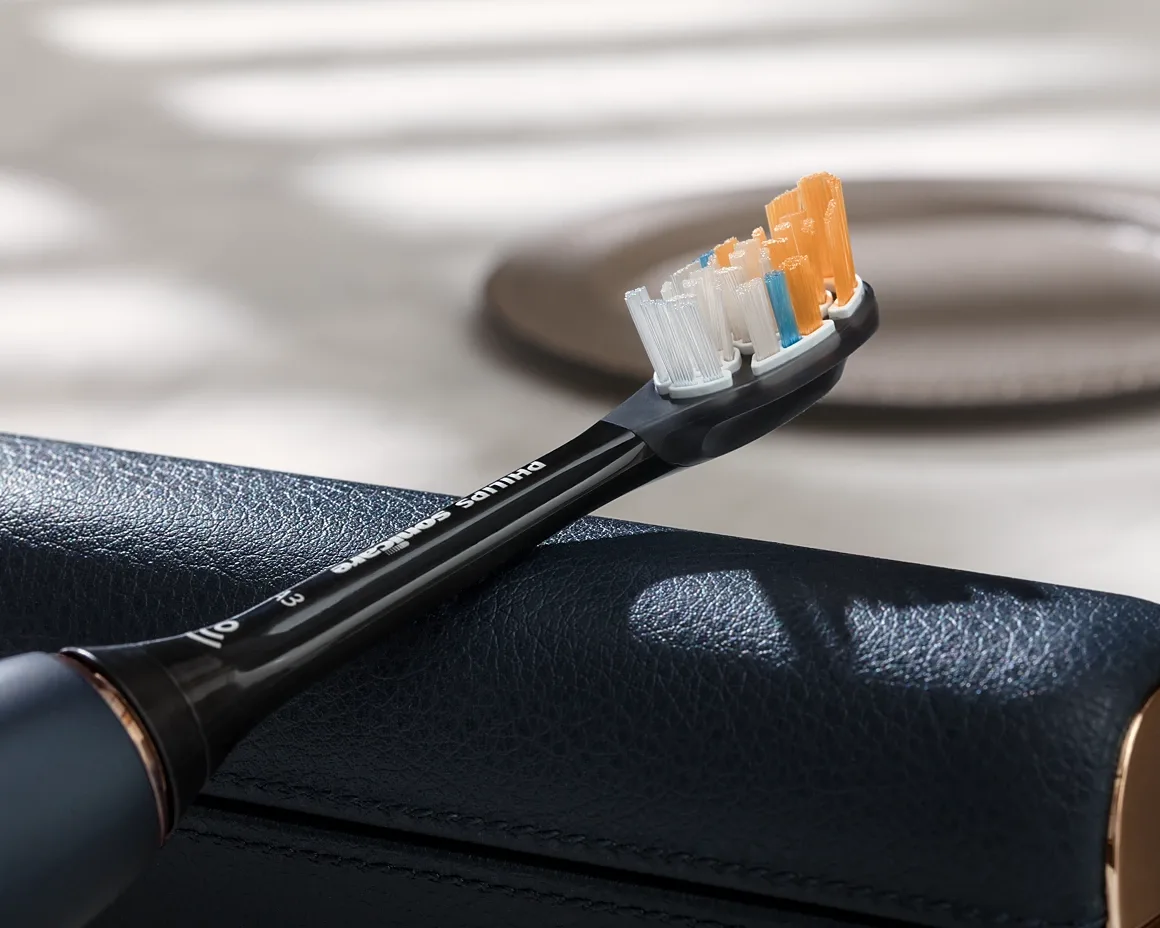
If you travel regularly — even a few times a year — the accessories that come with your electric toothbrush deserve more attention than most buyers give them.
Electric Teeth's comparison is unambiguous: Philips travel cases are better than Oral-B equivalents. The premium Sonicare charging travel cases are particularly useful because they allow you to charge the brush while traveling without carrying a separate dock. Combined with Sonicare's longer battery life, this makes a meaningful practical difference for frequent travelers.
Electric Teeth also highlights an accessibility advantage that rarely appears in mainstream reviews: Sonicare's pressure sensor and battery charge alerts use both visual and audio cues, making them more accessible for users with visual or hearing impairments. Oral-B's pressure alerts tend to rely more heavily on a single feedback channel.
Oral-B accessories vary considerably by model. Higher-end iO Series models do include travel cases, but they're generally considered less refined than their Sonicare counterparts. For users who primarily brush at home and rarely travel, this distinction may not matter much.
Price and Value: What You Actually Get at Each Budget Level
Both brands span a wide price range, and the value proposition shifts significantly depending on which tier you're shopping in.
At the entry level, Oral-B holds a clear advantage. The Oral-B Pro 1000 is available at roughly $60–70 and is described by a dentist at Stone Creek Village Dentistry as the "go-to for most patients" — reliable, effective, and wallet-friendly. It includes a pressure sensor and a built-in timer, the two features most likely to improve brushing habits for the average user.
Moving up, the Oral-B iO Series 3 is positioned at approximately $79.99, offering smart features and the magnetic charging system at a mid-range price. The Philips Sonicare 4100 occupies a comparable everyday tier for users who want Sonicare quality without committing to premium pricing.
At the top of the range, the gap widens considerably. The Philips Sonicare DiamondClean 9900 Prestige is priced at approximately $219.96, while the Oral-B iO Series 9 comes in at approximately $179.95 — both per Electric Teeth's pricing data. Forbes Vetted selected the Sonicare Prestige 9900 as the best splurge pick, but neither flagship offers cleaning performance that justifies the premium for most users.
One practical cost consideration worth noting: Oral-B's older Pro Series models accept generic-compatible brush heads at significantly lower cost, while the iO Series uses proprietary magnetic heads that are more expensive to replace. If ongoing brush head costs matter to your budget, the Pro Series line may offer better long-term value than the iO Series despite the latter's smart features.
The global electric toothbrush market is currently valued at approximately $5.6 billion in 2026, according to Future Market Insights, and is projected to reach $11.8 billion by 2036 — driven largely by growing consumer preference for sonic technology, which is projected to hold a 46% market share in 2026.
Oral-B vs Sonicare: Which Is Right for You?
The category-by-category breakdown above is useful, but most people want a direct answer. Here's how to match the evidence to your specific situation.
Choose Oral-B if:
- You want the best value for money at the entry or mid-range price point
- You prefer a more intense, tactile cleaning sensation
- You deal with heavy plaque buildup or surface staining
- You want a wide variety of brush head shapes and styles, including cheaper generic-compatible options
- You want smart features like app connectivity and AI brushing guidance without paying flagship prices
- You don't travel frequently and battery life beyond two weeks isn't a concern
Choose Sonicare if:
- You have sensitive gums, gum recession, or existing dental work such as crowns, veneers, or implants
- You travel regularly and want longer battery life and a better travel case
- You prefer quieter operation, particularly in shared living spaces
- You're transitioning from a manual toothbrush and want a gentler introduction to powered brushing
- You wear orthodontic appliances — sonic fluid dynamics can reach around brackets and wires more easily
- You prioritize design and ergonomics in daily-use items
The Clark Howard Community frames the choice simply: Oral-B for straightforward daily cleaning, Sonicare if you want a gentler experience. Dentistry Blogger adds that Oral-B offers better value for money, a stronger cleaning action at the entry tier, and a broader range of brush heads — none of which is wrong, but it reflects a different set of priorities than someone with sensitive gums would bring to the decision.
Electric Teeth's most important finding applies to everyone: brushing technique and frequency have a more positive impact on your oral health than any specific brand. The best electric toothbrush is the one you will actually use consistently, correctly, for two minutes, twice a day.
Electric Toothbrush vs Bluetooth Headphones: The Surprising Parallel
There's an interesting parallel between how people choose electric toothbrushes and how they approach other personal tech decisions. When we covered the best noise-canceling headphones of 2026 and best wireless earbuds, the same pattern kept appearing: the "best" product according to specs rarely matches the best product for a specific user's habits and lifestyle. Battery life, comfort during extended use, and total cost of ownership (including replaceable parts) matter far more than headline feature counts.
The same logic applies here. When you're making a $60–$220 purchase decision on something you'll use twice daily for years, prioritizing the features that match your actual lifestyle — your gum sensitivity, travel frequency, bathroom routine — will serve you better than chasing the highest-rated model in a category benchmark.
Frequently Asked Questions
Is Oral-B or Sonicare better for sensitive teeth and gums?
Sonicare is generally the better choice for sensitive gums. Its sonic vibration technology produces a gentler sensation than Oral-B's oscillating-rotating action, and Stone Creek Village Dentistry specifically notes that sonic brushes are a favorite for sensitive gums. If sensitivity is your primary concern, the Sonicare 4100 or ProtectiveClean 6100 are well-regarded starting points.
Does a more expensive electric toothbrush actually clean better?
Not meaningfully. Consumer Reports' lab testing and Electric Teeth's independent comparisons both confirm that the core cleaning technology is effective across price tiers in both brands. Paying more typically buys you additional features — Bluetooth connectivity, AI brushing feedback, premium travel cases — rather than a measurable improvement in plaque removal. The Oral-B Pro 1000 at $60–70 cleans effectively for most users.
How long do electric toothbrush batteries last?
Sonicare consistently outlasts Oral-B. According to TestHut's testing, most Sonicare brushes last more than three weeks per charge — their tested Sonicare 4300 ran for 30 days. Most Oral-B brushes last over two weeks. Oral-B iO Series models recharge in approximately three hours using their magnetic charging system.
Are generic brush heads safe to use with Oral-B?
Generic brush heads are widely used with Oral-B's Pro Series models and are generally considered safe and effective for everyday use. The iO Series uses proprietary magnetic heads incompatible with generic alternatives, which increases the ongoing cost of ownership. If brush head cost matters to your budget, the Pro Series line is the more economical long-term choice.
Which electric toothbrush brand do dentists recommend?
Most dental professionals recommend ADA-approved electric toothbrushes from either brand rather than endorsing a specific model. Forbes Vetted notes dental professionals they consulted generally recommend ADA-approved models. Stone Creek Village Dentistry's dentist recommends the Oral-B Pro 1000 as a practical, affordable choice for most patients, while noting that both oscillating and sonic technologies reduce gingivitis effectively according to ADA research.
Is the electric toothbrush market still growing?
Yes. According to Future Market Insights, the global electric toothbrush market is valued at $5.6 billion in 2026 and is projected to reach $11.8 billion by 2036, growing at a CAGR of 7.7%. Sonic electric toothbrushes are projected to hold a 46% share of the market in 2026, reflecting growing consumer preference for the gentler sonic experience.
Final Recommendation: Our Picks by Budget
If you want a single, clear decision framework: start with your budget and your gum sensitivity, then let everything else follow.
Under $70 — no gum issues: Buy the Oral-B Pro 1000. It's the most consistently recommended entry-level option across dentist advice, independent testing, and consumer communities. It cleans effectively, includes a pressure sensor and timer, and costs less than most people spend on a single dental visit co-pay.
Under $70 — sensitive gums: Look at the Philips Sonicare 4100. The gentler sonic action is worth the slight price premium over comparable Oral-B entry models if sensitivity is a real concern for you.
Mid-range ($80–$130) — frequent traveler: The Sonicare's combination of longer battery life and superior travel accessories makes it the more practical choice. The Sonicare ProtectiveClean 6100 is a well-regarded option in this tier.
Mid-range — want smart features: The Oral-B iO Series 3 at approximately $79.99 delivers app connectivity and AI brushing guidance at a price where Sonicare can't match it for features per dollar.
$150+ — splurge pick: Forbes Vetted gives the nod to the Philips Sonicare DiamondClean 9900 Prestige for its elevated features and appearance. But if you're spending this much, scrutinize which specific features you'll actually use daily — for most people, a $70 brush does 95% of the job.
This article was drafted with AI assistance and fact-checked by our editorial team before publishing. We may earn a commission when you use our links to make a purchase. This never affects our rankings. Affiliate disclosure · Methodology