Reviewed by the Trusted Buyer Report editorial team. This article was researched and drafted with AI assistance and fact-checked by a human before publishing. Trusted Buyer Report may earn a commission from purchases made through links on this page — at no extra cost to you. Full disclosure → | How we research →
Quick Verdict: Which Resistance Band Is Right for You?

Here's the short answer before we go deep: resistance bands are not interchangeable, and buying the wrong type for your goal is the single most common mistake. If you want strength training, you need stackable tube bands or heavy loop bands reaching 30–300 lbs. For physical therapy or rehab, you need flat therapy bands starting as low as 3 lbs. For travel, you need a full set with a carry bag that spans the entire resistance range.
If you're setting up a full home fitness space alongside your bands, our best home gym equipment guide for 2026 covers the rest of what you need — from adjustable dumbbells to cable machines — at both budget and premium price points.
Resistance Bands by Use Case: Head-to-Head Comparison
| Use Case | Recommended Type | Resistance Range | Top Pick | Price |
|---|---|---|---|---|
| Strength Training | Stackable tube or heavy loop | 30–300 lbs | Bodylastics PRO Series | ~$59.97 |
| Rehab / Physical Therapy | Flat therapy band | 3–6.7 lbs | THERABAND Beginner Kit | ~$16.71 |
| Travel / Portable | Tube band set with carry bag | 2–200 lbs (full set) | Sportneer 7-Band Set | $28.59–$39.99 |
Notice how the resistance ranges differ by an order of magnitude across use cases. That gap is exactly why a single "all-purpose" band rarely satisfies any one goal well. For strength training, the upper end of the range is what matters. For rehab, the lower end is critical — a band that starts at 25 lbs is useless for someone rehabbing a rotator cuff. For travel, breadth across the full spectrum is the priority, because one set has to cover everything from warm-up mobility to working sets.
Why Resistance Bands Work: The Science Behind Variable Resistance
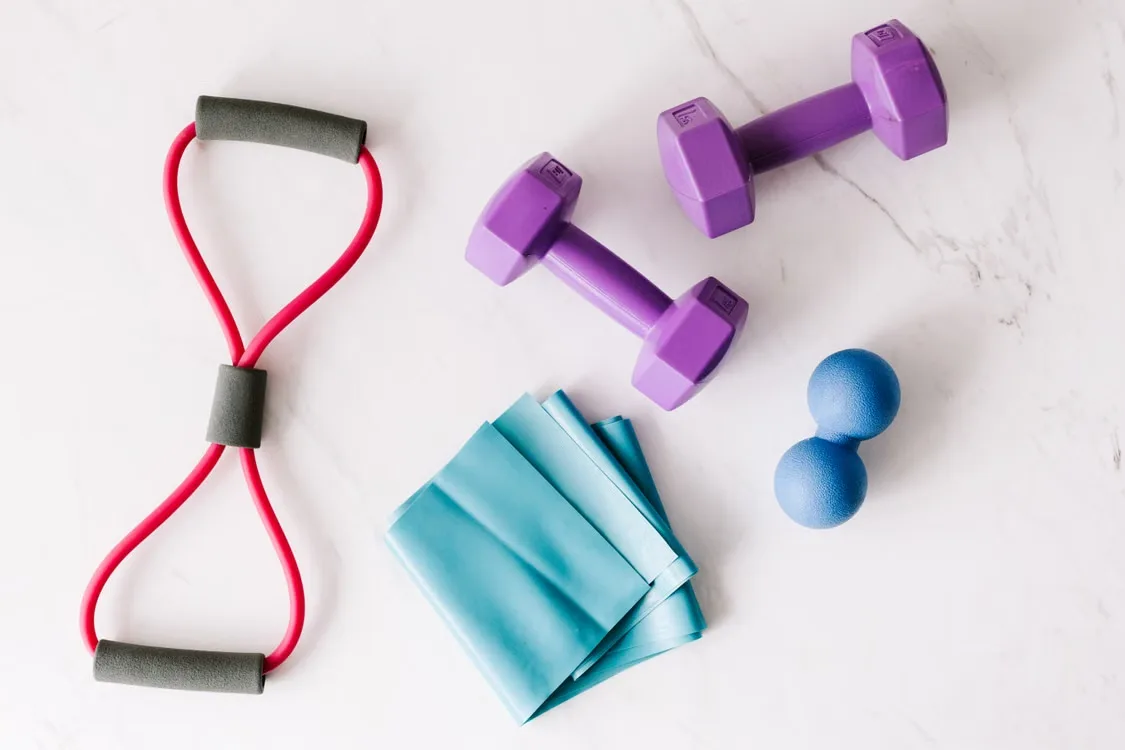
Resistance bands earn a place in serious training programs because of a mechanical property that free weights don't share: variable resistance. As you stretch a band further, the tension increases — meaning the hardest part of a band-resisted movement occurs at full extension.
David G. Behm, PhD, a research professor at Memorial University of Newfoundland's School of Human Kinetics and Recreation, confirmed to Consumer Reports that elastic resistance bands are as effective as dumbbells for improving strength, power, and endurance. That's a research-backed position from a credentialed exercise scientist, not a marketing claim.
Abby Gillard, DPT, a board-certified orthopedic clinical specialist and national director of Sports Medicine-Rehabilitation at Select Medical, adds an important nuance, also cited by Consumer Reports: with dumbbells, the hardest part is typically the initial lift. With resistance bands, tension keeps increasing throughout the range of motion. For rehab patients, this is clinically valuable — the band is gentler at the start of a movement when a joint is most vulnerable, and loads progressively as the joint moves into a stronger position.
This same variable loading pattern makes bands useful for accommodating resistance training, where a band is added to a barbell to increase load at lockout — a technique powerlifters use deliberately. Understanding this mechanic shows why resistance bands aren't a compromise. They're a different tool with specific mechanical advantages.
The 5 Types of Resistance Bands Explained
Walk into any sporting goods store and you'll find at least five distinct formats. Each has a different mechanical profile, ideal use case, and target user. Choosing by type before brand or price is the decision that matters most.
Loop Bands (41-Inch Continuous Loops)
Large, continuous rubber loops preferred by powerlifters, CrossFit athletes, and anyone doing pull-up assistance work. Everyday Health lists Serious Steel Fitness 41" Resistance Bands as a top pick for pull-up assistance. Loop bands are highly versatile — you can anchor them to a pull-up bar, step on them, or wrap them around a rack — but they require more setup knowledge than tube bands with handles.
Mini Loop Bands
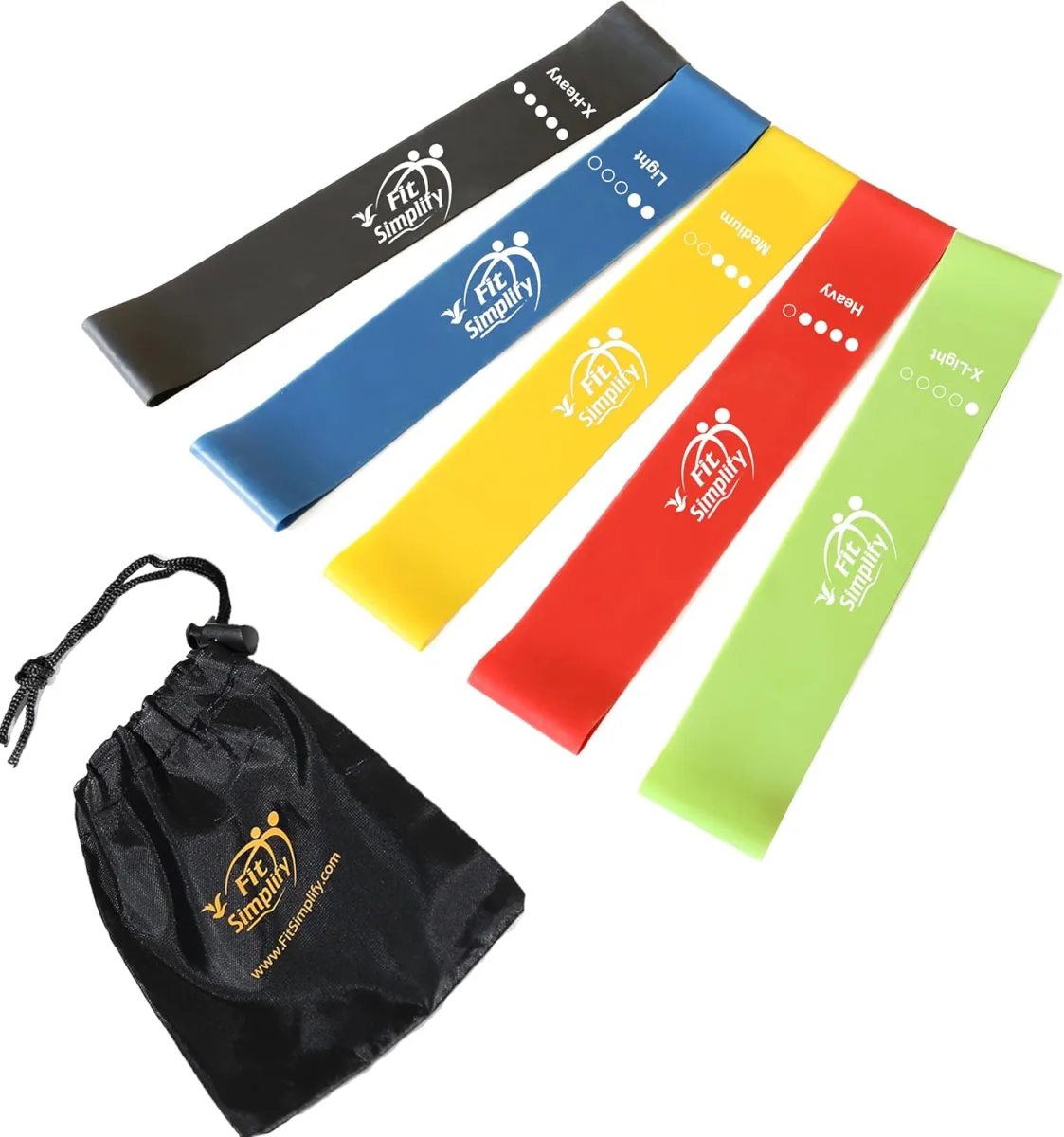
Smaller fabric or latex loops designed for hip activation, glute work, lateral movements, and stability exercises. They sit around the thighs, ankles, or wrists. Both Perform Better Mini Loops and Renoj fabric bands (listed by Everyday Health) fall into this category. Mini loops are a staple in athletic warm-up protocols and senior fitness programs alike.
Flat Therapy Bands
Open-ended strips of latex or latex-free material — the clinical standard in physical therapy offices. Their wide, flat profile distributes pressure across a larger skin surface, reducing discomfort during post-injury exercises. Both Women's Health and Runner's World identify TheraBand's flat design as ideal for rehab, prehab, and stretching — and note that a latex-free version is available, which matters in clinical settings where latex allergies are common.
Tube Bands with Handles
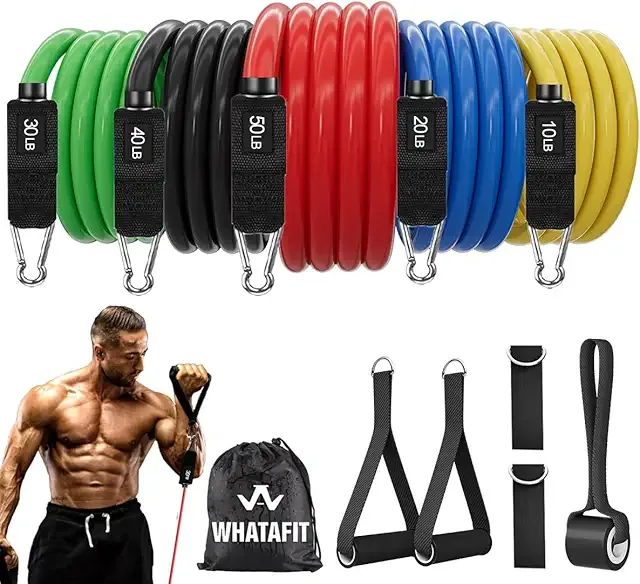
The most beginner-friendly format. Tube bands with clip-on handles mimic cable machine movements and come with accessories like door anchors and ankle straps. The Bodylastics PRO Series features a patented inner safety cord that prevents the tube from snapping back if the outer latex fails — a meaningful safety feature that cheaper sets omit. According to The Consumers Guide, Bodylastics has earned six consecutive years of recognition from Wirecutter, signaling consistent quality over time.
Fabric Bands
Woven from cotton or a cotton-latex blend, fabric bands don't roll up the leg during exercises the way latex mini loops sometimes do, and they feel more comfortable against bare skin. The trade-off is a narrower resistance range and less elasticity than pure latex. Wirecutter also notes that Rep Fitness makes a latex-free option using molded thermoplastic elastomer (TPE) with a claimed 5–85 lbs resistance range — though testers found these bands slippery compared to latex alternatives.
Best Resistance Bands for Strength Training in 2026
Strength-focused users have two primary needs: a resistance ceiling high enough to challenge large muscle groups, and a system that supports progressive overload over months and years. A band that tops out at 50 lbs will plateau a moderately trained person within weeks.
If you're pairing bands with other supplements to support your training, see our protein powders guide for 2026 for tested picks across whey, plant-based, and performance formulas.
Living.Fit Resistance Bands — Best for Serious Strength
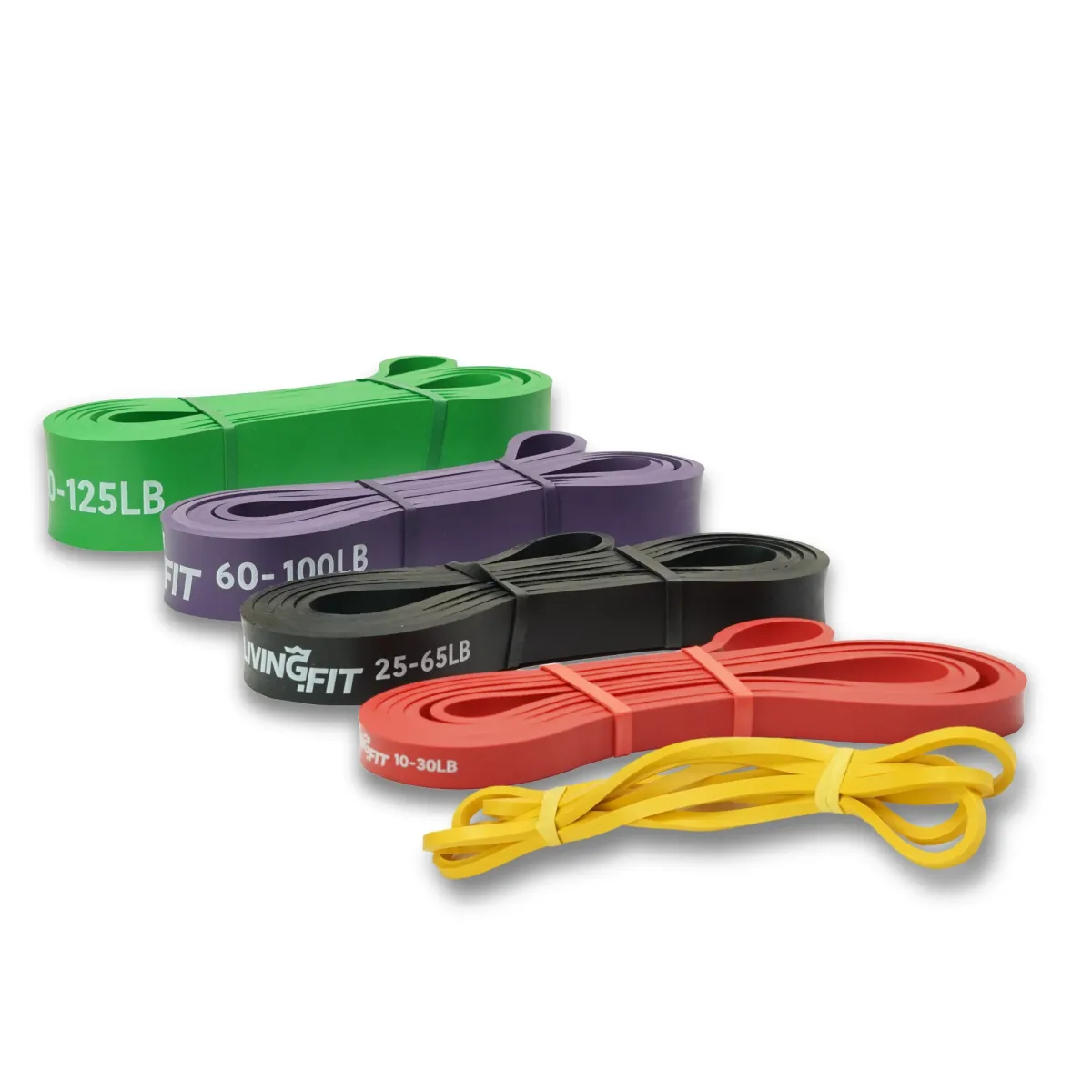
According to Garage Gym Reviews, Living.Fit Resistance Bands are made from natural latex, span 6–250 lbs of resistance, and come with a lifetime warranty. For comparison, the average resistance band package reviewed by Garage Gym Reviews covers 10–175 lbs with only a 2-year warranty. If you're training seriously and want bands that will last, the premium for Living.Fit is defensible. The lifetime warranty signals that the manufacturer is confident enough in material quality to back it indefinitely.
Best for: Intermediate to advanced lifters who want to add accommodating resistance to barbell work or need a high resistance ceiling for compound movements.
Titan Fitness Heavy Resistance Bands — Best HSA/FSA-Eligible Option
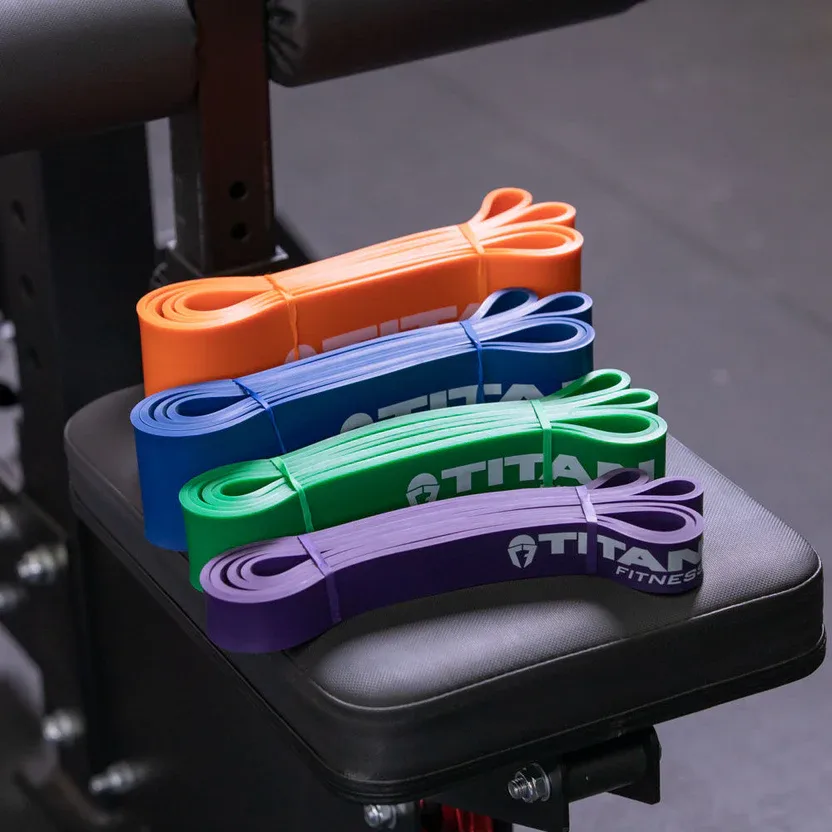
Garage Gym Reviews rates the Titan Fitness Heavy Resistance Bands a 4.3 out of 5. They use a looped design, contain latex, and are notably HSA/FSA-eligible — meaning if you have a health savings account, you may be able to purchase them with pre-tax dollars. They carry a 1-year warranty and free shipping.
Best for: Users who want a heavy loop band for barbell accommodating resistance or heavy pull-up work without committing to the Living.Fit price point.
Bodylastics PRO Series — Best Overall Home Gym Set

At approximately $59.97, the Bodylastics PRO Series delivers 3–190 lbs of stackable resistance through a tube band system with a patented inner safety cord. The Consumers Guide identifies it as the best overall home gym resistance band set. The stackable design means you can start light and add bands as you get stronger — genuine progressive overload without buying new equipment as you improve.
Best for: Home gym users who want a comprehensive, safe, and scalable tube band system.
COOBONS 300LB Set — Best for Maximum Resistance
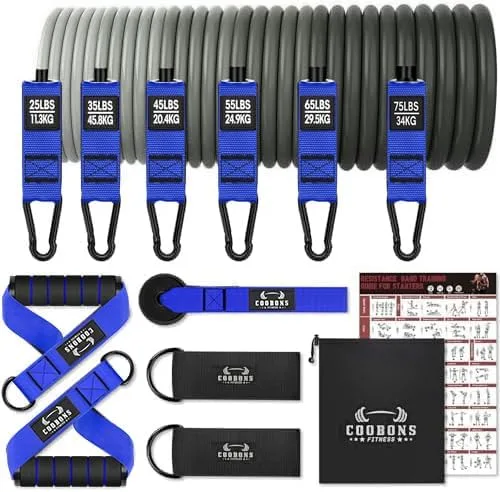
For users who need maximum resistance, the COOBONS 300LB Set offers 25–300 lbs through a stackable tube design at approximately $49.99. The low price relative to its resistance ceiling makes it worth considering for advanced users, though the brand lacks the long-term recognition of Bodylastics.
Best for: Advanced users who have outgrown standard stackable sets and need a 300 lb ceiling.
Best Resistance Bands for Physical Therapy and Rehabilitation in 2026
Rehab is the use case most resistance band roundups handle poorly. A product list optimized for strength athletes is nearly useless for someone recovering from knee surgery or managing chronic shoulder pain. The criteria here are almost inverted: you want the lowest possible resistance levels, the widest and most comfortable band profile, and ideally a latex-free option.
If you're in active recovery and also evaluating supplements that might support healing, our vitamins and supplements guide for 2026 covers what the evidence actually supports — and what to skip.
THERABAND Beginner Kit — Best for Post-Injury Rehab
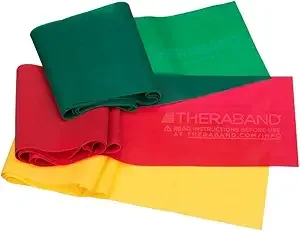
The Consumers Guide identifies the THERABAND Beginner Kit as the best resistance band option for rehabilitation, priced at approximately $16.71. It covers 3–6.7 lbs of resistance — a range that sounds trivial until you're two weeks post-surgery trying to rebuild basic motor patterns without aggravating tissue. TheraBand is the clinical gold standard; if you've ever done physical therapy, you've almost certainly used one.
Best for: Early-stage post-surgical rehab, rotator cuff recovery, and any protocol where the therapist is prescribing very low loads.
TheraBand Resistance Bands Set — Best Flat Therapy Band
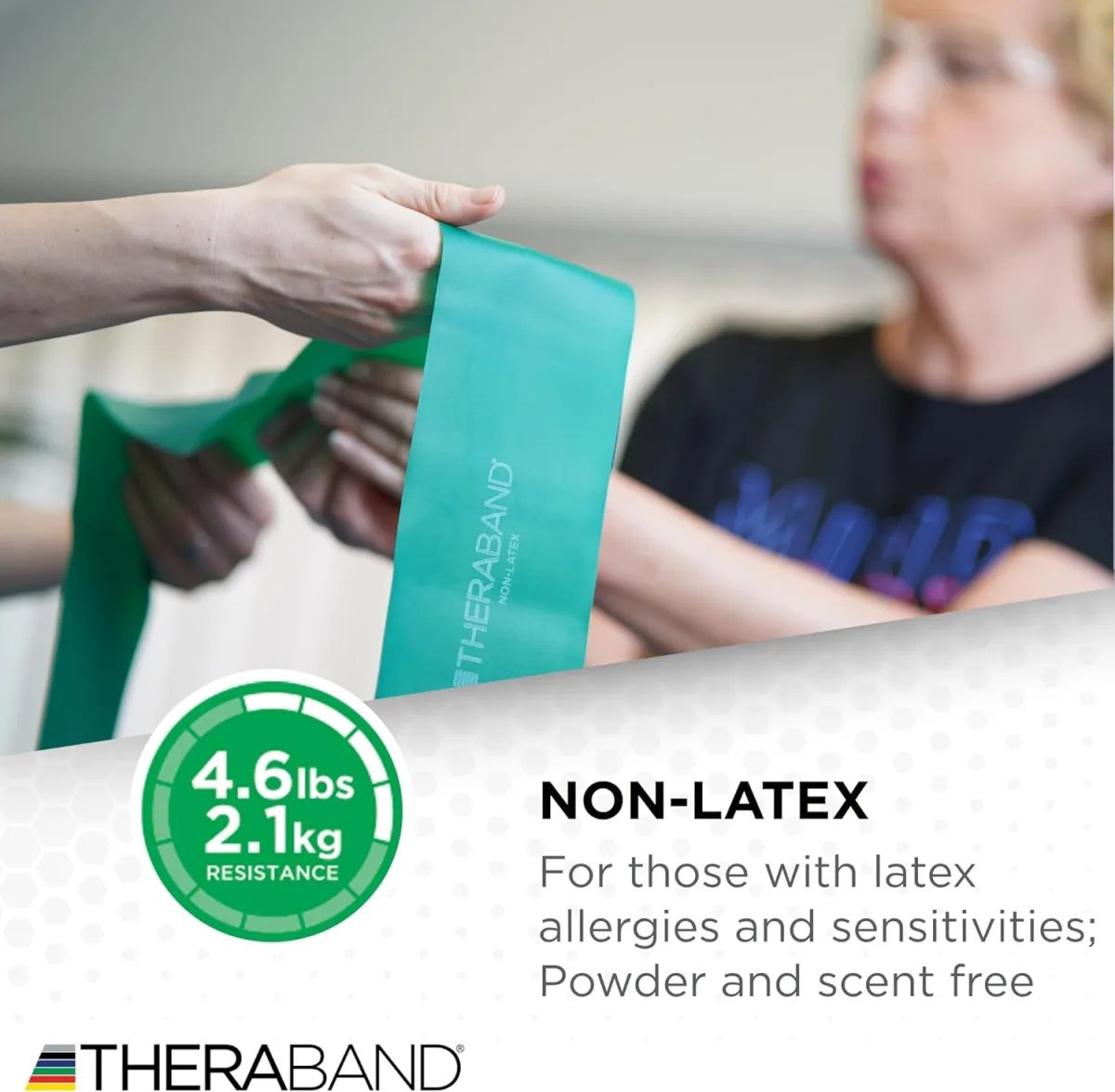
The broader TheraBand set, recommended by both Women's Health and Runner's World, uses a wide flat design that distributes pressure comfortably across skin and soft tissue. The latex-free version is available for users with latex sensitivities. Women's Health notes this is the band you're likely to see in a physical therapist's office — a meaningful endorsement given that PTs select tools based on patient outcomes, not marketing.
Best for: Physical therapy patients following a color-coded progression protocol, and anyone with a latex allergy who needs clinical-grade flat bands.
Gaiam Resistance Band Stretch Strap — Best for Recovery and Mobility
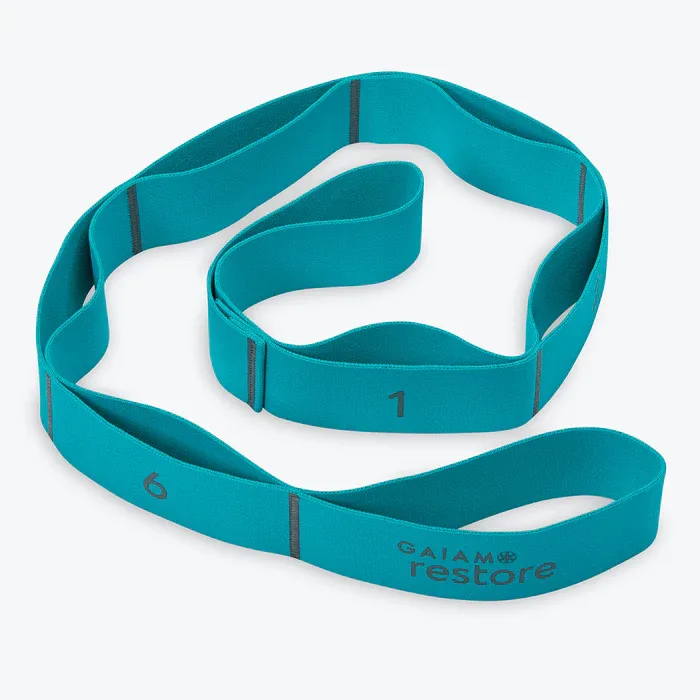
Everyday Health lists the Gaiam Resistance Band Stretch Strap as the best band for recovery. Stretch straps serve a dual function: they provide gentle assisted stretching for tight muscles and tendons, and they can be used for low-load resistance movements. For someone in early-stage recovery where range of motion is the primary goal, a stretch strap is often more appropriate than a traditional resistance band.
Best for: Post-workout recovery, flexibility work, and early rehab where range-of-motion is the primary goal rather than strength loading.
Pvolve P.band — Best for Posture Work
Everyday Health identifies the Pvolve P.band as best for posture and Bala Bands as best for Pilates. Both occupy the lighter end of the resistance spectrum and are appropriate for movement-quality work, postural correction, and Pilates-style exercises where control matters more than load. These aren't clinical rehab bands in the strict sense, but they serve users whose goal is correcting imbalances and rebuilding functional movement patterns.
Best for: Pilates practitioners, posture correction programs, and users focused on movement quality rather than resistance load.
Best Resistance Bands for Travel and Portable Workouts in 2026
Travel workouts have a specific constraint that home gym workouts don't: you cannot add equipment mid-trip. Whatever you pack has to cover warm-up, strength work, and cool-down across your full range of training needs. That makes resistance range breadth — not peak resistance, not minimum resistance, but the spread between the two — the most important spec for travel bands.
For travelers managing both fitness and budgets on the road, our best health and fitness subscription services guide for 2026 reviews digital workout platforms that pair well with travel band workouts.
Sportneer Resistance Bands Set — Best Overall for Travel
According to Everyday Health, the Sportneer Resistance Bands Set is the best overall resistance band set for travel, available for $28.59 on Amazon or $39.99 direct. It includes seven color-coded bands:
- Orange: 2–15 lbs
- Purple: 5–35 lbs
- Red: 10–50 lbs
- Blue: 25–80 lbs
- Green: 50–120 lbs
- Black: 60–150 lbs
- Yellow: 80–200 lbs
It comes with handles, a door anchor, and a carry bag. That combination — breadth of resistance, included accessories, and a bag — makes it the most practical single purchase for travel use.
Best for: Travelers who need a complete workout system that fits in a carry-on and covers warm-up through heavy resistance work.
TRX Strength Bands — Best for Full-Body Training
Everyday Health lists TRX Strength Bands as the best for full-body training. TRX has a strong reputation for travel-ready fitness equipment, and their resistance bands follow the same design philosophy: compact, versatile, and built to deliver a complete workout without a fixed gym setup.
Best for: Athletes accustomed to TRX suspension training who want a complementary band system from the same brand.
GoFit ProGym Extreme Set — Best Dual Door Anchor Setup
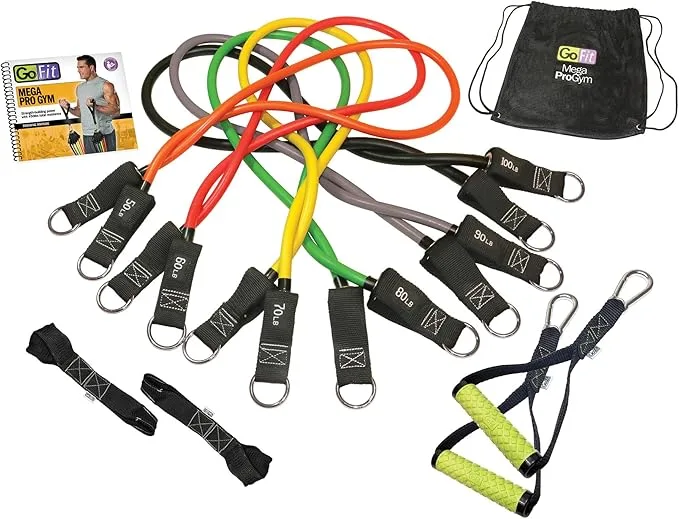
Wirecutter notes the GoFit ProGym Extreme Set as a solid travel option. It includes four interchangeable tube bands claiming up to 140 lbs of combined resistance, plus two door anchors — one more than most competing sets. The dual door anchors meaningfully expand the exercise variety you can achieve in a hotel room. The absence of tube-reinforcing safety cords is a genuine negative worth noting.
Best for: Travelers who want maximum exercise variety from a door-anchor setup.
Hyperwear Resistance Tube Bands — Best with Ankle Strap Included
Reviewed by Wirecutter, the Hyperwear set includes five color-coded bands ranging from 10 to 50 lbs, a door anchor, two handles, and two ankle straps. The 1-year warranty and ankle strap inclusion make it a complete package for lower-body travel exercises. Wirecutter's testers found the handles less comfortable than their top pick, which is worth factoring in for high-rep upper-body work.
Best for: Travelers who prioritize lower-body workouts and want ankle straps included out of the box.
How to Read Resistance Band Labels: Weight Ratings and Color Codes
Resistance band weight ratings are estimates, not precise measurements. When a band is labeled "50 lbs," that figure represents approximate tension at a specific stretch length — typically around double the band's resting length. If you stretch it further, tension increases; at shorter stretch, tension drops. This is fundamentally different from a 50-lb dumbbell, where the load is fixed regardless of how you hold it.
Color coding is brand-specific, not universal. A red band from TheraBand indicates a different resistance level than a red band from Sportneer or Serious Steel. Always check the brand's specific resistance chart rather than assuming colors transfer across manufacturers. This is the most common source of confusion when switching brands mid-program.
Stackable systems like the Bodylastics PRO Series allow you to combine multiple bands for higher resistance. The combined resistance is approximately additive, but band interaction means the result isn't always a precise sum. Test combined configurations before relying on them for max-effort sets.
Latex bands degrade over time, particularly with UV exposure, sweat, and storage in extreme temperatures. A band that tested at 80 lbs when new may deliver noticeably less after a year of heavy use. Wirecutter's testing also found that TPE bands like the Rep Fitness Latex-Free Pull-Up Bands can feel slippery compared to latex, affecting grip security during dynamic movements.
Should You Combine Resistance Bands with Other Equipment?
Resistance bands shine as a standalone training tool, but they also integrate well with broader fitness setups.
For home gym builders, bands make an excellent complement to a yoga practice. If you're evaluating mats to round out your space, our best yoga mats for 2026 covers grip, thickness, and eco-materials tested across price points — and there's a dedicated yoga mats and Pilates equipment guide for those who train across both disciplines.
For runners adding resistance band work for injury prevention or hip stability, our best running shoes guide for 2026 covers picks for beginners, marathon training, and trail running — and discusses how to pair footwear with prehab routines. And if you're managing your overall wellness routine alongside training, our best electric toothbrushes guide for 2026 is a reminder that the best athletes sweat the small details.
Frequently Asked Questions
Are resistance bands as effective as weights for building muscle?
Yes, under appropriate loading conditions. David G. Behm, PhD, of Memorial University of Newfoundland, confirmed to Consumer Reports that elastic resistance bands are as effective as dumbbells for improving strength, power, and endurance. The key qualifier is appropriate loading — you need bands that provide sufficient resistance to challenge your muscles through a full range of motion, which requires a set with a broad enough range to progress over time.
What resistance band should a beginner start with?
For general fitness beginners, Everyday Health recommends the Fit Simplify Resistance Loop Exercise Bands Set of 5, which covers extra-light through extra-heavy resistance in a latex loop format. For rehab beginners, the THERABAND Beginner Kit at approximately $16.71 is the clinical standard. Start lighter than you think you need — bands are harder to control than they look, and form breaks down quickly when resistance is too high.
Can I use resistance bands for physical therapy at home?
Resistance bands are a standard tool in physical therapy, but home use should follow your therapist's specific guidance on resistance level, exercise selection, and progression. Flat therapy bands like TheraBand are the clinical standard because their wide profile is gentle on sensitive tissue and their color-coded system makes progression systematic. Always confirm with your PT before changing resistance levels or adding new exercises.
What is the difference between loop bands and tube bands?
Loop bands are continuous rubber rings, typically 41 inches long, used for pull-up assistance, barbell accommodating resistance, and lower-body activation work. Tube bands are hollow cylinders with clip attachments at each end for handles, ankle straps, or door anchors — they replicate cable machine movements and are more beginner-friendly for full-body home workouts. Neither type is universally better; the right choice depends on your specific exercises.
Are fabric resistance bands better than latex?
Fabric bands are more comfortable against bare skin, don't roll up during leg exercises, and are suitable for users with latex sensitivities. Their trade-off is a narrower resistance range and less elasticity than natural latex. For hip and glute activation work, fabric mini loops are often preferred. For heavy resistance training or pull-up assistance, latex loop bands are the better tool.
How do I know when to replace a resistance band?
Inspect bands before each use for cracks, discoloration, cloudiness, or sticky texture — all signs of latex degradation. If a band snaps back with noticeably less force than when new, shows visible surface cracking, or has developed a sticky film, replace it before your next session. UV exposure and sweat are the two primary accelerants of latex degradation. Store bands away from direct sunlight and in a cool, dry location.
Which resistance band type is best for seniors?
Light-to-moderate flat therapy bands with clearly marked resistance levels and comfortable grip points are generally recommended for seniors. TheraBand flat bands work well for rehab and mobility work, Fit Simplify loop bands support balance and hip work, and Bodylastics tube bands with handles work for full-body strength programs — a tiered approach that matches band type to functional goal rather than treating all senior fitness needs as identical.
How This Guide Was Researched
This guide is based on manufacturer specifications, independent testing roundups, and clinical source material aggregated from Consumer Reports, Garage Gym Reviews, Everyday Health, Women's Health, Runner's World, Wirecutter, and The Consumers Guide. It does not reflect hands-on testing by Trusted Buyer Report. All product specs are sourced from the reviews cited and linked throughout; prices are approximate and subject to change. Read our full methodology →
This article was drafted with AI assistance and fact-checked by our editorial team before publishing. Trusted Buyer Report may earn a commission from purchases made through links on this page. Our rankings are finalized before any affiliate link is applied. Affiliate disclosure →