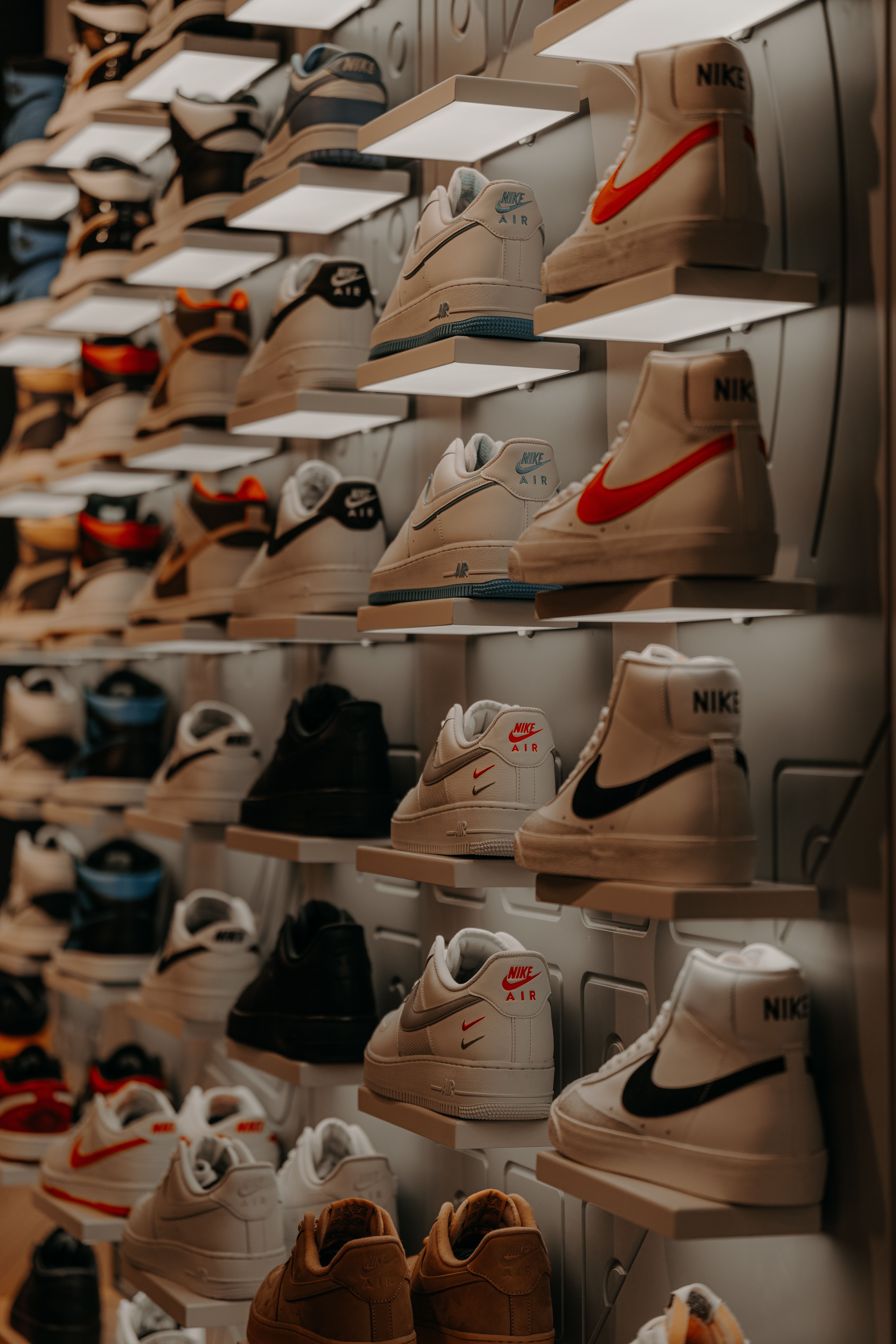

Here is a number that should stop you mid-scroll: Nike scores a quality net score of 47.8 among US consumers in 2026 — second only to Levi's — yet its value-for-money score sits at just 21.6. That is a gap of roughly 26 points, according to a YouGov analysis of more than 32,000 US adults published by Sporting Goods Intelligence. In plain terms: people broadly believe Nike makes good products, but they do not believe those products are priced fairly. That tension is exactly what this review is built to resolve.
This is not a product roundup or a brand defense. It is a structured answer to the question you are actually asking when you pick up a ?-plus Nike shoe and wonder whether to put it back: is Nike worth it compared to what else exists right now, for your specific use case?
The Core Problem: Nike's Quality Is Respected, But the Value Question Is Real

Nike's quality reputation is not hype. The same YouGov 2026 survey places Nike's quality net score at 47.8 — ahead of New Balance at 43.6 and adidas at 43.5. Only Levi's, at 54.1, scores higher. By that measure, Nike is genuinely perceived as one of the best-quality brands in American fashion and sportswear.
The problem is what happens when you look at the other column. Nike ranks ninth on value for money among the fashion brands surveyed, with a score of 21.6. Adidas, for comparison, scores 26.7 on value — a narrower gap relative to its quality score. New Balance does not appear in the bottom tier on value the way Nike does. What this tells you is that Nike's quality lead over its rivals is real but modest, while its pricing premium is perceived as disproportionate.
This is not just a consumer feelings problem. It has commercial consequences. Chronicle Journal / Finterra's 2026 market analysis identifies the "Value Gap" as a major structural force in retail: consumers are increasingly questioning Nike's ?-plus price points when alternatives exist at lower prices that they consider "good enough." Global sporting goods spending fell roughly 9% in 2026 due to persistent inflation, which sharpens that question considerably for anyone who is not a high-income buyer.
If you have stood in a store holding a Nike sneaker next to a New Balance option at ? less and felt genuinely unsure, that uncertainty is data-supported — not just personal frugality.
How Nike Prices Its Products in 2026 — and Why

Nike's pricing is not accidental or arbitrary. According to FourWeekMBA's 2026 analysis of Nike's pricing strategy, the company deliberately employs premium pricing to position its products as high-quality and performance-driven, rather than competing on price. That strategy serves several functions: it funds research and innovation, supports athlete endorsements and marketing at a scale competitors cannot match, and sustains the brand loyalty that keeps customers returning.
Flagship lines like Air Jordan and Air Max are priced above comparable competitor products by design. The signal is intentional — a higher price communicates quality and exclusivity, which reinforces the brand image that makes Nike culturally dominant. You are not just buying cushioning; you are buying into a positioning system that Nike has spent decades and billions building.
FourWeekMBA identifies four specific challenges Nike faces in maintaining this strategy in 2026: price competition from value alternatives, variation in what consumers across global markets will pay, shifting consumer perception of whether the premium is earned, and rising costs tied to sustainability commitments. These are not minor headwinds. They explain why Nike launched its "Win Now" strategic initiative — an internal acknowledgment that pricing power is under pressure and must be re-earned through genuine product innovation rather than brand inertia alone.
For you as a buyer, understanding this logic matters. When you pay a Nike premium, part of what you are funding is R&D, athlete contracts, and marketing infrastructure. Whether that is worth it depends on whether those investments produce products that outperform cheaper alternatives in ways you actually notice and use.
What Nike Actually Makes: Products, Lines, and Where Quality Holds Up
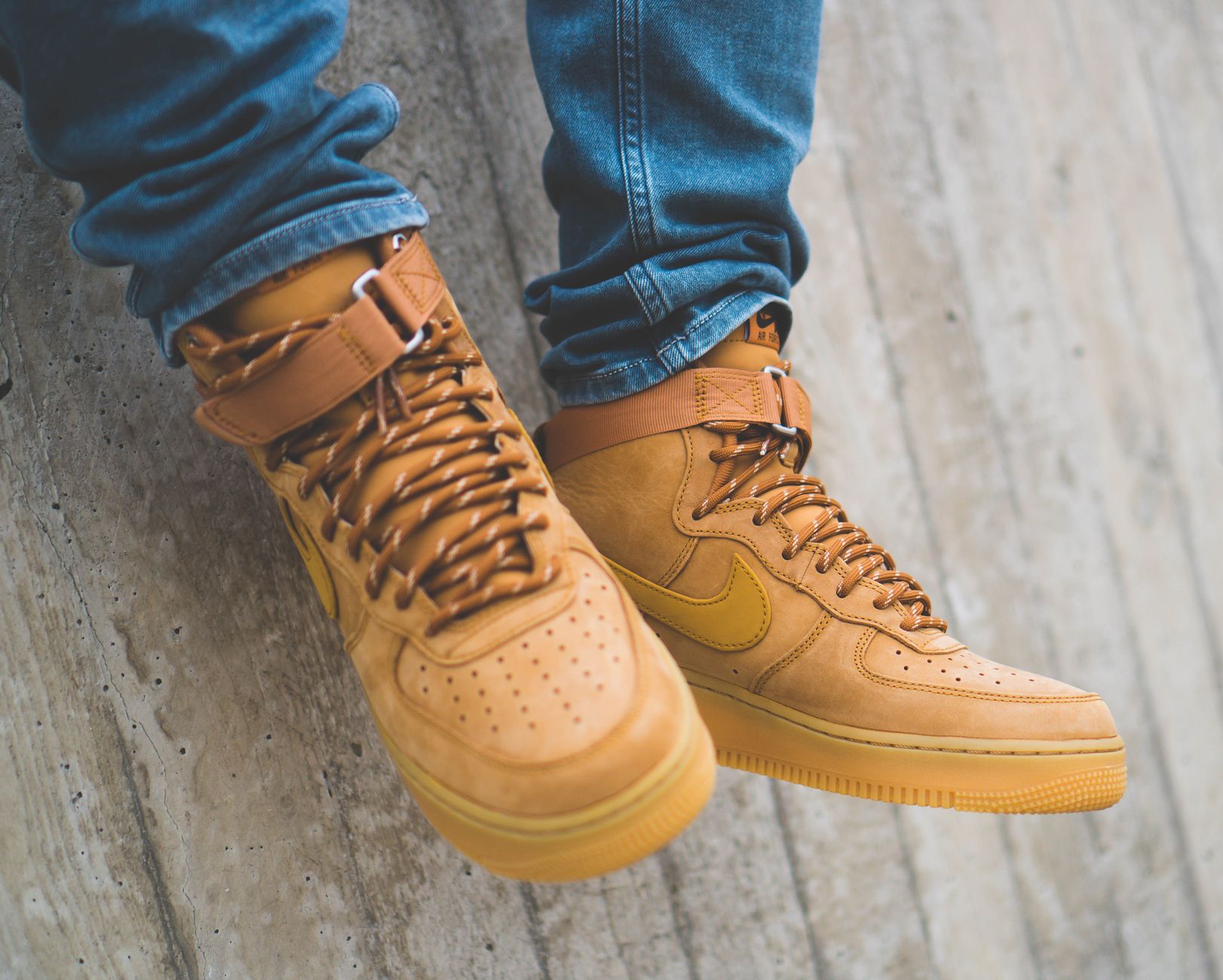
Nike's portfolio is broader than most buyers realize. According to Artificall's 2026 Nike analysis, the company's product categories span athletic and casual footwear, apparel with licensed team and league logos, performance equipment including bags, socks, sport balls, eyewear, and protective gear, plus sub-brands including Converse, Jumpman, Chuck Taylor, All Star, and Jack Purcell. That range matters because the value equation is not the same across all of it.
Performance running is where Nike's premium is most defensible in 2026. Zacks.com notes that running and football categories are showing double-digit growth, driven by renewed athlete-led innovation. Independent testing backs this up.
RunRepeat's 2026 guide to Nike running shoes gives the Nike Streakfly 2 a score of 84, highlighting its carbon-fiber plate, ZoomX foam, feather-light build, and suitability for 5K and 10K races. Reviewers note it is "not pricey all things considered" for a race-day shoe — meaning even at Nike's price point, the performance hardware justifies the cost relative to comparable carbon-plate racers from other brands. The Nike Vomero Plus earns RunRepeat's top designation for shock absorption among Nike running shoes, described as genuinely feeling premium. The Nike Structure 26, also scoring 84, serves stability runners with a more utilitarian value proposition — less hype, more function.
Lifestyle and fashion-adjacent products tell a different story. Converse Chuck Taylors and Jumpman lifestyle sneakers carry significant brand premium with limited performance justification. You are paying for cultural cachet, not biomechanical engineering. That is a legitimate reason to buy — but you should know that is what you are doing. Equipment and accessories (bags, socks, sport balls) are generally less scrutinized for value, and Nike's quality in these categories is broadly acceptable without being exceptional.
Nike's 2026 Innovation Pipeline: Is New Technology Justifying the Price?
The most significant product development Nike has made in 2026 is the launch of the Nike Mind line in January. According to Kavout's market analysis, the Mind series is a neuroscience-based footwear line focused on mental performance and recovery rather than traditional mechanical cushioning. The Mind 001 trainer is described as Nike's boldest attempt to move beyond foam and carbon plates into a new product category — one that, if it resonates with wellness-focused consumers, could provide the high-margin "halo" product Nike needs to justify premium pricing going forward.
Zacks.com also cites the Aero-FIT platform as a scalable innovation alongside Nike Mind, noting that Nike's expanding pipeline of differentiated products is a genuine competitive asset.
The honest caveat here is important. ZoomX foam and carbon-fiber plates — the innovations in shoes like the Streakfly 2 — have measurable, independently verifiable performance outcomes. Runners can feel the energy return. Biomechanists can test the plate stiffness. "Neuroscience-based" claims in the Nike Mind line are harder to evaluate independently. Until third-party researchers publish controlled studies on the Mind 001, you are largely taking Nike's word for the mental performance benefits. That does not make the product bad — the materials and construction may still be excellent — but it means the premium for that specific innovation claim is not yet validated the way ZoomX foam is.
Nike has navigated innovation cycles before. Kavout notes that the company recovered from similar slumps in the late 1990s and during the 2008 financial crisis through strategic reinvestment in product and marketing. The pattern suggests Nike's innovation pipeline is a genuine long-term asset, even if individual product claims require scrutiny.
How Nike Compares to Competitors in 2026: adidas, New Balance, and the Value Gap

The competitive landscape in 2026 is more challenging for Nike than at any point in recent memory. New Balance has closed the quality perception gap significantly — a YouGov quality net score of 43.6 versus Nike's 47.8 is a difference of roughly 4 points, not a chasm. More importantly, New Balance's value perception is stronger relative to its quality score than Nike's, meaning consumers feel they get more for their money from New Balance.
Adidas presents a similar picture. Its quality score of 43.5 is just below New Balance, but its value score of 26.7 — compared to Nike's 21.6 — suggests consumers feel adidas pricing is more proportionate to what they receive. That is a meaningful commercial advantage in an environment where inflation has made buyers more price-sensitive.
Beyond the traditional rivals, TIKR.com's 2026 Nike analysis specifically names Deckers — parent company of Hoka — as gaining share in running and lifestyle categories where Nike is under pressure. Hoka's maximalist cushioning and strong word-of-mouth among distance runners have made it a credible alternative to Nike's premium running line, often at comparable or lower price points.
The practical breakdown by category looks like this:
- Elite performance running: Nike's top-tier shoes (Vomero Plus, Streakfly 2, Alphafly) remain competitive with the best from adidas and Hoka. The premium is more defensible here.
- Everyday training and stability running: New Balance Fresh Foam and adidas Ultraboost offer comparable performance at prices that often undercut Nike's equivalent models. The value case for Nike weakens.
- Lifestyle and casual wear: New Balance 990 series and adidas Samba/Gazelle lines have captured significant cultural relevance in 2026. Nike's lifestyle premium is harder to justify on performance grounds alone.
- Apparel: Nike's training apparel is high quality, but adidas and Under Armour offer comparable technical fabrics at lower price points. Brand loyalty drives most Nike apparel purchases.
The Chronicle Journal / Finterra analysis frames this as "Consumer Polarization": high-income buyers are spending more on premium wellness products, which benefits Nike's top tiers, while inflation-squeezed mid-tier buyers are migrating to alternatives. If you are buying Nike's race-day shoes or premium training line, you are in the segment where the brand is holding up. If you are buying mid-range Nike sneakers for general use, you are in the segment where alternatives are winning on value.
Consumer Sentiment in 2026: What Real Buyers Are Actually Saying

Aggregated consumer feedback from Artificall's 2026 Nike analysis shows a consistent pattern: Nike earns genuine praise for product quality and style, but the most common frustration is not product failure — it is price. Consumers feel the products often deliver, but the price-to-value ratio is the sticking point. Secondary complaints include occasional service delays and customer experience issues, though these are noted as less frequent than the pricing frustration.
That distinction matters. If the dominant complaint were "the shoes fell apart" or "the materials feel cheap," that would be a product quality problem. The dominant complaint being "these cost too much" is a different problem — it means the product often does what it promises, but buyers are questioning whether the promise is worth the price relative to alternatives. That is a value perception problem, which is exactly what the YouGov data quantifies.
The consumer polarization trend reinforces this. High-income buyers purchasing Nike's premium wellness and performance tiers in 2026 report satisfaction — they are getting what they paid for and they can afford to pay for it. Mid-tier buyers, squeezed by inflation, are the ones most likely to feel the value gap acutely. If your household budget is under pressure, a ? Nike trainer competing against a ? New Balance with a quality score only 4 points lower is a hard sell.
Brand cultural relevance remains strong, particularly among younger consumers and competitive athletes. The Motley Fool's 2026 Nike analysis notes that the Nike brand has remained globally relevant, as evidenced by the resumption of positive revenue growth after a period of decline. The brand is not broken — it is under pressure to re-earn its premium at scale.
Nike's Financial Health in 2026: What It Means for Product Buyers
Most financial coverage of Nike focuses on stock price and investor returns. What matters more to you as a buyer is whether Nike's financial situation is causing it to cut corners, flood the market with discounted product, or compromise on materials. The short answer is: not yet, and the trend is moving in the right direction.
According to Chronicle Journal / Finterra, Nike reported revenue of ?.43 billion in Q2 FY2026 (ended November 30, 2025), a 0.6% year-over-year increase that beat analyst estimates. Yahoo Finance notes that Nike's balance sheet remains strong with a manageable debt load relative to cash, short-term investments, and accounts receivable — and that Nike has increased its dividend for 24 consecutive years, a signal of financial discipline rather than crisis management.
Critically for buyers, The Motley Fool reports that inventory fell 3% despite a 1% revenue increase in the latest quarter. That means Nike is clearing product more cleanly and relying less on heavy promotional discounting to move inventory. From a buyer's perspective, this is actually positive: it suggests that list prices are more likely to reflect genuine value rather than inflated anchors set up to be "discounted" to a fake deal price. A brand that is perpetually on sale is a brand that has lost confidence in its own pricing — Nike is moving away from that pattern, not toward it.
The shift toward more direct-to-consumer sales, which carry structurally better margins than wholesale, is another indicator that Nike is investing in long-term product quality rather than short-term volume. The financial picture does not suggest a brand that is about to start using cheaper materials to protect margins.
Final Recommendation: A Decision Framework by Buyer Type
Nike is not uniformly worth the premium — and it is not uniformly overpriced. The right answer depends on what you are buying and why.
Buy Nike at full price if:
- You are a competitive runner or athlete who will use performance-specific technology (carbon plates, ZoomX foam, Aero-FIT) in the way it was designed. The Streakfly 2 and Vomero Plus represent genuine engineering at a price that holds up against direct competitors.
- You are a high-income buyer for whom the ?-plus price point is not a meaningful budget strain and brand consistency matters to you across your athletic wardrobe.
- You are buying into a specific Nike innovation — like the Mind line — with the understanding that you are an early adopter of a technology whose claims are not yet fully independently verified.
Consider alternatives if:
- You need an everyday training shoe and are not a competitive racer. New Balance Fresh Foam and adidas Ultraboost offer quality scores within 4-5 points of Nike's at meaningfully lower prices. The value math favors them.
- You are buying Nike primarily for lifestyle or fashion reasons. New Balance's 990 series and adidas's current lifestyle lineup have comparable cultural relevance in 2026 at better value scores.
- Inflation has made your discretionary budget tighter. The 9% decline in global sporting goods spending in 2026 reflects real financial pressure — and the "good enough" alternatives that the Chronicle Journal / Finterra analysis identifies are genuinely good enough for most non-elite use cases.
Wait and watch if:
- You are interested in the Nike Mind line specifically. Give the neuroscience claims time to be tested by independent reviewers before paying the premium for mental performance benefits that have not yet been validated outside of Nike's own marketing.
- You are watching for Nike's "Win Now" initiative to produce results. Analysts at Yahoo Finance note the results are unlikely to fully materialize for several more quarters — meaning the product pipeline may look more compelling by late 2026 or early 2027.
Frequently Asked Questions
Is Nike quality actually better than adidas or New Balance in 2026?
Marginally, according to consumer perception data. YouGov's 2026 survey gives Nike a quality net score of 47.8 versus 43.5 for adidas and 43.6 for New Balance. That is a real but narrow lead — not the wide gap that would justify a significantly higher price across all product categories.
Why is Nike so expensive compared to other athletic brands?
Nike's premium pricing deliberately funds R&D, athlete endorsements, and marketing infrastructure at a scale most competitors do not match. According to FourWeekMBA, this is a strategic choice to position Nike as a premium performance brand rather than a volume player. Whether that investment produces products that justify the premium depends on the specific product category.
Are Nike running shoes worth it in 2026?
For competitive and serious recreational runners, yes — particularly at the top of the lineup. The Streakfly 2's carbon plate and ZoomX foam are validated by independent reviewers at RunRepeat, and the Vomero Plus leads Nike's lineup in shock absorption. For casual runners, alternatives from New Balance and Hoka offer comparable performance at lower prices.
Is Nike financially stable enough to keep investing in product quality?
Yes, based on current data. Nike's balance sheet is strong, inventory is improving, and the company has increased its dividend for 24 consecutive years, according to Yahoo Finance. There is no current evidence of cost-cutting that would compromise product materials or construction.
What is the Nike Mind line and should I buy it?
Nike Mind is a neuroscience-based footwear series launched in January 2026, focused on mental performance and recovery. It represents Nike's most ambitious attempt to create a new product category beyond mechanical cushioning. The concept is interesting, but the performance claims have not yet been independently verified by third-party researchers. If you are an early adopter comfortable with unverified innovation claims, it may be worth exploring. If you want proven performance technology, stick with established lines like the Vomero Plus or Streakfly 2.
How does Nike's value perception compare to competitors?
Poorly, relative to its quality score. Nike ranks ninth on value for money among US fashion brands in YouGov's 2026 survey, with a score of 21.6 — roughly 26 points below its quality score of 47.8. Adidas scores 26.7 on value, suggesting consumers feel adidas pricing is more proportionate to quality. This gap is the central commercial challenge Nike faces in 2026.