Researched and drafted with AI assistance. Reviewed and fact-checked by our editorial team before publishing. How we review · How we use AI
We may earn a commission when you use our links to make a purchase. Our editorial assessments are finalized before any affiliate link is applied. Full disclosure →
TL;DR — Key Takeaways
- Reliability data beats brand loyalty. Consumer Reports scores brands per category — a top-ranked dishwasher brand may rank poorly for ranges. Always check the specific category score before buying.
- Induction is the better default in 2026 for most households — faster, safer, and more efficient than gas, as long as you own or plan to buy magnetic-base cookware.
- Smart appliances are worth it only when they save time or energy. Look for Matter certification to avoid ecosystem lock-in.
- Clad stainless steel cookware outlasts non-stick 4:1 on a cost-per-year basis. Buy once, maintain it, keep it for decades.
- The biggest hidden cost in appliance buying is ecosystem risk — features tied to discontinued apps cost real money. Prioritize brands with documented software support timelines.
Home & Kitchen Buying Guide 2026: Appliances, Cookware & Smart Home
You already know that kitchen appliances are expensive. What most buying guides won't tell you: the model that scores highest today isn't necessarily the one that will still be working well — or even working at all — in five years.
This guide is built around one question that almost no one asks before buying: What predicts long-term satisfaction, not just opening-day specs? The answer involves reliability data from real owners, smart-home ecosystem risk, cookware material science, and a few counterintuitive findings about which specs actually matter.
Why Kitchen Appliance Buying Is Harder in 2026
The market is larger than it has ever been. The global kitchen appliances sector was valued at approximately USD 254.7 billion in 2025 and is forecast to reach nearly USD 381 billion by 2034, growing at a 4.58% CAGR, according to IMARC Group's 2026 Kitchen Appliances Market report. A separate analysis by Fortune Business Insights puts the 2026 figure at USD 287.66 billion, with a faster 7.21% growth rate — the two figures use different methodology, but both confirm the same underlying trend: more manufacturers, more SKUs, more decisions.
The built-in kitchen appliances segment alone is projected to reach USD 32.4 billion by 2035, growing from USD 20.5 billion in 2026, fueled by premiumization and smart-home integration according to GlobalMarketInsights (GMI). That growth is real and visible on showroom floors — but it also means the buying landscape is broader and faster-moving than any previous generation of homeowners faced.
Here's what that means practically: you're choosing from a wider product field during a period of significant appliance price inflation. Mintel's 2026 US Major Household Appliances report documents a direct shift in consumer purchasing behavior driven by higher prices — when a mid-range refrigerator runs $3,200 and a premium smart range hits $4,500, getting the decision wrong is genuinely costly.
The question most guides skip: "Will this still work reliably in year five, integrate with my actual home setup, and justify what I paid?" That framing — reliability + ecosystem fit + real value — is what this guide is built around.
The Reliability-First Framework: What Consumer Data Actually Shows
Marketing copy is nearly useless for predicting how long a dishwasher will last. "Commercial-grade" and "professional-style" appear on products at every price tier. What actually predicts whether you'll need a service call in year three is repair-rate data from real owners at scale — and the most rigorous source of that data in the US is Consumer Reports.
CR's 2026 brand rankings are built from two independent sources: lab tests on appliances purchased at retail (not manufacturer samples), and ownership surveys from tens of thousands of CR members reporting real-world experiences. Their current test pool includes approximately 50 wall ovens, 75 cooktops, 130 dishwashers, 190 ranges, and nearly 300 refrigerators — large enough sample sizes to produce statistically meaningful reliability signals.
Two things are worth understanding about how CR scores:
Reliability and performance are separate. A brand can achieve excellent lab scores — fast preheat, even baking, thorough cleaning — while still ranking poorly on reliability if its real-world repair rate runs high. You want both scores to be strong. Assume neither is until you check.
CR applies a value adjustment. Brands delivering high-performing, reliable appliances at lower price points receive a ranking boost. The highest-ranked brand is not necessarily the most expensive — it's the most efficient use of money at its price tier.
The practical takeaway: Before finalizing any appliance purchase, look up the brand's reliability score for that specific category. A brand that ranks well for refrigerators may rank poorly for dishwashers. Brand loyalty across categories is a habit that costs money.
Major Appliance Categories: What the Specs Actually Mean
Each category has specifications that genuinely predict satisfaction — and marketing features that rarely do.
Refrigerators: What to Prioritize
Capacity (roughly 4–6 cubic feet per household member) and compressor type are the two specs that most affect day-to-day satisfaction. Dual-compressor models maintain separate humidity levels for the fridge and freezer, which extends food freshness meaningfully.
Ice makers are consistently the most-repaired component in refrigerators. If you don't specifically need one, removing it from your requirements list immediately reduces your long-term repair risk and cost.
Built-in refrigerators command a $2,000–$5,000 premium over comparable freestanding models. That premium is justified when flush integration with custom cabinetry is a genuine design priority — not when the kitchen layout accommodates a freestanding unit equally well.
Energy Star certification reduces annual operating costs by 9–10% on average compared to non-certified models at equivalent performance levels. Over a 10-year lifespan, that adds up to real money.
Ranges and Cooktops: Induction vs. Gas in 2026
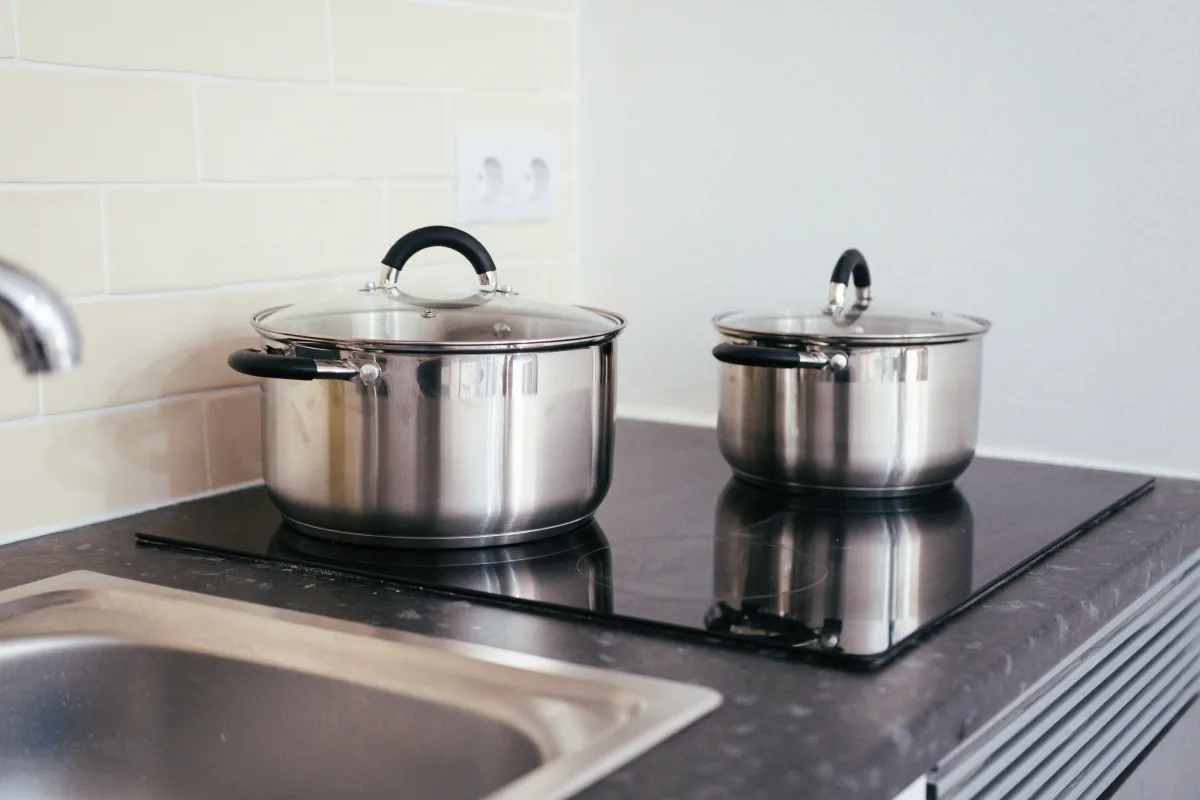
The debate has a clearer answer now than it did five years ago.
Induction advantages: Water boils roughly 25–50% faster than on gas. The cooking surface itself doesn't get hot, reducing burn risk significantly. Energy efficiency is higher — approximately 85–90% of generated heat reaches the cookware versus around 40% for gas. Cleanup is dramatically easier: spills don't bake onto a hot surface.
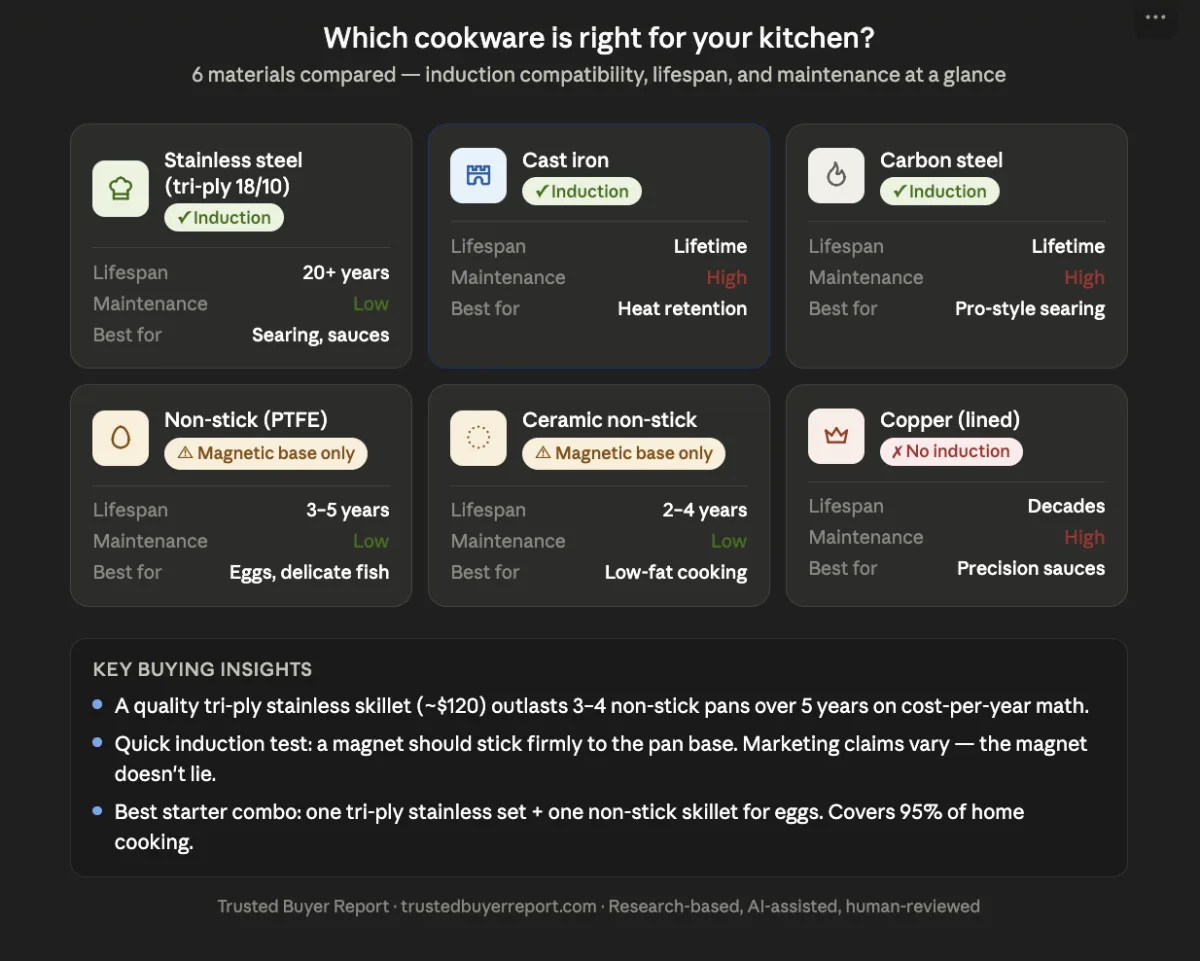
The one real tradeoff: induction requires magnetic-base cookware. Cast iron, carbon steel, and magnetic stainless steel work. Aluminum, copper, and non-magnetic stainless do not — unless they have a magnetic clad base. If you're switching from gas to induction, budget $150–$400 for new cookware if your current set isn't compatible.
Gas remains the preference of many experienced cooks for immediate visual feedback and tactile heat control. It's a legitimate choice — not an outdated one.
Electric coil and standard radiant electric are difficult to recommend except when budget is the absolute overriding constraint. They're slower and less precise than either induction or gas on every objective measure.
Dishwashers: The Underrated Spec
Decibel rating is the most underrated dishwasher specification. Here's a practical scale:
- 38 dB — nearly silent; normal conversation is possible right next to it
- 44 dB — noticeable but non-disruptive
- 52 dB — audible from adjacent rooms; a genuine quality-of-life issue in open-plan homes
If you have an open kitchen-living layout, a dishwasher rated above 46 dB will frustrate you. This is rarely emphasized in product listings.
Third-rack utility (a shallow top rack for utensils and small items) adds meaningful loading flexibility. Soil sensors that adjust cycle length based on actual water cleanliness save both water and energy compared to fixed-duration cycles — they're worth the small price premium they add.
Wall Ovens: Two Features Worth Paying For
True European convection — a third heating element surrounding the fan, rather than a fan simply circulating existing heat — produces genuinely more even baking results across the entire oven cavity. If you bake regularly, this is worth the price differential.
Self-cleaning type matters more than most buyers realize. Pyrolytic cleaning (high-heat burn-off) is thorough but raises kitchen temperature significantly and takes 2–4 hours. Steam cleaning is faster and gentler but handles only light soiling. Understand which you're buying and whether it matches your cleaning habits.
Smart temperature probe integration — where the oven shuts off automatically when food hits a target internal temperature — is one of the genuinely useful smart features available. It prevents overcooking reliably. This is the right bar for evaluating any smart appliance feature: does it solve a real problem or add unnecessary complexity?
Smart Kitchen Appliances: What IoT Actually Delivers in 2026

The smart appliance segment is growing at over 20% CAGR, according to Market Research Future. That growth contains a wide range of actual usefulness — from features that save real time and energy to features that exist primarily as marketing.
Cognitive Market Research identifies five smart product categories: smart ovens, smart dishwashers, smart refrigerators, smart cooktops/cookware, and smart scales and thermometers. A rough value ranking by real-world utility:
High value at low cost: Smart scales and Bluetooth meat thermometers. A thermometer that alerts your phone when your roast hits 135°F prevents overcooking every time you use it. Straightforward utility, low price.
High value at moderate cost: Smart refrigerators with internal cameras. Checking fridge contents from the grocery store is genuinely useful — the cameras require regular cleaning, but the core feature works as described.
Conditional value: Smart dishwashers with remote start are convenient primarily if you run them on off-peak electricity rates and the rate differential is significant in your area. Otherwise, delayed start timers on standard dishwashers accomplish the same thing.
Legitimate time-saver: Smart ovens with remote preheat. If your commute is 20 minutes, starting preheat from the car means the oven is ready when you walk in. Real utility.
The Ecosystem Risk Problem — and How to Avoid It
Here's the scenario that has cost real money for real buyers: a Wi-Fi-enabled range purchased in 2021, companion app discontinued in 2024. The hardware still works, but half the features paid for are gone. This is ecosystem risk, and it's now as important a purchase criterion as build quality.
The Matter protocol significantly reduces this risk. Matter — the unified smart-home standard backed by Apple, Google, Amazon, and Samsung — means a certified appliance can communicate with any compatible hub. If you switch ecosystems in three years, your appliances don't become incompatible. When comparing two otherwise similar smart ranges, Matter certification is a meaningful tiebreaker.
GMI research specifically identifies Samsung as a standout among built-in appliance brands for IoT connectivity, AI-assisted cooking, and smart-home integration. Samsung's SmartThings ecosystem is one of the two most developed smart-home platforms available in 2026 (alongside LG's ThinQ). The honest caveat: verify that the companion app has received updates within the past six months before purchasing either brand's smart appliances.
Features that rarely justify their price premium: voice-activated door locks on refrigerators, touchscreen panels on dishwashers that duplicate functions already available via physical buttons, and app-dependent controls with no manual override. If the appliance becomes non-functional when the app goes down, that's a design flaw, not a feature.
Designers at Harvey Jones put it well: the best smart kitchen innovations deliver consistent cooking results and easier routines — not added complexity. Use that standard when evaluating any smart feature.
Brand Landscape 2026: Who Leads and Where
GMI identifies 15 major players in the built-in kitchen appliances market. Here's where each tier sits and — critically — where individual brand strengths actually apply.
Premium Tier: Miele, Gaggenau, Siemens
Miele engineers for a 20-year product lifespan, testing appliances to 20 years of average use before release. A Miele built-in oven typically runs $4,500–$7,500 — but when you model total cost of ownership against an $1,800 alternative that needs replacement in 8–10 years, the math often favors Miele. Harvey Jones specifically cites Miele's long-life engineering as aligned with sustainable kitchen investment.
Gaggenau occupies an even higher tier and is primarily relevant for bespoke luxury kitchen projects.
Siemens delivers strong engineering at a slightly more accessible price point within the premium tier — worth considering for buyers who want premium-level reliability without Miele's full price premium.
Mid-Premium Tier: Bosch, KitchenAid, Electrolux
Bosch dishwashers consistently appear in Consumer Reports member surveys among the most reliable in their category — a multi-generation track record, not a single-cycle result. If you're buying one dishwasher and want confidence, Bosch is the most data-supported choice at this price tier.
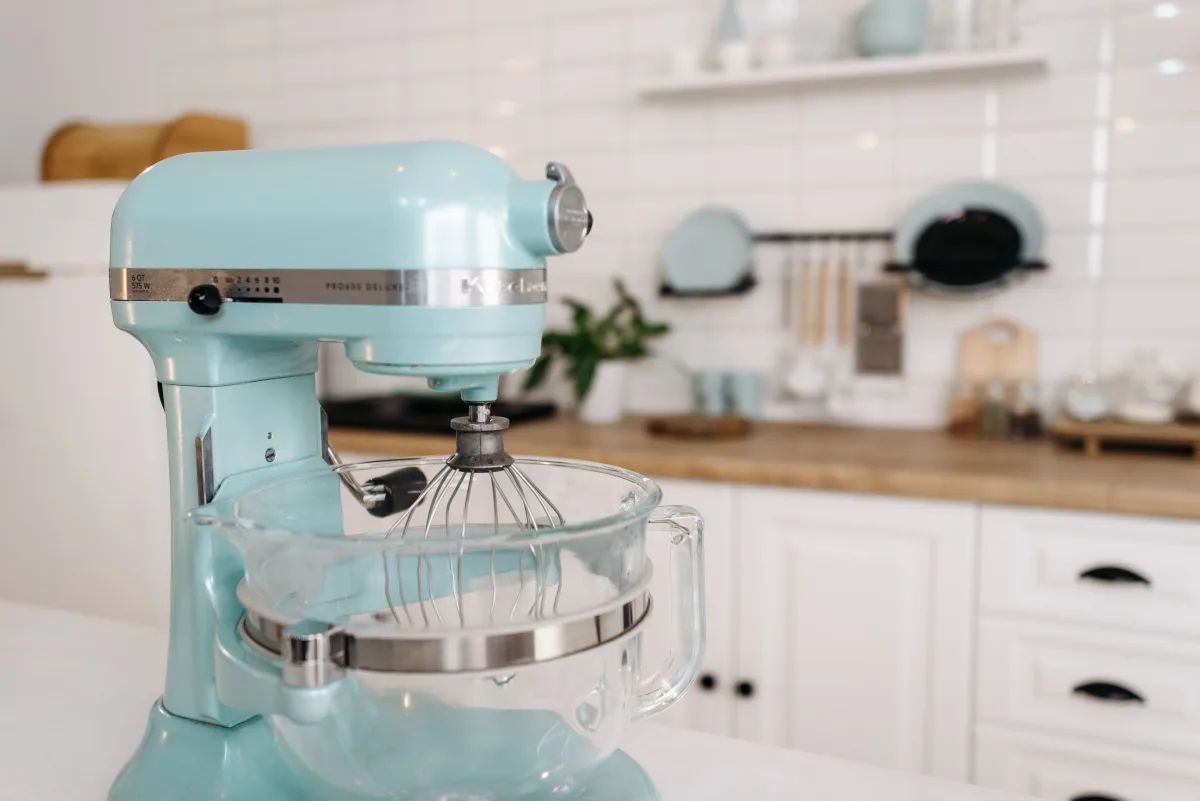
KitchenAid's stand mixer is the benchmark for what premium mid-range build quality looks like in small appliances: all-metal construction, a 10-year motor warranty, and a replacement-parts ecosystem unchanged for decades. The Artisan series is the right starting point for most buyers. (See our comparison of KitchenAid vs Cuisinart vs stand mixer alternatives in 2026 for the full breakdown.)
Electrolux offers strong performance in ranges and refrigerators with competitive reliability scores and represents one of the best combinations of performance and price at this tier.
This mid-premium segment delivers the best reliability-per-dollar for most households.
Technology-Forward Tier: Samsung, LG
Both lead on IoT integration and smart-home compatibility. LG's ThinQ and Samsung's SmartThings are the two most developed smart-home appliance platforms in 2026. Before buying either brand's smart appliances, verify the current software support commitment and confirm recent app update activity.
Value Tier: Whirlpool, Haier
Whirlpool offers wide parts availability, accessible pricing, and adequate reliability for budget-conscious buyers. Parts are easy to find and local repair services are familiar with Whirlpool products — an underappreciated factor in long-term cost.
Haier has expanded its global footprint significantly and delivers competitive value, particularly in refrigeration. Defensible when budget is the primary constraint.
Cookware Materials Guide: What Lasts, What Doesn't, and What Works on Induction
Cookware material determines heat distribution, reactivity, weight, maintenance requirements, and induction compatibility. Buying the wrong material for your cooktop type makes every meal harder than it needs to be.
| Material | Heat Distribution | Induction Compatible | Maintenance Level | Estimated Lifespan |
|---|---|---|---|---|
| Stainless Steel (tri-ply, 18/10) | Excellent (aluminum core) | Yes | Low — dishwasher safe | 20+ years |
| Cast Iron | Excellent retention, slow response | Yes | High — season & hand-wash | Lifetime |
| Carbon Steel | Good retention, faster response than cast iron | Yes | High — requires seasoning | Lifetime |
| Non-stick (PTFE) | Adequate | Only if base is magnetic | Low — but coating degrades | 3–5 years |
| Ceramic Non-stick | Adequate | Only if base is magnetic | Low — more heat tolerant | 2–4 years |
| Copper (lined) | Superior responsiveness | No (unless clad) | High — polishing required | Decades with care |
The real cost comparison: A quality tri-ply stainless 10-inch skillet at around $120 will outlast three or four $25–$40 non-stick pans over five years, making it cheaper per year of use. PTFE coatings degrade with high heat and metal utensil contact — once the coating flakes, replacement is necessary on safety grounds. Ceramic coatings tolerate higher heat but lose non-stick properties faster than PTFE in real-world cooking.
Clad construction — an aluminum core bonded between stainless steel layers — is the standard for serious home cooks. It combines even heat distribution across the entire pan (not just the base) with a non-reactive cooking surface. This is the material combination to start with if you're building a set from scratch.
Cast iron is the best value if you're willing to maintain it. Pre-seasoned cast iron from Lodge is functional out of the box and available at a fraction of the cost of European brands. Enameled cast iron (Le Creuset, Staub) adds the non-reactive surface of enamel without seasoning requirements — at a corresponding price premium.
Induction compatibility is increasingly important to verify before purchase. The quick test: a magnet should stick firmly to the bottom of the pan. If it doesn't, the pan won't work on induction. "Induction-compatible" marketing claims vary in accuracy — the magnet test is reliable where label claims sometimes aren't.
When to Buy: Timing Your Appliance Purchase to Save Money
Appliance pricing follows predictable patterns. Knowing them can save $300–$800 on a major purchase with no compromise on the model you want.
Best times to buy major appliances:
- September–October: Manufacturers introduce new models, and retailers discount previous-year inventory aggressively.
- Black Friday and Cyber Monday: Genuine discounts on major appliances, particularly for bundled purchases (buying multiple appliances together unlocks larger percentage discounts).
- Memorial Day, Labor Day, and Presidents' Day weekends: Traditionally strong appliance sale periods, though less dramatic than end-of-model-year clearance.
When to wait: If a model was just released (particularly in smart appliances), waiting 3–6 months often reveals reliability issues — and early adopter pricing — that early purchasers absorb on your behalf. For technology-forward brands, first-generation smart features frequently improve with software updates; buying gen-2 hardware is usually wiser than buying gen-1 smart.
Use Trusted Buyer Report's Price Trend Analyzer to check historical pricing data before committing to any major appliance purchase.
Who Should Buy What: Decision Guide by Use Case
Not every household needs the same kitchen setup. Here's how to match the right choice to your actual situation.
You're a renter or planning to move in the next 3 years: Prioritize cookware over appliances — it moves with you. Invest in a quality stainless tri-ply set and cast iron skillet. For appliances, don't spend premium on built-ins you'll leave behind; freestanding mid-tier is the right call.
You're outfitting a forever home or long-term renovation: Built-in appliances add measurable resale value in premium markets. The Miele lifetime-cost calculation starts to make sense here. Invest in reliability data from Consumer Reports for each category before committing.
You cook frequently and want precision: Induction range + tri-ply stainless + cast iron is the combination with the strongest evidence base. Gas is a legitimate alternative if tactile feedback matters to you; skip electric entirely.
You want smart home integration without ecosystem risk: Choose Matter-certified appliances from brands with active app development history. Start with a Bluetooth thermometer (low cost, immediate utility) before committing to a full smart appliance ecosystem.
Budget is the primary constraint: Whirlpool for major appliances (parts availability, repair familiarity), Lodge cast iron and a single quality stainless skillet for cookware. Buy these once and maintain them rather than replacing cheap alternatives every three years.
Frequently Asked Questions
Is induction better than gas for home cooking in 2026? For most households, yes. Induction is faster (water boils 25–50% faster), more energy-efficient, and safer than gas. The only substantive tradeoff is cookware compatibility — induction requires magnetic-base pots and pans. If your existing cookware isn't compatible, budget $150–$400 for a new set. The ongoing efficiency and safety benefits typically outweigh that one-time cost within two to three years.
Which kitchen appliance brand is most reliable? Reliability varies by category, not brand. A brand that ranks among the most reliable for dishwashers may rank poorly for ranges. Consumer Reports' brand reliability scores — built from tens of thousands of owner survey responses — are the most rigorous publicly available source. Check the specific category score for the appliance you're buying, not the brand's overall reputation.
What does Matter certification mean for smart appliances? Matter is a unified smart-home connectivity standard backed by Apple, Google, Amazon, and Samsung. A Matter-certified appliance can communicate with any Matter-compatible hub or smart-home system. This protects you from ecosystem lock-in — if you switch from Amazon Alexa to Apple HomeKit in three years, your appliances remain compatible. It's a meaningful tiebreaker when comparing two otherwise similar smart appliances.
How long should kitchen appliances last? Industry benchmarks: refrigerators 10–15 years; dishwashers 9–12 years; ranges and ovens 13–15 years; microwaves 9–10 years. Premium brands (Miele, Bosch) often exceed these benchmarks. Value-tier brands may fall below them. Actual lifespan depends heavily on usage intensity, maintenance, and water quality (for dishwashers and refrigerators with ice makers).
Should I buy non-stick cookware or stainless steel? Both have a place, but they're not interchangeable. Non-stick (PTFE or ceramic) is ideal for eggs and delicate fish — low-fat, low-heat applications where sticking is the primary concern. Stainless steel handles searing, browning, deglazing, and high-heat cooking that would damage a non-stick coating. A practical setup: one quality non-stick skillet for eggs plus a tri-ply stainless set for everything else covers most cooking scenarios.
What's the best time of year to buy kitchen appliances? September through October for previous-year inventory clearance as new models arrive. Black Friday for bundled appliance purchases. Memorial Day, Labor Day, and Presidents' Day weekends for promoted sales. Avoid buying smart appliances at launch — wait 3–6 months for first-generation reliability issues to surface and for prices to stabilize.
Reviewed by the Trusted Buyer Report editorial team. This article was researched and drafted with AI assistance, then fact-checked by a human before publishing. Affiliate commissions may be earned through links on this page; they do not influence our recommendations, which are finalized before any link is placed. Methodology · Affiliate disclosure · AI ethics