
How this guide was researched: This guide is based on publicly available pricing data from key comparison platforms, publisher announcements, and verified third-party marketplace listings. It does not reflect hands-on purchasing tests conducted by Trusted Buyer Report. All price examples are sourced from named platforms and reflect data available as of May 2026.
Drafted with AI assistance and fact-checked by our editorial team. We may earn a commission from purchases made through links on this page. Full disclosure →
TL;DR — The Short Answer
- Safe cheap keys exist. The risk is the seller, not the price.
- Best starting points: Allkeyshop and CDKeyPrices for Steam; Eneba for PS5 (check region tags carefully); Newegg and Allkeyshop for Xbox.
- Red flag: More than 70–80% off a game released in the last four weeks. Pause and verify.
- Biggest mistake buyers make: Ignoring region restrictions on PS5 keys. A UK key will not work on a US account — period.
- Best money-saving move: Set a price alert on Allkeyshop or CDKeyPrices instead of buying at launch.
The Biggest Misconception About Cheap Game Keys
Most players fall into one of two camps: they either assume discounted game keys are outright scams, or they buy any deal that looks cheap without checking the source. Both approaches cost money.
The reality is more precise. Some discounted keys are completely legitimate — sourced from authorized regional distributors, surplus stock, or retailers competing on margin. Others carry real risk because they originated from stolen payment methods or unauthorized bulk purchases. The price alone does not tell you which category a key falls into. The seller does.
That distinction is the entire foundation of buying game keys intelligently. The rest of this guide is built around it.
Why Game Prices Vary So Dramatically — and What That Means Before You Buy
Three structural forces drive price variation across platforms and key sellers:
Regional pricing. Publishers set different base prices for different markets. A key sourced from Eastern Europe or Southeast Asia may legally (or, depending on the publisher's terms, illegally) be resold in North American or Western European markets at a lower price. This is the most common source of legitimate price differences — and the most common source of redemption failures when regional restrictions apply.
Currency fluctuations. A key priced in British pounds or euros can become meaningfully cheaper in dollar terms depending on exchange rates at the time of purchase.
Distributor surplus. Authorized distributors sometimes receive more keys than they can sell at full retail price and offload the remainder to secondary sellers at a discount. This is the cleanest source of cheap keys and the one that carries essentially no revocation risk.
Understanding these forces helps you distinguish a legitimate deal from one that should prompt a second look. A 34% discount on Forza Horizon 6 for Xbox is consistent with distributor competition and reflects real market dynamics. A 75% discount on the same title the week of launch is not.
How Game Key Comparison Sites Work
Key comparison platforms function similarly to flight search engines: they aggregate prices from dozens of third-party sellers in real time and display them side by side. Most do not sell keys directly — they connect you to the seller offering the lowest price. The critical variable is which sellers the platform vets.

Here are the main platforms and what each is actually good for:
Allkeyshop
Allkeyshop is one of the most comprehensive comparison tools available for US buyers. It covers Steam, Xbox Game Pass, and PS Plus pricing in USD, EUR, and GBP, and lists sellers across UK, US, and EU markets. Importantly, it includes editorial content — buying guides, news, and context on seller track records — alongside raw price data. That editorial layer matters: a bare price listing tells you the cost; Allkeyshop's surrounding content tells you whether a seller has a strong dispute resolution record and whether a particular key type has known regional restrictions.
It also has a buyer protection program that is explicitly documented on the platform — a meaningful signal that the site takes seller accountability seriously rather than treating every transaction as purely the buyer's risk.
CDKeyPrices
CDKeyPrices.com tracks PC, PSN, Xbox, Switch, Steam, EA, Epic, BattleNET, Rockstar, Ubisoft, and GOG keys in a single interface. The platform is unusually transparent about risk: it explicitly states that it lists stores purchasing from authorized distributors to minimize revocation risk, and it warns buyers that using stolen or region-restricted keys can result in platform bans.
That kind of upfront disclosure is a meaningful differentiator. A platform that openly explains how keys can go wrong is more likely to have done the work of filtering out the sellers most likely to cause those problems.
GOCDKEYS
GOCDKEYS displays prices from named sellers — Kinguin, Difmark, and others — alongside percentage discounts and platform tags (PC Digital, PlayStation 5, Xbox). It also maintains a pre-order calendar covering upcoming releases through 2026 and beyond, which is useful for tracking how prices evolve from pre-order through post-launch. On a single day, you might see the same title listed at three different prices from three different sellers for the same platform — the comparison is only valuable if you also check each seller's regional compatibility, which reputable aggregators display alongside the price.
Eneba
Eneba functions as a direct marketplace rather than a pure aggregator, which means it is a single point of accountability for the transaction. Its listings include explicit region tags (e.g., "United Kingdom," "Global") directly on each product card — a model of transparent regional labeling that other sellers should be benchmarked against. Eneba also offers an 11% cashback structure on purchases, which functions as an effective discount on top of the listed price. The mechanics of cashback redemption vary, and it's worth reading the terms before relying on that figure.
The key distinction: a price aggregator that vets its listed sellers is meaningfully different from one that lists any seller willing to pay for placement. The former gives you a curated shortlist; the latter puts all due diligence on you.
Buying Cheap Steam Keys in 2026: What to Check Before You Purchase
Steam keys can be sold by any retailer Valve authorizes — this is by design, and it is what makes the third-party Steam key market both large and legitimate when sourced correctly. Buying a Steam key from a reputable third-party seller is not unusual or risky. It is what Valve's own ecosystem is built to accommodate.
Allkeyshop, CDKeyPrices, and GOCDKEYS all aggregate Steam key prices from multiple sellers simultaneously. A search for any major title typically returns five to fifteen price options within seconds. Deep discounts of 80%+ on a brand-new $60 release should prompt scrutiny; the same discounts on a two-year-old title are often legitimate.
Region locks are the most common source of failed Steam key redemptions. A key sourced from, say, Eastern Europe or Southeast Asia may carry a restriction that prevents activation on a North American or Western European account. Reputable comparison platforms display regional compatibility on each listing. If that information is absent, treat the listing as incomplete and look elsewhere.
Practical approach: check Steam's current sale price first, then run a comparison on Allkeyshop or CDKeyPrices. If the third-party price is more than 15–20% lower, verify regional compatibility and seller review history before purchasing. For most back-catalog titles, legitimate third-party sellers will consistently undercut Steam's own sale prices.
Buying Cheap PS5 Keys in 2026: Region Restrictions Are Non-Negotiable

PlayStation's key market operates under a fundamentally different architecture than Steam's. PSN codes are region-specific — they are tied to either PSN wallet credit or specific game entitlements, and they are not universal redemption codes. A UK PSN code will not work on a US PSN account, full stop. There is no workaround short of creating a separate regional account, which creates its own complications around DLC compatibility and trophy syncing.
When you see "cheap PS5 keys" listed on comparison platforms, you are looking at discounted PSN wallet top-ups or regional game codes. The region tag on each listing is not optional reading — it is the most important piece of information on the page.
Eneba handles this well in practice. Its region tags appear directly on each product card, making it straightforward to filter for "Global" listings that work on US accounts. Allkeyshop specifically tracks PS Plus subscription pricing in EUR, USD, and GBP, which is useful if you are evaluating whether a PS Plus subscription is cheaper through a key seller than through Sony directly — in many cases, particularly during major retail sale windows, it is.
If you're still deciding whether PS5 is the right ecosystem for your library, our Gaming Buyer's Guide 2026: Consoles, PCs & Accessories covers platform selection in detail. And for a broader comparison of PS Plus value against competing subscription services, see our breakdown of the best game subscription services in 2026.
Buying Cheap Xbox Game Keys in 2026: Game Pass Changes the Math
Xbox's key ecosystem has a structural advantage that PlayStation's does not: a single Xbox key typically works across both Xbox consoles and Windows PC via Xbox Live and the Microsoft Store. Cross-platform compatibility means the effective value of an Xbox key discount is higher than the nominal percentage suggests.
For titles not available on Xbox Game Pass, comparison platforms list Xbox keys at meaningful discounts. GOCDKEYS data shows recent titles already trading below retail within weeks of release — discounts in the 15–35% range are common, and back-catalog titles routinely reach 50–70% off.
Newegg is specifically worth checking for Xbox, particularly during major retail sales events like Black Friday. Newegg competes aggressively on Xbox account credit and combo deals during these windows.
Xbox Game Pass fundamentally changes the calculus of buying individual keys. If a title is currently on Game Pass, purchasing a standalone key is rarely the right financial decision unless you need permanent ownership or know the game is rotating out of the service. Allkeyshop tracks Game Pass pricing directly in EUR, USD, and GBP, making it straightforward to compare subscription cost against buying titles individually — a comparison that often favors Game Pass for players who finish more than four or five games per year.
For a detailed breakdown of Game Pass tiers, PS Plus tiers, and Nintendo Online compared side by side, see our full game subscription services comparison for 2026.
How to Tell a Safe Key Seller from a Risky One
The legal status of buying a key and the risk of buying a key are two separate things. As CDKeyPrices.com states directly: buying a key is legal; the risk lies in the source of that key. A key purchased from a seller who obtained it through stolen credit cards or unauthorized bulk purchases can be revoked by Steam, PlayStation, or Xbox at any time — even months after you have been playing the game.
Characteristics of trustworthy sellers:
- They clearly state regional restrictions on every listing.
- They have a named buyer protection or dispute resolution policy.
- They have verifiable user reviews from identifiable accounts, not anonymous five-star ratings.
- They are transparent about their sourcing — sellers that purchase from authorized distributors will generally say so, because it is a competitive differentiator.
Red flags worth pausing on:
- More than 70–80% off a game released within the past four weeks.
- No stated region on a PlayStation key listing.
- No dispute resolution process.
- No verifiable seller identity.
- Discounts dramatically out of step with what competing sellers list for the same title.
The worst-case outcome — a revoked key — is entirely avoidable by spending two extra minutes on seller verification before purchasing.
When to Buy: Timing Often Beats Platform-Switching
Most cheap game key guides focus on where to buy and ignore when. Timing a purchase correctly often produces larger savings than switching between sellers.
Game prices follow a predictable decay curve. Most titles drop 20–40% within three to six months of launch, and 50–70% within 12–18 months, regardless of platform or seller. Major retail sale windows — Black Friday, Steam's Summer and Winter Sales, PlayStation's seasonal promotions — consistently produce the deepest simultaneous discounts across all platforms and key sellers. These are the windows when Newegg, Eneba, and comparison platforms all compete most aggressively, and when even recently released titles can see meaningful price drops.
The four-to-eight-week post-launch window is often underrated. New releases are rarely discounted at launch, but GOCDKEYS data consistently shows titles appearing at 15–35% off within weeks of release as distributors begin competing on margin. Buying at launch when a game will be meaningfully cheaper six weeks later is the most common form of unnecessary overspending in this category.
Pre-order keys occasionally offer savings, but they carry the risk of the game underperforming expectations or being delayed. The post-launch discount window typically delivers comparable savings with zero delivery risk.
Price alert tools on Allkeyshop and CDKeyPrices let you set a target price for a specific title and receive a notification when that threshold is reached. Setting an alert at 40% below retail and purchasing when triggered is a more disciplined approach than browsing comparison sites impulsively.
GameStop as an Alternative: Still Worth Checking?
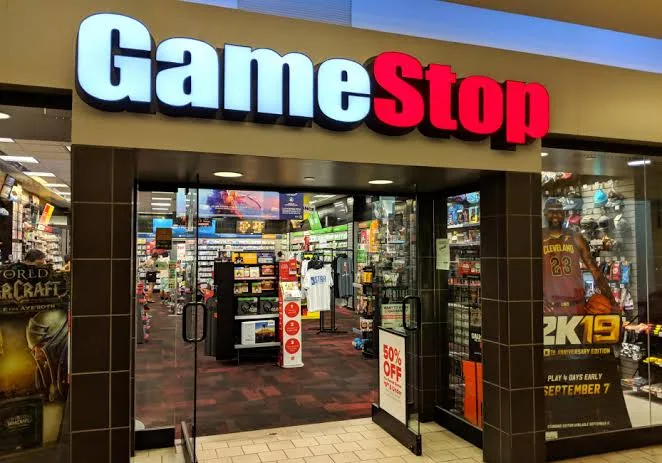
If you prefer buying from a US-based physical or hybrid retailer rather than a key marketplace, GameStop remains an option for console digital codes and PC game cards. It is worth understanding where GameStop fits in the ecosystem — and where it does not. Our GameStop review for 2026 covers its current digital offerings, trade-in value, and how it compares to online key sellers on price.
Frequently Asked Questions
Are cheap game keys legal to buy?
Yes. Purchasing a game key from a third-party seller is legal in most US jurisdictions. The legal risk is to the seller if the key was obtained through unauthorized means — not to the buyer. However, if Steam, PSN, or Xbox determines a key in your account was sourced from stolen payment methods, the key can be revoked from your library with no recourse. Buying from sellers that source from authorized distributors minimizes this risk substantially.
What is the difference between a price aggregator and a direct key seller?
A price aggregator like Allkeyshop, CDKeyPrices, or GOCDKEYS collects prices from multiple third-party sellers and displays them side by side. It does not usually sell keys directly. A direct seller like Eneba or Kinguin sells from its own inventory, giving you a single point of accountability for the transaction. Aggregators give you broader price comparison; direct sellers give you clearer responsibility for dispute resolution. The vetting standards of whichever platform you use determine how much you can trust the sellers it lists.
Can I use a cheap PS5 key on any PSN account?
No. PSN codes are region-specific. A key purchased for the UK PSN store will not activate on a US PSN account. Always verify the region tag on any PlayStation key listing before purchasing. If a listing does not display region information, treat it as incomplete and look elsewhere.
Does Xbox Game Pass make buying individual Xbox keys pointless?
Not entirely. Game Pass covers a rotating library, and titles do leave the service. For games you want to own permanently, or for titles not currently available on Game Pass, buying a discounted key remains cost-effective. Allkeyshop tracks Game Pass pricing alongside individual key prices, making it straightforward to compare the two options for any specific title.
What discount percentage should make me suspicious of a key listing?
A discount exceeding 70–80% on a game released within the past four weeks is a meaningful red flag. Legitimate distributor surplus rarely produces discounts that deep on brand-new releases. Older titles, indie games, and back-catalog titles can legitimately reach these levels — but for recent AAA releases at that discount depth, additional scrutiny of the seller's sourcing and review history is warranted.
Which platforms are best for comparing prices across Steam, PS, and Xbox at the same time?
Allkeyshop and CDKeyPrices both cover Steam, PSN, Xbox, Nintendo Switch, Epic Games Store, and others in a single interface. GOCDKEYS is strong for PC Digital and console comparisons with named seller attribution. Eneba functions as a direct marketplace with transparent regional labeling. Using two in combination — one aggregator for breadth, one direct seller for accountability — is a practical approach for most buyers.
Final Recommendation: A Three-Step Framework for 2026
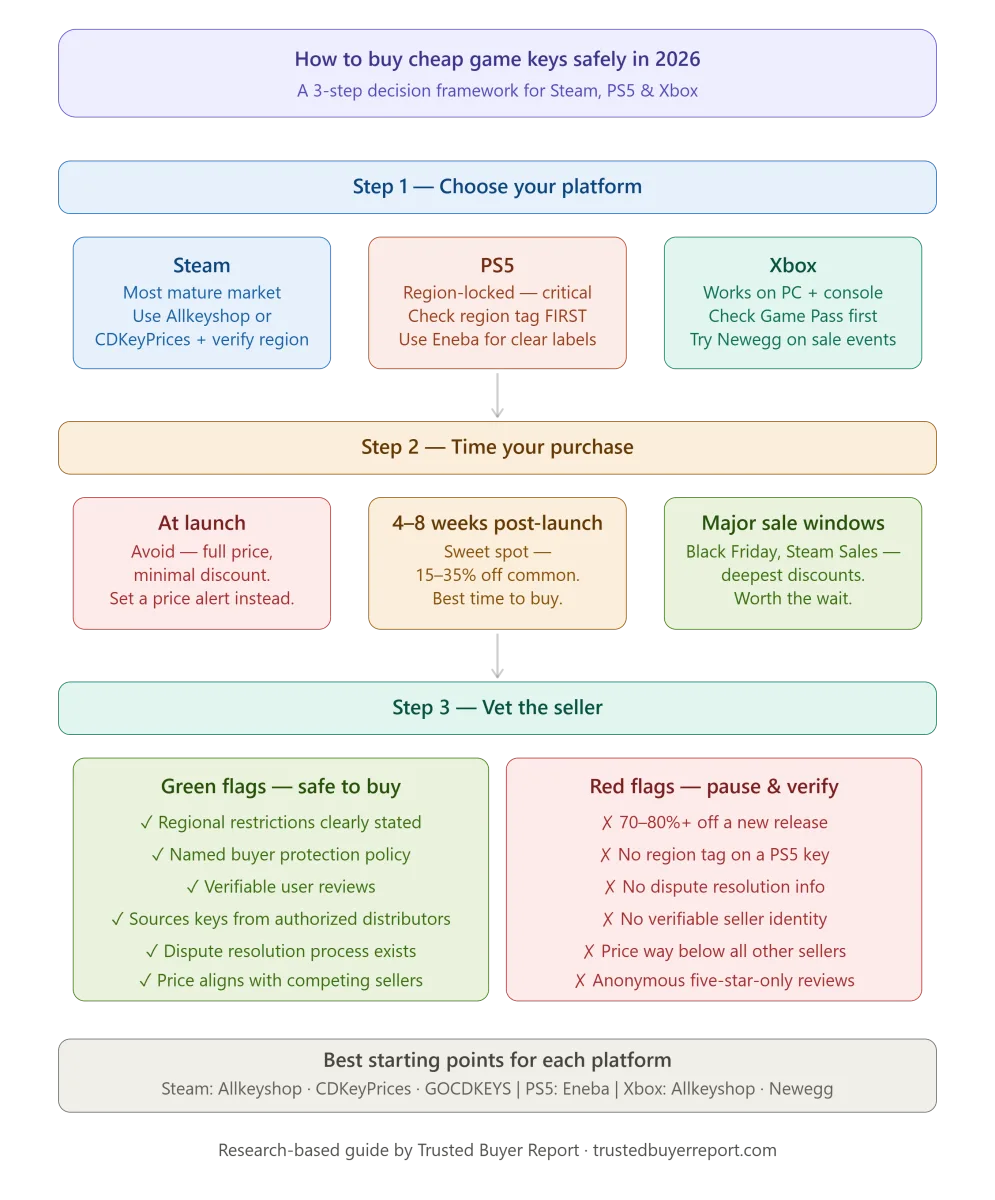
Step 1 — Start with platform. For Steam, the third-party key market is mature and generally safe when you use established aggregators and verify regional compatibility. For PlayStation, treat regional restrictions as the primary filter — a cheap key that does not work on your account region is not cheap, it is worthless. For Xbox, check Game Pass availability first; if the title is on the service, a key purchase is hard to justify unless you need permanent ownership.
Step 2 — Evaluate timing. If the game launched within the past four weeks, the post-launch discount window has not fully opened. Set a price alert on Allkeyshop or CDKeyPrices and wait, or hold for the next major sale event. The savings from patience consistently exceed the savings from platform-switching.
Step 3 — Vet the seller. Look for named regional restrictions, a stated buyer protection policy, and verifiable user reviews. Avoid listings with no region tag, no dispute resolution, and discounts dramatically out of step with competing sellers. This takes two minutes and is the most reliable protection against a revoked key.
The cheap game key market in 2026 is large, competitive, and — navigated with these three filters — genuinely useful for reducing what you spend on games without reducing what you play.
Related Reading on Trusted Buyer Report
If you're building or upgrading your gaming setup, these guides cover the rest of the picture:
- Gaming Buyer's Guide 2026: Consoles, PCs & Accessories — full platform selection guide
- Best Gaming Laptops 2026: Balancing Performance, Price & Portability
- Best Gaming Controllers 2026: Third-Party vs Official
- Best Gaming Keyboards & Mice 2026: Wired vs Wireless
- Best Gaming Desks 2026: Space & Cable Management
- Best Game Subscription Services 2026: Xbox Game Pass vs PS Plus vs Nintendo Online
- Best Retro Gaming Consoles 2026: NES Classic, Sega, Analogue
- GameStop Review 2026: Still Relevant?
This article was drafted with AI assistance and fact-checked by our editorial team before publishing. Affiliate links are labeled. How we review → · How we use AI →