You're standing in a surf shop — or more likely, scrolling through one at midnight — looking at a wall of boards, wetsuits, and accessories that all claim to be the best option for 2026. The price tags range from ? to ?,000 for what appears to be the same category of product. The marketing copy on every tag says something about "performance," "innovation," and "next-level feel." None of it tells you what you actually need to know: which piece of equipment will make you better in the water, and which one will collect dust in your garage by March.
This guide cuts through that noise. It covers the best surfing & water sports equipment 2026 has to offer across the categories that matter most — surfboards, SUP boards, wetsuits, and the fast-growing adjacent sports — with real market data, material science context, and skill-level filtering so you can match gear to where you actually are, not where you wish you were. If you're also researching broader gear categories, the Outdoor & Sports Gear: The 2026 Buyer's Guide provides useful context on how water sports equipment fits into the wider recreational gear landscape.
Surfboard vs. SUP Board in 2026: Which Should You Buy First?
This is the question most new buyers avoid asking directly, because they already have an answer in their head. They want a surfboard because surfing looks cooler. But the honest comparison between surfboards and stand-up paddleboards (SUPs) is not even close for most buyers — and the data reflects this.
According to Future Market Insights, the surface water sports equipment market — which includes SUP, kayaking, and windsurfing alongside traditional surfing — was valued at USD 38.70 billion in 2025 and is projected to reach USD 42.18 billion in 2026. The surfing equipment segment specifically, per Mordor Intelligence, sits at USD 4.85 billion in 2026. The size difference reflects participation reality: paddle sports reach a far broader audience because the barrier to entry is dramatically lower.
| Dimension | Surfboard | SUP Board |
|---|---|---|
| Entry cost (beginner) | ?–? (soft-top) | ?–? (inflatable) / ?–?,400 (rigid) |
| Skill floor | High — requires wave reading, pop-up technique, balance | Low — most people stand within 30 minutes |
| Wave dependency | Complete — unusable without surf | None — works on flat water, rivers, and surf |
| Transport & storage | Rigid only — requires roof rack or van | Inflatable options pack into a backpack |
| Fitness benefit | High — but only during active wave riding | High — continuous core and upper body engagement |
The SUP case is strongest for buyers who don't live within driving distance of consistent surf, or who want year-round usability. OutdoorGearLab's 2026 tested picks include the Bote Wulf Aero (Editors' Choice) as a premium inflatable SUP that handles everything from flatwater touring to small surf, and the Advenor Extra Wide as a Best Buy for buyers who want stability and value without the premium price tag. For buyers who want a rigid board with crossover surf capability, the Surftech Lido Utility Armor earned an Editors' Choice designation, while the Tahe Beach Performer sits in the mid-range rigid category for intermediate paddlers.
Surfboards, by contrast, reward commitment. The StrategyR research published via PR Newswire projects the surfboards segment at a 4% CAGR — healthy growth, but driven largely by experienced surfers upgrading equipment rather than mass beginner adoption. If you're a first-time buyer who purchases a shortboard before mastering the pop-up, the odds are high you'll abandon the sport within a season. A SUP removes that dropout risk entirely.
The one scenario where a surfboard makes sense as a first purchase: you live within 15 minutes of a consistent beach break, you've already taken lessons, and you have someone to coach your progression. Otherwise, start with a SUP or a high-volume soft-top longboard.
How the 2026 Surfing Equipment Market Shapes What You Can Actually Buy
Market trends aren't abstract when they directly determine what's on the shelf and at what price. Three forces are reshaping what buyers encounter in 2026: sustainability regulation, Asia-Pacific manufacturing growth, and surf park expansion.
The global surfing equipment market was valued at approximately USD 4.76 billion in 2025 and is expected to reach USD 6.78 billion by 2035 at a 3.60% CAGR, according to Expert Market Research. Within the broader surface water sports category, Mordor Intelligence identifies Asia-Pacific as advancing at a 6.78% CAGR — the fastest of any region — driven by coastal tourism growth in Australia, New Zealand, Indonesia, and emerging markets across Southeast Asia. That regional growth is expanding global manufacturing capacity, which means more competitive pricing for buyers in North America and Europe.
North America remains the largest single surfing equipment market, supported by long coastlines, an established surf culture, and a rapidly expanding network of artificial wave facilities. ResearchAndMarkets.com's analysis specifically highlights US surf parks using artificial wave technology as a driver of equipment demand — a buyer in a landlocked state who has access to a wave pool now needs the same gear as a coastal surfer, which is pulling new demographics into the market.
Sustainability regulation is the most disruptive force on product availability. Mordor Intelligence notes that EU and California sustainability mandates are steering brands toward bio-based composites and recycled materials in both boards and wetsuits. This is not purely a marketing trend — it's a compliance requirement that is changing what materials manufacturers can use and, consequently, what products reach retail. Buyers who prioritize sustainability will find more legitimate options in 2026 than in any prior year, but should still verify performance claims independently rather than accepting eco-labeling at face value.
Surfboard Materials in 2026: What Each Actually Means for Performance
Market Research Future segments the surfing equipment market by material across five categories: epoxy, polyurethane, fiberglass, carbon fiber, and polyethylene. Each serves a distinct buyer profile, and understanding the differences will prevent you from spending money on a material that doesn't match your skill level or wave conditions.
Polyurethane (PU) with Fiberglass Laminate
This is the traditional construction method that has dominated surfboard manufacturing for decades. PU foam has a flex pattern that experienced surfers describe as "alive" — the board responds to rail pressure in a way that feels intuitive once you've developed the sensitivity to notice it. The downside is weight and fragility: PU boards ding easily, absorb water through cracks, and require more maintenance. They're the right choice for intermediate to advanced surfers who surf regularly enough to justify the upkeep.
Epoxy over EPS Foam
Epoxy-laminated EPS foam boards are lighter, more buoyant, and significantly more durable than PU equivalents. For beginners and small-wave surfers, that extra buoyancy makes paddling easier and catching waves more forgiving. The trade-off is stiffness: epoxy boards don't flex the same way PU boards do, which can feel unresponsive in powerful, overhead surf. At a 6-foot beach break, most intermediate surfers won't notice the difference; at double overhead reef surf, advanced surfers will.
Carbon Fiber
Carbon fiber reinforcement is increasingly used in high-performance shortboards and premium SUPs to reduce weight without sacrificing stiffness. You'll typically find it as a tail patch or rail reinforcement rather than a full carbon construction. The weight savings are real — a carbon-reinforced shortboard can be meaningfully lighter than its fiberglass equivalent — but the cost premium is significant. Carbon fiber is a legitimate upgrade for advanced surfers who surf powerful waves frequently; it's an unnecessary expense for anyone else.
Polyethylene (Soft-Top)
Soft-top boards have undergone a genuine quality revolution. The foam deck and rubber-like surface that once made them feel like pool toys now comes in performance shapes — fish outlines, mid-length templates, and even shortboard profiles — that allow beginners to progress without switching equipment immediately. Surf schools use soft-tops because they're safe in crowded lineups, but the best 2026 soft-tops are legitimately fun boards for casual surfers of any experience level.
Bio-Based and Recycled Materials
Bio-based resins and recycled foam cores are appearing in premium board lines as a direct response to EU sustainability mandates. Patagonia's use of Yulex (a natural rubber alternative to neoprene) in wetsuits is the most established example of this shift, but board manufacturers are beginning to follow. Performance parity with conventional materials is improving but not yet consistent — if you're considering a bio-based board, ask the manufacturer for independent test data rather than relying on marketing language.
Wetsuits in 2026: Thickness, Technology, and the Sustainability Shift
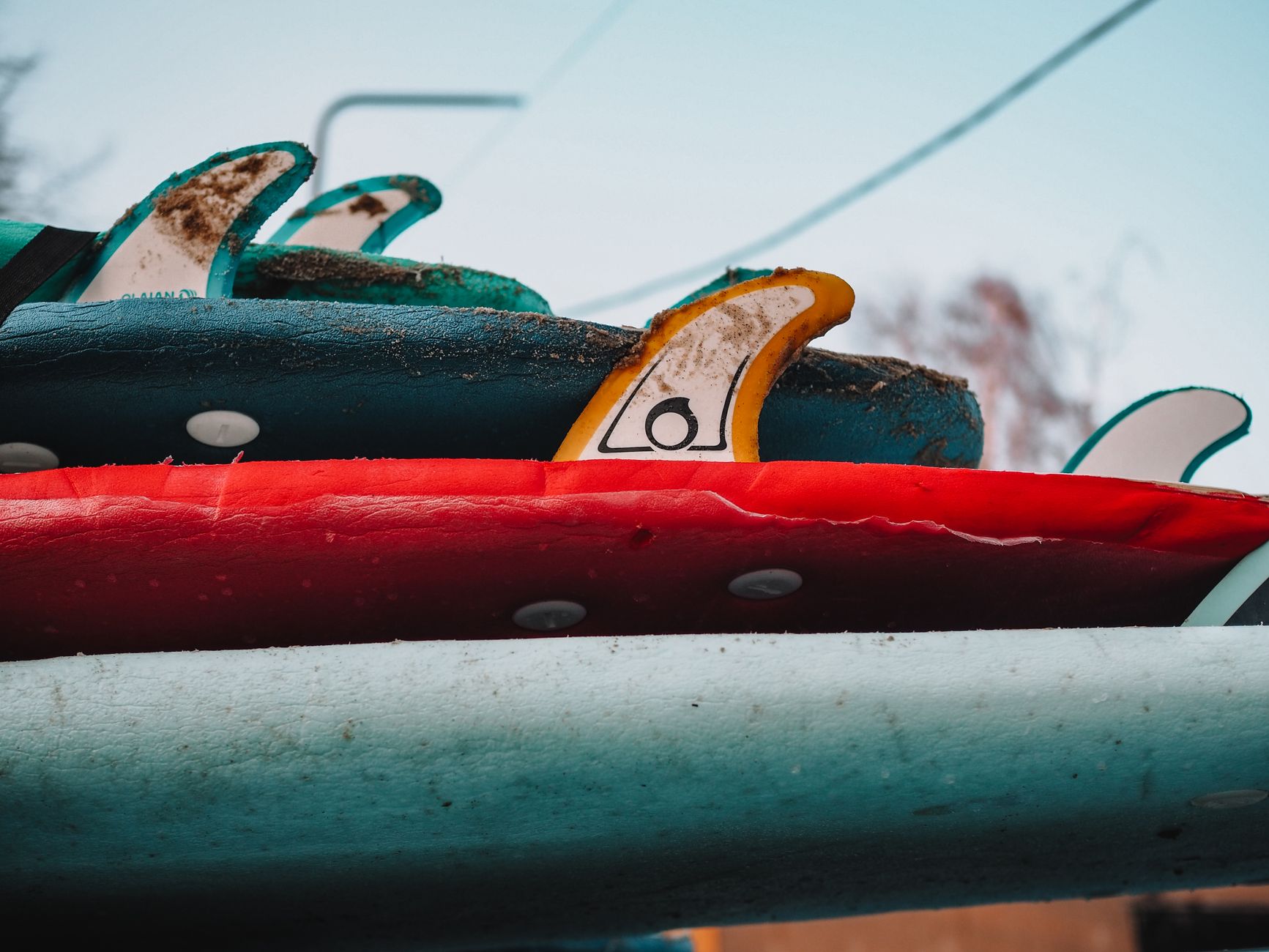
Wetsuit selection is more systematic than board selection, which makes it easier to get right. The primary variable is water temperature, and the primary specification is thickness.
Wetsuit thickness is expressed in millimeters as a two- or three-number combination. In a 3/2mm suit, the first number (3mm) is the chest thickness and the second (2mm) is the limb thickness. The chest is thicker because that's where heat loss is greatest. Here's a practical temperature guide:
| Water Temperature | Recommended Thickness | Additional Gear |
|---|---|---|
| Above 72°F (22°C) | Shorty or rash guard | None required |
| 65–72°F (18–22°C) | 2/2mm or 3/2mm | Optional gloves |
| 58–65°F (14–18°C) | 3/2mm or 4/3mm | Boots recommended |
| 50–58°F (10–14°C) | 4/3mm or 5/4mm | Boots, gloves, hood |
| Below 50°F (10°C) | 5/4mm or 6/5mm | Full system essential |
Seam construction is the second most important variable and the most commonly overlooked. Flatlock stitching (thread passes through the neoprene) is the least expensive but allows water to flush through seam holes — acceptable in warm water, problematic in cold. Blind-stitched seams don't penetrate the neoprene fully, dramatically reducing flushing. Glued and blind-stitched (GBS) seams add an adhesive layer for near-waterproof performance. At cold water temperatures, GBS seams are not optional.
The sustainability shift in wetsuits is more advanced than in boards. Limestone-based neoprene — sold under brand names like Yulex (used by Patagonia) and Geoprene — offers comparable warmth and stretch to petroleum-based neoprene with a meaningfully lower environmental footprint. These materials are now available in mid-range price tiers, not just premium products. The StrategyR report projects the Surfing Apparel & Accessories segment at a 3.5% CAGR, reflecting steady demand growth rather than the explosive growth seen in board categories.
OutdoorGearLab awarded the Speedo Surf Knit Pro (Women's) a Best Buy designation in 2026, demonstrating that high-performance wetsuits are available below the premium price tier. The Surf Knit Pro uses a knit fabric facing that reduces drag and improves flexibility compared to standard neoprene facings — a genuine technical advantage, not just a marketing claim.
Equipment by Skill Level: What Beginners, Intermediate, and Advanced Surfers Actually Need
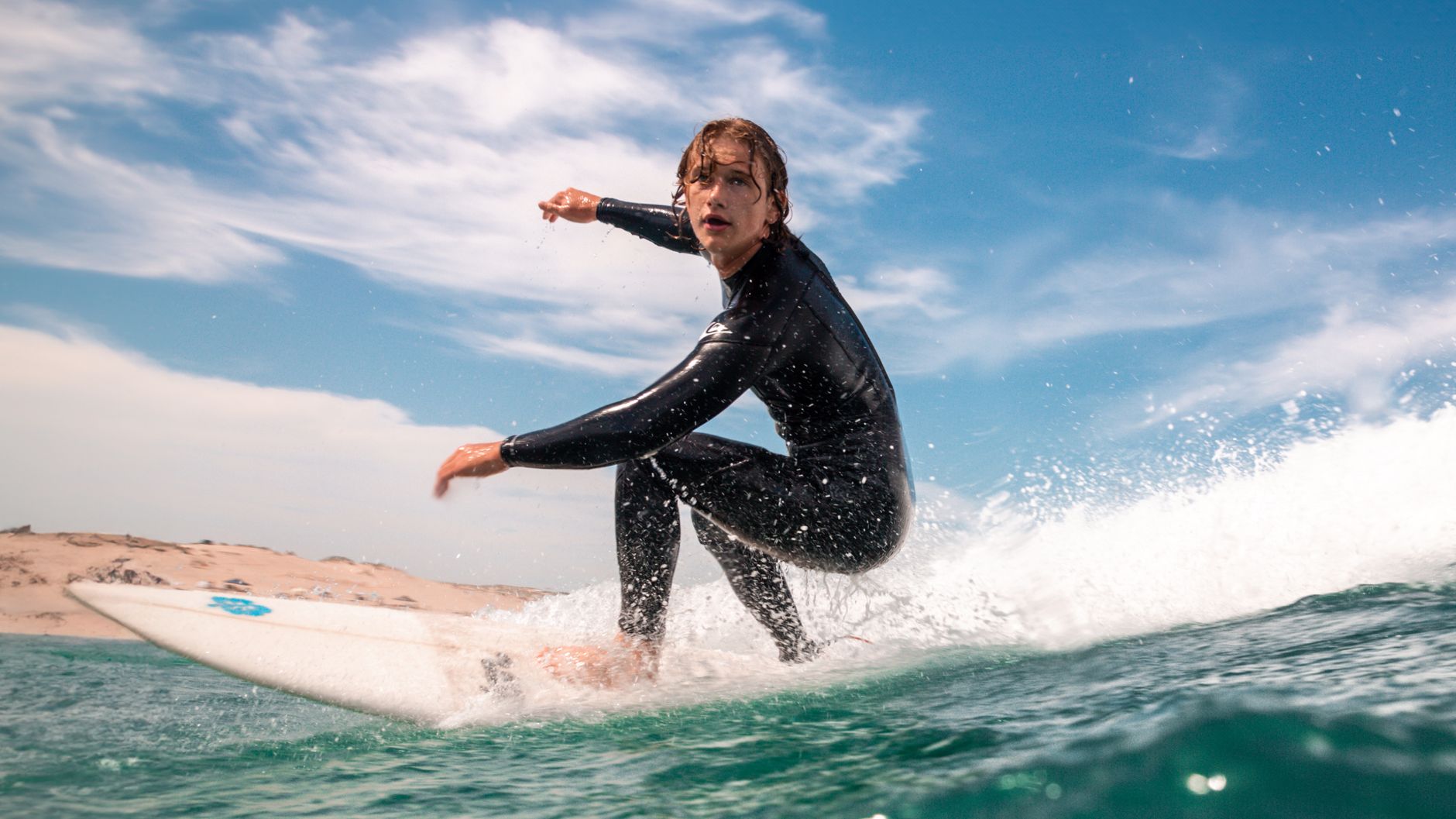
Market Research Future explicitly segments the surfing equipment market by skill level — beginner, intermediate, advanced, and professional — confirming that manufacturers design and price products for these distinct tiers. The most expensive mistake in surf gear purchasing is buying equipment designed for a skill level you haven't reached yet.
Beginners
Volume and stability are the only metrics that matter at this stage. A board with high volume (measured in liters) is more buoyant, easier to paddle, and more forgiving when you miss a wave or lose your balance. The rule of thumb: your board volume in liters should be at least 100% of your body weight in kilograms as a beginner — so a 75kg surfer needs at least a 75-liter board, and ideally more. A soft-top longboard or high-volume funboard in the 8–9 foot range, paired with a leash and a 3/2mm wetsuit appropriate for your local water temperature, covers 90% of beginner needs. Don't buy fins separately yet — the fins that come with a beginner board are adequate for this stage.
Intermediate Surfers
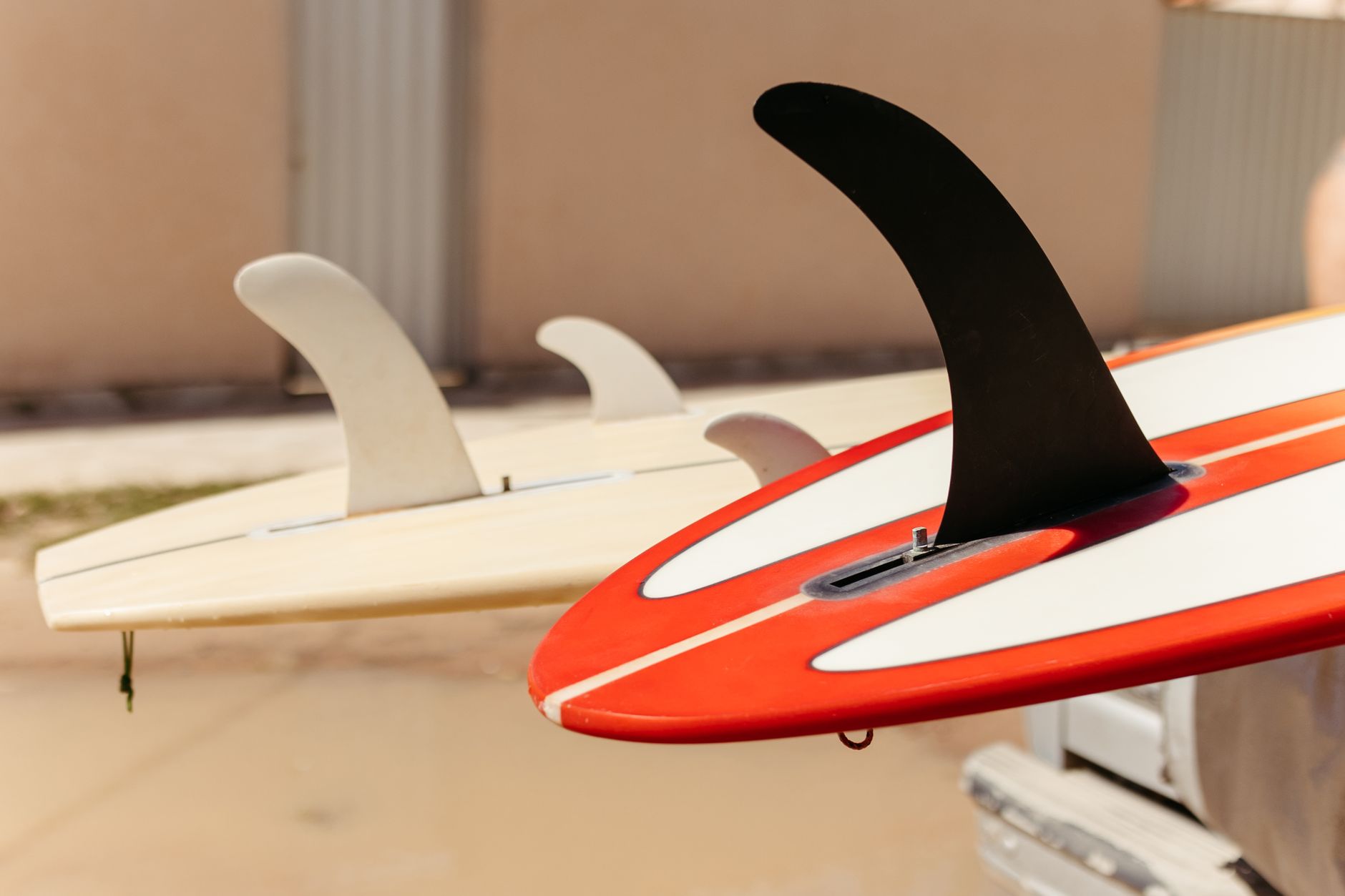
The most common intermediate plateau is caused by riding a board that is too small. Surfers who progress from a longboard and immediately jump to a 6'0" shortboard lose the paddle power and wave-catching ability that built their confidence in the first place. A mid-length board in the 7–8 foot range, or a higher-volume shortboard (fish or hybrid shape), bridges this gap more effectively. This is also the stage where fins become a meaningful variable. The two dominant fin systems — FCS II and Futures — are not interchangeable, so choose a board with the system you want to commit to. FCS II fins can be swapped without a key, which makes experimentation easier; Futures fins are fixed with a screw but many surfers find them to have a more solid connection to the board.
Advanced and Professional Surfers
Market Research Future also segments the market by wave type — beach breaks, point breaks, reef breaks, slab breaks, and big waves — because advanced surfers genuinely need different equipment for different conditions. A fish shape (wide, twin-fin, low rocker) excels in small, mushy beach break waves where speed generation is the priority. A step-up (slightly longer and narrower than your everyday board) handles overhead surf with more control. A gun (long, narrow, high rocker) is designed specifically for big-wave conditions and is dangerous to ride in anything less. Impact vests are non-negotiable for hollow reef breaks and big-wave sessions — they protect against the impact of the water surface itself, not just underwater objects.
Beyond Surfboards: The Water Sports Equipment Categories Growing Fastest in 2026
The surface water sports equipment market is substantially larger than the surfing segment alone. Future Market Insights projects the overall market to expand from USD 42.18 billion in 2026 to USD 99.86 billion by 2036 at a 9.00% CAGR — an incremental opportunity of USD 57.68 billion over the forecast period. That growth is distributed across several categories worth understanding if you're deciding where to invest your equipment budget.
Surf Foiling (Hydrofoil Surfing)
Surf foiling is the fastest-growing niche within surfing. A foil board uses a hydrofoil — a mast, fuselage, and wing assembly mounted below the board — to lift the rider above the water surface once sufficient speed is achieved. The practical benefit is dramatic: foil surfers can ride small, weak waves that would be completely unrideable on a conventional board. The learning curve is steep and the injury risk during the learning phase is real (the foil components are hard metal), but the equipment has become more accessible in 2026 with shorter masts and larger front wings designed specifically for beginners. Entry-level foil setups start around ?,500–?,000 for the foil assembly alone, separate from the board.
Kitesurfing
Modern leading-edge inflatable (LEI) kites are substantially more forgiving than earlier designs — they relaunch from the water more easily and have a wider wind range, which reduces the frustration that caused many beginners to quit in previous years. Foil kites offer superior upwind performance and work in lighter winds but are harder to relaunch and less forgiving for beginners. For most new kitesurfers, an LEI kite in the 9–12 meter range (depending on local wind conditions) paired with a twin-tip board is the standard starting configuration.
Kayaking and Canoeing
Kayaking spans three fundamentally different equipment categories. Recreational kayaks have wide, stable hulls designed for calm water and casual use — they track poorly but are nearly impossible to capsize. Touring kayaks have longer, narrower hulls optimized for efficiency over distance, with storage hatches for multi-day trips. Whitewater kayaks have short, highly rockered hulls designed for maneuverability in moving water, not speed or tracking. Buying the wrong hull type is the most common kayaking equipment mistake. Paddle length and blade shape also vary by activity — a whitewater paddle is shorter and has a more aggressive blade angle than a touring paddle.
For footwear across paddling activities, OutdoorGearLab awarded the Astral Loyak AC and Astral Brewer 3.0 Editors' Choice designations in 2026 — both offer the drainage, grip, and protection that paddlers need without the bulk of a water boot.
Government investment in marinas, water parks, and coastal infrastructure is expanding access to all of these categories. Future Market Insights specifically identifies government tourism and sports investment policies as key drivers of