
The Real Problem: Why Most 'STEM' Labels Mean Very Little
Here is a fact that should change how you shop: the term "STEM toy" has no legal or regulatory definition anywhere in the United States or European Union. Any manufacturer can print it on a box without meeting a single documented standard. That gap between marketing language and measurable learning is why so many parents have a drawer full of "educational" kits their child touched once and abandoned.
As Inspirely puts it directly: "The right STEM kit is worth buying. The wrong one is an expensive toy. The distinction comes down to two things: independent authentication and open-ended depth." That is not a marketing line — it is a diagnostic test you can apply before spending ? to ? on a kit.
The pattern of disappointment is consistent. A kit arrives, the child builds one fixed model in 25 minutes, and the completed object sits on a shelf because there is nothing left to do with it. The packaging claimed it "teaches engineering," but the only decision the child made was which color piece to snap on first. Thoson's 2026 guide notes that many toys carrying the STEM label "deliver no genuine learning" — the label is applied to products that are fundamentally novelty items with a science-adjacent theme.
The global STEM toys market is growing fast. Fortune Business Insights and Grand View Research both document strong compound annual growth rates driven by rising parental awareness and digital integration. But market growth means more products on shelves, not better products. The volume of low-value kits is rising alongside the genuine ones. That makes your ability to evaluate a product more important in 2026 than it has ever been.
What Makes a STEM Toy Genuinely Educational: A 2026 Evaluation Framework
Before you look at any specific product, build a mental checklist. These seven criteria separate a kit that teaches from one that merely entertains for an afternoon.
Independent Authentication
A self-awarded badge means nothing. Look for named third-party verification — STEM.org authentication is the most commonly cited standard in 2026. According to Inspirely, a STEM.org authenticated kit has been "independently assessed against documented learning outcomes — the educational claim is verified, not just printed on the box." Museum partnerships and curriculum alignment documentation from named educational publishers are also credible signals.
Open-Ended Depth
Ask one question: what does the child do after the first build? A kit with no extension activities, no variation potential, and no experimental variables has a hard ceiling. The best kits function as learning platforms — the structure gets built, then modified, then broken down and rebuilt differently. That iterative cycle is what the actual scientific process looks like.
Age-Appropriate Challenge
The kit should sit in the child's zone of proximal development. Too easy produces boredom within 15 minutes. Too hard without scaffolding produces frustration and permanent abandonment. The instructions should be readable by the child independently, but the decisions required should demand genuine thinking.
Hands-On Mechanism
Physical manipulation of components builds spatial reasoning and fine motor skills in ways that screen-based simulations do not fully replicate. The National Science Foundation, cited by GM Insights, states that "children who have contact with STEM reasoning early on develop greater problem-solving capabilities" — and the research base for that finding is grounded in physical, hands-on engagement.
Parental Engagement Design
Quality kits include guidance for adults — not instructions that tell parents to do the building for the child, but prompts that help adults ask open questions. Toytooth identifies parental engagement as essential to the learning outcome, not optional. A kit that ignores the adult entirely misses a significant multiplier.
Safety Certifications
For children under 14, verify CE marking (EU), ASTM F963 (US), or EN71 (UK/EU) as appropriate to your region. These are baseline requirements, not indicators of educational quality, but their absence is a red flag about the manufacturer's overall standards.
Durability and Reusability
Components that survive repeated use support iterative experimentation. A kit whose pieces break after two builds cannot support the trial-and-error process that genuine engineering learning requires. If reviews consistently mention fragile connectors or brittle plastic, that is a functional limitation on the learning experience, not just a product quality complaint.
Understanding the STEM Toy Market in 2026: What the Data Tells Parents

Knowing where the market is heading helps you understand which product categories have the most developed quality standards and which are still catching up.
Engineering-based STEM toys — building blocks, mechanical kits, and construction sets — account for approximately 20% of total STEM toys market share, according to Fortune Business Insights. That makes them the single largest validated category. The report notes that engineering toys "play a crucial role in developing spatial awareness, creativity, and problem-solving skills" and have the broadest research base supporting their educational claims. If you are uncertain where to start, this category carries the least risk of purchasing something that underdelivers.
Technology-based toys incorporating AI, augmented reality, and robotics are among the fastest-growing segments in 2025 and 2026. The integration of personalized learning algorithms into physical toys is genuinely new territory. GM Insights notes that breakthroughs in AI and machine learning have produced smart STEM toys that adapt to individual learning pace — though the quality gap between well-implemented and poorly-implemented AI features is significant, and authentication standards for this subcategory are still maturing.
Geographically, Grand View Research projects the Asia Pacific STEM toys market to grow at a CAGR of 7.8% from 2025 to 2030, driven by aspirational parents and increasing collaboration between toy brands and educational institutions. This regional growth is relevant to parents globally because it is accelerating product development cycles and bringing more internationally designed kits into Western markets.
One significant 2025 market signal: Mattel announced a multi-year licensing agreement with Teacher Created Materials (TCM), a leading educational publisher, to launch curriculum-aligned workbooks and supplemental materials for children aged 3–8, with the launch expected in Spring 2026, according to GM Insights. This signals that major toy brands are entering the structured educational space with documented curriculum alignment — a development worth watching because it raises the bar for what "educational" means on a product label. Parents researching broader learning tools beyond physical kits may also find value in the Education & E-Learning Buyer's Guide 2026, which covers digital learning platforms alongside physical products.
Age-by-Age Guide: Matching STEM Toys to Developmental Stages

Cognitive Market Research segments the STEM toys market into Infant/Preschool, Age 6–8, Age 9–11, and older categories — and those divisions reflect genuine developmental differences, not just marketing demographics. Buying outside the appropriate window is one of the most common causes of kit abandonment.
Infants and Toddlers (0–3)
Sensory-rich toys that build cause-and-effect understanding, tactile discrimination, and early motor skills are the appropriate entry point. Kits with small components are a safety hazard and developmentally premature. Shape sorters, stacking rings, and textured exploration toys lay the perceptual foundation that later STEM engagement builds on.
Preschool (3–5)
Simple building sets, water play, and sand exploration introduce early engineering and physics concepts through unstructured discovery. The learning at this stage is not about following instructions — it is about observing what happens when you stack, pour, or push. Magnetic tile sets like Magnetiles work well here because the child sets the agenda.
Early Elementary (6–8)
Rule-based building kits, basic circuit sets, and guided science experiments introduce structured problem-solving while still allowing creative variation. Toytooth identifies this as the stage where "age-appropriate choices" shift from purely sensory play toward kits with documented learning outcomes. A simple snap-circuit kit or a gear-based construction set with multiple build options fits this window well.
Peak STEM Engagement Window (8–10)
This is the most important age range to get right. According to Inspirely, "ages 8 to 10 is the peak STEM engagement window — when spatial reasoning is most responsive to physical input and attention span is long enough for a real engineering build." A child in this range can sustain a 75–90 minute build, engage with multi-step instructions independently, and derive genuine satisfaction from a working mechanical outcome. Authenticated engineering kits with real mechanical principles — hydraulics, gears, levers — deliver maximum value here.
Preteens (11–13)
Robotics kits, programmable electronics, and chemistry sets with genuine experimental variables support abstract thinking and introduce computational logic. The child should be writing or arranging actual logic sequences, not pressing pre-labeled buttons. Kits that connect to a programming environment — even a block-based one — extend the learning surface significantly.
Teenagers (14+)
Open-ended electronics platforms, advanced robotics, and project-based kits that mirror real engineering workflows provide the most value. Subscription-based engineering kits, such as Crunch Labs (referenced in independent reviewer testing), can sustain engagement across months because each delivery introduces a new mechanical or engineering challenge. The Crunch Labs science and engineering subscription has been noted for engaging children well beyond the target age range — including teenagers who return to it voluntarily.
The Five Core STEM Toy Categories and What Each One Actually Develops
Engineering and Construction Kits
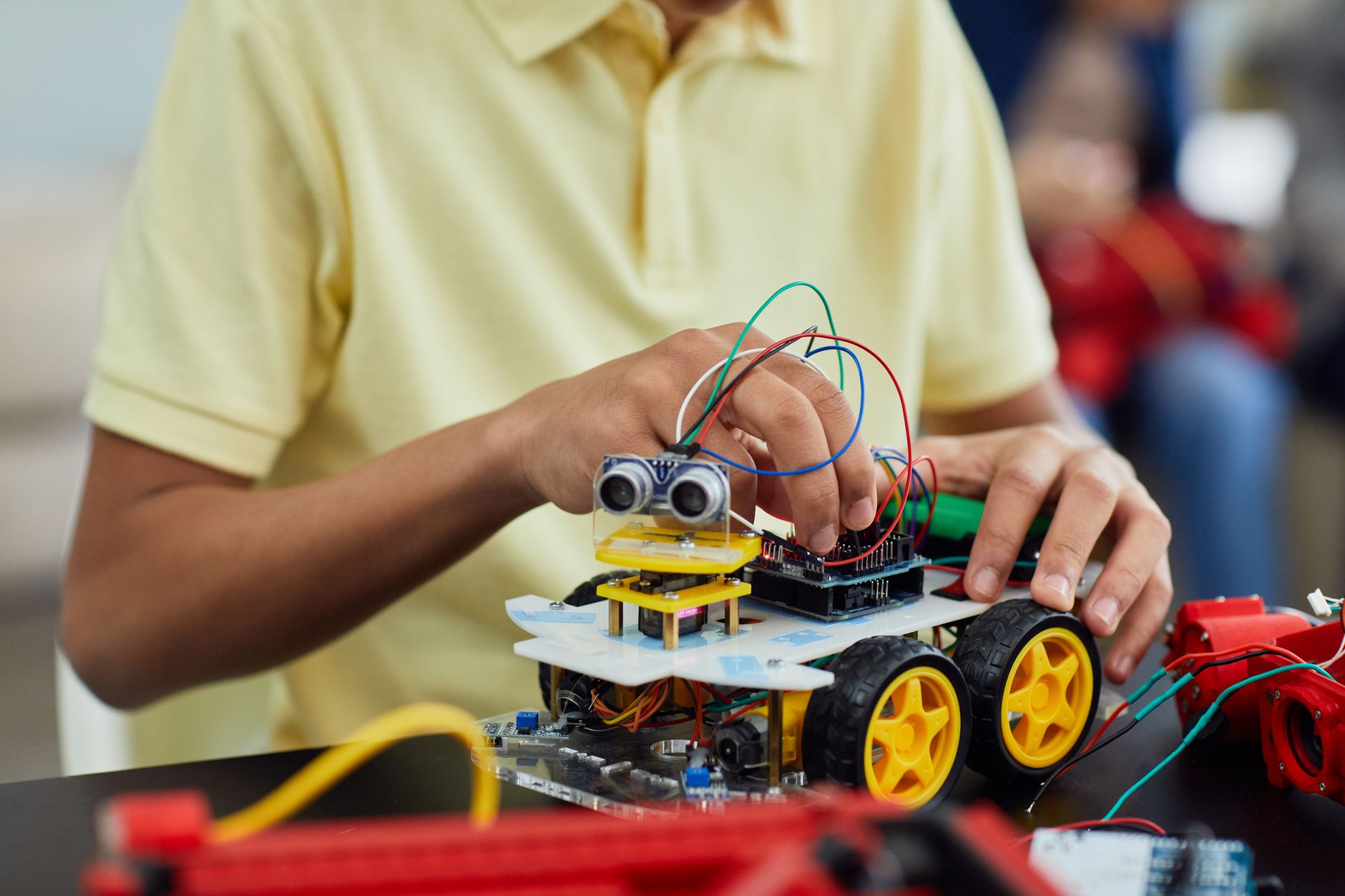
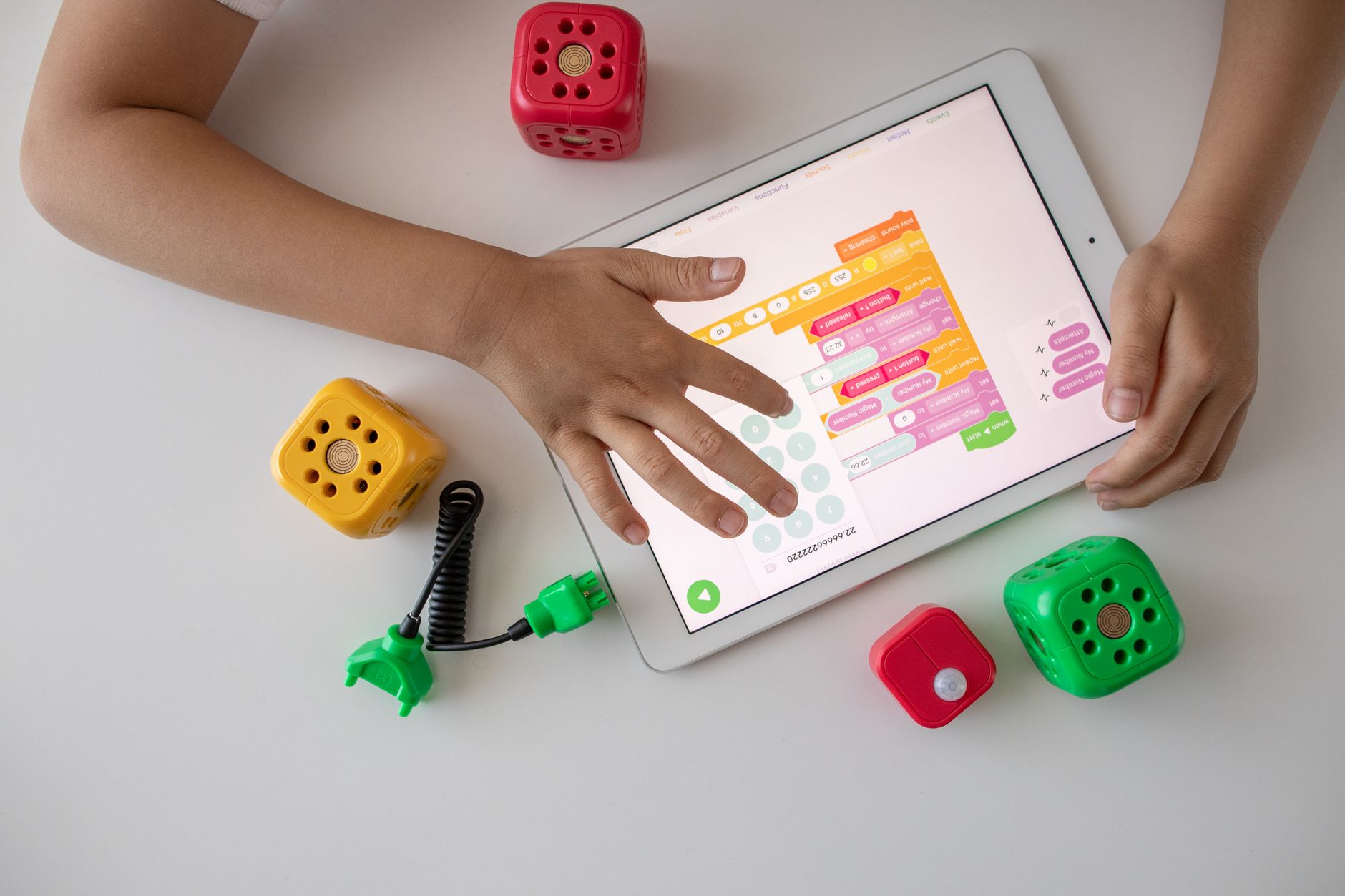
This is the most validated category in the market. Fortune Business Insights confirms these toys "help children understand engineering concepts" while developing spatial awareness, creativity, and problem-solving simultaneously. The best kits introduce real mechanical principles — hydraulics, compression, tension — rather than simply providing stackable components. A hydraulic bridge kit, for example, teaches fluid mechanics through a working mechanism the child can test and observe. A static display model teaches nothing after the first assembly.
Science Experiment Kits
Value in this category depends entirely on whether the experiments are genuinely variable. A kit that walks a child through a fixed sequence to a predetermined outcome is a demonstration, not an experiment. A quality science kit asks the child to form a hypothesis, change a variable, and observe a different result. Thoson describes the best versions as kits that "make chemistry tangible" — the physical reaction is the teaching moment, not the instruction booklet.
Coding and Robotics Kits
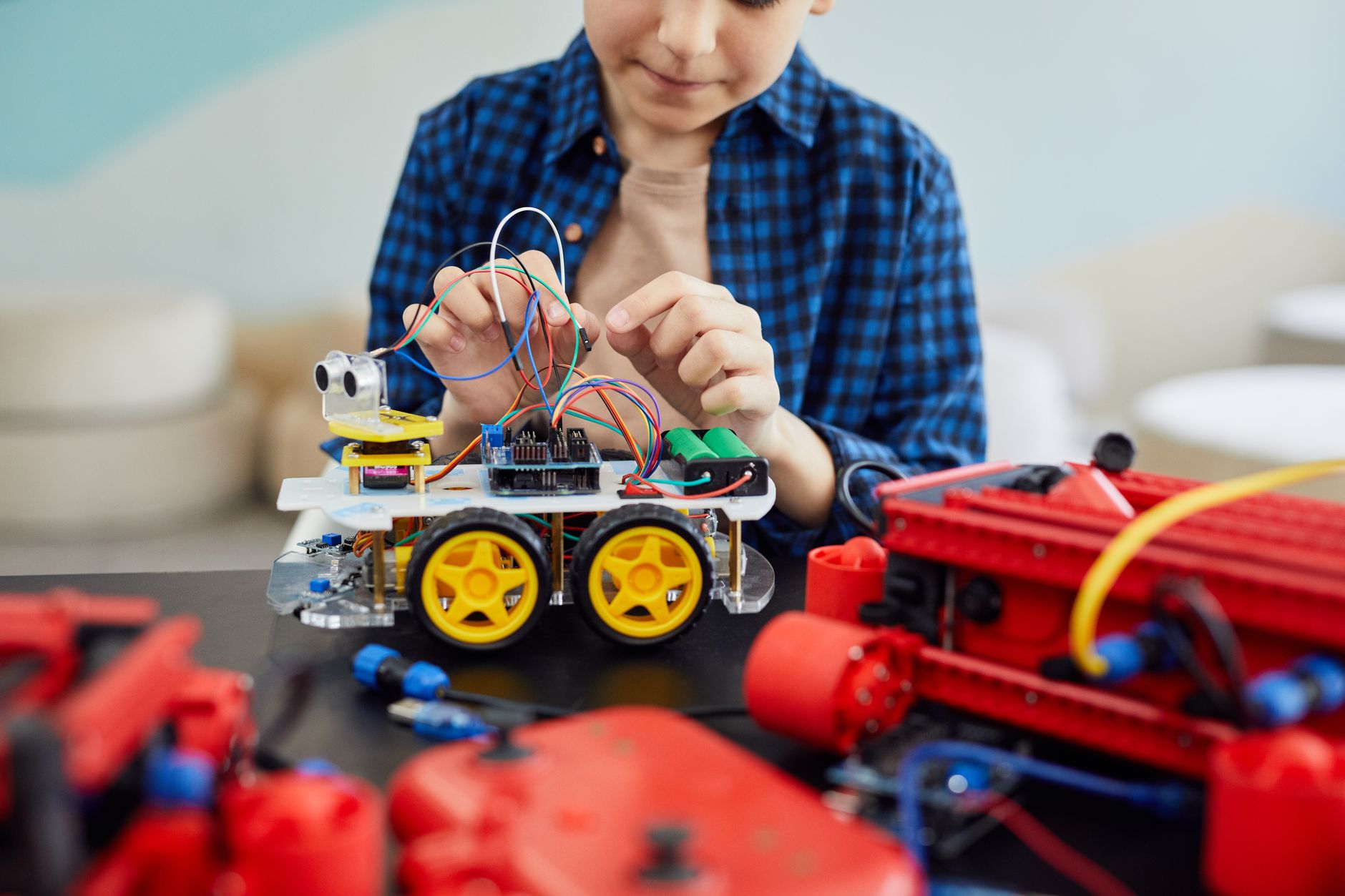
Quality varies more in this category than any other. Look for kits where the child arranges actual logic — sequences, conditionals, loops — rather than following a color-coded button sequence with one correct answer. The distinction matters because computational thinking requires encountering failure and debugging, not executing a pre-solved puzzle. Wonder Workshop's Dash robot and similar platforms that allow open-ended mission creation sit on the high end of this spectrum.
Math Manipulatives and Puzzle Toys
Consistently underestimated by parents, this category has among the strongest research support for early mathematics development. Pattern blocks, tangrams, and number-based construction sets develop geometric reasoning and number sense in ways that worksheets cannot replicate. These are also among the most durable and reusable products in the STEM category, making them strong value per dollar over time.
Technology and Electronics Kits
Breadboard-based electronics kits — where the child physically connects components and observes circuit behavior — offer substantially more open-ended value than single-project PCB kits. Marble run sets occupy an interesting hybrid position: they teach momentum, kinetic and potential energy, gravity, slope, speed, and angles through direct physical experimentation, as noted in independent reviewer testing. Magnetiles used alongside marble runs extend the learning further by enabling the child to design their own track configurations. When you combine categories this way, the learning surface expands considerably.
How to Evaluate Any STEM Kit Before You Buy: Five Questions to Ask
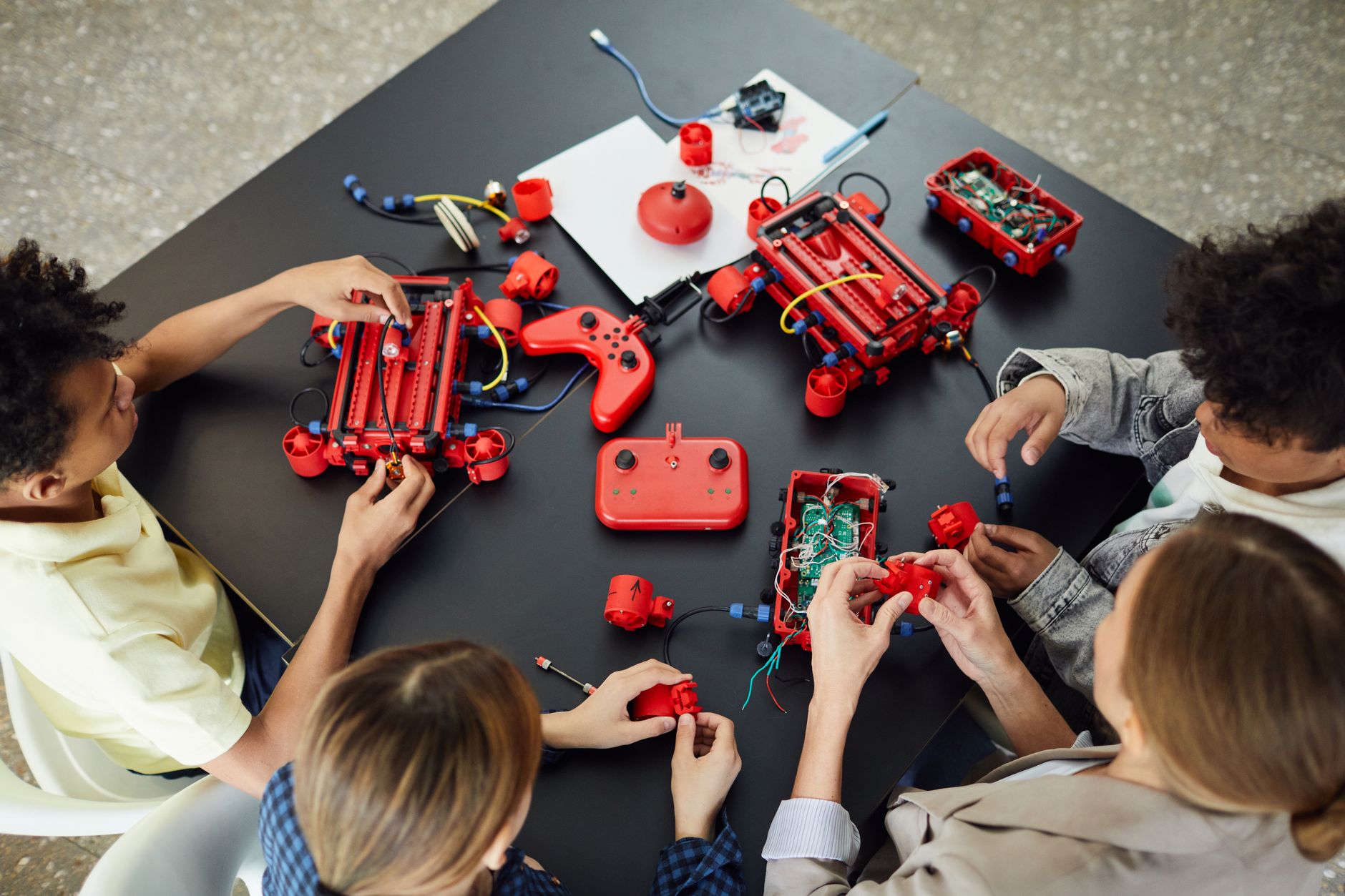
These five questions work whether you are standing in a store aisle, reading a product page, or reviewing another guide's recommendations. They translate the framework above into a practical pre-purchase filter.
- Who verified the educational claim? A logo the brand designed itself means nothing. A STEM.org authentication, a named museum partnership, or documented curriculum alignment from a named publisher is verifiable. If you cannot find the name of the authenticating organization, the claim is unverified.
- What happens after the first build or experiment? Read the product description for extension activities, alternative configurations, or experimental variables. If the description ends at "build this model," the educational return on investment ends there too. As Inspirely states, "a kit with genuine open-ended extension value functions as an experiential learning platform long after the structured build."
- Does the child do the thinking, or does the kit do it for them? Count the number of decisions the child makes during the build. If every step has exactly one correct answer and the instructions show exactly where each piece goes, the child is executing, not problem-solving. The best kits require the child to encounter a failure state and figure out why.
- Is the challenge level matched to the child's current ability? Check the recommended age range, then read independent reviews from parents whose children are the same age as yours. A kit rated for ages 8–12 can feel very different to an 8-year-old versus a 12-year-old. Look for reviews that specify the child's age and describe their experience level.
- What do independent testers say, not the brand? The most reliable testing methodology involves multiple children across multiple sessions. Wirecutter tested 19 toys with children aged 3 to 13 over the course of a year, observing "how easy each toy is to set up, how durable it is, and whether kids kept coming back to it." In May 2025, they hosted a hands-on testing session at Northeastern University's Roux Institute with 15 children aged 3–15. That methodology — multi-session, multi-child, independent — is the standard to look for. Single-session unboxing reviews tell you very little about sustained engagement.
Engineering and Construction Kits: The Most Validated STEM Category in 2026
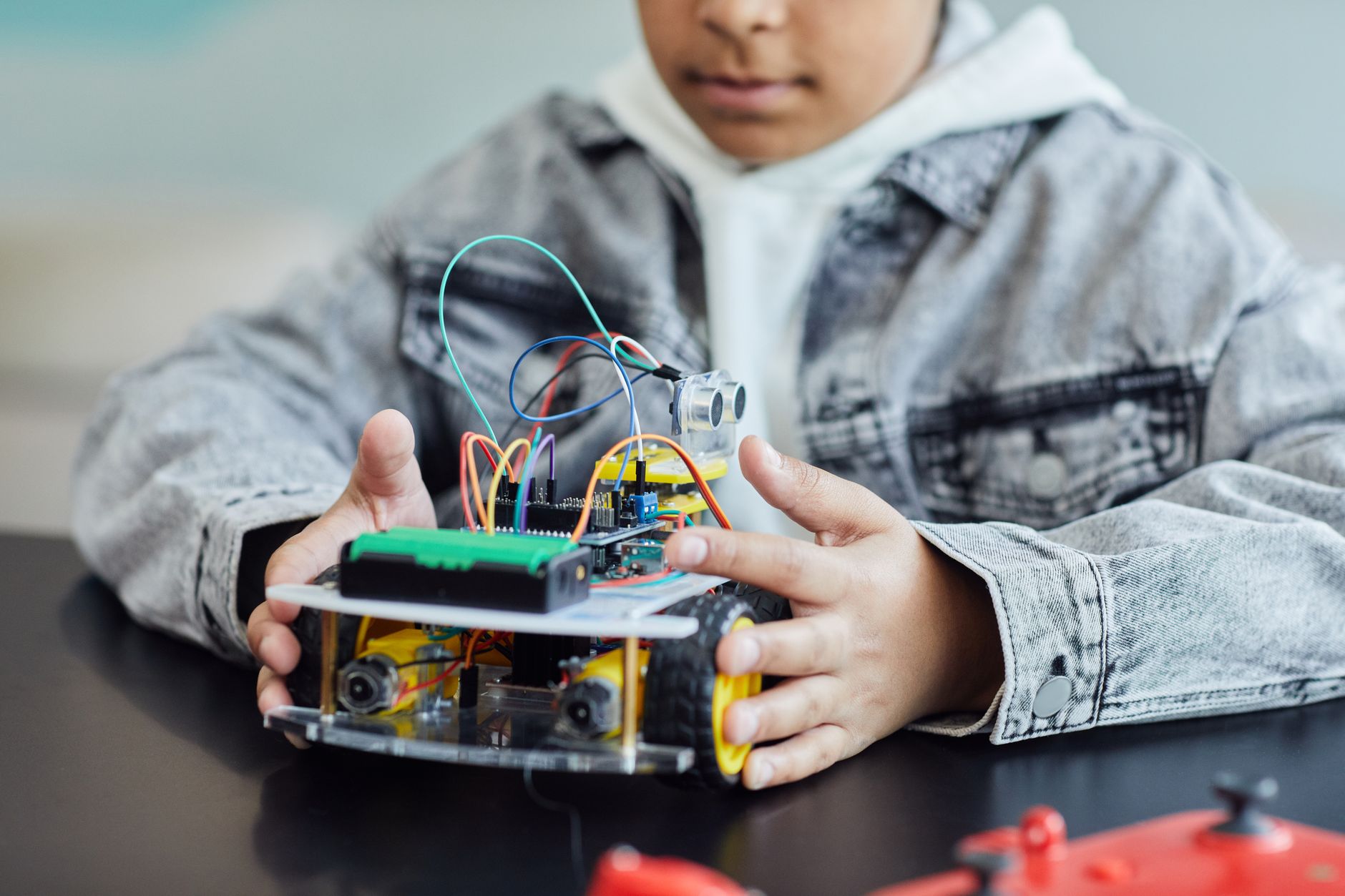
If you are buying for a child in the 6–13 age range and you are uncertain which category to choose, engineering and construction kits carry the lowest risk of disappointment. They represent approximately 20% of total STEM toys market share — the largest single segment — according to Fortune Business Insights, and that dominance reflects sustained demand across age groups and geographies.
The best kits in this category introduce real physical principles through a working model the child can test. A hydraulic bridge kit, for example, teaches fluid mechanics through an actual hydraulic mechanism — the child pumps fluid and watches the bridge rise. The learning outcome is observable, not abstract. Engino, noted by Toytooth as a brand that combines engineering principles with play quality, produces kits in this mold — multiple build configurations, documented mechanical principles, and components durable enough for repeated assembly.
Marble run sets occupy a particularly strong position within this category because they teach physics through direct experimentation. Independent reviewers have highlighted how marble runs demonstrate momentum, kinetic and potential energy, gravity, slope, speed, and angles — and how combining them with Magnetiles allows children to design custom track configurations, extending the learning indefinitely. The open-ended potential here is genuine, not marketing language.
Fat Brain Toys is another brand consistently cited for combining engineering-focused design with age-appropriate challenge levels. Their products tend to avoid the single-fixed-outcome trap because the design philosophy prioritizes exploration over completion. That distinction — exploration versus completion — is the clearest way to identify a quality engineering kit at a glance. Parents who also want to extend their child's learning into structured digital environments may find the Education & E-Learning Buyer's Guide 2026 a useful companion resource for identifying platforms that complement physical kit learning.
Frequently Asked Questions
Is there a difference between a STEM toy and a STEM kit?
In practice, yes. A STEM toy typically refers to an open-ended play object — building blocks, magnetic tiles, a marble run — that develops STEM skills through unstructured play. A STEM kit usually involves a structured build or experiment with instructions, components, and a defined outcome. Both can be genuinely educational, but kits carry a higher risk of being single-use if they lack open-ended extension activities.
What age group benefits most from STEM kits?
According to Inspirely, ages 8 to 10 represent the peak STEM engagement window, when spatial reasoning is most responsive to physical input and attention spans are sufficient for multi-step engineering builds. That said, every age group benefits from age-appropriate STEM engagement — the key is matching the product to the developmental stage, not skipping stages in pursuit of "advanced" content.
How do I know if a STEM certification is legitimate?
Search for the certifying organization independently. STEM.org is a documented third-party authenticator with a public assessment process. If a product displays a badge you cannot find information about outside the brand's own website, treat it as a self-awarded label with no verified meaning.
Are subscription STEM kits worth the ongoing cost?
They can be, provided each delivery builds on prior learning rather than delivering unrelated novelty. Crunch Labs, for example, has been noted by independent reviewers for sustaining engagement across age groups over multiple months because the engineering challenges are progressive. Evaluate any subscription by asking whether the curriculum is documented and whether there is a clear learning arc across deliveries.
What is the single most important thing to check before buying any STEM product?
Whether the child makes real decisions during the activity. If every step has exactly one correct answer shown in the instructions, the child is following a script. If the child must choose, test, fail, and adjust, the child is learning. That distinction determines whether you are buying a genuine educational experience or an expensive activity with a science label.
Final Recommendation: A Decision Framework You Can Use Right Now
Start with age. Match the product to the child's developmental stage before evaluating anything else