
The ? Lesson: Why Paying Full Price for Sneakers in 2026 Is Usually Optional

The most common misconception about finding sneaker deals in 2026 is that you need to be a reseller, a hype-tracker, or someone refreshing drop pages at midnight. You don't. The buyers who consistently overpay are not unlucky — they're simply unaware of how predictable sneaker pricing cycles actually are. A reader who bought a Nike colorway in January for ? and found the same shoe at a mainstream retailer for ? in March didn't miss a flash sale. They missed a pattern that repeats itself across brands, seasons, and retail channels every single year.
That ? gap is not an anomaly. RunRepeat, which tracked 12 million price points across more than 2,000 running shoes and 5,000 sneakers over seven years from over 200 retailers, documented exactly this kind of drop with the Nike Pegasus 36. The shoe launched at a ? MSRP and fell to a range of ?–? within months of release. That's a 21–42% reduction — not from a special event, but from the ordinary mechanics of retail inventory management.
The context matters here. According to Statista, the global sneaker market generated ?.37 billion in revenue in 2026, with the United States alone accounting for an estimated ? billion. When supply is this vast and competition among retailers is this fierce, the market structurally rewards patient buyers. Retailers need to move inventory. Brands need to make room for new models. The deals exist — they just require knowing when and where to look.
This guide is built around two practical levers: timing and channel selection. It is written for everyday buyers — people who want quality footwear at a fair price, not resale profit or status signaling. If you want to understand the sneaker market well enough to stop overpaying, the framework starts here. For broader context on how footwear fits into smarter consumer spending, the The Ultimate US Shopping & Money-Saving Guide 2026 covers the wider landscape of retail timing and channel strategy across categories.
How the 2026 Sneaker Market Actually Works: Supply, Pricing, and What That Means for Buyers
Sneaker pricing is not random. Brands establish a suggested retail price, but what you actually pay is determined by a layered set of forces: how many units were produced, how many retailers carry the model, how long the model has been on shelves, and what competitors are charging at any given moment. Understanding this structure helps you anticipate price movements rather than react to them.
Historical median price benchmarks from Market.us give a useful baseline: Nike's median price sits at ?, ASICS and Adidas at ? each, New Balance at ?, and Reebok at ?. These figures reflect brand positioning as much as product cost. Nike's premium is partly a brand tax — you're paying for the logo and the cultural cachet as much as the shoe. New Balance at ? median delivers comparable technical performance in many categories at a meaningfully lower entry point.
Brands and retailers don't set prices in a vacuum. According to ActowizMetrics, sophisticated retailers now use real-time price monitoring across multiple marketplaces, SKU-level inventory tracking, and consumer review sentiment analysis to adjust pricing dynamically. When a competitor drops a price on a shared model, other retailers often follow within hours. This competitive dynamic is actually good for buyers — it means that once a price breaks downward on a popular model, it tends to stay low or go lower across multiple channels simultaneously.
One finding from the AlixPartners 2026 Spring Footwear Survey is particularly useful: both online and in-store consumers use Amazon as a search engine and starting point when they're ready to buy a new pair of shoes. This doesn't mean Amazon is always the cheapest — it means Amazon functions as a price anchor and comparison baseline. If you start your search there, you establish a reference point that makes it easier to recognize a genuine deal elsewhere.
Statista projects the sneaker market will grow at a 4.97% CAGR through 2030. More pairs, more brands, more retailers competing for your purchase. For value-focused buyers, a growing market means more options and more pricing pressure — both of which work in your favor.
When to Buy: The Data-Backed Timing Windows That Deliver the Lowest Prices

The advice you'll find in most sneaker guides — "buy in spring when old models go on sale" — is an oversimplification that doesn't hold up under scrutiny. RunRepeat's seven-year, 12-million-price-point analysis found that the timing of price drops is far more model-specific than season-specific. The most reliable trigger is not a calendar date — it's the launch of a successor model.
When Nike released the Pegasus 37, the Pegasus 36's price — which had already settled into a ?–? range — dropped further as retailers cleared stock. The Pegasus 37 itself held at its ? MSRP for nearly six months before its own price began to soften. This pattern repeats across brands: the outgoing model becomes the deal, and the new model requires patience. If you're not attached to owning the latest version, buying the previous generation of a well-reviewed shoe is consistently one of the highest-value moves in footwear shopping.
Beyond the successor cycle, two seasonal windows reliably produce lower prices. The post-holiday period — roughly late January through mid-February — is when retailers liquidate inventory that didn't sell during the holiday rush. This window is less crowded than Black Friday and often yields deeper discounts on a wider range of sizes. The second window is late summer, when back-to-school inventory peaks and retailers compete aggressively on price to capture that spending.
One nuance that most guides ignore: price drops are size- and colorway-dependent. A Nike model might be discounted to ? in size 11 and still sitting at ? in size 9. Popular sizes in neutral colorways hold their price longer because demand stays elevated. If you wear a common size, you may need to wait longer or be more flexible about color. If you wear a less common size — say, a men's 13 or a women's 5 — you'll often find your size discounted first, simply because retailers overestimated demand at those ends of the size run.
The practical takeaway: track the specific model you want for four to eight weeks before purchasing. Price volatility is highest in the first 90 days after a shoe's launch, then stabilizes. Buying during that initial window almost always means paying more than you need to.
Online vs. In-Store: Where Buyers Actually Find Better Deals in 2026
The honest answer is: it depends on what you're optimizing for. The AlixPartners 2026 Spring Footwear Survey found that 70% of in-store buyers cite the ability to try on shoes before buying as their primary reason for going to a physical store, and 65% cite the ability to get products immediately. These are not trivial advantages — fit is genuinely hard to predict from a size chart alone, particularly across brands, and avoiding a return shipment saves both time and money.
Online shopping has its own concrete advantages. The same survey found that online buyers cite convenience (39%), better deals (32%), and broader selection as their top reasons. Critically, online channels give you the ability to compare prices across multiple retailers in minutes, read verified buyer reviews, and order multiple sizes simultaneously to find the right fit before committing. For buyers in areas without strong local retail options, online is often the only practical channel for accessing a full range of models and sizes.
The most effective approach in 2026 is a hybrid strategy: use online channels for research, price comparison, and review validation, then decide where to purchase based on which channel offers the best combination of price, availability, and return flexibility. A practical version of this looks like: check Nike.com and Amazon for pricing on a specific model, read Wirecutter or RunRepeat reviews to confirm quality, then visit a DSW or Foot Locker to confirm fit before purchasing wherever the price is lowest. In-store clearance racks at major chains also frequently carry discontinued models that have been pulled from brand websites — these are often the deepest discounts available on quality footwear.
One channel worth understanding separately: Zappos. Owned by Amazon but operating with its own return policy — including free returns and a 365-day return window — Zappos is particularly useful for buyers who are uncertain about fit across brands. The pricing is rarely the lowest available, but the return terms reduce the risk of an online purchase significantly.
Which Retail Channels Offer the Most Consistent Value in 2026

Not all retail channels are equal, and matching your shopping strategy to the right channel for your specific goal matters more than most buyers realize. Here's an honest breakdown of the major options:
Brand-Direct Websites
Nike.com, Adidas.com, and ASICS.com are the right place to buy when you want a new release, a specific colorway that hasn't reached multi-brand retailers yet, or access to member-exclusive models. They are rarely the cheapest option for standard models. Brand sites do run periodic sales, but their discounts tend to be shallower than what you'll find at multi-brand or off-price retailers. The advantage is authenticity — you're guaranteed a genuine product with full brand warranty support.
Multi-Brand Athletic Retailers
Dick's Sporting Goods, Foot Locker, and DSW run predictable sales cycles tied to holidays, back-to-school, and end-of-season clearances. Their loyalty programs — particularly DSW's rewards structure — can deliver meaningful value for buyers who purchase multiple pairs per year. These retailers also tend to carry broader size ranges than brand-direct sites for popular models, which matters if you're shopping outside common sizes.
Off-Price Retailers
Nordstrom Rack, TJ Maxx, and Ross carry prior-season footwear at genuinely low prices — often 40–60% below original MSRP. The trade-off is unpredictable inventory. You cannot reliably find a specific model in your size at an off-price retailer; you find what's there. For buyers with flexibility on model and colorway, these channels offer some of the best absolute prices available. For buyers with specific requirements, the unpredictability is a real limitation.
Online Marketplaces
Amazon and Zappos offer competitive pricing, strong return policies, and review ecosystems that help validate quality before purchase. ActowizMetrics notes that retailers actively monitor and match prices across these platforms in real time, which creates genuine price competition. The risk on Amazon specifically is third-party sellers — always verify that you're purchasing from a reputable seller with strong ratings, and check the return policy before completing a purchase.
Resale Platforms
StockX and GOAT are appropriate for limited-edition models that are unavailable through standard retail. They are not value channels. According to the GQ 2026 Sneaker Survey, Vans average prices on StockX were up 42% by the end of 2025, with price premiums surging 28%. Paying a 28–42% premium over retail is the opposite of finding a deal. Use resale platforms only when a model is genuinely unavailable elsewhere and you've decided the shoe is worth the premium.
The Brands Delivering Real Value in 2026: What the Data and Reviews Actually Show

Brand value in footwear is best measured by cost-per-wear — how much you effectively pay per use over the life of the shoe — rather than sticker price alone. A ? shoe that lasts three years of regular wear outperforms an ? shoe that degrades in 18 months. With that framework in mind, here's what the current data shows about specific brands. This section also connects to broader Fashion & Apparel Buying Guides 2026 for readers evaluating value across clothing and footwear categories together.
ASICS
CLOSO's 2026 trend analysis identifies the ASICS Gel-1130 as one of the strongest current buys based on sales velocity and trend alignment. The Gel-1130 sits at the intersection of heritage aesthetics and genuine cushioning technology, priced accessibly relative to its construction quality. ASICS' median price of ? per Market.us positions it as a brand that competes on substance rather than brand premium. The Gel-1130 specifically is widely available across multiple retail channels, which creates pricing competition that benefits buyers.
Adidas
The Adidas Samba OG is one of the most thoroughly reviewed fashion sneakers of 2026. Wirecutter specifically praised it for closely spaced, uniform stitching, durable materials, and what they describe as hitting "the sweet spot between form and function." Critically, it's a perennial model — not a limited drop — which means it's available across multiple channels with genuine price competition. If you want a fashion sneaker with documented quality and broad availability, the Samba OG is one of the most defensible purchases in its category.
New Balance
At a median price of ?, New Balance consistently delivers technical quality at a price point that undercuts Nike and Adidas without sacrificing construction. The brand performs strongly in both running and lifestyle categories. For buyers who prioritize function over brand recognition, New Balance is frequently the highest-value option in its price tier.
Puma
CLOSO's 2026 data identifies the Puma Speedcat alongside the ASICS Gel-1130 as a strong current buy. The Speedcat's low-profile silhouette aligns with the slim, minimal aesthetic that is dominating 2026 fashion footwear, and its pricing remains accessible relative to comparable Adidas and Nike models in the same aesthetic category.
Hoka
According to YouGov BrandIndex 2026, Hoka is gaining measurable momentum among U.S. sneaker buyers, tracked against a competitive set of 11 brands including Nike, Adidas, and Vans. The brand's premium positioning means MSRP purchases rarely represent peak value. The best time to buy Hoka is during retailer sales at multi-brand athletic stores, where discounts of 20–30% appear regularly on prior-season colorways.
Nike
The GQ 2026 Sneaker Survey notes genuine energy around Nike's new performance models — the Vomero Plus, Mind 001, Ja 3, and A'One — with average resale prices up 5% on StockX. Nike has real product momentum in 2026. But that momentum means new releases hold their price longer. For value buyers, Nike rewards patience: wait for the successor model cycle, and the shoe you want will typically reach a fair price within six to nine months of launch.
2026 Sneaker Trends That Affect Pricing: What's Rising, What's Plateauing

Trend cycles directly affect pricing. A model at peak cultural demand commands full retail; a model whose trend has passed moves to clearance. Understanding where specific aesthetics sit in their cycle helps you buy at the right moment.
Heritage and retro silhouettes are the defining trend of 2026. CLOSO's analysis frames this as a deliberate shift from hype-driven limited drops to wearable, classic designs with broad appeal. Models like the Samba OG and Gel-1130 are at or near peak demand right now, which means their prices are relatively firm. If you want these shoes, buy them — waiting for a discount on a peak-demand heritage model may mean waiting a long time or finding your size sold out.
Metallic finishes and slim, low-profile silhouettes are trending upward through mid-2026, per CLOSO's data. Expect these to carry a slight premium relative to neutral colorways of the same model. If you're indifferent to finish, choosing a matte or standard colorway of the same silhouette typically saves ?–? with no functional difference.
Hiking hybrid styles — shoes that look like a boot but perform like a sneaker, in the vein of the Merrell Moab — are currently underpriced relative to their rising demand. CLOSO identifies these as fast-moving inventory in 2026. Buyers interested in this category may find better pricing now than in six months as the trend matures and retailers adjust pricing upward.
Chunky maximalist soles, which dominated 2022–2024, are plateauing. Retailers are actively clearing this inventory, which means buyers who like that aesthetic can find strong deals right now. The trade-off is that these models are increasingly off-trend, which matters if you care about current aesthetics.
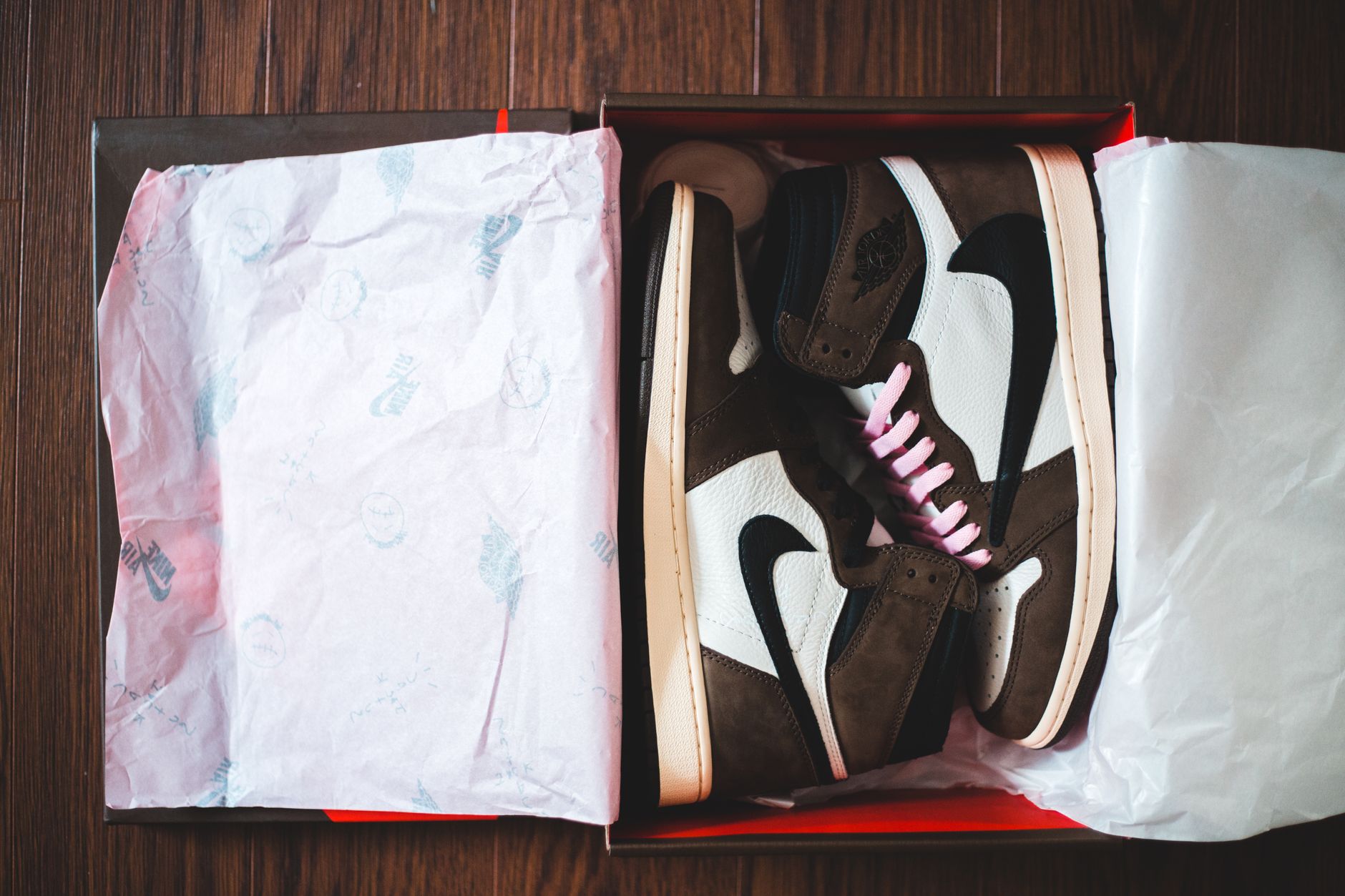
Materials also affect price. Mesh and synthetic uppers dominate the value tier and offer genuine advantages — lighter weight, better breathability, and lower cost. Suede and leather uppers command a premium but offer durability and aesthetic depth that synthetic materials don't replicate. CLOSO specifically identifies rich, dark brown suede as a fast-moving category in 2026, meaning suede models in that colorway are selling at or near full price.
Frequently Asked Questions
What is the best time of year to buy sneakers in 2026?
There is no single best month, but two windows consistently produce lower prices: late January through mid-February (post-holiday clearance) and late summer (back-to-school competition). More reliably, the best time to buy a specific model is six to nine months after its launch, or immediately after its successor model is released. RunRepeat's data across 12 million price points confirms that post-launch price drops are the most predictable discount pattern in footwear retail.
Is it cheaper to buy sneakers online or in-store?
Online channels generally offer broader price comparison and more frequent discounts, but in-store clearance racks — particularly at off-price retailers like Nordstrom Rack and TJ Maxx — can deliver deeper absolute discounts on prior-season models. The AlixPartners 2026 Footwear Survey found that 32% of online buyers and 32% of in-store buyers both cite price as a primary factor, suggesting neither channel has a decisive advantage. The most effective strategy is to compare both before purchasing.
Which sneaker brands offer the best value in 2026?
For performance footwear, ASICS and New Balance consistently deliver strong cost-per-wear value at accessible price points. For fashion sneakers, Adidas (particularly the Samba OG) and Puma (Speedcat) offer trend-aligned designs at prices that don't require paying a brand premium. Nike delivers strong product quality but rewards patient buyers who wait for post-launch price normalization rather than purchasing at release.
Are resale platforms like StockX worth using for finding deals?
No, for most buyers. Resale platforms are appropriate only for limited-edition models that are genuinely unavailable through standard retail. The GQ 2026 Sneaker Survey found that Vans average prices on StockX were up 42% by the end of 2025. Paying a 28–42% premium over retail is not a deal strategy — it's the opposite. Use resale platforms as a last resort, not a starting point.