
Reviewed by the Trusted Buyer Report editorial team. This guide is based on manufacturer specifications, independent lab tests (Consumer Reports 2026), and verified professional painter feedback aggregated from multiple sources. It does not reflect hands-on testing by Trusted Buyer Report. We may earn a commission when you use our links — added only after our assessment is complete. Full disclosure →
Bottom line up front: For most owner-occupied interiors, Benjamin Moore Regal Select offers the best balance of coverage, color depth, and longevity. For whole-house or exterior projects where contractor availability matters, Sherwin-Williams Duration is the most practical pick. For high-traffic rooms on a tighter budget, Behr Dynasty punches above its price point. And if you're painting a rental or flip, Behr Premium Plus or PPG Diamond save real money without sacrificing enough durability to matter within a typical repaint cycle.
That's the short answer. Read on for the full use-case breakdown.
2026 Paint Brand Comparison at a Glance
| Brand | Best Product Line | Price/Gallon (2026 retail) | Coverage (sq ft/gal) | VOC Level | Where to Buy | Best For |
|---|---|---|---|---|---|---|
| Benjamin Moore | Aura / Regal Select | $75–$99 | 400–450 | Low to Zero | Independent dealers, Ace Hardware | Premium interiors, color-critical projects |
| Sherwin-Williams | Duration / Emerald | $75–$95 | 350–400 | Low | SW stores, Lowe's (HGTV line) | Whole-house, exterior, contractor use |
| Behr | Dynasty / Marquee | $50–$65 | 300–400 | Low | Home Depot exclusively | High-traffic interiors, stucco/brick exteriors |
| PPG | Diamond / Timeless | $45–$55 | 300–400 | Low | Home Depot, select retailers | Value-tier whole-house, rental properties |
2026 pricing note: Price data sourced from Echo House Painting's 2026 Boston-market retail report and EstimationPro AI's Benjamin Moore cost tool. Prices vary by finish, region, and whether contractor discounts apply. Sherwin-Williams typically runs 30–40% off sales four times per year — timing a purchase during one of those events can save $200–$300 on a whole-house project.
What Changed in the 2026 Paint Market (And Why It Affects Your Choice)
Most paint buying guides recycle the same advice year after year. Three 2026-specific shifts make that a problem if you're working from an older guide.
1. Price compression at the mid-grade tier. Supplier cost increases have pushed mid-grade paints upward in price while premium lines have held relatively steady. The traditional logic — "save on paint, spend on labor" — is weaker than it was two years ago. When you're already paying a professional $50–$90/hour, saving $10/gallon on a paint that requires an extra coat or needs repainting two years sooner rarely makes financial sense on a per-project basis.
2. Formula reformulations across flagship lines. Professional painters in 2026 are reporting that even trusted flagship lines from both Benjamin Moore and Sherwin-Williams are being quietly reformulated at the chemistry level. The practical consequence: sheen matching for touch-ups is becoming less reliable. If you paint a room today and need to touch it up in 2028 with leftover paint, the new formula may not match the old one — an especially important issue if color consistency is a core reason you're paying premium prices.
3. Low-VOC is now standard, not premium. Benjamin Moore Aura, Sherwin-Williams Emerald, and Behr Dynasty all meet low-VOC standards as their default formulation — you no longer need to seek out a specialty "eco" line for bedrooms or nurseries. This also means VOC level is no longer a meaningful differentiator between premium brands.
2026 color trends worth knowing: All four major brands have anchored their 2026 palettes around warm neutrals and earthy tones, replacing the cool grays that dominated the past decade. Sherwin-Williams named Universal Khaki SW 6150 its Color of the Year; Benjamin Moore chose Silhouette AF-655 (a rich espresso brown); Behr selected Hidden Gem N430-6A (a smoky jade-green). These deeper, warmer pigments perform differently across bases and sheens — base selection matters more than it did when everything was being painted Light French Gray.
Best Interior Paint by Use Case
Ranking paint brands in the abstract is almost meaningless. Benjamin Moore is not the best paint for every interior project, and Behr is not always the wrong choice. What matters is matching the product to the surface, the room's function, and your realistic repaint timeline. Here's how the brands stack up by actual use case.
Whole-House Repainting
Best pick: Sherwin-Williams Duration (value) or Benjamin Moore Regal Select (premium)
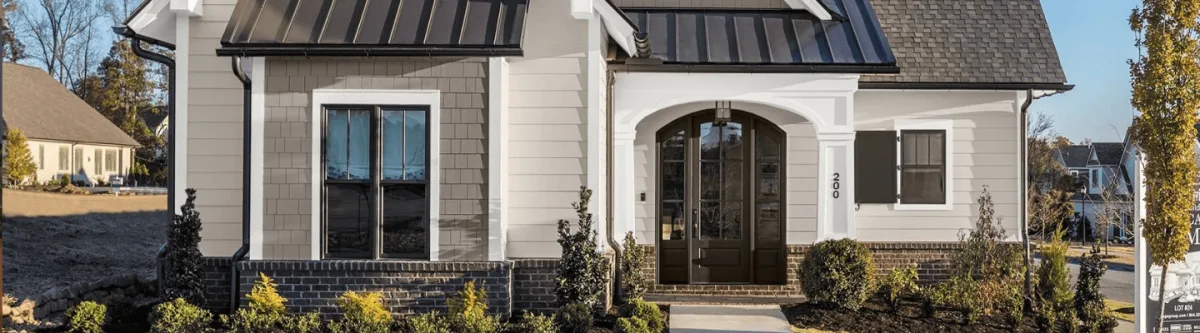
For a full interior repaint, Duration offers reliable coverage across large wall areas with consistent sheen and strong contractor availability. Regal Select delivers richer color depth and slightly better pigment retention over time. If color accuracy is your top priority — you're working with a designer or matching specific swatches — Regal Select is worth the $10–$20/gallon price difference. If you're timing a Sherwin-Williams sale, Duration becomes an even easier choice on value.
Sherwin-Williams has over 4,500 store locations across the US, meaning a contractor can reliably get more paint on a Tuesday morning. That supply chain reliability is a genuine advantage for multi-room projects where you may need additional gallons mid-job.
Cabinets and Trim
Best pick: Benjamin Moore Advance (professional) or Sherwin-Williams Emerald Urethane Trim Enamel (practical DIY)
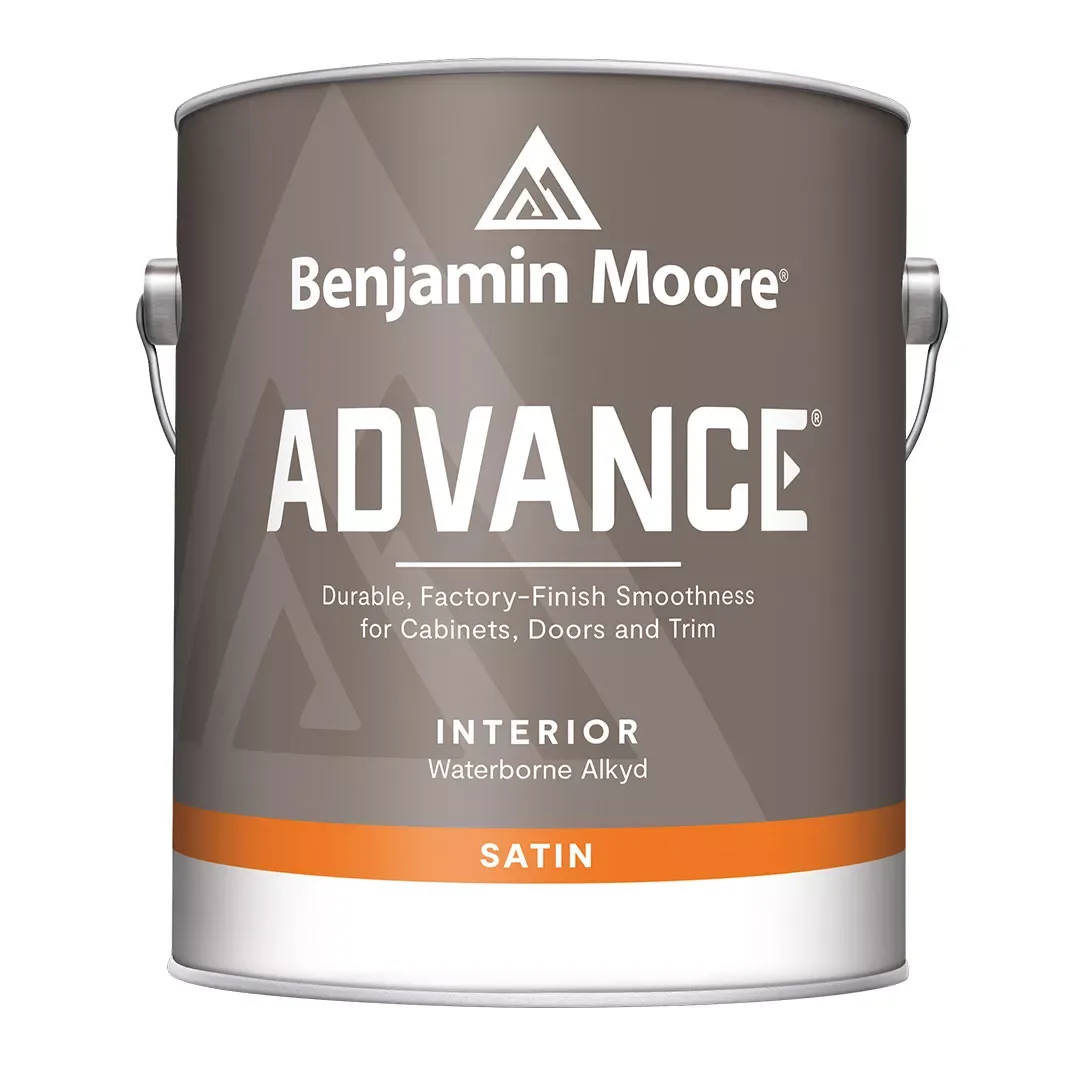
Benjamin Moore Advance is the professional benchmark for cabinet painting in 2026. Its alkyd-hybrid waterborne formula levels out brush marks as it dries, producing a factory-smooth finish that standard latex cannot match on hard surfaces. The trade-off: Advance requires 16 hours between coats, which makes multi-day kitchen projects a real scheduling consideration.
Sherwin-Williams Emerald Urethane Trim Enamel dries faster and is slightly more forgiving in humid conditions. For most DIY cabinet projects, Emerald Urethane is the more practical choice. For professional kitchen renovations where finish quality is non-negotiable, Advance remains the benchmark.
High-Traffic Rooms: Kitchens, Hallways, Kids' Rooms
Best pick: Behr Dynasty or Benjamin Moore ben
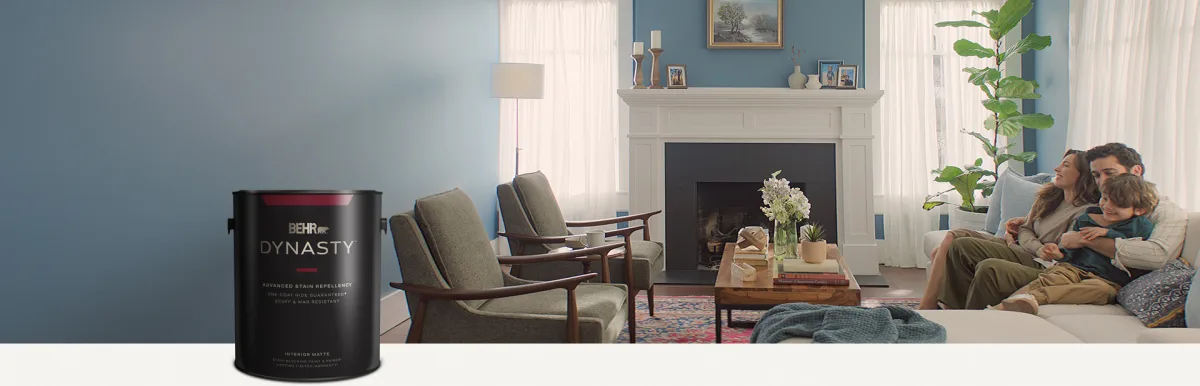
Washability is the defining spec for these spaces. Consumer Reports' 2026 interior paint lab tests place Behr Dynasty and Benjamin Moore ben among the top performers for scrub resistance. Behr Dynasty is particularly notable here: it competes directly with paints costing $20–$30 more per gallon on scuff and stain resistance, and it's available at every Home Depot. For families with kids or pets who need a paint that holds up to repeated scrubbing without losing sheen, Behr Dynasty is a genuinely strong choice.
Rental Properties and Flip Projects
Best pick: Behr Premium Plus or PPG Diamond
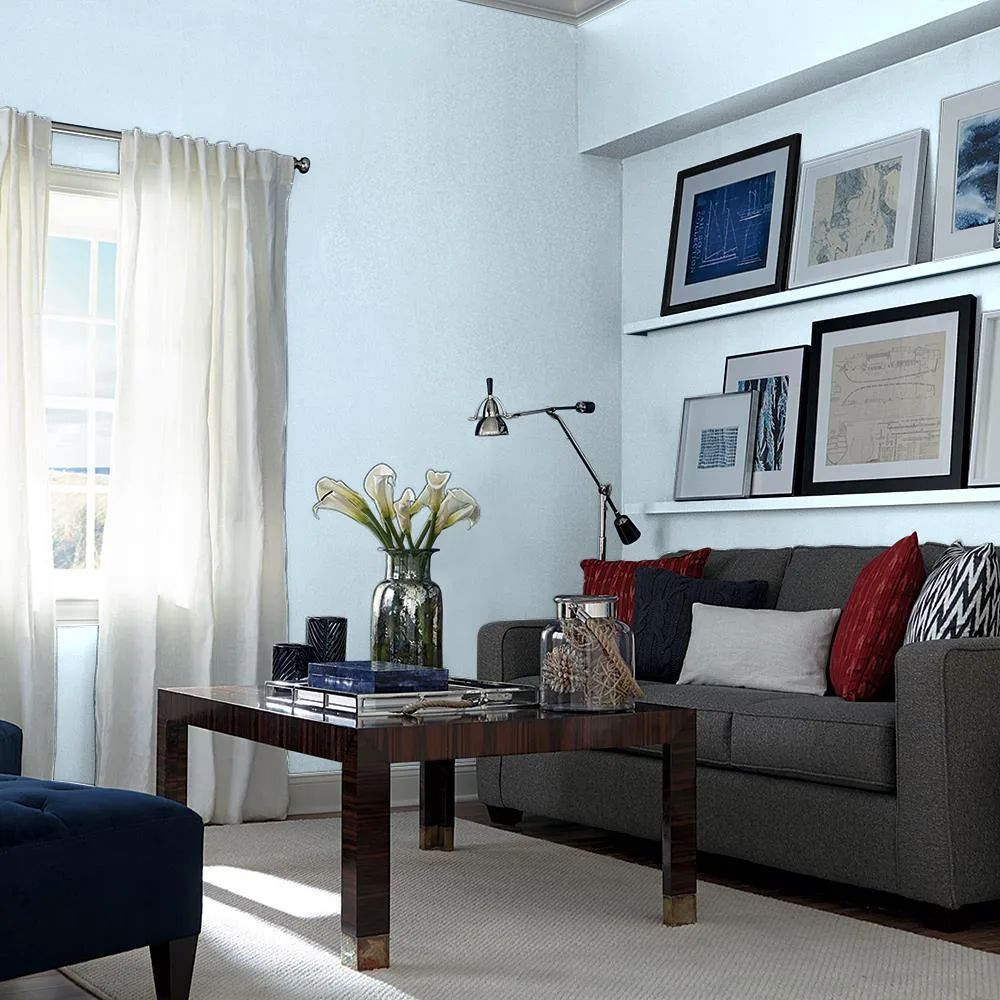
When the repaint cycle is five years or less — realistic for rental units and flipped homes — the long-term durability argument for premium paint weakens considerably. Behr Premium Plus at $30–$35/gallon and PPG Diamond at $45–$55/gallon offer acceptable coverage and washability at $20–$35 less per gallon than premium alternatives. The color depth won't be as rich, and touch-up matching will be less precise over time — but for a property that will be repainted before those issues surface, the savings are real.
This same logic applies when you're furnishing a rental or investment property. If you're also choosing durable, easy-to-clean furniture for high-turnover spaces, coordinating your surface and furniture decisions on a realistic ownership timeline tends to produce better ROI than defaulting to premium options across the board.
Best Exterior Paint Brands 2026
Exterior paint operates in a fundamentally different environment than interior paint. UV exposure, moisture cycling, temperature swings, and biological growth (mold, mildew, algae) are the real enemies — not foot traffic or spilled coffee. The specs that matter most for exterior applications are fade resistance, adhesion, flexibility (to handle expansion and contraction), and moisture barrier performance.
Sherwin-Williams Duration Exterior — Best Overall
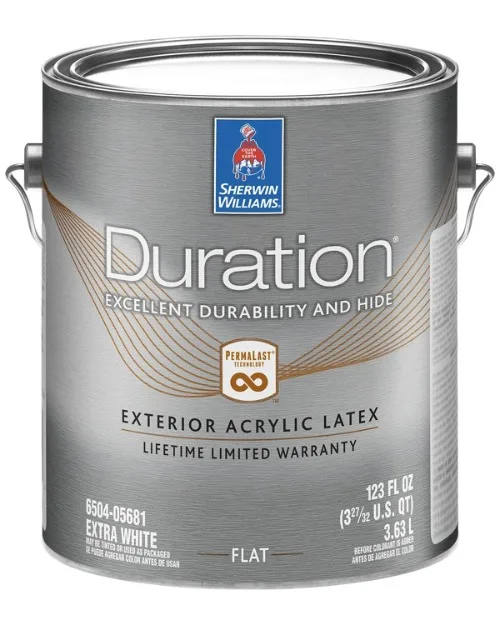
Duration Exterior is the most widely recommended contractor-grade exterior paint in 2026. It offers chip and fade resistance, one-coat coverage capability in many situations, and consistent performance across surface types including stucco, wood, and vinyl. For homeowners who want a proven, widely available exterior paint with strong contractor support, Duration Exterior is the default recommendation.
Benjamin Moore Aura Exterior — Best for Long-Term Color Retention
Aura Exterior is the premium choice when fade resistance over five-plus years is the priority. Benjamin Moore's Gennex colorant system produces deeper pigmentation that holds up better under UV exposure over multiple seasons. The price premium over Duration Exterior is real — expect to pay $10–$20 more per gallon — but for a home where the exterior color is a design statement rather than a neutral background, the difference in fade resistance is visible after three to five years.
For context on the head-to-head: according to FacadeColorizer's 2026 UV test analysis, Benjamin Moore Aura covers roughly 15% more area per gallon than Duration and often requires only one coat on mid-tone repaints, which means the delivered cost on a typical 2,400-square-foot home often ends up within $75–$150 of each other — less than 2% of a $6,000 paint project.
Benjamin Moore Arborcoat — Best for Wood Surfaces
For exterior wood surfaces — decks, fences, wood siding — Arborcoat is the leading specialized option in 2026. Unlike standard exterior paint, Arborcoat is formulated as a penetrating stain that enhances wood grain rather than sitting on top of it. Film-forming paints on wood can peel as the wood expands and contracts; penetrating stains flex with the wood. If you have cedar siding, a hardwood deck, or natural wood trim, Arborcoat is worth the specific investment.
Behr Premium Elastomeric Latex — Best for Stucco and Brick
For stucco and brick surfaces, flexibility is the critical property. These substrates develop hairline cracks over time, and a rigid paint film will crack with them. Behr Premium Elastomeric Latex is the top recommendation for stucco and brick specifically for its crack-bridging properties. At exterior painting costs of $1.75–$3.00 per square foot for stucco and brick (according to Home Shield Coating's 2026 cost data), using a paint that bridges rather than cracks with the substrate is a straightforward decision.
Sherwin-Williams SuperPaint Exterior — Best Mid-Tier Value
SuperPaint sits between Behr Premium Plus and Duration in price and performance. It uses advanced acrylic resin technology for fade and peel resistance, making it a solid practical choice for homeowners who want Sherwin-Williams quality without the Duration price point. Consumer Reports' 2026 exterior paint tests also flag HGTV Home by Sherwin-Williams WeatherShield as a tested option for buyers at Lowe's who want lab-verified performance data.
Benjamin Moore Deep Dive: Who It's Really For in 2026
Benjamin Moore's reputation is built on one core differentiator: color. Their proprietary Gennex colorant system produces pigmentation depth that most competitors cannot match, and their color accuracy is consistently rated as best-in-class. For a homeowner who has spent hours selecting the perfect shade of warm white or a specific designer green, that accuracy matters.
The product hierarchy:
- Aura — flagship for interior and exterior. Best color retention and coverage. ~$75–$99/gallon.
- Regal Select — the value pick within Benjamin Moore's range. Most of Aura's performance at a slightly lower price. ~$65–$80/gallon.
- Advance — specialist for cabinets and trim. Alkyd-hybrid formula for a harder, smoother finish. ~$55–$70/gallon.
- ben — budget entry point. A reasonable choice for rooms where longevity is less critical. ~$50/gallon.
Key advantage: Exceptional coverage (often one to two coats), rich and consistent color depth, durability that holds up to cleaning over multiple years.
Genuine drawbacks: Higher price point and limited retail availability. Benjamin Moore is sold primarily through independent paint dealers and Ace Hardware — not Home Depot or Lowe's. That means you can't pick it up on a Saturday afternoon at a big-box store, and pricing can vary between dealers.
One pricing insight most buyers miss: Independent dealers have more pricing flexibility than chain stores. On volume orders for a whole-house project, negotiating 30–50% off list price is entirely reasonable — something that doesn't exist at big-box retail. If you're buying five or more gallons, it's worth asking.
Benjamin Moore is best suited for owner-occupied homes where long-term appearance matters, high-end residential projects, and any situation where color fidelity is non-negotiable. It's harder to justify for rental properties, garages, or utility spaces.
Sherwin-Williams Deep Dive: Why Professionals Reach for It First
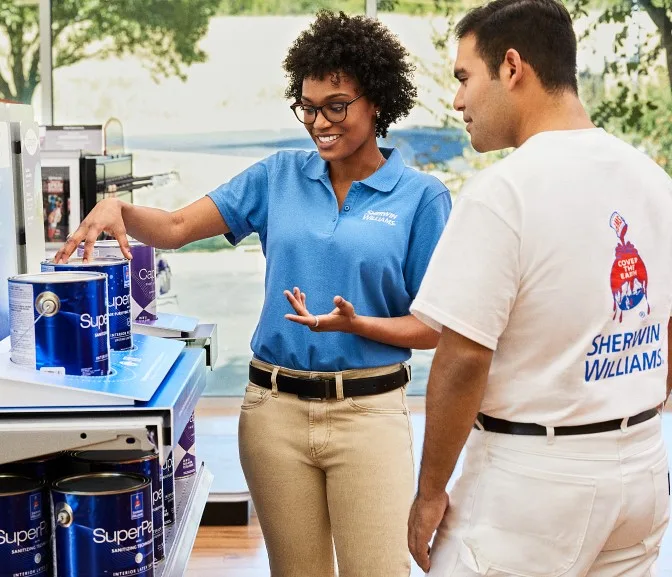
Sherwin-Williams dominates the professional painting market in 2026 — not because every product is objectively superior, but because the ecosystem around the brand is built for professional use. Over 4,500 Sherwin-Williams store locations across the US mean a contractor can get more paint on a Tuesday morning without planning ahead. Contractor loyalty programs, consistent supply chains, and dedicated professional support make it the default choice for painters who need reliability at scale.
As one working professional painter summarized it in Happy Home Painter's 2026 guide: Sherwin-Williams gets used "not necessarily because it's always the best on the market, but because they treat painters extremely well and they are available everywhere." That's useful context for homeowners trying to understand why their contractor recommends it.
The product lineup by tier:
- SuperPaint — entry-level professional option. Good coverage, mid-range durability.
- Duration — the workhorse. Reliable coverage, strong durability, available in interior and exterior.
- Emerald — premium tier. Best in class for washability and VOC performance.
- Emerald Urethane Trim Enamel — standout specialty product for cabinets and hard surfaces.
For homeowners buying at Lowe's, the HGTV Home by Sherwin-Williams line — including Infinity and WeatherShield — offers Sherwin-Williams chemistry in a big-box retail format with Consumer Reports-verified performance data.
The one caveat: Professional painters in 2026 are noting some formula variability in reformulated lines, affecting touch-up matching over time — the same issue flagged for Benjamin Moore. If touch-up consistency matters for your project, buy extra paint and store it properly labeled with the date.
Sherwin-Williams is the right choice for contractors, DIYers who want consistent results without hunting for a specialty dealer, whole-house projects, and exterior applications in variable climates.
Behr and PPG: The Honest Case for the Budget Tier
The assumption that Behr and PPG are simply inferior versions of Benjamin Moore and Sherwin-Williams is not accurate. For specific applications, they are genuinely the better choice — not just the cheaper one.
Behr Dynasty is the clearest example. Consumer Reports' 2026 interior paint lab tests place Behr Dynasty competitively against premium brands on washability — the most practically important spec for high-traffic interior rooms. At $50–$65/gallon at Home Depot, it delivers scuff and stain resistance that competes with paints costing $20–$30 more per gallon. For a family room, hallway, or bathroom, the performance gap between Behr Dynasty and Benjamin Moore Regal Select is narrower than the price gap suggests.
Behr Premium Elastomeric Latex is the top recommendation for stucco and brick exteriors — period. On these surfaces, the elastomeric formula's crack-bridging flexibility outperforms more expensive non-elastomeric options. This is a case where the product's specific chemistry matters more than the brand's overall prestige.
PPG Diamond ($45–$55/gallon) offers solid coverage and durability at a mid-range price. PPG Timeless ($45–$55/gallon) is their premium alternative and competes with Behr Marquee on performance. Available at Home Depot and select retailers, they're a reasonable choice when you don't have access to a Sherwin-Williams store or Benjamin Moore dealer.
The real trade-offs for Behr and PPG:
- Slightly less color depth compared to Benjamin Moore's Gennex colorant system
- More variability in touch-up matching over time
- Shorter expected repaint cycles for exterior applications in harsh climates
For a room you plan to repaint within five years, or a property where the repaint schedule is driven by tenant turnover rather than paint degradation, those trade-offs are largely irrelevant. Behr is exclusively available at Home Depot, and PPG has limited retail distribution — if you need flexibility in where you buy, that can be a practical constraint.
Frequently Asked Questions
Is Benjamin Moore worth the higher price in 2026?
For owner-occupied homes where you care about long-term color accuracy and plan to stay for more than five years, yes. Benjamin Moore's Gennex colorant system produces richer, more consistent color than most competitors, and the longer repaint cycle partially offsets the higher upfront cost. For rental properties or rooms you'll repaint within five years, the premium is harder to justify. Also factor in that independent dealers sometimes offer substantial volume discounts not available at big-box stores — at 40–50% off, the price gap with Sherwin-Williams narrows significantly.
What's the best exterior paint for a house with stucco siding?
Behr Premium Elastomeric Latex. Stucco develops hairline cracks over time as it expands and contracts with temperature changes. A rigid paint film will crack along with the substrate; elastomeric paint stretches to bridge those cracks rather than cracking with them. On stucco and brick, this crack-bridging property matters more than brand prestige.
Does Sherwin-Williams Duration Exterior hold up in humid climates?
Yes. Duration Exterior is the most commonly specified contractor paint for humid southern climates precisely because of its moisture barrier performance and mildew-resistance additives. Sherwin-Williams Emerald Exterior is the upgrade if you want the highest-tier option — particularly recommended for New England freeze-thaw cycles according to professional painter sources.
Can I use Behr at Lowe's?
No. Behr is sold exclusively through Home Depot. If you need to buy paint at Lowe's, your options are Sherwin-Williams (HGTV Home line), Valspar (Reserve line), or Glidden. Consumer Reports tests HGTV Home by Sherwin-Williams products and the data is publicly available if you want lab-verified performance info for the Lowe's channel.
How much does it cost to paint a house interior in 2026?
Professional labor runs $50–$90/hour depending on your market, with whole-house interior projects typically ranging from $3,000–$8,000 for a 2,000–2,500 square foot home including materials. Paint itself is typically 10–20% of total project cost — which is the core argument for not downgrading on paint quality when you're already paying significant labor costs.
What's the difference between Sherwin-Williams Duration and Emerald?
Duration is Sherwin-Williams' workhorse: reliable, widely used by contractors, available in interior and exterior formulations, strong durability. Emerald is the premium tier: higher VOC performance, better washability ratings, and the Emerald Urethane version is specifically optimized for hard surfaces like cabinets and trim. Consumer Reports has tested both; Emerald scores higher on washability metrics. If budget isn't the constraint, Emerald is worth the upgrade for main living areas. For utility spaces, Duration is the more cost-effective choice.
Who Should Buy What: A Quick-Reference Summary
| If you... | Best pick |
|---|---|
| Want the best color accuracy for a long-term owner-occupied home | Benjamin Moore Aura or Regal Select |
| Are hiring a contractor who needs paint readily available | Sherwin-Williams Duration |
| Have kids/pets and need maximum washability on a budget | Behr Dynasty |
| Are painting a rental or property you'll resell within 5 years | Behr Premium Plus or PPG Diamond |
| Need to paint exterior wood (decks, siding, fences) | Benjamin Moore Arborcoat |
| Have stucco or brick exterior surfaces | Behr Premium Elastomeric Latex |
| Want premium exterior with long-term fade resistance | Benjamin Moore Aura Exterior |
| Want premium exterior at Lowe's with lab-verified data | HGTV Home by Sherwin-Williams WeatherShield |
| Are doing cabinets and want a professional finish | Benjamin Moore Advance |
| Are doing cabinets as a DIY project | Sherwin-Williams Emerald Urethane Trim Enamel |
How This Guide Was Researched
This guide is based on manufacturer specifications, Consumer Reports' 2026 interior and exterior paint lab tests, professional painter guides from Happy Home Painter and Echo House Painting (contractors with firsthand 2026 market experience), and cost analysis from FacadeColorizer's 2026 UV exposure comparison. It does not reflect hands-on testing by Trusted Buyer Report. All pricing is 2026 US retail before contractor discounts and seasonal promotions, which can shift the math considerably — especially for Sherwin-Williams.
This article was drafted with AI assistance and fact-checked by our editorial team before publishing. How we review →
Related Reading on Trusted Buyer Report
If you're planning a home refresh beyond just the walls, these guides may be useful in your overall project:
- Choosing paint is one part of a larger home upgrade. Our 2026 furniture and appliances buyer's guide covers how to coordinate purchases and get the best value across your home's key investments.
- Freshly painted dining rooms and living spaces make furniture choices feel more intentional — if you're repainting ahead of a furniture refresh, our dining room table and chair guide walks through the 2026 options from budget to luxury.
- A newly painted home office pairs well with the right workstation setup. See our best ergonomic office chairs for 2026 if you're also upgrading your WFH setup.
- If you're painting outdoor structures (fences, deck furniture, exterior trim), our best outdoor furniture 2026 guide covers weather-resistant materials that hold up without needing frequent repainting.
- For the full home decor picture — wall color is only one piece — see our roundup of best home decor online stores in 2026.
- Adding low-maintenance indoor plants to a freshly painted room makes both the plants and the paint look better — our 2026 guide covers the easiest-care, air-purifying options.
Trusted Buyer Report is independent and not affiliated with Benjamin Moore, Sherwin-Williams, Behr, PPG, or any paint retailer. We may earn a commission from purchases made through links on this page. Full affiliate disclosure →