

Head-to-Head: Top Home Décor Online Stores Compared at a Glance (2026)

You're standing in a freshly painted living room with a tape measure in one hand and a browser tab open in the other, trying to decide between Joss & Main, Perigold, and three other stores you've had bookmarked for two weeks. This is exactly where most home décor shopping decisions stall — not from lack of options, but from too many options with no clear framework for choosing between them.
According to Newsweek's Best Online Shops 2026, which scored retailers on a 10-point scale using real customer testing across multiple experience dimensions, the top-ranked furniture and home living stores break down as follows:
| Store | Newsweek Score | Price Tier | Style Identity | Return Window |
|---|---|---|---|---|
| Joss & Main | 8.32 | Budget–Mid | Transitional, eclectic | 30 days |
| Birch Lane | 8.32 | Mid | Traditional, classic | 30 days |
| World Market | 8.14 | Budget–Mid | Global eclectic | 30 days |
| Perigold | 8.12 | Luxury | Designer, maximalist | 30 days |
| Living Spaces | 8.10 | Mid–Premium | Contemporary, broad | 30 days |
| Frontgate | 7.85 | Premium | Outdoor/indoor lifestyle | 90 days |
| Design Within Reach | 7.81 | Premium–Luxury | Modernist, Bauhaus | 30 days |
| RH (Restoration Hardware) | 7.76 | Luxury | Aspirational transitional | 30 days |
| Uplift Desk | 7.74 | Mid–Premium | Ergonomic/home office | 30 days |
| Article | 7.59 | Mid | Scandinavian minimalist | 30 days |
These scores reflect customer experience quality — checkout flow, delivery reliability, product accuracy, and post-purchase support — not brand marketing budgets. Joss & Main and Birch Lane tied at 8.32, both part of the Wayfair family but serving meaningfully different aesthetics. Perigold, also Wayfair-owned, operates as a separate luxury channel with a distinct product catalog and service tier. Knowing these structural relationships helps you understand why prices and policies differ even when the parent company is the same.
Future Market Insights projects that online retail will represent 38% of the global home décor market share in 2026 — a position reinforced by comparison tools, wider assortment visibility, and integration with digital room-planning features. That channel dominance means the stores listed above are competing intensely for your attention, which generally works in your favor when it comes to pricing and service.
Why Online Home Décor Shopping Has Fundamentally Changed in 2026

The home décor e-commerce landscape in 2026 is not simply "more of the same." Structural shifts in consumer behavior, housing economics, and retail technology have combined to create a market that looks genuinely different from three years ago.
At the macro level, Mordor Intelligence values the global home décor market at ?.53 billion in 2026, growing at a 5.21% CAGR toward ?.34 billion by 2031. A longer-range forecast from Future Market Insights projects expansion from ?.1 billion in 2026 to ?.8 billion by 2036 at a 6.9% CAGR, with furniture commanding a 42% product share. These are not niche numbers — home décor is one of the largest consumer discretionary categories on earth, and the online channel is capturing an increasing share of it.
On the US side, Renub Research estimates the US home décor market at ?.52 billion in 2025, growing to ?.93 billion by 2034 at a 4.32% CAGR. That growth is being driven by e-commerce penetration, AI-assisted product discovery, and digital visualization tools that reduce purchase uncertainty. Meanwhile, IBISWorld reports that brick-and-mortar home furnishings stores have seen revenue decline at a -1.5% CAGR over five years, reaching an estimated ?.9 billion in 2026 with a further 0.6% decline expected this year alone.
The reason for that physical retail decline is partly structural. Interest rate hikes pushed mortgage rates higher, suppressing home buying and new construction. Consumers who couldn't move redirected spending toward refreshing existing spaces — a behavioral shift that favors online shopping, where room-by-room browsing and style filtering are faster and more efficient than driving to a showroom. Gitnux reports that 48% of shoppers aged 25–34 now default to online for home décor purchases, and millennial spending on home décor averages ?,500 per year.
Three-dimensional product visualization tools deserve specific mention here. The experiential gap between online and in-store has narrowed considerably — you can now place a virtual sofa in a photo of your actual living room before buying. This technology, integrated into several of the stores listed above, is one reason online channel share has reached 38% despite the obvious limitation that you cannot sit on a couch through a screen. If you're also evaluating appliances and smart home devices alongside your décor refresh, the Home & Kitchen Buying Guide: Appliances, Cookware & Smart Home 2026 covers the connected home ecosystem in comparable depth.
The Question Most Shoppers Don't Ask: Which Store Actually Matches Your Decorating Style?
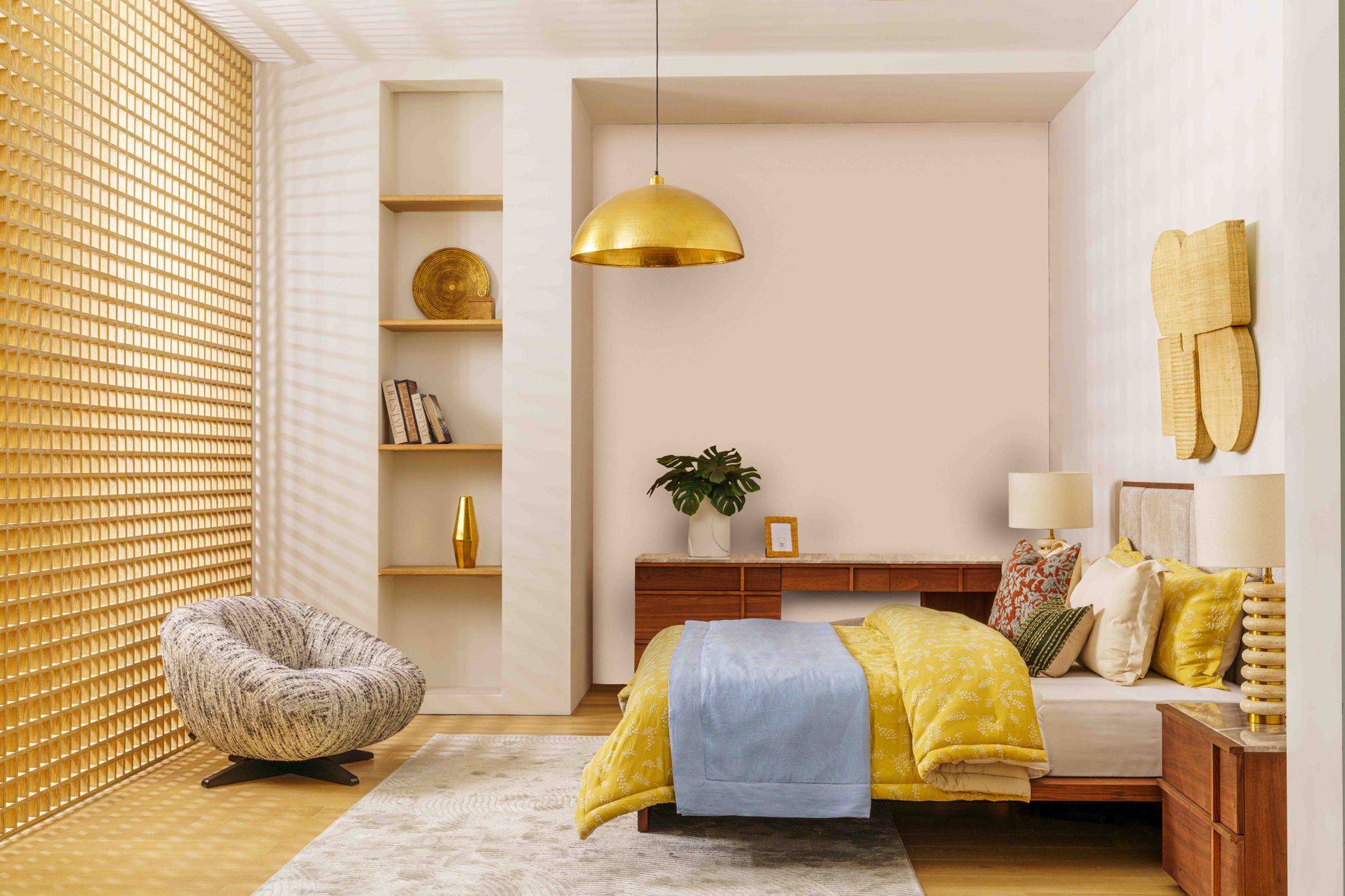
Almost every "best home décor stores" article ranks by price or popularity. Almost none of them map stores to specific aesthetic identities — which means shoppers regularly discover mismatches after delivery, when a sofa that looked warm and traditional on screen arrives looking stiff and formal in their casual, layered space.
Six interior design styles are dominant in 2026, according to trend reporting from Nomi K and Printful: maximalist/intentional clutter, biophilic/natural materials, Scandinavian minimalism, transitional traditional, industrial modern, and global eclectic. Here's how the top stores map to each:
- Birch Lane — Best for transitional traditional. Its catalog runs deep on classic silhouettes with updated finishes: rolled-arm sofas, turned-leg dining tables, and shiplap-adjacent wall décor. If your reference point is a well-furnished New England farmhouse or a Southern colonial interior, Birch Lane's filtering tools will surface relevant options faster than any other store on this list.
- Design Within Reach (dwr.com) — Best for modernist and Bauhaus-influenced spaces. This is the store for Eames chairs, Noguchi tables, and their legitimate contemporaries. The catalog is deliberately narrow, which is a feature, not a limitation — every piece is architecturally intentional.
- World Market — Best for global eclectic. Handcrafted items, culturally diverse sourcing, and a price point that lets you layer without financial anxiety. If your aesthetic involves Moroccan poufs next to Japanese ceramics next to Mexican textiles, this is your store.
- Perigold — Best for luxury maximalism. Designer brands, high-end textiles, and statement furniture from names you'd find in architectural digest features. The catalog aggregates luxury rather than manufacturing it, which means breadth is exceptional.
- Article — Best for Scandinavian minimalism. Clean lines, a deliberately curated SKU count (which prevents the overwhelm common on broader platforms), and direct-to-consumer pricing that makes mid-century modern accessible without the DWR price tag.
- RH / Restoration Hardware — Best for aspirational transitional luxury. Neutral palettes, oversized upholstery, architectural hardware, and a membership model that reduces prices for committed buyers. The aesthetic is cohesive to a fault — everything looks like it belongs in the same loft.
Style-fit matters more in 2026 than it did five years ago. Gitnux reports that 72% of Gen Z shoppers want personalized home décor pieces, and 65% of consumers express eco-friendly preferences. A store that doesn't surface sustainable product lines clearly — or that buries customization options — is a structural mismatch for these buyers regardless of its price competitiveness. Before judging any store's fit, filter by a specific style tag rather than browsing the homepage, which is curated for broad appeal rather than your specific aesthetic.
Budget Tiers Decoded: What You Actually Get at Each Price Level

Price tier confusion is the most common source of post-purchase disappointment in home décor. A ? accent chair from Joss & Main and a ? accent chair from Design Within Reach are not comparable products — they exist in different supply chains with different material standards and different service assumptions.
Here's a realistic breakdown of what each tier delivers in 2026:
Budget (Under ? for accents, under ? for furniture)
World Market is the strongest performer here. You get global-inspired decorative pieces — rattan baskets, ceramic vases, woven throws — at prices that make layering affordable. Furniture at this tier is typically particleboard or MDF construction with veneer finishes. Expect a 3–7 year lifespan with normal use. Return policies at this tier tend to be standard (30 days), but shipping costs can erode value on smaller orders.
Mid-Range (?–? for accents, ?–?,000 for furniture)
Joss & Main, Birch Lane, and Article occupy this tier. Article's direct-to-consumer model is worth understanding: by eliminating retail markup, they deliver solid-wood frames and performance fabrics at prices that would be premium-tier in a traditional retail context. A Sven sofa from Article at roughly ?,400 uses a kiln-dried hardwood frame and sinuous spring suspension — construction details you'd expect to pay ?,500+ for at a traditional furniture store. Birch Lane at this tier offers strong value on upholstered pieces and case goods, though some accent furniture uses engineered wood at the lower end of its price range.
Premium (?+ for accents, ?,000–?,000 for furniture)
Living Spaces and Frontgate anchor this tier. Living Spaces offers broader customization on upholstery — fabric and configuration options that mid-range stores don't provide. Frontgate's premium positioning extends to outdoor furniture built for multi-season durability, with powder-coated aluminum frames and solution-dyed acrylic fabrics that resist UV fading. At this tier, white-glove delivery (room placement, packaging removal) becomes a standard option rather than an expensive add-on.
Luxury (?,000+ for accents, ?,000+ for furniture)
Perigold, RH, and Design Within Reach operate here. RH's membership model (?/year) provides 25% off regular pricing, which changes the value calculation significantly for anyone furnishing multiple rooms. DWR sells authenticated versions of iconic modernist designs — the difference between a licensed Eames Lounge Chair from DWR and a lookalike from an unverified seller is significant in terms of materials, tolerances, and resale value. Perigold aggregates designer brands including Arteriors, Currey & Company, and Visual Comfort, giving access to trade-only lines without requiring a design professional account.
Furniture dominates the market at 42% of total home décor spending, according to Future Market Insights, which means your furniture budget allocation matters most. Gitnux notes that bedding products represent 18% of the textiles décor segment and that tableware décor is valued at ? billion globally — meaningful categories where mid-range stores often match luxury stores on visual impact at a fraction of the cost.
Specialty vs. General: When to Shop a Curated Store vs. a One-Stop Marketplace

The strategic choice between a broad marketplace and a specialty store affects both the quality of your outcome and how much time you spend getting there. Neither approach is universally better — the right choice depends on where you are in your decorating process.
General marketplaces like Joss & Main and World Market are most useful when you're furnishing multiple rooms simultaneously or when your style is still being defined. The breadth of SKUs lets you compare dozens of options side by side, and the advanced filtering tools — which Future Market Insights identifies as a core competitive advantage of the online channel — make it possible to narrow by color, material, dimension, and price in a single session.
Specialty stores serve a different need. Lovesac (Newsweek score: 7.67) builds its entire business around one product category — modular sectional sofas — and goes extraordinarily deep on customization within that category. You can configure fabric, fill density, seat count, and chaise orientation with a precision that no general marketplace can match. The tradeoff is obvious: Lovesac cannot furnish your dining room. Similarly, Uplift Desk (Newsweek score: 7.74) is the right choice for an ergonomic home office setup, with standing desk configurations and accessory ecosystems that general stores don't replicate — but it won't help you choose a bedroom rug.
Perigold occupies an interesting hybrid position. It functions as a specialty luxury aggregator — curating designer brands rather than manufacturing products — which gives it both the breadth of a marketplace and the curation quality of a specialty store. For buyers in the luxury tier who want a single destination rather than managing accounts across six designer brands, Perigold's model is genuinely efficient.
A practical approach: use a general marketplace to establish anchor pieces (sofa, dining table, bed frame), then use specialty stores for statement items and finishing details. This sequence prevents the style incoherence that comes from buying everything from a single general store's "trending" section, while avoiding the inefficiency of shopping specialty stores for commodity items. Renub Research notes that specialty stores in the US differentiate through expert guidance and curated product ranges — advantages most relevant when you already know what you want and need depth, not breadth.
Shipping, Returns, and the Hidden Costs of Online Furniture Buying

The listed price of an online furniture purchase is rarely the final price. Understanding the full cost structure before you buy prevents the unpleasant surprise of a ? sofa that arrives with a ? freight charge and a ? assembly fee.
Large furniture typically ships via freight carrier rather than parcel carrier. Delivery methods vary significantly: threshold delivery (left at your door or garage), room-of-choice delivery (placed in the room you specify but not assembled), and white-glove delivery (placed, assembled, and packaging removed). Each tier adds cost — typically ?–? more per step. Frontgate and RH include white-glove delivery as a standard option on large items; Joss & Main and Birch Lane offer it as a paid upgrade. Article includes free threshold delivery on most items but charges for room-of-choice.
Return policies for large furniture are where many shoppers get caught. Some stores charge restocking fees of 10–20% on returned furniture, and some classify oversized items as final sale. Always read the return policy for the specific item, not just the store's general policy page — exceptions are common. Frontgate's 90-day return window is notably generous compared to the 30-day standard across most competitors.
Damage-in-transit rates are meaningfully higher for large furniture than for small décor items. Before purchasing any large piece, check whether the store's damage claim process requires you to refuse delivery (which requires inspection at the door) or whether you can report damage within a window after delivery. RH and Perigold both have established damage resolution processes; smaller DTC brands vary in how efficiently they handle freight claims.
Assembly requirements are rarely prominent in product listings. A mid-range bookcase from Joss & Main might require 45–90 minutes of assembly and two people for safe execution. Third-party assembly services (TaskRabbit, Handy, store-partnered services) typically charge ?–? per piece. Factor this into your total cost comparison, especially when evaluating whether a premium store's white-glove delivery justifies its higher base price.
The tactile gap between online and in-store remains real despite 3D visualization improvements. Fabric texture, cushion firmness, and wood grain are still impossible to fully evaluate through a screen. Order fabric swatches when available — Birch Lane, Article, and RH all offer this — before committing to upholstered pieces. For rugs, which Nomi K identifies as the top décor purchase category (49% of decorators bought one in the past year), pile height and texture vary enormously between product photos and physical samples.
Frequently Asked Questions
Which online home décor store has the best return policy in 2026?
Frontgate stands out with a 90-day return window, significantly longer than the 30-day standard at most competitors. For large furniture purchases where you need time to live with a piece before deciding, that extra window is genuinely valuable. RH's return policy is also relatively flexible for members. Always check item-specific return conditions — many stores exclude oversized or custom-configured items from standard return terms.
Is it safe to buy furniture online without seeing it in person?
For most mid-range and premium purchases, yes — with precautions. Order fabric swatches before committing to upholstered pieces. Use 3D room-planning tools (available on Article, RH, and Living Spaces) to check scale. Read customer reviews specifically for comments on color accuracy and material quality, not just overall satisfaction. For luxury purchases above ?,000, consider whether a showroom visit is worth the trip — DWR and RH both maintain physical locations where you can evaluate flagship pieces before ordering online.
What's the difference between Joss & Main and Birch Lane?
Both are Wayfair-owned and scored identically (8.32) in Newsweek's 2026 ranking, but they serve different aesthetics. Joss & Main leans transitional and eclectic — a broader range of styles at budget-to-mid price points. Birch Lane focuses on traditional and classic American styles with a more consistent aesthetic identity. If your space leans classic,