This article was researched and drafted with AI assistance, then reviewed and fact-checked by our editorial team before publishing. We may earn a commission when you use our links to make a purchase — this never influences our rankings. Read our full disclosure →
Buying an engagement ring online is one of the highest-stakes purchases most people make. You're spending thousands of dollars on something you can't touch, from a seller you've never met, for an occasion that doesn't allow a do-over.
This guide cuts through the noise. Below, you'll find a data-driven comparison of the top engagement and wedding ring retailers in 2026 — ranked by diamond certification standards, return and resize policies, customization depth, and verified customer trust scores from Trustpilot. We synthesized data from Forbes Vetted, Velur's 2026 retailer analysis, GitNux's engagement ring statistics, and The Knot Real Weddings Study 2026 to build this comparison. We have not personally tested these retailers; our methodology is transparent research-based analysis, not hands-on experience.
Bottom line up front: Blue Nile wins on selection breadth and pricing transparency. 77 Diamonds leads on Trustpilot ratings (4.9/5 across 5,612 reviews) and bespoke capability. Brilliant Earth is the strongest pick for lab-grown and ethical sourcing. James Allen is the safest bet for first-time buyers who need to see a stone clearly before committing.
How These 6 Ring Sites Compare at a Glance
| Retailer | Best For | Diamond Options | Customization | Return Window | Trustpilot |
|---|---|---|---|---|---|
| Blue Nile | Overall selection & pricing | Natural + lab-grown | Online configurator | 30 days | 3.9/5 (1,465 reviews) |
| James Allen | First-time buyers, classic styles | Natural + lab-grown | Online configurator | 30 days | 3.9/5 (1,725 reviews) |
| Brilliant Earth | Ethical sourcing, lab-grown | Natural + lab-grown | Online configurator | 30 days | 4.2/5 (1,482 reviews) |
| 77 Diamonds | Bespoke, international buyers | Natural + lab-grown | Full bespoke service | Varies | 4.9/5 (5,612 reviews) |
| Vrai | Minimalist lab-grown only | Lab-grown only | Online configurator | Varies | 3.8/5 (80 reviews) |
| Pandora | Affordable wedding bands | Lab-grown + CZ | Pre-set designs | Varies | N/A (mass retail) |
A few things stand out immediately. 77 Diamonds scores 4.9/5 across over 5,600 verified reviews — the highest on this list by a significant margin — yet it operates as a specialist, not a mass-market platform. High ratings don't always track with name recognition. Vrai's 3.8/5 from just 80 reviews reflects a small and somewhat polarized customer base; that limited sample size warrants extra caution for anyone spending $2,000+.
Forbes Vetted named Blue Nile the overall winner for engagement rings, citing its price-match guarantee and diamond upgrade program — a long-term benefit most competitors skip entirely.
If you're still mapping out your full wedding budget and want to understand where ring costs fit relative to venue, catering, and attire, the Wedding & Events Buyer's Guide 2026: Plan & Save covers total wedding expenditure across different budget tiers in detail.
What Actually Makes a Ring Site Worth Trusting?
Most "best ring site" articles apply the same five-star treatment to every retailer on the list. This guide doesn't. Here are the five criteria that genuinely differentiate trustworthy platforms from ones that look credible until something goes wrong.
Diamond Certification
According to GitNux's 2026 engagement ring statistics, more than 50% of U.S. diamond sales are now tied to certifications from major grading laboratories. The standard you want is GIA (Gemological Institute of America) or AGS (American Gem Society). Never buy an uncertified stone online — without independent grading, there's no objective basis for evaluating the cut, color, clarity, or carat weight you're actually getting.
Every retailer on this list offers certified stones. The difference is whether the certification comes standard or costs extra. Always confirm before adding to cart.
Return and Resize Policy
A 30-day return window is the industry floor, not a premium feature. What separates the good from the great is the resize policy, which matters far more than most buyers realize at the point of purchase.
Velur's 2026 retailer comparison shows significant variation: Blue Nile and James Allen each allow one free resize within 30 days of delivery. Velur itself offers 180 days of free resizing. Some European specialists like Verlobungsringe.de offer lifetime free resizing. For a ring you'll wear every day, this detail deserves as much attention as the stone grade.
Customization Depth
There's a meaningful difference between an online configurator (pair any stone with any pre-set setting) and full bespoke service (a jeweler designs the ring from scratch based on your brief, using CAD modeling). If your vision doesn't fit any existing template — unusual stone shape, non-standard band profile, mixed metal — an online configurator won't satisfy you. 77 Diamonds is the only option on this list offering full bespoke at scale.
Customer Support Access
Chat-only support is adequate for a $40 purchase. For a ring costing $3,000 or more, the ability to speak with a human by phone, WhatsApp, or in person is a meaningful differentiator. 77 Diamonds offers showroom access alongside live chat. Vrai's email-only support is the weakest option on this list for buyers who need real-time answers before committing.
Sourcing Transparency
According to The Knot Real Weddings Study 2026, Gen Z buyers — now entering peak marrying age — prioritize intentional, personalized choices over convention. That extends to diamond sourcing. Brilliant Earth's conflict-free certification and recycled metal options directly address this preference. Blue Nile and James Allen offer lab-grown alternatives but don't build their brand identity around sustainability. Your values should drive this decision, not just the price tag.
Lab-Grown vs. Natural Diamonds in 2026: What the Data Says
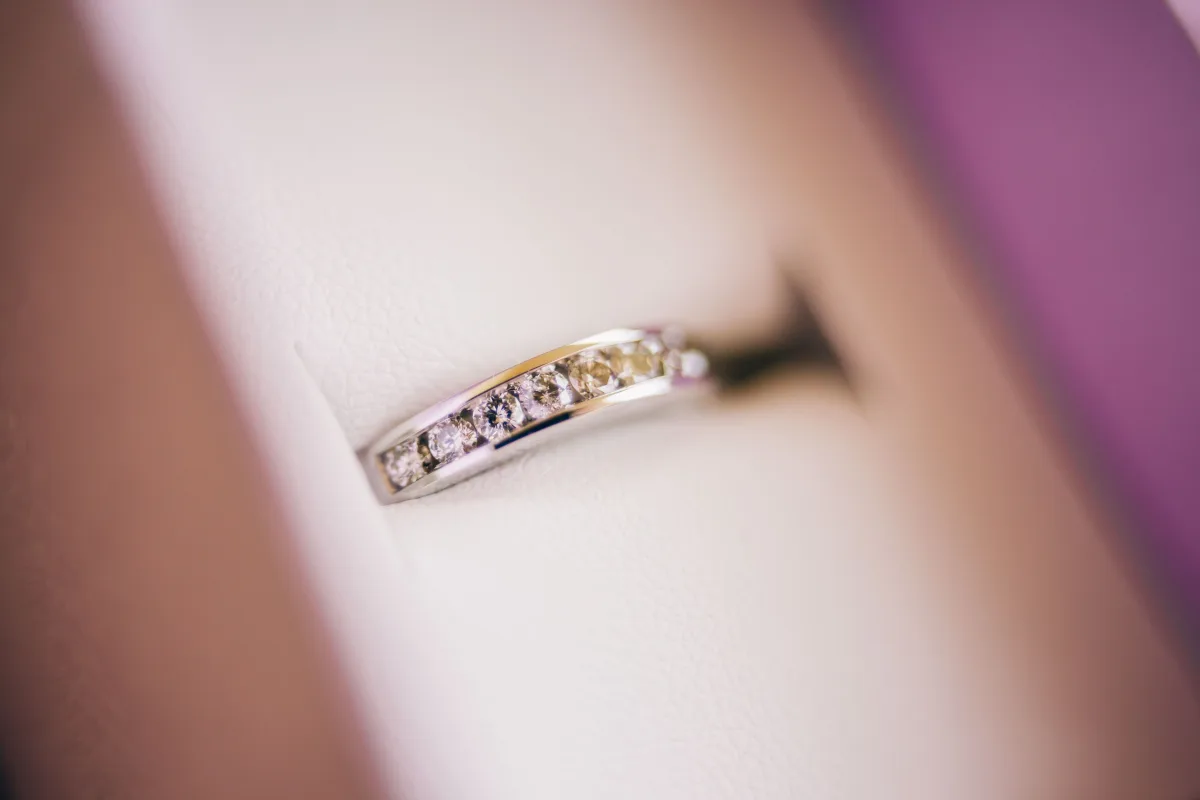
Lab-grown diamonds are chemically and physically identical to mined diamonds. The difference is origin, not composition. A GIA-certified lab-grown diamond has the same hardness, refractive index, and optical properties as a mined stone of equivalent grade.
The practical difference in 2026 is price. Lab-grown stones typically cost 50–80% less than comparable natural diamonds. That means a buyer targeting a 1.5-carat stone on a natural-diamond budget can realistically access a 2.5-carat lab-grown equivalent — with the same certification and visual profile.
The Knot Real Weddings Study 2026 identifies lab-grown diamonds as one of the defining market trends of the year, driven by Gen Z's priorities around sustainability and value. According to GitNux, 50.4% of U.S. engagement ring shoppers are targeting a 0.5 to 0.69 carat center stone — a range where lab-grown pricing makes larger sizes accessible within the same budget.
Here's the trade-off worth acknowledging honestly: natural diamonds retain more secondary market value. Lab-grown stones have depreciated significantly as production costs have fallen. If long-term resale value matters to you, natural is the rational choice. If you're optimizing for size, quality, and ethical sourcing within a fixed budget, lab-grown wins the argument.
Your stone preference directly determines your retailer shortlist:
- Lab-grown only: Vrai — its entire catalog is built around this
- Lab-grown emphasis with natural options: Brilliant Earth
- Both with comparable depth: Blue Nile and James Allen
- Both plus full bespoke: 77 Diamonds
Choosing a lab-grown-focused retailer isn't just a values decision — it's a catalog decision that affects how many stone options you'll actually see.
2026 Engagement Ring Trends: What Couples Are Actually Buying
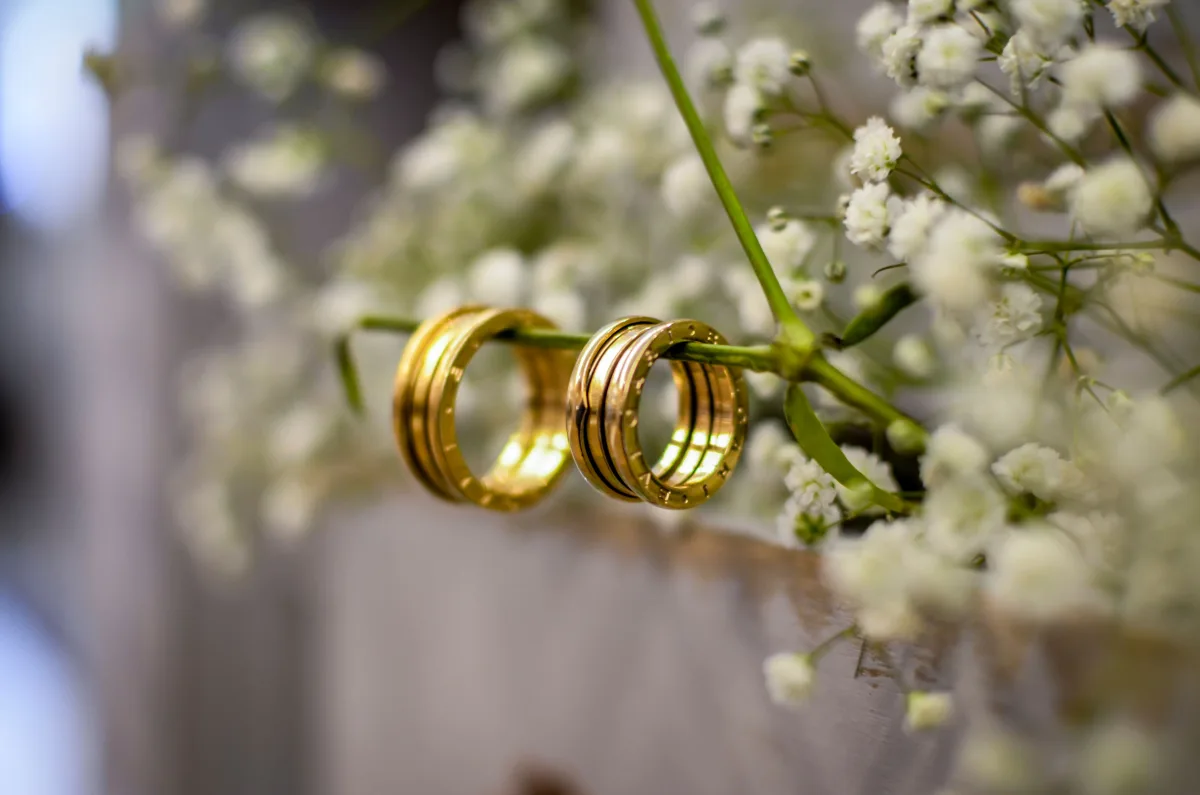
Trend data matters for a practical reason: it tells you whether a retailer's current inventory will actually stock what you want.
According to Queensmith's 2026 Engagement Ring Trends Report, searches for "timeless engagement rings" have risen 200% year-over-year, and "vintage-style engagement rings" have surged 700%. Couples are moving away from trend-chasing and toward pieces that feel personal and enduring. That shift has real implications for which retailers to shortlist.
Trilogy rings (representing past, present, and future) account for 18.4% of engagement ring sales in 2026 — down slightly from 20% in 2024, but still a top-three style by volume. If a trilogy ring is your goal, prioritize retailers with deep three-stone inventory or bespoke capability. Precise stone matching across three stones requires more than a standard configurator handles well.
Halo rings have declined to 5.3% of sales in 2026, compared to 9% the year before. Queensmith's analysts forecast a revival driven by old-money aesthetics and specific celebrity influence (Elsa Hosk's halo ring is cited as a returning reference point). Declining market share doesn't mean unavailability — it may actually mean better pricing and less competition for premium halo settings right now.
Yellow gold is making a strong comeback, per Regal Hatton Garden's 2026 expert trend analysis. The warm tone complements all skin types, contrasts naturally with diamonds, and pairs well with the broader shift toward timeless aesthetics. Designers are combining yellow gold with modern settings — bezel, tension, east-west prong — to create rings that feel nostalgic without being dated. Not every online retailer stocks yellow gold in the same depth as white gold or platinum; confirm catalog availability before narrowing your search.
Solitaire settings remain the most universally stocked style across every major platform. If you want a solitaire, you have maximum retailer flexibility. If you want a vintage-inspired trilogy in yellow gold with a cushion-cut center stone, your shortlist shrinks considerably — and that's where 77 Diamonds' bespoke capability becomes the practical choice, not just the premium one.
2026 Wedding Band Trends: Matching — or Intentionally Contrasting — Your Engagement Ring
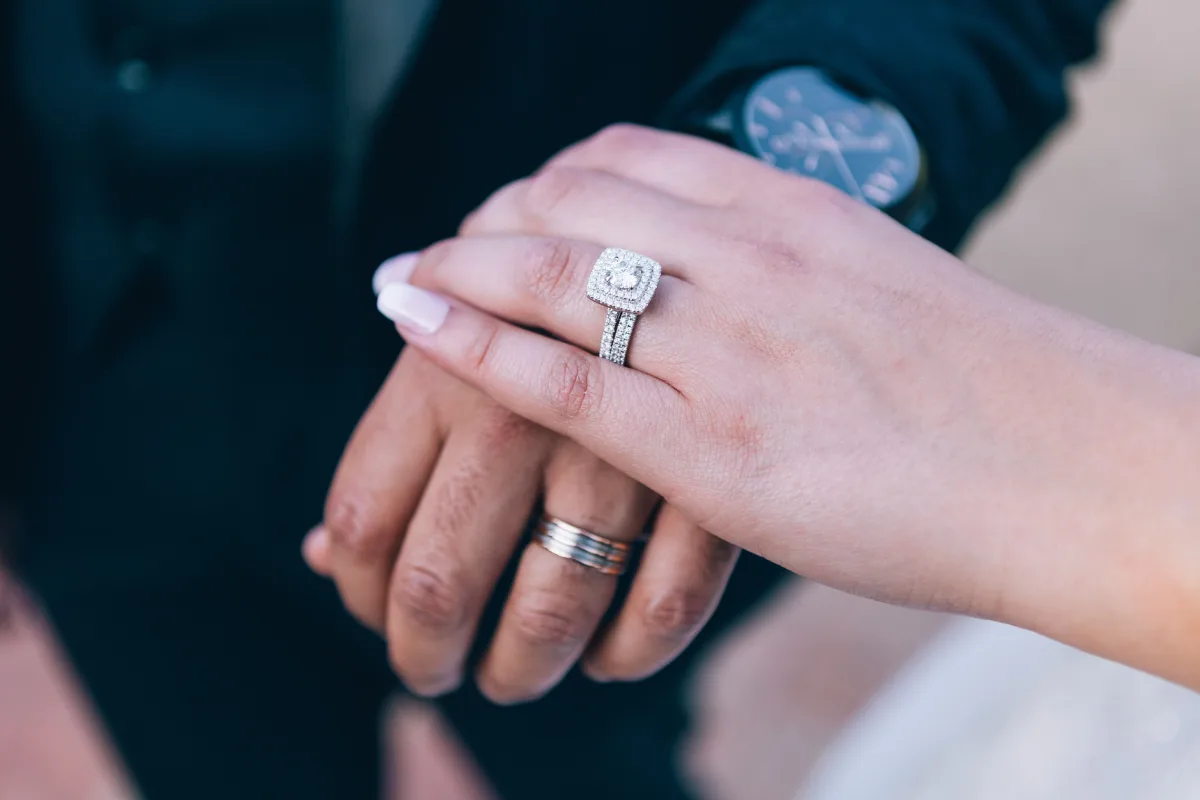
Wedding band selection is often treated as an afterthought. That leads to two common and costly mistakes: buying from a different retailer and discovering the metals don't match in daylight, or choosing a band profile that physically conflicts with the engagement ring's setting.
According to Gabriel & NY's 2026 Wedding Ring Trend Report, open bands are one of the fastest-growing styles. Characterized by a deliberate gap that becomes part of the design, these translate in 2026 to sculpted negative space, floating diamonds at each end, and asymmetrical curves that create movement. Open bands pair particularly well with oval solitaires and asymmetrical settings, where the open space complements the silhouette without crowding it.
Sculptural bands — twisted metal, fluid curves, forms that appear hand-shaped — appeal to buyers who want a wedding ring that functions as standalone art rather than a supporting piece. These require a retailer with genuine bespoke capability, not a configurator with limited band options.
Regal Hatton Garden's 2026 guidance highlights another growing approach: pairing a solitaire engagement ring with a custom wedding band that includes accent diamonds, engraved details, or a hidden halo. The solitaire's clean profile becomes a canvas that doesn't compete with a more detailed band. This pairing approach works best when both rings are designed in coordination — mismatched metal tones and profile heights are the most common mistakes buyers report after the fact.
For buyers prioritizing value on the wedding band specifically, Pandora's portfolio offers sterling silver, 14K gold, and lab-grown diamond options at accessible price points — solitaire bands, pavé designs, eternity rings, and stackable wishbone bands. Pandora isn't a destination for engagement rings, but as a wedding band source for budget-conscious buyers who want contemporary design, it's a legitimate option, per GM Insights' 2026 Wedding Ring Market analysis.
If you're also thinking about gifts for the wedding party, upcoming showers, or events around the engagement, the guides on flowers and gifts and best gift ideas by occasion cover those decisions with the same research-based approach.
Diamond Shape Guide: Which Cuts Are Well-Stocked Online — and Which Require a Specialist
Diamond shape availability varies more than most buyers expect. Choosing a less common shape from a retailer with limited inventory means accepting whatever stones happen to be in stock — often a poor selection at inflated per-carat prices for that cut.
Round brilliant is the most widely stocked shape across every major online retailer. Engineered to maximize light return, it holds the largest share of shape demand among U.S. buyers. Maximum retailer flexibility.
Oval offers an elongated silhouette that creates a finger-lengthening visual effect. High demand in 2026 and well stocked at Blue Nile and James Allen. Strong choice for buyers who want brilliance close to round with a more distinctive profile.
Emerald cut uses step facets to create a "hall of mirrors" effect that emphasizes clarity over sparkle. This requires a higher clarity grade — GIA VS2 or better is typically recommended — because inclusions are more visible. James Allen's 360-degree stone viewer is especially valuable here, allowing you to evaluate each emerald cut before purchase rather than relying on flat photography.
Princess cut is a modern square shape with sharp corners and strong brilliance. Widely available but declining in relative popularity — which may mean good selection at competitive prices right now.
Cushion cut is a vintage-inspired square or rectangle with rounded corners. Strong availability across major platforms and well-suited to the 2026 trend toward timeless aesthetics.
Pear, marquise, heart, asscher, radiant: Fancy shapes with more limited online inventory. These cuts require careful evaluation of symmetry and the bow-tie effect that standard product photography rarely captures. For these shapes, 77 Diamonds' bespoke service or an in-person specialist is the more reliable route.
GitNux data confirms that 50.4% of U.S. shoppers are targeting 0.5 to 0.69 carat center stones — a range where lab-grown pricing creates meaningful options across all shapes, including fancy cuts that would cost significantly more in natural diamonds at equivalent carat weight.
How to Buy an Engagement Ring Online Without Regret: A Practical Pre-Purchase Checklist
Buying a ring you can't hold first is genuinely anxiety-inducing. These steps don't eliminate that — but they eliminate the most common sources of regret after delivery.
Before you shop:
- Confirm your partner's ring size. Resizing is possible but limits to one free adjustment at most retailers; getting it right saves time and stress.
- Decide on natural vs. lab-grown before selecting a retailer. This choice narrows your shortlist more than any other factor.
- Set a firm budget before browsing. Configurators are designed to encourage upgrades; knowing your ceiling keeps decisions rational.
Evaluating a retailer:
- Verify that stones come with a GIA or AGS certificate included in the listing, not as an optional add-on.
- Read the return policy — specifically the resize terms and whether return shipping is covered.
- Test customer support before buying. Send a chat message or email with a specific question. Response speed and quality tell you more than any review.
Evaluating a specific stone:
- For round and oval shapes: prioritize cut grade over carat size. A well-cut smaller stone outperforms a poorly cut larger one visually.
- For step cuts (emerald, asscher): go to VS2 clarity or better. Inclusions are more visible in these cuts.
- Use James Allen's 360-degree viewer or Blue Nile's zoom tools to inspect the stone, not just a static image.
- For fancy shapes (pear, marquise, heart): confirm the stone doesn't have a strong bow-tie effect. If the listing doesn't show it clearly, ask for additional images before committing.
Before finalizing:
- Confirm the metal: white gold requires rhodium plating every 1–2 years to maintain its color; platinum doesn't. Yellow gold and rose gold are maintenance-free in terms of color.
- Check whether the band width is compatible with wedding bands you're considering. Some engagement ring settings require a custom-fitted wedding band.
Who Should Buy From Each Retailer
Blue Nile: Best for buyers who want the widest selection of certified stones at transparent prices with a price-match guarantee. Strong for natural and lab-grown alike. Solid choice if you want flexibility and aren't locked into a specific setting style.
James Allen: Best for traditional styles and first-time buyers who need confidence before committing. The 360-degree viewer is the best stone evaluation tool of any online retailer, and the 30-day return policy is straightforward.
Brilliant Earth: Best for buyers who prioritize ethical sourcing, conflict-free certification, and recycled metals. Strong lab-grown selection with a values-forward brand identity. Higher price point than Blue Nile for equivalent specs, but the transparency is genuine.
77 Diamonds: Best for buyers with a specific vision that no configurator can execute, international buyers wanting showroom access, and anyone who wants the highest Trustpilot-rated ring retailer on this list. Not the right fit if you need a quick turnaround.
Vrai: Best for minimalist lab-grown-only shoppers who know exactly what they want and don't need phone support. Email-only support and a small review base mean this is a higher-risk option for first-time buyers.
Pandora: Not an engagement ring destination, but a legitimate source for affordable contemporary wedding bands, particularly for buyers who want lab-grown or sterling silver options without a large price tag.
Frequently Asked Questions
What is the best site to buy an engagement ring online in 2026? For most buyers, Blue Nile (breadth and pricing) or James Allen (stone viewer and classic styles) are the strongest all-around choices. For ethical sourcing, Brilliant Earth leads. For bespoke work, 77 Diamonds has the highest verified customer ratings and the most customization depth.
Are lab-grown diamonds worth buying in 2026? Yes, for buyers optimizing for size and value within a budget. Lab-grown diamonds are physically and chemically identical to natural diamonds. The trade-off is lower resale value — natural diamonds hold secondary market value better. If you don't plan to resell, lab-grown is a strong choice.
How much should I spend on an engagement ring? The traditional "three months' salary" guideline is a marketing construct, not a financial norm. The Knot's 2026 data shows the average U.S. engagement ring spend is around $5,500 — but this varies widely by region, age group, and financial circumstance. Buy what you can afford without going into debt.
What diamond certification should I require? GIA (Gemological Institute of America) or AGS (American Gem Society). Both are independent grading labs with rigorous standards. Avoid buying uncertified stones online.
Can I return or resize a ring bought online? Most major retailers offer a 30-day return window. Resize policies vary significantly: James Allen and Blue Nile each offer one free resize within 30 days; Velur offers 180 days. Confirm resize terms for the specific retailer before purchasing.
What diamond shape is most available online? Round brilliant has the deepest inventory across all major platforms. Fancy shapes (pear, marquise, heart, asscher) have more limited online selection and may require a specialist or bespoke service.
How this guide was researched: This article is based on publicly available retailer specifications, expert sources, and verified customer data aggregated from Forbes Vetted, Velur's 2026 retailer analysis, GitNux's engagement ring statistics, The Knot Real Weddings Study 2026, Queensmith's 2026 trends report, and Regal Hatton Garden's expert analysis. It does not reflect hands-on testing by Trusted Buyer Report.
We may earn a commission when you use our links to make a purchase. Our editorial assessments are completed before any affiliate link is applied and are never influenced by commercial relationships. Read our methodology →