

Verdict up front: Mailchimp is best for small businesses and beginners. Kit (formerly ConvertKit) is built for content creators and newsletter writers. Klaviyo is the default choice for ecommerce brands. None of them is the "best" platform in general — they serve fundamentally different business types, and picking the wrong one mid-growth means rebuilding everything from scratch.
This guide is based on manufacturer specifications, published pricing data, and verified third-party comparisons aggregated from multiple sources. It does not reflect hands-on testing by Trusted Buyer Report. We may earn a commission when you use our links to make a purchase.
Why Choosing the Wrong Email Platform Is So Costly
Most people shopping for email software assume there's one winner — the platform with the highest rating, the most features, or the best price. That logic leads to a surprisingly common and expensive mistake: picking a tool that's fine in general but wrong for your specific business model, then realizing it six months later when your list has grown and your automations are too complex to rebuild easily.
Switching platforms mid-growth isn't like exporting a CSV file. You're rebuilding every automation from scratch, recreating audience segments that took months to define, and losing the behavioral history — open rates, click patterns, purchase events — that made those segments meaningful in the first place. This kind of migration can easily consume two to three weeks of staff time, and the disruption to deliverability and subscriber engagement is rarely mentioned in comparison guides.
The better question isn't "which platform is best?" — it's "which platform was designed for someone like me?"
The One Question That Determines Your Platform

Before looking at pricing or features, answer this:
What is your primary business model?
- You sell products through an online store (physical or digital), and your marketing depends on purchase history, browse behavior, or order data → Klaviyo
- You build an audience through content — newsletter, podcast, blog, online course — and monetize through that relationship → Kit
- You're a local service business, nonprofit, or general small business sending regular emails to a contact list without complex behavioral triggers → Mailchimp
These aren't interchangeable tools competing on the same turf. They have different data philosophies and different definitions of what "good email marketing" looks like. Identifying your business type before you evaluate anything else saves significant time and money.
Mailchimp in 2026: Strengths, Limitations, and Who It Still Serves
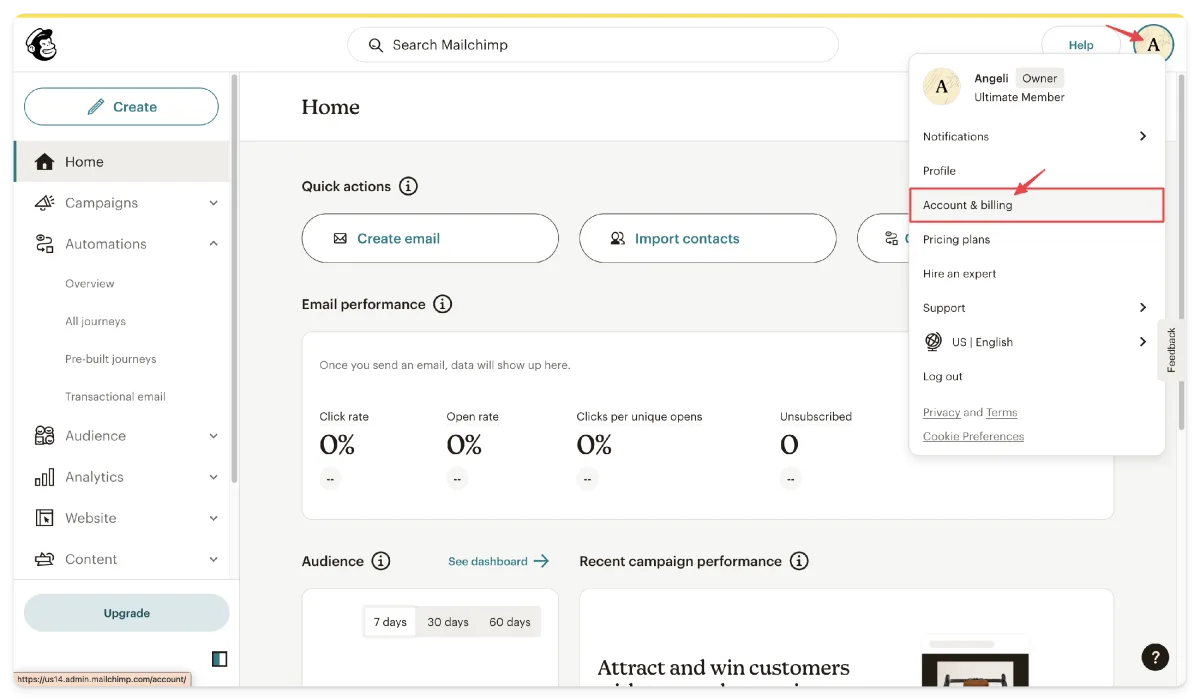
Mailchimp's most durable advantage is its onboarding speed. Most users can send their first campaign within hours — no technical setup, no data modeling, no understanding of event tracking required. The drag-and-drop editor is genuinely well-designed. The template library is extensive. Reporting covers the basics (open rates, click rates, unsubscribes) without overwhelming a non-technical user.
One concrete advantage Mailchimp holds over both Kit and Klaviyo is its pre-built Google Analytics integration. This gives access to over 50 reports including page views and visitor engagement, connecting email campaign performance directly to website behavior with zero custom setup. Neither Kit nor Klaviyo offers this out of the box.
Current pricing (2026):
- Free: 500 contacts, 1,000 emails/month (Mailchimp updated limits; verify current tier at mailchimp.com)
- Essentials: ~$13/month for 500 contacts
- Standard: ~$20/month for 500 contacts
- Premium: $299+/month
One important caveat on Mailchimp's contact billing: <a href="https://mailtoolscout.com/blog/klaviyo-vs-mailchimp">Mailchimp counts total contacts including unsubscribed and cleaned addresses in some plan calculations</a>. If you import a large list "to be safe," your bill reflects the full import, not just your active subscribers. Actively archiving unengaged contacts is necessary to control costs.
Honest limitations to name: Mailchimp's automation is locked entirely behind paid plans. Advanced segmentation works well for demographics and basic purchase history, but it's not built for real-time behavioral segmentation — you can't, for example, branch an automation based on whether a subscriber viewed a specific product page in the past 48 hours. For businesses that handle broader operational needs alongside marketing — think CRM, project management, or accounting — our 2026 business software deals guide covers complementary tools worth considering.
Mailchimp is a strong fit if:
- You're in the first one to two years of building an email list
- Your program is primarily broadcast newsletters with a basic welcome sequence
- You value ease of use over segmentation depth
- You don't anticipate needing behavioral triggers based on product views or purchase data within the next year
Kit (ConvertKit) in 2026: The Creator Platform Most Comparisons Underexplain
Kit — rebranded from ConvertKit in 2024 — is purpose-built for content creators: bloggers, podcast hosts, newsletter writers, course creators, and digital product sellers. The rebrand wasn't cosmetic. It signals a deliberate choice to optimize for creator workflows rather than compete with Klaviyo on ecommerce depth or Mailchimp on general-purpose accessibility.
The most immediately striking differentiator is the free plan. Kit's free tier supports up to 10,000 contacts — forty times the allowance of Mailchimp's free tier, and forty times Klaviyo's. For a newsletter writer with 6,000 or 8,000 subscribers still building toward monetization, this means running a functional email operation including automation sequences without paying anything until the list crosses five figures. No other major email platform offers a free plan at this scale.
Current pricing (2026):
- Free (Newsletter plan): up to 10,000 contacts
- Creator: $39/month for 1,000 contacts, scales to ~$119/month at 10,000
- Creator Pro: $79/month for 1,000 contacts
Annual billing saves approximately 16%, and Kit offers free migration from other platforms for lists over 5,000 contacts.
The tagging and segmentation system in Kit is designed around audience relationships rather than transactional data. You tag subscribers based on what content they've engaged with, what products they've purchased, or where they entered your list. A course creator can tag buyers separately from free subscribers and deliver entirely different email sequences to each group. A podcast host can tag listeners who downloaded a specific episode and follow up with related content. This isn't ecommerce behavioral tracking — it's audience relationship management, and Kit does it more naturally than either Mailchimp or Klaviyo.
What Kit doesn't do well: ecommerce lifecycle marketing. It lacks product catalog integration, browse abandonment triggers, and predictive analytics. If your revenue depends on an online store, Kit is the wrong tool regardless of its generous free plan.
Kit is a strong fit if:
- You're a blogger, podcaster, newsletter writer, course creator, or digital product seller
- Your list is under 10,000 contacts and you want to operate without a monthly fee
- Your email strategy is built around content sequences and subscriber relationships, not transactional triggers
Klaviyo in 2026: Why Ecommerce Marketers Treat It as the Default Choice
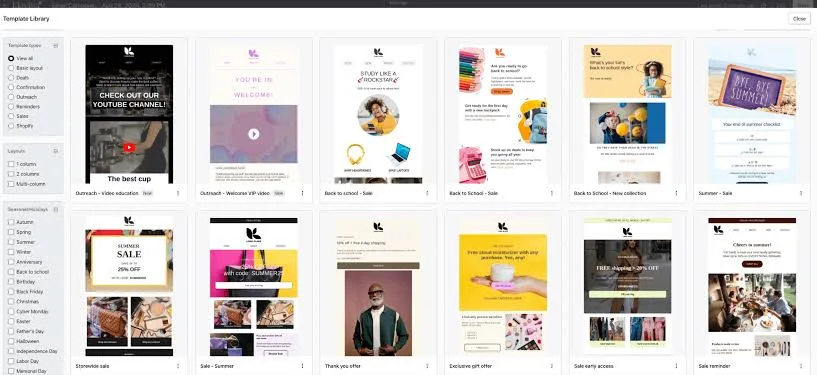
Klaviyo is purpose-built for ecommerce, and that focus shows in every part of the product. Native features for abandoned cart emails, product recommendations, browse abandonment flows, and order confirmations are built in — not tacked on — because the platform is architected around product catalog data, customer event history, and real-time behavioral triggers.
The segmentation engine is where Klaviyo genuinely separates itself. Klaviyo's segments update in real time, support unlimited conditions, and incorporate predictive data: predicted lifetime value, predicted next order date, and churn risk scores. A Shopify store can create a segment of customers who've purchased twice in the past 90 days, have a predicted lifetime value above a threshold, and haven't opened an email in 30 days — then trigger a specific re-engagement flow for exactly that group. That level of precision isn't available in Mailchimp at any price tier.
Current pricing (2026):
- Free: 250 contacts, 500 emails/month
- Email-only plans start at ~$20/month for 500 contacts, scaling to ~$100/month at 5,000 and ~$150/month at 10,000
- Adding SMS starts at an additional $15/month
- Important billing change: As of February 2025, Klaviyo bills on total active profiles — all subscribed contacts in your account, whether recently emailed or not. Brands with large unengaged lists saw meaningful cost increases under this model.
Comparing Klaviyo to Mailchimp at scale: <a href="https://www.mailerlite.com/blog/mailchimp-alternatives">at 5,000 subscribers Klaviyo costs $100/month versus Mailchimp's $75; at 50,000 subscribers Klaviyo costs $720 versus Mailchimp's $385</a>. The argument Klaviyo users consistently make is that revenue attribution features — which track exactly which emails drove which purchases — make the cost transparent and justifiable in a way cheaper platforms can't match.
The tradeoff is complexity. The platform is optimized for accuracy and data access, not first-send speed. Plan for meaningful setup time before Klaviyo becomes productive. Flows that require no configuration on simpler platforms — welcome series, post-purchase sequences — need to be built from scratch in Klaviyo, connected to your product catalog, and tested across multiple purchase scenarios.
Klaviyo is a strong fit if:
- You operate an ecommerce store on Shopify, WooCommerce, or another platform
- Your email program needs to respond to purchase behavior, browse activity, and order history
- You need predictive analytics to inform your campaign strategy
- You're willing to invest time in setup in exchange for segmentation precision
For businesses also evaluating their CRM setup alongside email, our best CRM software for small business guide covers tools that integrate directly with Klaviyo.
Head-to-Head Pricing: What You Actually Pay at Real List Sizes
Entry-level pricing is the least useful number in a platform comparison. The more relevant question is what each platform costs at the list sizes you'll actually reach.
| Platform | Free Plan | 500 contacts | 5,000 contacts | 10,000 contacts | Best For |
|---|---|---|---|---|---|
| Mailchimp | 500 contacts, 1K emails/month | ~$13/month | ~$75/month | ~$110/month | Small businesses, beginners |
| Kit | 10,000 contacts | $39/month (1K) | ~$89/month | ~$119/month | Content creators, newsletters |
| Klaviyo | 250 contacts | ~$20/month | ~$100/month | ~$150/month | Ecommerce brands |
Sources: MailerLite comparison, Etropo pricing data, EmailToolScout
The scenario that makes Kit's free plan most striking: a newsletter writer with 8,000 subscribers pays nothing on Kit. On Mailchimp, that list would require a paid plan. On Klaviyo, it would also require a paid plan at a higher entry price.
The scenario that makes Klaviyo's higher price justifiable: an ecommerce business with a growing catalog and behavioral email needs. The 15–30% revenue lift that well-configured Klaviyo flows produce for stores in the $30K–$200K monthly revenue range — documented by practitioners who've migrated clients from Mailchimp — makes the monthly cost difference largely irrelevant.
Hidden costs worth factoring in: the time required to learn each platform, the cost of integrations with your existing tools, and which automation features are included in the base plan versus gated behind higher tiers. Mailchimp restricts automations to paid plans entirely. Kit includes automation on its free plan. Klaviyo's automation is available from entry level but requires meaningful setup time.
Automation and Segmentation: Where the Real Differences Live

All three platforms offer automation. The differences are in the trigger logic, the data those triggers can access, and the complexity of sequences you can build.
Mailchimp covers standard use cases — welcome series, birthday emails, re-engagement campaigns, basic post-purchase follow-ups. For a three-email welcome sequence and monthly newsletter, this is sufficient. Where it falls short: conditional logic based on real-time behavioral data. You can't branch an automation based on whether a subscriber viewed a specific product page in the last 48 hours, or trigger an email based on a predicted next purchase date.
Kit is built around tags and subscriber actions. When someone downloads a lead magnet, they get tagged and enter a specific sequence. When they purchase a course, the tag changes and the sequence shifts. This tag-based logic is intuitive for creators managing multiple content tracks. It's not designed for ecommerce event data, but for content-driven relationship building it works cleanly and requires far less technical setup than Klaviyo.
Klaviyo operates on a fundamentally different level of data access. Flows can be triggered by specific events — a product viewed, a cart abandoned, an order placed, a subscription lapsed — and each branch in the flow can reference the actual product data involved. An abandoned cart email in Klaviyo dynamically populates with the exact items the customer left behind, including images, prices, and inventory status. That's not a template trick; it requires a live connection to your product catalog and customer event history.
Klaviyo also ships pre-built browse abandonment, post-purchase, replenishment, and review request flows — scenarios that require either custom integrations or manual workarounds on Mailchimp.
Which Platform Wins for AI-Powered Features in 2026?
All three platforms have invested in AI features, but they serve different purposes.
Mailchimp's Creative Assistant automatically compiles a brand kit by pulling colors, fonts, images, and logos from your website — available on all plans including free. This gives small businesses a fast path to branded emails without manual setup.
Klaviyo AI is native to the platform's data model. It includes personalized product recommendations in emails, channel affinity prediction (determining whether a given subscriber responds better to email or SMS), and a Marketing Agent that can build automated flows with full context of your customer data. The AI features are meaningfully more powerful because they have access to behavioral event data that Mailchimp's AI doesn't.
Kit has added AI-assisted writing features, but AI is not a primary differentiator for the creator use case. The platform's value is in its list-building and audience relationship tools, not marketing automation intelligence.
If AI-powered marketing automation is a priority, Klaviyo's advantage is real and meaningful — but only if you're running an ecommerce operation with enough behavioral data to make those features useful.
Separately: if your business relies on content marketing alongside email, our guide to best AI writing tools in 2026 covers the writing and copy tools that work alongside any of these email platforms.
The Platform Migration Problem Nobody Warns You About
Here's the migration scenario that catches ecommerce businesses off guard: a Shopify store launches on Mailchimp because the interface is approachable. For the first year, monthly newsletters and a basic welcome series work fine. Then the product catalog grows, the team wants to trigger emails based on browse behavior, and they need segments that update in real time based on purchase frequency. Mailchimp's mid-tier segmentation handles demographics and basic purchase history, but it doesn't match the behavioral depth the business now needs.
The migration to Klaviyo takes two to three weeks of staff time. The welcome series gets rebuilt from scratch. Subscriber engagement data from the previous platform doesn't transfer. The segments that took months to define have to be recreated.
The practical advice: if you're a small ecommerce business currently on Mailchimp and your catalog is growing, plan your migration to Klaviyo before you need it rather than after. The transition is manageable when your list is small and your automations are simple. It becomes significantly more disruptive once you have 20 active flows and 50 audience segments built in a platform you're leaving behind.
Business Software That Works Alongside Your Email Platform
Email marketing doesn't operate in isolation. The platforms you use for project management, accounting, HR, and design all affect how efficiently your email program runs.
Teams using project management tools to coordinate campaign calendars will find our best project management tools comparison useful for understanding how Asana, Monday.com, and Notion fit different team workflows.
For businesses evaluating their full software stack — not just email — our office and business buyers guide covers the broader landscape of tools worth auditing in 2026. Freelancers and self-employed marketers managing their own finances will also find our best accounting software for freelancers guide relevant for keeping the business side of email consulting organized.
If you're producing visual content for your emails — templates, social assets, branded graphics — our best graphic design tools comparison covers Canva, Adobe, and Figma side by side.
Frequently Asked Questions
Is Mailchimp still worth using in 2026?
Yes, for the right user. Mailchimp remains one of the most accessible email platforms available, with a strong drag-and-drop editor, reliable deliverability, and a pre-built Google Analytics integration unavailable on competing platforms. Its free plan is now limited, but for small businesses and beginners who need a paid plan anyway, the ~$13/month Essentials entry price is competitive. The platform's limitations become relevant primarily for ecommerce businesses that need behavioral segmentation depth.
What is the difference between ConvertKit and Kit?
They're the same platform. ConvertKit rebranded to Kit to better reflect its positioning as a creator marketing tool. The product, pricing, and features remained consistent through the rebrand. When you see either name in comparisons, they refer to the same service.
Why does Klaviyo cost more than Mailchimp?
Klaviyo's higher entry price reflects its ecommerce-specific infrastructure. Maintaining real-time behavioral event tracking, predictive analytics, and live product catalog connections requires more data processing than a standard email platform. For ecommerce businesses, the revenue attribution and segmentation precision typically justify the cost. For businesses that don't need those features, the cost difference is not justified — and a simpler platform will serve them better.
Can I switch from Mailchimp to Klaviyo without losing my data?
You can export your contact list and import it into Klaviyo, and Klaviyo offers a one-time sync tool specifically for Mailchimp migrations. However, behavioral history — open rates, click patterns, purchase event data — does not transfer between platforms. You're migrating contacts, not the full customer intelligence that makes advanced segmentation useful. This is the core reason to plan migrations early rather than late.
Which platform is best for a small business just starting out?
Mailchimp's free plan and intuitive editor make it the lowest-friction starting point for general small businesses. However, if you're building a content-based audience (newsletter, podcast, blog), Kit's free plan supports up to 10,000 contacts — a significantly more generous starting point. If you're launching an ecommerce store from day one, starting with Klaviyo avoids a migration later, even though the learning curve is steeper.
Reviewed by the Trusted Buyer Report editorial team. This article was researched and drafted with AI assistance, then reviewed and fact-checked by a human before publishing. Trusted Buyer Report may earn a commission from purchases made through links on this page. Our editorial recommendations are completed before any affiliate link is applied. Full disclosure · How we review