This guide is based on manufacturer specifications, expert sources, and verified customer feedback aggregated from multiple independent review outlets. It does not reflect hands-on testing by Trusted Buyer Report. We may earn a commission when you use our links to make a purchase — this never influences our rankings. Read our full methodology →
TL;DR — Key Takeaways
- The #1 regret among dining table buyers isn't quality — it's poor sizing. Measure your room before falling in love with any table.
- Minimum clearance rule: 36 inches on every chair-pull side; 48 inches for comfortable circulation.
- "Solid wood" is not a quality signal on its own. Premium tables use 4–6 wide, knot-free boards. Budget "solid wood" tables use dozens of small glued pieces.
- Best budget pick: Morton Fort 60" farmhouse set (6-person, under $600).
- Best mid-range: CB2 Otis Extendable Dining Table or Oak Furnitureland Islington marble-top (mixed-material sweet spot).
- Best luxury investment: RH French Contemporary Extension Table — heirloom joinery, genuine material transparency.
- Extendable tables are underused. If you host 3+ times per year and your room can't fit a large fixed table, an extendable table is the correct answer.
Why Most People Regret Their Dining Table Within a Year
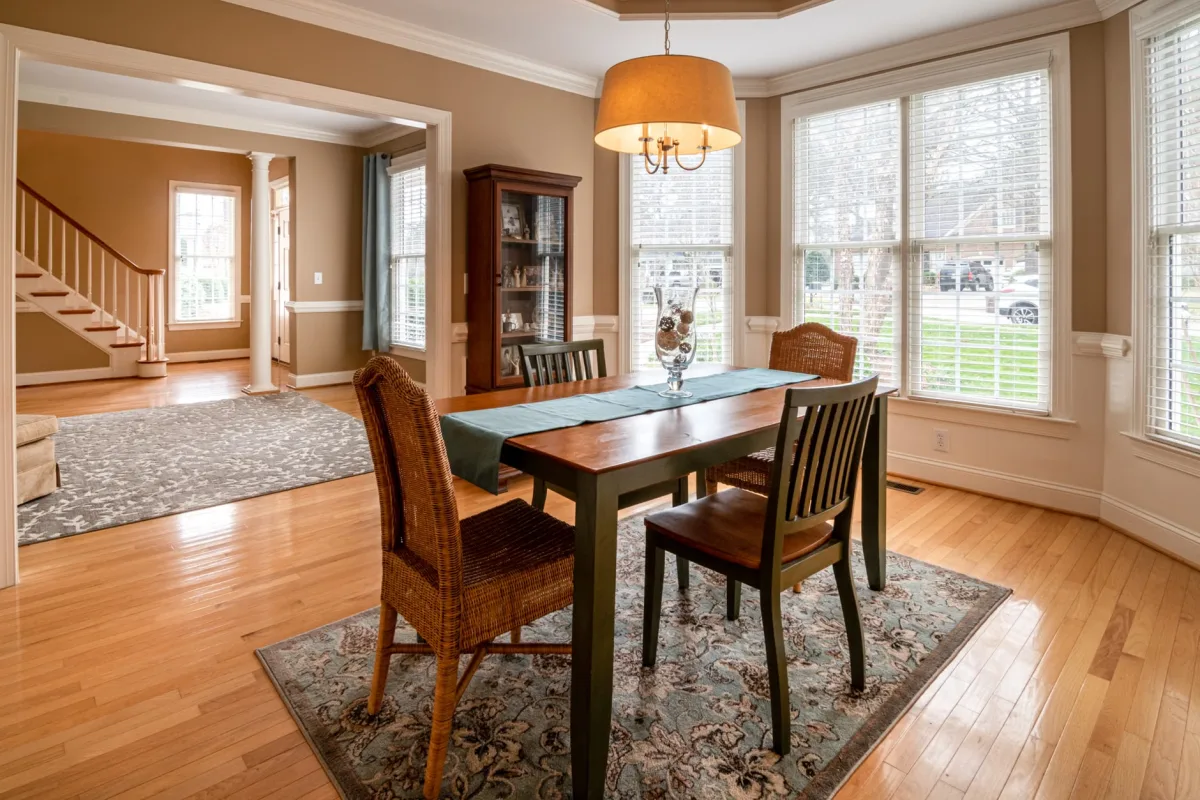
Here's the uncomfortable truth: most dining table buyers are dissatisfied within twelve months — not because the table broke, but because it never truly fit their home or their life.
The problem isn't quality. It's fit.
The two most common regrets are size and material. A buyer measures the dining room, picks a 72-inch rectangular table, and discovers that pulling out a chair requires either moving the chair or demolishing the wall. Standard dining chairs have a seat depth of 20–24 inches — and that doesn't include the space a person needs to actually stand up.
Material regret runs a close second. Many buyers purchase a table labeled "solid wood" without realizing that label is nearly meaningless as a standalone quality signal. A budget "solid wood" table may be constructed from dozens of small glued pieces; a premium tabletop uses just 4–6 wide, knot-free boards. The two surfaces can look identical in a product photo and feel completely different after two years of daily use.
Then there's the hosting frequency trap. A fixed four-seat table is fine for a household of two. It's a logistical problem the moment six people arrive for Thanksgiving. Buyers who host even occasionally — three or four times a year — and purchase a fixed table optimized for daily life end up scrambling for folding tables every time.
This guide is built to resolve each of these failure points before recommending a single product. If you're also upgrading your home office seating at the same time, check out our best ergonomic office chairs for 2026 — many of the same chair construction principles apply.
How to Size a Dining Table: The Math That Saves You From Regret

The single most important step you can take before evaluating any specific table is to calculate your maximum table footprint.
Here's the formula:
- Measure your dining room's usable floor space.
- Subtract 36 inches on every side where a chair will be pulled out (48 inches for comfortable flow).
- The rectangle that remains = your usable table zone.
Example: A 10×12-foot dining room — common in apartments and smaller homes — leaves you a maximum table of roughly 48×60 inches after 36-inch clearance on all sides. That seats 4–6 people, not 8. A 72-inch table in that room isn't a tight fit; it's a functional failure.
Chair Depth Compounds the Problem
Chair depth is often ignored in sizing calculations. Standard dining chairs require 20–24 inches of seat depth, plus additional clearance behind them for leg movement. Upholstered armchairs and chairs with deeper seats consume even more circulation space than slim side chairs.
If you're drawn to upholstered armchairs at the table heads — a popular 2026 styling trend — account for that in your room plan, before you fall in love with a specific table.
Round vs. Rectangular: A Practical Decision, Not Just Aesthetic
Round and oval tables eliminate sharp corners, meaning more people can sit comfortably within a given footprint. A 180cm rectangular table may technically seat six, but there's potential for knee-knocking at the ends — an oval version of the same length distributes seating more evenly.
If your room can't permanently fit the table size you need for hosting, an extendable table is the correct solution — not a compromise. More on that below.
Dining Table Materials Explained: What Actually Lasts vs. What Looks Good on Paper
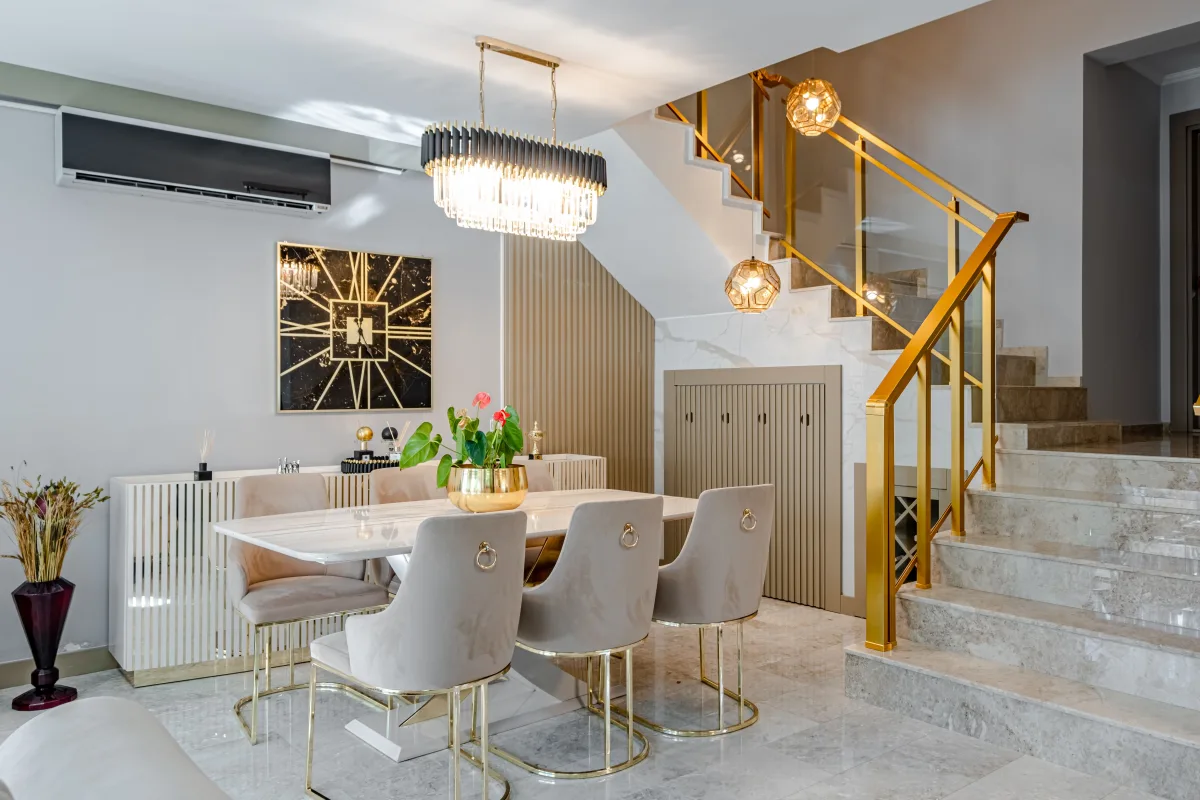
Material selection is where the most misleading marketing language lives. Here's what each major material actually means for your daily life.
Solid Hardwood
Walnut, oak, teak, acacia, Indian rosewood, and mango are the species most consistently cited for dining furniture durability. These woods resist daily wear and age gracefully, developing character over time. According to Wirecutter's dining table guide, hardwoods like walnut and oak age well — but the quality signal isn't "solid wood" as a label; it's the number and width of the boards used.
Premium tabletops use 4–6 wide, knot-free boards. Budget "solid wood" tables use many small pieces glued together. Visually similar in photos; very different after five years.
Best for: Households that want a table to last 15–25 years and don't mind occasional refinishing.
Veneer
Veneer is a thin layer of real wood applied over MDF or particleboard. It can look identical to solid wood at a glance and costs significantly less. Wirecutter is direct: veneer doesn't tend to last as long as solid wood, though durability varies widely based on substrate quality and finish.
Best for: Households with moderate use, no young children, and a tighter budget.
Watch out for: Edge banding — that's where veneer tables most commonly fail first. Inspect it closely before buying.
Marble and Natural Stone
Marble represents the pinnacle of luxury dining furniture in 2026. White Carrara delivers classic refinement; Calacatta offers bold veining against white backgrounds; Nero Marquina provides deep black with white veins. Every slab is unique by definition — a marble-top table is, in that sense, a one-of-a-kind object.
The practical downsides are real: marble requires periodic sealing, is heavy, and is expensive. It's not the right choice for a household where the dining table doubles as a homework surface.
Best for: Buyers who want a statement piece and are willing to maintain it.
Sintered Stone
Sintered stone — engineered under high heat and pressure to mimic natural stone — is a growing 2026 alternative. It's harder to damage than many wood-look laminates and more stain-resistant than both natural stone and solid wood. It offers a polished contemporary look at lower cost than genuine marble.
Best for: Design-forward buyers who want stone aesthetics with less maintenance.
Mixed Materials
The dominant 2026 construction trend: a wood base with a stone top, metal frame with a wood surface, or glass with solid wood legs. These combinations offer the warmth of wood, the durability of metal, and the visual weight of stone in a single piece — and allow you to refinish or replace one component without replacing the entire table.
Best for: Buyers who want versatility and design interest without committing to a single-material look.
2026 Dining Room Style Trends: What's Actually Selling and Why
The dominant shift in 2026 dining room design is a move away from cold minimalism toward spaces that feel "collected and lived-in." All-white, all-neutral dining rooms are being replaced by deeper color palettes, textured walls, and furniture that mixes eras and materials deliberately.
The table itself is being repositioned as the hero of the room — the piece that anchors the entire space. This shift is driving increased investment in statement tables, which explains why natural stone and mixed-material options are growing faster than plain wood in the premium segment.
A few data points that contextualize the market:
- Wood dining tables remain the dominant global material category, per Fortune Business Insights' dining table market report, which also notes that evolving renovation trends and preference for contemporary designs with textured patterns are driving growth.
- Extendable and transformer-style tables are growing globally, driven by smaller living spaces and multi-use room layouts.
- Customizable minimalistic designs are particularly in demand among budget-conscious buyers who want a clean aesthetic without high cost.
Scandinavian design — clean forms, honest materials, functional elegance — continues to exert strong influence on 2026 aesthetics. It's a useful frame: if a table tries to do too much visually, it probably does too little functionally.
For a broader look at the home furniture and appliance market before you commit to a large purchase, our 2026 furniture and appliances buyer's guide covers the landscape across categories.
Best Budget Dining Tables & Chairs (Under ~$600): Real Value Without Compromise
Budget dining furniture has improved substantially in the past three years. The key is knowing which materials perform at this price point and which fail quickly.
What to prioritize: Rubberwood and acacia are the two affordable hardwoods that consistently outperform cheap MDF and particleboard in structural integrity. At this price point, you shouldn't expect flawless finishing or heirloom joinery — but you should expect a table that doesn't wobble after six months.
Tip: Sets bundling a table with chairs typically offer better value than buying separately. The coordination also eliminates the style-mismatch problem that plagues buyers who mix and match across collections.
Top Budget Picks
Morton Fort 60" Farmhouse Dining Set (6-person) A 60-inch rectangular table with matching chairs in a farmhouse aesthetic. Highlighted as a top pick in multiple 2026 budget roundups for its structural integrity and accessible price. Solid rubberwood construction at the base means it won't wobble within the first year.
Best Choice Products 6-Piece Mid-Century Modern Set Rubberwood legs, walnut/cream finish, and a bench seat instead of six individual chairs. The bench is a practical feature: it seats 2–3 people in the footprint of one chair, which matters in tight rooms.
Signature Design by Ashley Skempton 7-Piece Cottage Set Whitewash finish, coastal-farmhouse crossover style, six upholstered chairs. The upholstered chairs add comfort but require more maintenance in a household with young children or frequent spills.
At this price point, prioritize structural integrity over surface finish. A minor cosmetic imperfection on a $400 table is acceptable. A wobble is not — it worsens over time and can't be corrected without professional repair.
Best Mid-Range Dining Tables & Chairs ($600–$2,000): The Sweet Spot for Most Homes
The $600–$2,000 range is where the dining table market is most competitive — and most rewarding. This is where solid hardwood construction becomes reliably available rather than just marketed. It's also where extendable functionality, genuine material variety, and design-forward options converge at a price most buyers can justify.
Top Mid-Range Picks
CB2 Otis Extendable Dining Table Ranks among the top three 2026 picks in multiple expert reviews. Clean lines and extendable functionality make it a strong choice for households that host occasionally and want a table that doesn't look like a compromise. CB2 also offers better material transparency than most mass-market alternatives — product pages specify construction details rather than relying on vague "solid wood" labeling.
Oak Furnitureland Islington (180cm, marble-top) Praised by The Independent's tested review for its smooth marble top, geometric acacia base, and 180cm length seating six. The combination of cool marble and warm dark wood creates a sophisticated contrast that works across multiple interior styles. It's a strong example of the mixed-material trend executed at a mid-range price point.
HERNEST Thorsten Oval Dining Table The oval form factor is a practical advantage in mid-sized rooms: it eliminates the dead corners of a rectangular table, distributes seating more evenly, and reduces knee-knocking. Ranked highly in HERNEST's 2026 expert review for its balance of design and function.
Chair Selection at This Price Point
Look beyond aesthetics. Mortise-and-tenon or dowel joinery in chair construction significantly outlasts stapled frames, which are common in budget chairs and begin to loosen within a year of regular use. Ask retailers specifically about joinery method before you buy — it's the question that separates informed buyers from everyone else.
If you're furnishing a full home office alongside your dining room, our best ergonomic office chairs for WFH in 2026 pairs well with this guide — seating ergonomics apply in both rooms.
Best Luxury Dining Tables & Chairs ($2,000+): Investment Pieces Worth the Price
Luxury pricing in dining furniture is justified by specific, verifiable factors — not brand prestige alone. The markers are:
- Premium-grade, knot-free lumber with wide boards (4–6 boards per tabletop, not dozens of small pieces)
- Hand-finishing rather than spray-line production
- Heirloom joinery techniques — mortise-and-tenon construction, not stapled frames
- Natural stone sourced and finished by hand, not poured composite
Top Luxury Picks
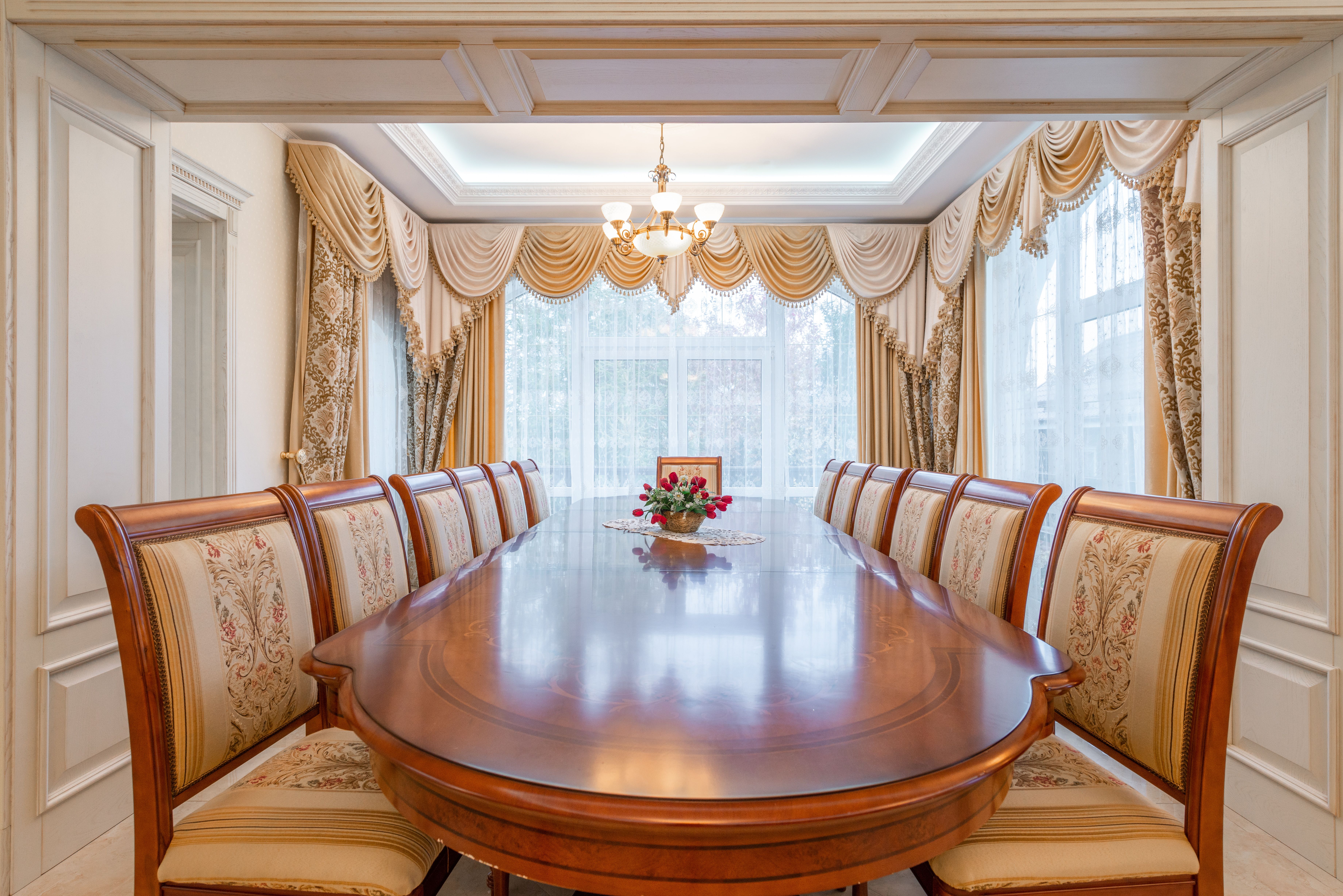
RH French Contemporary Rectangular Extension Table Leads multiple 2026 expert rankings. Described as "an impeccable choice for those who view their dining table as a long-term investment in both function and beauty." RH sits at the accessible end of the luxury market — not a custom studio piece, but with material standards meaningfully above mid-range alternatives. The extension functionality means it doesn't sacrifice daily usability for visual impact.
HERNEST Kanta (Natural Stone Top) Features a genuine natural stone surface — no two slabs are identical, which makes this genuinely unique rather than just marketed that way. Positioned for buyers who want a statement piece that holds up aesthetically for decades.
HERNEST Eliseo Texture and clean architectural lines make it a strong anchor for a modern dining room. Less about material drama, more about precision and proportion — a good fit if you want luxury without maximalism.
Chair Pairing at This Price Point
Chair pairing at the luxury tier should be treated as a separate design decision, not an afterthought. The 2026 trend of mixing eras and materials — an upholstered velvet armchair at the table head alongside wood-frame side chairs — is not a budget compromise. It's an intentional approach that creates visual interest and prioritizes comfort at primary seating positions without requiring eight identical chairs.
Extendable Dining Tables in 2026: Who Actually Needs One and How to Choose
An extendable table isn't the right answer for every buyer — but it's the right answer for more buyers than currently purchase one.
The core use case: A household that hosts more than twice a year and lives in a space where the dining room can't permanently accommodate a large table. If both conditions apply, a fixed table is a functional mistake.
What to Look For in an Extendable Table
Daily-use size first. The table should work well at its standard dimensions. A table that's awkward at its standard size but comfortable when extended is a poor daily experience.
Self-storing leaves. Leaves that fold into the table itself are more convenient than separate leaves requiring closet or under-bed storage. If you host infrequently and have limited storage, a self-storing extension mechanism is worth paying more for.
Base design matters. Four-leg bases offer more legroom per seated person than pedestal or trestle bases. They also tend to extend more cleanly. Pedestal bases can be elegant but often create legroom problems at the seating positions nearest the center of the table.
Example sizing: A well-designed extendable table operates at 71 inches for daily use by six people and extends to 95 inches for 8–10 guests. Plan for daily use first; treat the extended configuration as bonus capacity.
Dining Chairs: The Variable Most Buyers Underinvest In
Chairs are where most dining set buyers make their second-largest mistake, after table sizing. The table gets the research; the chairs get matched by color.
The result: seating that looks coordinated but is uncomfortable after 20 minutes, or chairs that begin rocking within a year.
The Sizing Check Most Buyers Skip
Seat height relative to table height is the most basic compatibility check — and it's frequently ignored. Standard dining table height: 28–30 inches. Standard dining chair seat height: 17–19 inches. That leaves a 10–11-inch gap between seat and tabletop — the ergonomic standard for comfortable dining.
If you're buying chairs separately from the table, verify these numbers explicitly. Don't assume.
Upholstered vs. Wood Seats
Upholstered chairs add comfort but require maintenance. In a household with children or frequent entertaining, performance fabric — stain-resistant and wipeable — is a practical requirement, not an upgrade. Standard linen or cotton upholstery on dining chairs in a busy household will show wear within two years.
The Mixed-Chair Approach
Mixing chair styles — two upholstered armchairs at the table heads and four matching side chairs along the sides — is both a 2026 design trend and a practical solution:
- It reduces full-set cost (armchairs are more expensive; you only need two)
- It adds visual interest without a custom furniture budget
- It concentrates comfort at the primary seating positions
Where to Buy: Retailers Worth Knowing in 2026
The retailer you buy from affects material transparency, delivery experience, and return policies as much as any single product decision.
Wayfair is the largest online furniture retailer and has the widest selection at every price point. Delivery experience and quality consistency vary significantly by vendor — read our Wayfair 2026 review before placing a large order.
IKEA offers strong value at the budget and lower-mid range, particularly for solid-wood options like the LISABO and MÖRBYLÅNGA lines. Assembly is required, and quality standards differ by product line. See our IKEA US review for 2026 for a full breakdown.
CB2 and Crate & Barrel offer better material transparency than mass-market alternatives and a strong mid-range selection. Prices are higher, but so is construction documentation.
RH (Restoration Hardware) sits at the accessible end of the luxury market and is worth considering for buyers spending $2,000+ on a single table.
For a curated list of the best home decor online stores across all budgets, our best home decor online stores guide for 2026 covers the full landscape.
Completing Your Dining Room: What Else to Consider
A dining table doesn't exist in isolation. A few companion decisions worth making at the same time:
Lighting: The right pendant or chandelier over a dining table anchors the space visually and affects how the table's material reads in the room. Marble looks different under warm Edison bulbs than cool LED pendants.
Rugs: A dining room rug defines the table zone and reduces sound. Size rule: the rug should extend at least 24 inches beyond the table on all sides so chairs remain on the rug even when pulled out.
TV stands and entertainment integration: If your dining room opens to a living space with a TV, your furniture choices need to coordinate. Our best TV stands and entertainment centers for 2026 covers the options.
Indoor plants: A well-placed plant near a dining table softens the space and adds life without requiring any renovation. Our best indoor plants for 2026 — focused on easy-care and air-purifying varieties — is a practical companion resource.
Paint: If you're refreshing the dining room at the same time, our best interior and exterior paint brands for 2026 covers the options by finish, durability, and VOC level.
Frequently Asked Questions
What is the minimum room size for a six-person dining table?
A six-person rectangular table typically measures 60–72 inches long and 36 inches wide. With standard 36-inch clearance on all sides, you need a room of at least 10×12 feet. For comfortable 48-inch clearance, you need closer to 11×13 feet. An oval or round table of equivalent seating capacity requires slightly less room because it eliminates corner dead zones.
Is veneer always a bad choice for a dining table?
No. According to Wirecutter's dining table guide, there's a wide durability range among veneer tables. A veneer table with a high-quality MDF substrate and a durable finish can last many years with moderate use. The risk increases in high-use households, particularly those with children, where the surface is more likely to sustain edge chips or delamination. If you choose veneer, inspect the edge banding closely — that's where veneer tables most commonly fail first.
How do I know if a table is genuinely solid wood or just marketed as such?
Ask specifically about the tabletop construction: how many boards, what species, and whether the base uses the same material as the top. Premium solid wood tables use 4–6 wide, knot-free boards. If a retailer can't answer these questions specifically, treat the "solid wood" claim with skepticism. Also check the underside if possible — veneer over MDF is usually visible at the edges.
What dining table material is best for a household with young children?
Solid hardwood with a durable oil or lacquer finish is the most forgiving — it can be sanded and refinished if scratched. Sintered stone is also a strong option: it's stain-resistant and doesn't require the maintenance of natural marble. Avoid veneer tables and natural marble in high-traffic family settings.
Should I buy a dining set or mix and match table and chairs separately?
At the budget tier ($300–$600): Buy a set. The coordination value and cost savings outweigh the customization trade-off.
At the mid-range and above: Consider separating the decisions. Buying a table and chairs separately lets you optimize each for different criteria — seating comfort, durability, joinery quality — and the 2026 mixed-chair trend makes mismatched chairs a feature, not a flaw.
How often should I refinish a solid wood dining table?
Most solid hardwood tables with an oil finish benefit from annual re-oiling to maintain water resistance and appearance. Tables with a lacquer or polyurethane finish require refinishing only when the surface shows significant wear — typically every 5–10 years with regular use. The refinishing window is one of the key long-term advantages of solid hardwood over veneer or stone alternatives.
Reviewed by the Trusted Buyer Report editorial team. This article was researched and drafted with AI assistance, then reviewed and fact-checked before publishing. Trusted Buyer Report may earn a commission from purchases made through links on this page — this does not influence our rankings or recommendations. Read our full affiliate disclosure →