This guide is based on manufacturer specifications, expert sources, and verified customer feedback aggregated from OutdoorGearLab, The Trek, Treeline Review, Intel Market Research, and Rinsekit. It does not reflect hands-on testing by Trusted Buyer Report. This article was drafted with AI assistance and fact-checked by our editorial team before publishing. We may earn a commission when you use our links to make a purchase — our rankings are finalized before any affiliate link is placed. Read our full disclosure →
The Gear Myth That's Costing You Weight and Money
Here's what most outdoor retailers won't tell you: more gear doesn't mean better camping. The best camping and hiking setup for 2026 is defined by doing more with less — lighter materials, smarter integrations, and trade-offs matched to your specific trip type.
The second misconception is that 2026 gear is just last year's products with a fresh colorway. It isn't. Lightweight materials science has converged with smart technology in ways that weren't commercially viable two years ago, creating a genuine generational shift in what's possible at every price point.
This guide cuts through the noise to tell you what's actually worth carrying — and what's just well-marketed weight.
TL;DR — Key Takeaways:
- Match your gear to your actual trip type (car camper, weekend backpacker, ultralight). The "best" gear changes completely.
- R-value matters more than pad thickness — don't skip this number.
- Trail runners outperform hiking boots for most three-season backpacking conditions.
- Torso length, not height, determines pack fit.
- A quilt is lighter than a comparable sleeping bag — and 2026 quilt quality has made the switch easy.
Why 2026 Is a Genuinely Different Year for Outdoor Gear
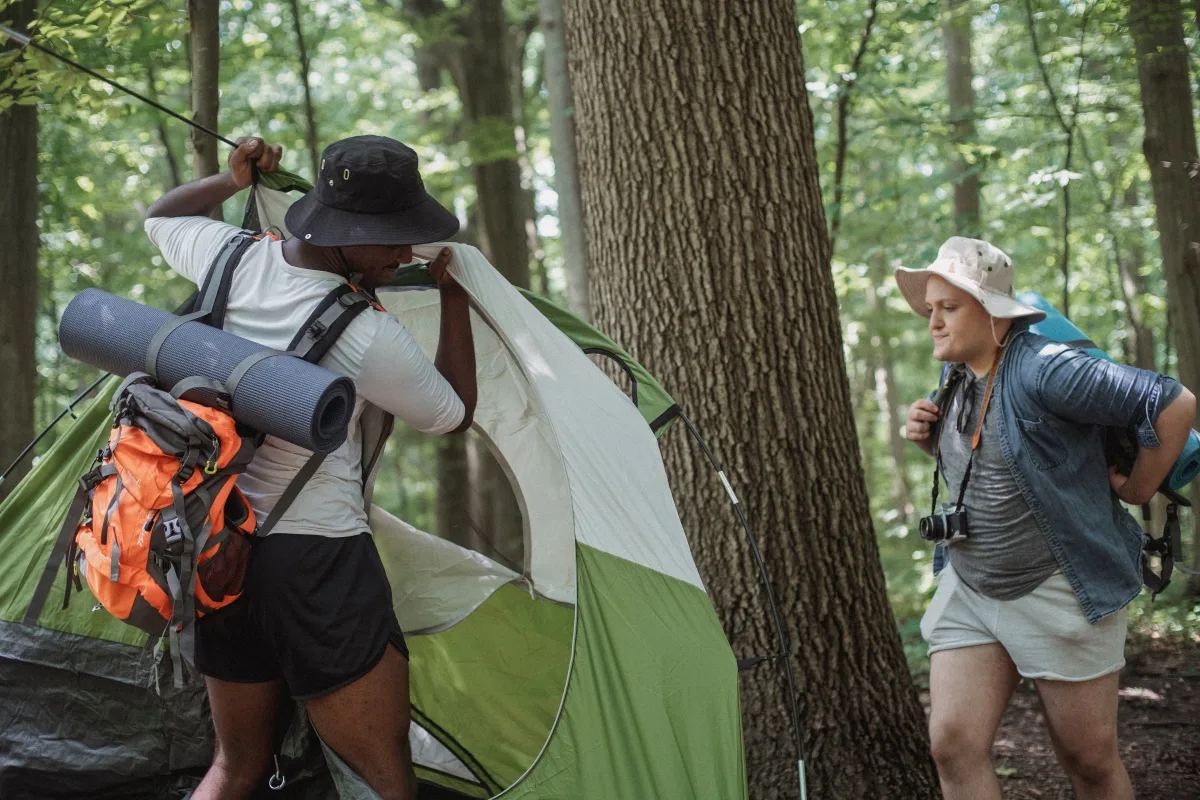
The outdoor gear market is undergoing a dual transformation. According to Intel Market Research's Outdoor Gear Market Outlook 2026–2032, the camping segment is being driven by increasing innovation in lightweight materials and smart technology integration, alongside the growing popularity of multi-day trekking and adventure tourism. Hiking and trekking leads all application segments.
What that market data means on the ground: gear that once belonged to elite expedition athletes is now available at mid-range price points. A $200 sleeping pad in 2026 genuinely outperforms what a $300 pad delivered five years ago. That's not marketing language — it's the result of manufacturing scale catching up with material innovation.
But there's a real risk embedded in this moment. As The Trek's 2026 hiking gear trends analysis notes honestly, gear marketing has accelerated alongside genuine innovation, making it harder to separate real breakthroughs from rebranded existing technology. This guide gives you a framework to tell the difference.
One area where improvement is genuinely evident: hiking clothing for all body types. The binary between skin-tight compression leggings and zip-off cargo pants has broken down. Functional silhouettes with thoughtful construction are now available across all gender categories — a change that matters for multi-day comfort that's easy to underestimate until you're on day three of a wet trail.
For a broader picture of how camping fits alongside other outdoor pursuits, Trusted Buyer Report's 2026 Outdoor & Sports Gear Buyer's Guide covers the full landscape of equipment categories.
Step One: Identify Your Trip Type
Before picking any specific product, answer this question — because it changes every recommendation in this guide:
| Trip Type | Characteristics | Weight Priority |
|---|---|---|
| Car Camper / Family Camper | Drive-in site, weight irrelevant | Comfort & durability |
| Weekend Backpacker | 1–3 nights, carry everything | Moderate — under 20 lb base |
| Multi-Day / Ultralight | 4+ nights or thru-hiking | Every gram counts — sub-10 lb base |
Trip length is the single most important variable in every gear decision. A sleeping pad that's perfect for a one-night car camp becomes a liability on a five-day backcountry route. Terrain and climate layer on top: desert heat, alpine cold, and coastal humidity each demand different material and insulation choices.
Sleep Systems: Where Comfort and Safety Intersect
Poor sleep on a multi-day trip doesn't just make you miserable — it cascades into poor decisions, depleted energy, and real safety risks at altitude or in cold conditions. This makes your sleep system the most consequential investment in your kit.

Sleeping Pads: Why R-Value Is Non-Negotiable
Most beginners focus on pad thickness. The more important number is R-value — the thermal resistance rating that tells you how well a pad insulates you from ground cold.
Here's the practical breakdown:
| Condition | Minimum R-Value |
|---|---|
| Summer camping (above freezing) | R-2 |
| Three-season backpacking | R-3 to R-4 |
| Winter camping | R-5 or higher |
Ground cold is more insidious than air cold — conduction pulls heat from your body faster than convection, and no sleeping bag compensates for an inadequate pad. This is the single most common beginner mistake in sleep system planning.
For car camping, comfort-first pads like the NEMO Roamer prioritize a mattress-like surface that makes a weekend camp feel genuinely restorative. For backpacking, the calculus shifts entirely toward packability and weight — inflatable pads in the 300–500g range with R-3 to R-4 represent the practical sweet spot for three-season use.
Sleeping Bags vs. Quilts: The Debate Has Settled
For most three-season backpackers, the sleeping bag vs. quilt debate has effectively resolved in favor of quilts. A well-made quilt rated to 20°F can weigh under 500g; a comparable mummy bag typically runs 800g–1.1kg. That's 300–600g per night you're not carrying.
Temperature rating honesty matters here: "comfort" ratings and "lower limit" ratings are not the same number. The comfort rating is what most sleepers — particularly those who sleep cold — should use for trip planning. The lower limit assumes a fit adult male in a curled position, which describes a minority of actual users.
The Big Agnes 3N1 sleeping bag system, which combines two discrete bags for different temperature conditions, represents the kind of modular design that solves a real problem: the shoulder-season camper who needs one system from 25°F to 55°F without carrying two separate bags.
Shelter: Match the Structure to the Situation
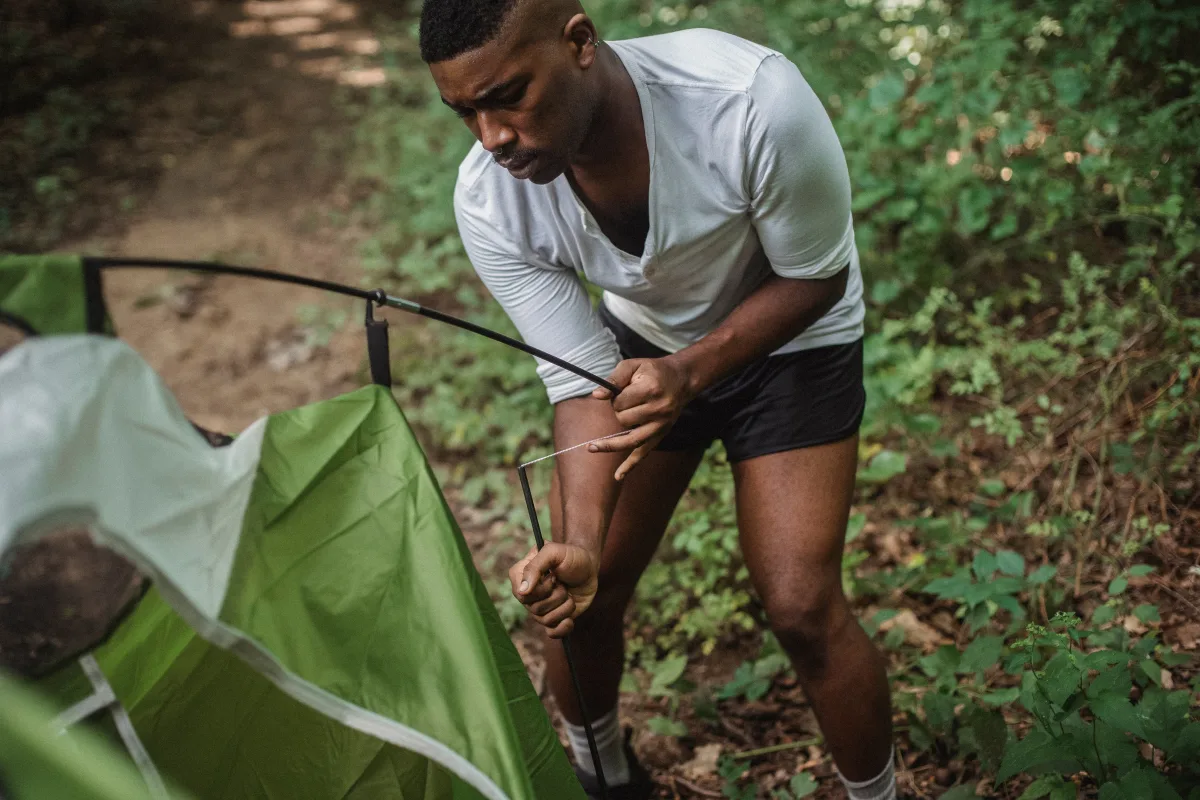
The tent market in 2026 spans a wider range than ever — which creates genuine confusion for buyers. Here's what actually matters in practice:
Freestanding three-season tents pitch without stakes, which matters on rocky or frozen ground. They're heavier but more forgiving for beginners. Non-freestanding ultralight shelters — tarps, cuben fiber designs, single-wall structures — save significant weight but require competent site selection and pitching technique.
The Details Most First-Time Buyers Overlook
Pole material: Aluminum poles are durable, field-repairable, and handle flex-loading well. Carbon fiber poles are lighter but can shatter rather than bend, and field repair is difficult. For most three-season backpackers, aluminum is the more practical choice.
Vestibule space: Consistently undervalued. This is where wet boots, muddy gear, and bad-weather cooking actually happen. For two-person use, a combined vestibule area of at least 10–12 square feet is a practical minimum.
Condensation management: Mesh inner panels, adjustable venting, and double-wall construction separate tents that work in humid or shoulder-season conditions from those that leave you waking up damp.
Footwear: The Most Personal Decision in Your Kit
No category is more individual than footwear. Foot shape, arch height, gait pattern, and terrain interact in ways that make any single "best boot" recommendation unreliable for a significant portion of readers. OutdoorGearLab's Best Hiking Gear 2026 tests across multiple terrain types — including the Patagonian Mountains — because footwear that excels on granite slabs may underperform on wet roots and mud.
Trail Runners vs. Hiking Boots: Who Wins for Most Hikers?
For most three-season backpacking conditions, trail runners have won the debate. They're lighter, require less break-in, and the lower stack height improves proprioception on technical terrain. The weight difference typically runs 300–600g per pair — and every gram on your feet costs roughly four times more energy than a gram in your pack.
Hiking boots still earn their place in specific conditions: heavy loads over 30 lbs where ankle support matters, sustained off-trail travel on loose scree, and winter conditions where insulation and waterproofing outweigh breathability.
The waterproofing trade-off: Gore-Tex and similar membranes keep water out effectively — until water overtops the boot. At that point, you're wearing a wet container that doesn't drain. In consistently wet climates like the Pacific Northwest, non-waterproof trail runners that dry in 2–3 hours often deliver a drier overall experience than waterproof boots that stay wet for 8–12 hours once soaked through.
If you're investing in purpose-built footwear, our guide to the best hiking boots of 2026 covers waterproof, lightweight, and trail-ready options across price points.
When to replace: Based on midsole condition, not upper appearance. Most hiking boot and trail runner midsoles have an effective lifespan of 400–600 miles, though this varies by body weight and terrain.
Backpacks: Fit First, Features Second
Here's what surprises most first-time buyers: pack fit is determined by torso length, not overall height. Measure from the C7 vertebra (the prominent bone at the base of your neck) to the top of your hip bones. Getting this right matters more than any feature list.
Practical capacity guidelines:
| Use Case | Capacity |
|---|---|
| Day hiking / fast-and-light overnights | 20–35L |
| Weekend backpacking with a lightweight kit | 40–55L |
| Extended trips or winter camping | 55–75L |
Resist the instinct to buy the largest pack that fits your budget. A pack with excess capacity tends to get filled with gear you don't need.
The Ultralight Pack Revolution
Dyneema Composite Fabric (DCF) and similar materials have made sub-1kg packs viable for multi-day trips. At Outdoor Market Alliance Winter 2026, Treeline Review noted that Gossamer Gear expanded its daypack and travel pack lineup alongside new pole designs — a sign that ultralight philosophy is moving beyond dedicated backpacking into everyday carry. The Hyperlite Mountain Gear Unbound 55 is a strong representative of this category.
DCF packs require a different mindset: they're less abrasion-resistant than nylon, have minimal internal organization, and work best when your base weight is genuinely low rather than aspirationally low.
Hydration and Water Treatment: Getting This Wrong Has Consequences
The core distinction most hikers miss: filters remove protozoa and bacteria, but purifiers also address viruses. In North American backcountry with low human activity, a filter is typically sufficient. In areas with high human traffic, international destinations, or water sources downstream of populated areas, a purifier is the safer choice.
Quick-reference comparison:
| Method | Removes Viruses | Weight | Best For |
|---|---|---|---|
| Squeeze filter (Sawyer) | No | ~85g | Solo / small group, North America |
| UV purifier (SteriPen) | Yes | ~90g | International travel, virus risk |
| Chemical treatment | Yes | <20g | Emergency backup |
| Gravity filter | No | ~200g+ | Groups / base camps |
The Sawyer Squeeze remains the weight-to-performance benchmark at around 85g and a 100,000-gallon filter life. It covers the vast majority of North American backpacking use cases without compromise.
At base camp: Hot water access is a comfort factor that often gets underplanned. Rinsekit's 2026 camping gear guide highlights the HyperHeater as a meaningful departure from traditional solar shower solutions, which depend on clear skies and warm ambient temperatures — conditions that frequently don't exist in the mountains or during shoulder-season camping. For car campers and base camp setups where weight isn't the primary constraint, it addresses a real gap in the comfort toolkit.
Cooking Systems: Three Tiers, One Right Choice Per Trip
Camp cooking in 2026 falls into three practical tiers. Choose based on trip type, not gear lust.
Tier 1 — Boil only (backpacking): A canister stove, titanium pot, and lighter weigh under 200g combined and handle every cooking need a backpacker actually has on trail — mostly rehydrating meals and boiling water for coffee.
Tier 2 — Integrated canister stoves (efficient backpacking): Systems like the Jetboil Flash or MSR WindBurner add a heat exchanger for improved efficiency in wind and cold. Modest weight penalty, real-world benefit in shoulder-season conditions.
Tier 3 — Full camp kitchen (car camping only): Multiple burners, cast iron cookware, dedicated cooking tables. Zero business in a backpack.
Fuel type matters for trip planning: Isobutane-propane canisters are convenient but underperform below freezing. Alcohol stoves are ultralight but wind-sensitive and slow. White gas handles expedition-level cold weather but adds complexity. For most three-season backpacking, a standard canister stove covers 95% of use cases.
Cookware material: Titanium is lightest but distributes heat unevenly — acceptable for boiling, problematic for anything more complex. Hard-anodized aluminum heats more evenly at a modest weight penalty. Stainless steel belongs in car camping kits.
Navigation and Electronics: What You Actually Need
GPS watches have become genuinely capable navigation tools. The Coros Apex 4 represents the current state of the art for trail-focused GPS watches — accurate mapping, long battery life, and a form factor that doesn't feel like wearing a hockey puck.
But here's the non-negotiable: a paper map and compass are required for any backcountry travel. Electronics fail — batteries die, screens crack, satellite signals drop in deep canyons. Navigation competence without electronics is a skill, not a retro affectation.
Headlamps: 200–300 lumens covers most camp use and trail navigation. 400+ lumens matters for technical terrain in darkness. Rechargeable headlamps (USB-C) have effectively replaced battery-powered models for most users — the weight savings from not carrying spare batteries over a week-long trip are meaningful.
Rock Climbing and Paddling: When the Outdoors Goes Vertical (or Wet)
If your outdoor adventures extend beyond hiking and camping, the gear calculus changes significantly. Our dedicated buying guides cover these adjacent categories in depth:
- For those who head vertical as well as horizontal: Best Rock Climbing Gear 2026 — Indoor & Outdoor
- For water-based adventures: Best Kayaking & Paddleboarding Equipment 2026
Where to Shop: Retailer Matters as Much as the Gear
The quality of your hiking and camping gear is only half the equation — who you buy from affects your warranty experience, return policy, and access to expert advice. Our in-depth REI review for 2026 covers whether REI's co-op membership is worth it for frequent outdoor buyers, how their quality standards compare, and when to look elsewhere.
Frequently Asked Questions
What's the most important piece of gear to invest in for a first backpacking trip?
Footwear and your sleep system. Blisters from ill-fitting boots and a cold, sleepless night from an inadequate pad and bag are the two most common reasons first trips become last trips. Everything else can be borrowed, improvised, or upgraded later.
Is ultralight gear worth the cost for occasional hikers?
Generally, no. Ultralight gear rewards users who hike frequently enough to feel the cumulative benefit of reduced pack weight over miles, and who have the experience to compensate for the reduced margin for error that ultralight designs carry. For occasional hikers doing weekend trips, mid-weight gear at lower price points delivers better value and more forgiveness.
How do I know if a product is genuinely innovative or just rebranded?
Look for specific material or construction claims you can verify independently. "Lighter than ever" is marketing. "Dyneema Composite Fabric at 152g per square meter" is a specification you can compare. Organizations like OutdoorGearLab publish their testing methodology and metrics, making their conclusions verifiable rather than just assertive.
What's the single biggest mistake experienced hikers see beginners make?
Buying gear for the worst-case scenario rather than the actual trip. A four-season mountaineering tent for a summer weekend in the Appalachians. A 0°F sleeping bag for July camping in the Rockies. Over-specified gear is heavier, more expensive, and often less comfortable in the conditions you'll actually encounter.
Do I need a water filter for every camping trip?
For any trip where you're drinking from natural water sources, yes. Even visually clear water in remote areas can carry Giardia and Cryptosporidium. The Sawyer Squeeze weighs 85g and costs around $30 — there's no practical argument for skipping it.
Is camping gear the same as hiking gear?
They overlap significantly but aren't identical. Camping gear optimizes for comfort and functionality at a fixed site; hiking gear optimizes for weight and mobility on the move. The sweet spot for backpackers is gear that does both without compromise — which is increasingly achievable at mid-range price points in 2026.
Final Decision Framework: Build Your Kit by Trip Type
Rather than a ranked product list, use this framework. The "best" gear in every category depends entirely on how you actually use it.
| Category | Car Camper | Weekend Backpacker | Multi-Day / Ultralight |
|---|---|---|---|
| Sleep Pad | Comfort-first (NEMO Roamer type), R-3+ | Inflatable, R-3 to R-4, under 600g | Ultralight inflatable, R-3+, under 400g |
| Sleep System | Sleeping bag rated 15–20°F below expected low | Sleeping bag or quilt, 20°F rating | Down quilt, 20–30°F, under 500g |
| Shelter | Freestanding 3-season, large vestibule | Freestanding 3-season, under 1.5kg | Ultralight non-freestanding, under 800g |
| Footwear | Hiking boots (comfort & support) | Trail runners or light boots | Trail runners, lowest viable weight |
| Pack | External frame or large duffel | 40–55L, aluminum frame | DCF pack, 40–55L, sub-1kg |
| Water | Water jug + filter for source water | Squeeze filter (Sawyer) | Squeeze filter or UV purifier |
| Cooking | Full kitchen, cast iron, multi-burner | Canister stove + titanium pot | Same, minimum configuration |
| Navigation | Phone + downloaded maps | GPS watch + paper map | Same, with full topo maps |
The pattern here is consistent: match the tool to the task. Over-specified gear compounds into heavier packs, higher costs, and gear that performs less well in the conditions you'll actually encounter.
We may earn a commission when you use our links to make a purchase, at no additional cost to you. Our editorial assessments are completed before any affiliate link is applied and are never influenced by commercial relationships. Read our full affiliate disclosure →