This guide was researched and drafted with AI assistance, then reviewed and fact-checked before publishing. Our research is based on manufacturer specifications, independent lab data, and verified consumer sources — not hands-on product testing. We may earn a commission when you use our links. Full disclosure →
Here is a fact most parents do not realize until they start digging: the USDA Certified Organic label on a baby food pouch says nothing about arsenic, lead, or cadmium levels. Those heavy metals can accumulate in organically grown crops through naturally contaminated soil — no synthetic pesticides required. So if you have been choosing organic baby food primarily for safety reasons, the certification you are looking for is not on most labels.
This guide cuts through the label confusion. It covers which brands are transparent about heavy metal testing, what certifications actually mean, how to match purees to your baby's developmental stage, and where each major brand genuinely stands — based on independent test data, consumer research, and market analysis, not marketing copy.
If you are also researching other baby and toddler purchases, our broader baby and kids product safety guides for 2026 cover everything from gear to nursery furniture.
Why Choosing Baby Food in 2026 Is More Complicated Than It Used to Be
The global organic baby food market was valued at approximately $7.8 billion USD in 2024 and is projected to grow to nearly $19.9 billion by 2035, according to Market Research Future. North America holds the largest regional share at roughly 34%, per Straits Research.
More brands in a fast-growing market means more competing certifications, more label claims, and more marketing language to parse. Organic purees now account for roughly 35% of global organic baby food market share — driven by convenience, wide retail availability, and their role as the primary complementary feeding option for infants, according to Market Research Future.
The rise of dual-income households has pushed demand for ready-to-eat organic options even higher, as Mordor Intelligence notes. When parents are time-pressed, the pressure to trust a label rather than investigate a brand becomes real. This guide is designed to give you the tools to evaluate brands critically, not just accept their marketing at face value.
The Safety Gap: What "Organic" Does — and Does Not — Guarantee
USDA Certified Organic certification confirms that crops were grown without synthetic pesticides and that the final product contains no artificial preservatives, colors, or flavors. That matters. But it does not test for heavy metals — arsenic, lead, cadmium, and mercury — which can enter organically grown crops through naturally contaminated soil. Rice-based cereals and root vegetable purees are among the most commonly flagged product types.
California's AB 899 legislation has changed the landscape by requiring brands to publish heavy metal test results publicly. Consumer Reports evaluated how transparently brands comply, and the differences are significant.
Pumpkin Tree stands out: it tests finished products and requires suppliers to provide batch-level ingredient test results, with independent random validation tests on top of that. That is ingredient-level transparency that goes well beyond what most brands offer.
Nestlé (which owns Gerber) states it tests crops, water, ingredients, and final products for hundreds of toxins, with more than 100 quality checks per product. That is a substantial testing infrastructure. Its consumer sentiment score of 7.2 out of 10, per Verified Market Research, sits lower than premium competitors — partly due to consumer concerns about ultra-processing in its shelf-stable pouches.
Sprout Organics makes results available via UPC and lot number lookup, which means the data exists — but you have to request it rather than find it proactively published. That places the burden on the parent rather than the brand.
A separate concern is ultra-processing. Shelf-stable pouches that undergo high-heat processing can degrade heat-sensitive nutrients. This does not make them unsafe, but it does mean that a pouch marketed as nutrient-rich may deliver less nutritional value than a minimally processed alternative. Look for brands that specify their processing method — cold-pressing preserves more heat-sensitive nutrients than conventional heat treatment.
How to Read a Baby Food Label: Certifications That Actually Mean Something
Not all certifications carry equal weight. Here is a practical breakdown of what each label claim actually signals.
USDA Certified Organic is the baseline standard. It confirms no synthetic pesticides and no artificial additives. Necessary, but not sufficient for a full safety assessment on its own.
Non-GMO Project Verified confirms ingredients are not genetically modified. This is a separate standard from organic — a product can carry one without the other. Earth's Best and Happy Baby Organics carry both certifications.
BPA-Free packaging is relevant for pouches and jars. Mordor Intelligence notes that brands like Earth's Best and Happy Family Organics have adopted BPA-free packaging as a standard feature. Treat this as a baseline expectation, not a premium differentiator.
Biodynamic / Demeter certification is a higher standard than USDA Organic, requiring holistic farm ecosystem management that addresses soil health, biodiversity, and supply chain traceability. HiPP's European Bio line operates at this level.
Regenerative organic sourcing is an emerging standard. Nestlé has announced a transition of its Gerber line toward 100% regenerative organic sourcing, per Verified Market Research. This is a direction of travel, not a completed certification — worth monitoring.
"Clean-label" is a marketing phrase, not a regulated certification. It signals minimal processing and simple ingredients but has no standardized legal definition. Look for specific certified standards rather than relying on this phrase alone.
Third-party heavy metal test result disclosure is not yet a universal requirement. Brands that proactively publish these results online — rather than making them available only on request — demonstrate the highest level of accountability.
The Good Housekeeping Institute's Nutrition Lab provides a useful independent benchmark: registered dietitians evaluated dozens of baby food products, analyzing ingredient lists, nutrition labels, and heavy metal mitigation efforts, then combined that analysis with parent panels for real-world quality and convenience feedback, as cited by Holle USA. That combination of expert analysis and lived experience is a more reliable signal than any single certification.
Stage-by-Stage Guide: Matching Baby Food to Your Infant's Development
The "best" brand for your baby depends partly on their developmental stage. The 6–12 month age group dominates the organic baby food market with a 42.85% share in 2025, per Mordor Intelligence — because this is the critical transition period from exclusive milk feeding to solid foods, when parents are most actively seeking guidance and variety.
Stage 1: Around 4–6 Months
Single-ingredient purees with very smooth textures are appropriate here. The goal is introducing one new ingredient at a time so you can identify allergic reactions clearly. Sweet potato, pea, and apple purees are common starting points. Brands like Happy Baby Organics and Earth's Best offer dedicated Stage 1 lines with single-ingredient options.
Stage 2: Around 6–8 Months
Multi-ingredient purees with slightly thicker textures. Flavor variety expands significantly at this stage, and more complex nutrient profiles emerge. Iron, DHA, and probiotics are increasingly added to organic baby foods at Stage 2 to address nutritional gaps common in the transition period, as noted by Renub Research. If you're also exploring formula to supplement feeding during this stage, our guide to the best baby formula and feeding products for 2026 covers the main options.
Stage 3: Around 8–12 Months
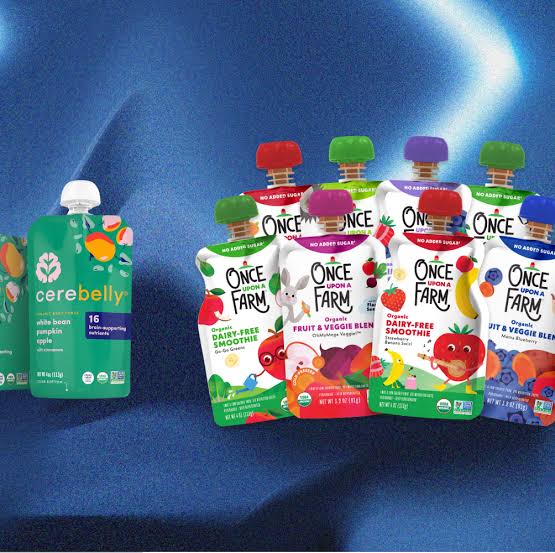
Chunkier textures and more complex flavor combinations. Some brands introduce protein-rich options at this stage — Once Upon a Farm expanded its organic line in March 2026 to include refrigerated meat pouches and protein-rich smoothies, per Straits Research. This reflects a genuine market trend toward higher-protein options for older infants, not just flavor variety.
Self-Feeding Snacks: 7 Months and Up
Once babies begin developing the pincer grasp, age-appropriate snacks designed for self-feeding become relevant. Milk Drunk highlights Little Bellies Pick-Me-Sticks — available in organic Strawberry, Sweet Potato, and Banana flavors — as a well-designed option shaped and textured specifically for safe self-feeding from 7 months.
If your baby has a dairy allergy, stage-matching also means checking allergen profiles at each step. Once Upon a Farm offers one of the most comprehensive dairy-free ranges across multiple stages — a practical choice for families navigating that constraint.
Best Organic Baby Food Brands in 2026: An Evidence-Based Overview
The assessments below draw on independent testing, market research, and expert evaluations. Mommyhood101 conducted one of the most methodologically rigorous consumer tests available, purchasing 14 different brands of fruit and vegetable purees with at least 3 varieties per brand before ranking them. Their results, combined with market data and expert analysis, form the basis of the assessments here.
How this guide was researched: This is a research-based guide, not a hands-on test. We aggregated independent lab data, consumer testing results, and market research from multiple named sources to give you a comparative view across the major brands available to US parents in 2026. It does not reflect direct product testing by Trusted Buyer Report.
Little Spoon Babyblends — Best for Nutrient Preservation
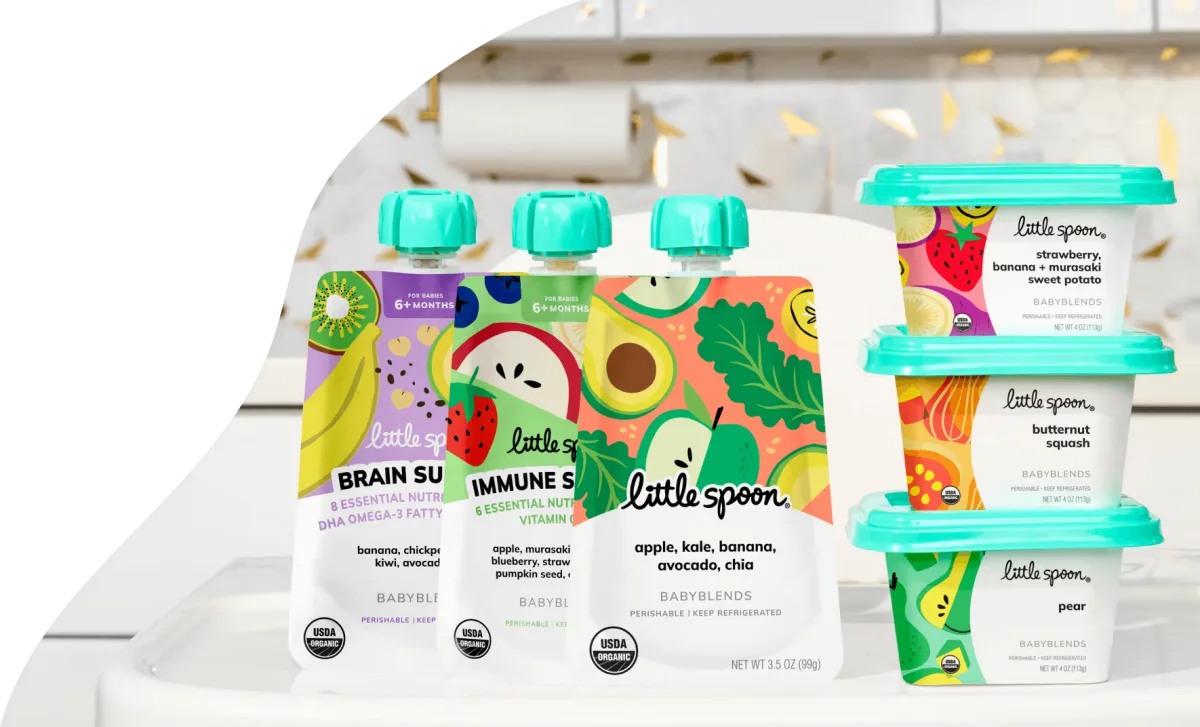
Ranked the top organic baby puree by Mommyhood101. Little Spoon uses a refrigerated delivery model, which avoids the high-heat processing required for shelf-stable products. The fresh format preserves more heat-sensitive nutrients — the trade-off is refrigeration requirements and a shorter shelf life than pouches. It also earned top spots in Mommyhood101's organic baby formula and organic baby cereal categories, suggesting consistent quality across its product range.
Best for: Parents who prioritize nutrient preservation and are comfortable with a subscription delivery model.
Limitation: Not available on store shelves; requires planning around delivery and refrigeration.
Happy Baby Organics — Best for Wide Availability and Stage Coverage
Named the best puree baby food by Milk Drunk and consistently ranked highly across multiple independent sources. Happy Baby Organics carries both USDA Organic and Non-GMO Project Verified certifications, uses BPA-free packaging, and offers a broad range of flavors across all developmental stages.
Best for: Parents who want a premium organic option that is easy to find at major grocery retailers.
Limitation: Standard heat processing (shelf-stable), which affects heat-sensitive nutrient levels.
Earth's Best Organics — Best for Product Variety and Accessibility
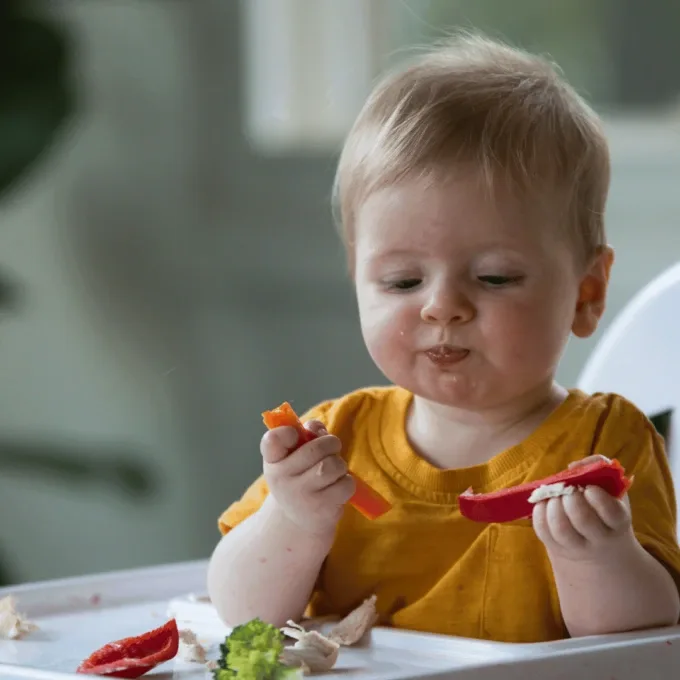
A long-standing market leader recognized by both Mordor Intelligence and Straits Research. Earth's Best has one of the broadest product ranges in the category — covering purees, cereals, snacks, and formula — and is widely available in major grocery retailers and online. It is a reliable baseline choice for parents who want USDA Organic certification and broad product variety without navigating specialty retailers.
Best for: Families who want a one-stop-shop organic brand across multiple product types.
Limitation: Less premium than fresh or cold-pressed alternatives in terms of nutrient profile.
Once Upon a Farm — Best for Dairy-Free and Protein-Rich Options
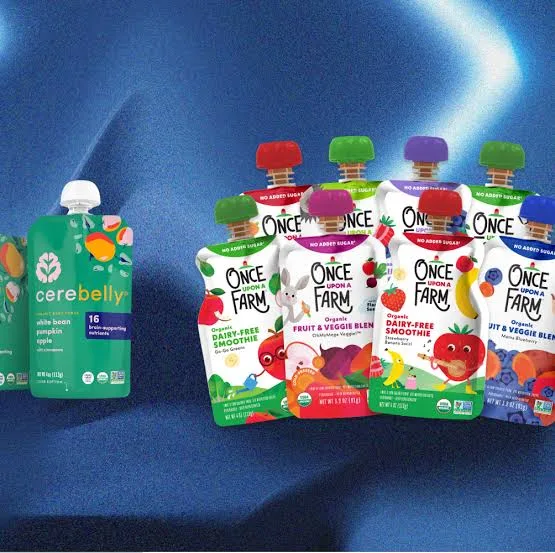
Co-founded by Jennifer Garner, Once Upon a Farm uses cold-pressed processing to preserve nutrients and sources USDA Organic ingredients. Its dairy-free range is one of the most comprehensive available. The brand's 2026 expansion into refrigerated meat pouches and protein-rich smoothies reflects a genuine commitment to stage-appropriate nutrition. You may also want to pair this brand's approach with our guide to the best kids' clothing brands for durability and comfort if you're outfitting an older toddler alongside meal planning.
Best for: Families managing dairy allergies and parents who want higher-protein options for older infants.
Limitation: Higher price point than mainstream alternatives.
Serenity Baby Foods — Best for Minimal Ingredient Lists
Ranked highly in Mommyhood101's tested review. Serenity is notable for genuinely minimal ingredient lists — a differentiator in a market where multi-ingredient blends can obscure what your baby is actually eating. For parents who want complete transparency over ingredients, Serenity's approach is worth examining.
Best for: Parents with ingredient sensitivities or allergies who need to know exactly what is in each pouch.
Limitation: Smaller product range than major brands.
Mama Bear Organic (Amazon) — Best Budget Organic Pick
Highlighted by Milk Drunk as the best budget organic baby food option. Mama Bear carries USDA Organic certification at a price point significantly below premium brands. For parents who need organic certification but face real budget constraints, this is a legitimate option — not a compromise dressed up as a recommendation.
Best for: Families who prioritize organic certification but need to manage costs.
Limitation: Limited flavor range compared to premium competitors.
Plum Organics — Best Mid-Tier Option
Featured in Fortune Business Insights' top 5 organic baby food brands. Plum Organics offers broad flavor variety and is widely available through major retail and e-commerce channels. It is a solid mid-tier option with strong brand recognition and consistent quality.
Best for: Parents who want variety and accessibility at a mid-range price point.
Limitation: Less transparency around processing methods than premium cold-pressed brands.
Gerber Organic — Best for Maximum Accessibility
The most widely available organic baby food brand in North America, backed by Nestlé's global distribution infrastructure. Nestlé holds a 28.5% global market share in the organic segment, per Verified Market Research. Accessibility is Gerber Organic's primary strength. Its consumer sentiment score of 7.2 out of 10 — lower than premium competitors — reflects concerns about ultra-processing in shelf-stable products. Nestlé's announced transition toward regenerative organic sourcing is worth monitoring, but it is not yet complete.
Best for: Parents who need reliable availability anywhere in North America.
Limitation: Lower consumer confidence score versus premium brands; standard heat processing.
At-a-Glance Comparison
| Brand | Key Certification | Processing Type | Best For | Notable Limitation |
|---|---|---|---|---|
| Little Spoon Babyblends | USDA Organic | Fresh / refrigerated | Nutrient preservation | Short shelf life; delivery only |
| Happy Baby Organics | USDA Organic + Non-GMO | Shelf-stable pouches | Broad stage coverage, wide availability | Standard heat processing |
| Earth's Best | USDA Organic | Shelf-stable | Product variety, retail accessibility | Less premium than fresh alternatives |
| Once Upon a Farm | USDA Organic | Cold-pressed / refrigerated | Dairy-free range, protein options | Higher price point |
| Serenity Baby Foods | USDA Organic | Shelf-stable | Minimal ingredient transparency | Smaller product range |
| Mama Bear Organic | USDA Organic | Shelf-stable | Budget-conscious families | Limited flavor variety |
| Gerber Organic | USDA Organic | Shelf-stable | Maximum accessibility | Lower sentiment score |
| HiPP (European) | Biodynamic / Demeter | Varies by product | Ultra-premium standards | Limited North American distribution |
European and Premium Global Brands Worth Knowing About
HiPP is a German family-owned company that pioneered organic farming decades before it became a commercial trend. Its Brand Trust Score of 9.6 out of 10 in the EMEA region — the highest of any brand assessed by Verified Market Research — reflects its biodynamic sourcing standards and long track record. HiPP's "Bio" certification exceeds USDA Organic requirements in farming practices and traceability. The primary limitation for North American parents is distribution: HiPP has limited penetration in this market. Parents who can access it through reputable specialty importers should verify shelf life and import channel legitimacy before purchasing.
Holle, another European brand operating at Demeter-certified biodynamic levels, is similarly positioned. European "Bio" standards frequently exceed USDA Organic requirements in soil health, biodiversity, and supply chain traceability. For parents who want the highest available certification standard and are willing to navigate specialty retail channels, these European brands represent a genuine step up from most domestic options.
Who Should Buy Which Brand: Use-Case Summary
Choosing a baby food brand is not a one-size-fits-all decision. Here is a practical breakdown by family situation:
- You want the best nutrient profile possible → Little Spoon Babyblends (refrigerated, fresh-format delivery) or Once Upon a Farm (cold-pressed)
- You need something available at your local grocery store → Happy Baby Organics or Earth's Best
- Budget is a real constraint → Mama Bear Organic by Amazon delivers USDA Organic certification at a meaningfully lower price
- Your baby has a dairy allergy → Once Upon a Farm has the most comprehensive dairy-free range across stages
- You want the simplest possible ingredient list → Serenity Baby Foods
- You want the highest certification standard available globally → HiPP or Holle, if you can access them through a verified importer
- Your baby is in the Stage 2–3 transition → Look for brands now adding DHA and iron fortification, and consider Once Upon a Farm's protein-rich expansion launched in early 2026
As your child grows out of purees and into finger foods, toddler snacks, and eventually family meals, your product research needs will shift too. Our guides to the best kids' toys and educational picks for 2026 and the best baby clothing brands for softness and durability can help you think through other purchases in this life stage.
Frequently Asked Questions
Does "certified organic" mean baby food is free of heavy metals?
No. USDA Certified Organic certification addresses pesticide use and artificial additives but does not test for heavy metals such as arsenic, lead, cadmium, or mercury. These can enter organically grown crops through naturally contaminated soil. Look for brands that proactively publish third-party heavy metal test results, as required under California's AB 899 legislation.
Which baby food brands publish heavy metal test results most transparently?
Based on Consumer Reports' evaluation of California AB 899 compliance, Pumpkin Tree stands out for testing finished products and requiring batch-level supplier ingredient testing with independent validation. Nestlé (Gerber) states it tests at multiple points in the supply chain. Sprout Organics makes results available via UPC and lot number lookup. Brands that publish results proactively online — without requiring a specific lot number — offer the highest level of transparency.
What is the difference between biodynamic and organic certification?
USDA Organic requires crops to be grown without synthetic pesticides and prohibits artificial additives in the final product. Biodynamic certification — such as Demeter — goes further, requiring holistic farm ecosystem management, specific soil health practices, biodiversity standards, and stricter traceability. HiPP's European Bio line operates at biodynamic standards. In practical terms, biodynamic certification is a meaningfully higher bar than organic alone.
Is fresh refrigerated baby food genuinely better than shelf-stable pouches?
Fresh and refrigerated products like Little Spoon Babyblends avoid the high-heat processing required to make pouches shelf-stable, which can degrade heat-sensitive nutrients. Cold-pressed products like Once Upon a Farm similarly preserve more of the original nutrient profile. The trade-off is shorter shelf life and refrigeration requirements. Shelf-stable pouches are more convenient for travel and storage. Neither format is inherently unsafe — the choice depends on your priorities and logistics.
At what age should I start introducing purees?
Most pediatric guidelines recommend introducing solid foods around 6 months of age, though some infants may be developmentally ready slightly earlier. The readiness cues to watch for are the ability to sit up with minimal support, loss of the tongue-thrust reflex, and showing interest in food. Always consult your pediatrician before starting solids. Stage 1 single-ingredient purees are the standard starting point. As you set up your feeding space, our guide to the best nursery furniture sets for 2026 includes guidance on selecting the right high chair and feeding station for your space.
Are European baby food brands like HiPP safe to buy through importers?
HiPP and Holle meet rigorous European Bio and Demeter standards that frequently exceed USDA Organic requirements. The key concern with importing is verifying the legitimacy of the importer and checking shelf life at the time of purchase. Purchasing through a reputable specialty importer with transparent sourcing information reduces that risk significantly. Avoid purchasing through unauthorized third-party resellers on general marketplaces where storage conditions and provenance cannot be verified.
We may earn a commission when you use our links to make a purchase. This article was drafted with AI assistance and fact-checked by our editorial team before publishing. How we review · Affiliate disclosure