
We may earn a commission when you use our links to make a purchase, at no extra cost to you. This article was researched and drafted with AI assistance, then reviewed and fact-checked by our editorial team before publishing. Read our methodology →
Amazon dominates U.S. e-commerce — but "dominates" does not mean "best at everything." In several categories, dedicated platforms consistently outperform Amazon on the dimensions that actually matter: product authenticity for handmade goods, category-specific search tools for furniture, expert curation for outdoor gear. The right question is not whether to leave Amazon entirely. It's which platform does your specific job better.
Bottom line: No single platform replaces Amazon across the board. But Etsy, REI, Wayfair, Walmart, and a handful of others each beat Amazon at something specific — and knowing which one to use for which purchase is where most shoppers leave money and satisfaction on the table.
Why Shoppers Are Looking Beyond Amazon in 2026
Amazon accounts for roughly 37.6% of all U.S. e-commerce sales, according to Forbes Advisor's e-commerce statistics. That figure sounds overwhelming — until you flip it. The other 62.4% of online shopping already happens somewhere other than Amazon. The platform is dominant, not exclusive.
What's driving shoppers to diversify? Three friction points come up consistently:
- Counterfeit and low-quality listings mixed into legitimate search results
- Buried small-business sellers drowned out by mass-produced alternatives
- Undifferentiated search results — searching for a handmade anniversary gift or a specific piece of camping gear and getting back a wall of generic listings
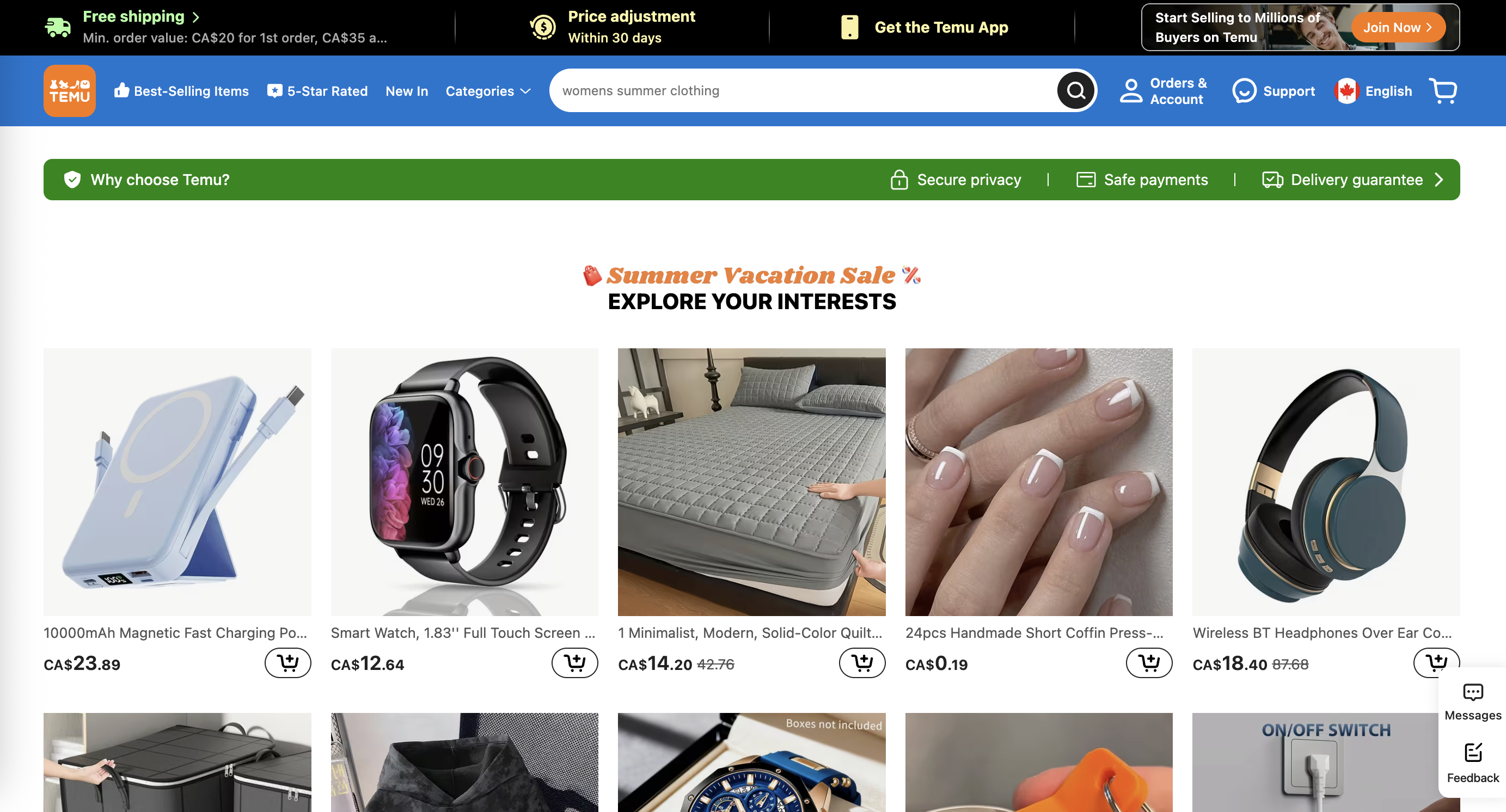
Amazon is paying attention to the competition. According to Marketplace Pulse's 2026 marketplace analysis, Amazon launched Amazon Haul — a direct-from-China storefront with over one million items — explicitly to compete with Temu's pricing model. When Amazon builds a separate brand to fight a competitor, that competitor has genuinely disrupted the market.
If you're thinking about broader ways to stretch your shopping budget, our US shopping money-saving guide for 2026 covers strategies that apply across all these platforms.
The Alternatives Landscape: What's Actually Out There
The market outside Amazon is larger and more specialized than most shoppers realize. According to Marketplace Pulse, several platforms have independently built billion-dollar operations in their respective categories. Wayfair has reached major GMV in home goods. Etsy sits firmly in handmade goods. Whatnot — a live-auction platform — has grown rapidly in collectibles.
Social commerce is adding another layer. Platforms like TikTok Shop and Temu are projected to grow at approximately 31% per year, according to Webbeeglobal's marketplace expansion report. That is not a niche trend. That's a structural shift in how product discovery works.
Here's what this means for you: the best Amazon alternative for your situation depends entirely on what you're buying and why. The sections below are organized by shopping need — not by platform — for exactly that reason.
Best for Handmade, Vintage, and Custom Gifts: Etsy

Search Amazon for a custom anniversary gift — a hand-stamped silver ring, a personalized cutting board, a watercolor portrait — and you'll get pages of mass-produced items with "handmade" in the title. That gap is exactly what Etsy fills.
What makes Etsy genuinely better here: The platform exists to connect buyers with artisans, crafters, and small entrepreneurs selling things they actually made. Its sustainability credentials are documented, not just marketing language. According to The Good Trade's Amazon alternatives guide, Etsy was the first major online shopping destination to offset 100% of carbon emissions from shipping, with marketplace operations powered by renewable energy.
Where Etsy beats Amazon: Personalized goods, handmade jewelry, reclaimed materials, vintage clothing from a specific era, custom pet portraits, hand-thrown ceramics. Any purchase where uniqueness and the human story behind the product are part of what you're paying for.
Where Etsy falls short: Commodity purchases. If you need a USB cable or mixing bowls, Amazon wins on speed and price. Etsy seller quality also varies more than Amazon — reading shop reviews and checking how long a seller has been operating matters more here.
Honest caveat: Etsy rewards buyers who do a small amount of due diligence. Check seller review count and shop age before purchasing anything significant.
Best for Outdoor Gear and Conservation Values: REI
REI is not a typical retailer. It's a consumer cooperative — its profits are reinvested into conservation and equity initiatives rather than returned to outside shareholders. According to Rolling Stone's guide to Amazon alternatives, a portion of every lifetime membership purchase goes to the REI Cooperative Action Fund, which supports community health and outdoor access organizations.
The real advantage: REI's product curation is built by people who actually use the gear. Search for a backpacking tent on Amazon and you'll get thousands of results with no reliable way to tell which will hold up in a three-season alpine environment. REI's catalog is organized by real outdoor activities — thru-hiking, car camping, whitewater kayaking — not keyword matching.
Here's something most shoppers miss: you don't need a membership to shop REI. Non-members have full access to the catalog, including clearance sections with significant discounts on outdoor and camping equipment. REI Co-op Used — the platform's used-gear program — is worth exploring for trekking poles, sleeping bags, and rain jackets where brand and condition matter but newness doesn't.
Best for Everyday Essentials: Walmart
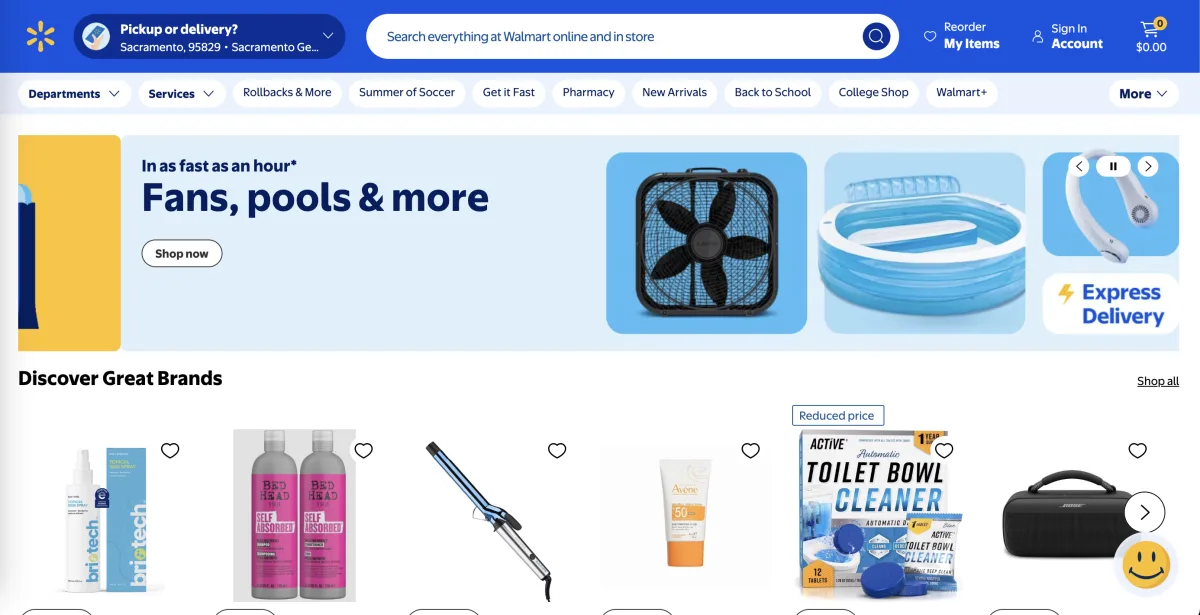
Walmart has become a genuinely serious Amazon alternative, not just a fallback. According to Forbes Advisor, Walmart holds approximately 6.4% of U.S. e-commerce sales — second only to Amazon among U.S. platforms.
Walmart's structural advantage over Amazon: its physical store network. Buying online and returning in-store — without scheduling a pickup, finding a UPS drop-off, or waiting for a return label — is a practical convenience Amazon cannot match at scale. For households buying groceries, household staples, and brand-name electronics regularly, Walmart's prices are often competitive with Amazon's, and there's no required subscription fee.
Our full Walmart online review for 2026 goes deeper on the platform's strengths and limitations across grocery and electronics categories.
One thing to know: Walmart's marketplace includes third-party sellers alongside Walmart's own inventory. Check who is actually selling the item before you buy — the same discipline that applies on Amazon applies here.
Best for Eco-Friendly Household Products: Curated Platforms
Searching for "non-toxic dish soap" on Amazon returns hundreds of results with claims that are essentially unverifiable without independent testing. That's the specific problem curated platforms like Grove Collaborative solve.
Rather than offering everything, Grove Collaborative offers a vetted selection of eco-friendly, cruelty-free, and nontoxic household and personal care products. According to The Good Trade, Grove Collaborative is a certified B Corp — meaning it has met independently verified standards for social and environmental performance. Shipping carbon is offset with each delivery.
The trade-off is selection. Grove Collaborative carries far fewer products than Amazon by design — that narrowness is the point. Similar principles apply to Credo Beauty (clean cosmetics) and Thrive Market (organic pantry staples). Each sacrifices breadth for accountability.
Shoppers who find Amazon's household category overwhelming, or who've been burned by unverifiable "natural" claims, will find the curated approach a relief rather than a limitation.
Best for Price-First Shopping: Temu and SHEIN
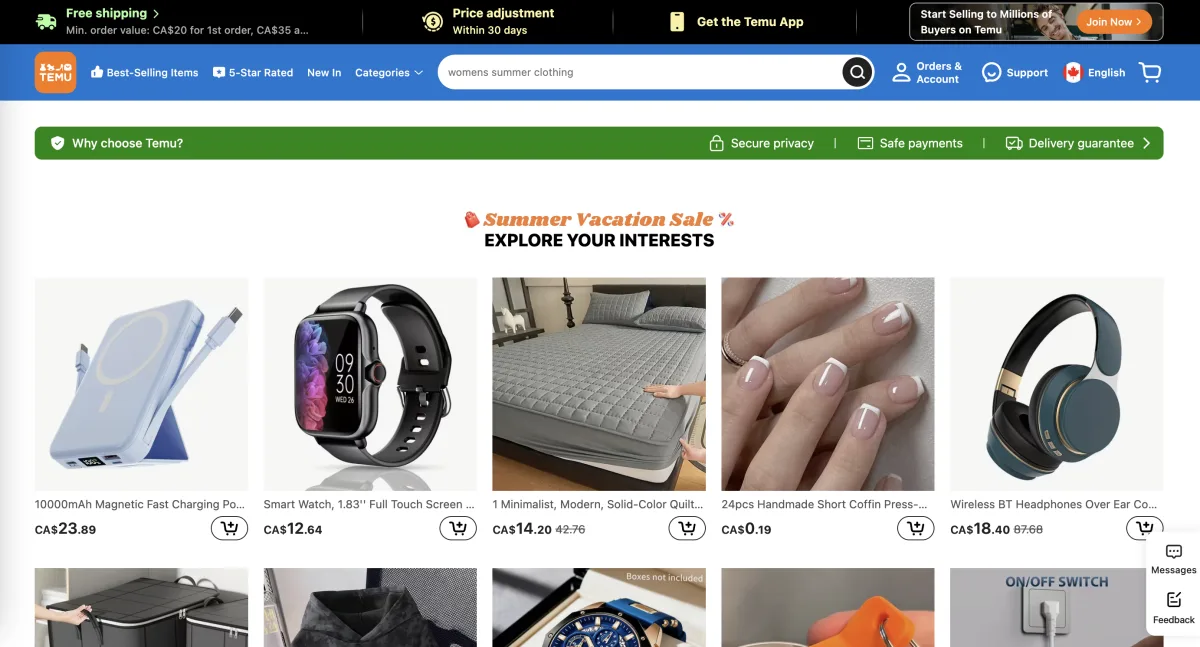
Temu and SHEIN cut multiple layers out of the traditional supply chain — goods move from manufacturer to consumer with minimal intermediary markup. The result is prices that are often dramatically lower than anything available on Amazon for comparable items.
According to Marketplace Pulse, SHEIN's marketplace has reached significant U.S. GMV — a figure that reflects genuine consumer demand, not novelty. Amazon's response (launching Amazon Haul to compete directly with Temu's model) confirms how seriously the market takes these platforms.
The trade-offs are real:
- Shipping times are typically 1–3 weeks, not 2 days
- Product quality is variable and harder to predict than on Amazon
- Ethical concerns around labor practices and environmental impact have been documented by mainstream outlets and investigated by regulatory bodies in multiple countries
These platforms make the most sense for low-stakes purchases where price is the primary driver and delivery speed isn't critical: seasonal decorations, basic accessories, craft supplies. They're poor choices for anything where quality, fit, or safety matters significantly.
If you want a detailed breakdown of what to trust and what to watch out for, our Temu review for 2026 and AliExpress review for 2026 cover the key risks and safeguards in depth.
Best for Live Shopping and Collectibles: Whatnot and TikTok Shop

Whatnot and TikTok Shop represent a genuinely different shopping behavior — one Amazon's interface doesn't meaningfully serve.
Whatnot is a live-auction platform that has grown primarily around collectors of trading cards, comics, sneakers, and vintage items. The experience is interactive: buyers watch a live video feed, ask the seller questions in real time, and participate in competitive bidding. For collectibles where authentication, condition grading, and community knowledge are central to value, this model is far superior to a static Amazon listing.
TikTok Shop embeds shoppable product links directly into short-form creator content. A cooking video demonstrates a specific pan; you tap to buy it without leaving the app. This discovery-driven model works particularly well for lifestyle products, kitchen tools, beauty items, and apparel — categories where seeing something in use is more persuasive than reading a product description.
One honest caution for both: the entertainment element of live auctions and social video is psychologically designed to encourage spending. Go in with a specific item in mind rather than browsing for entertainment.
Best for Home Furniture and Decor: Wayfair
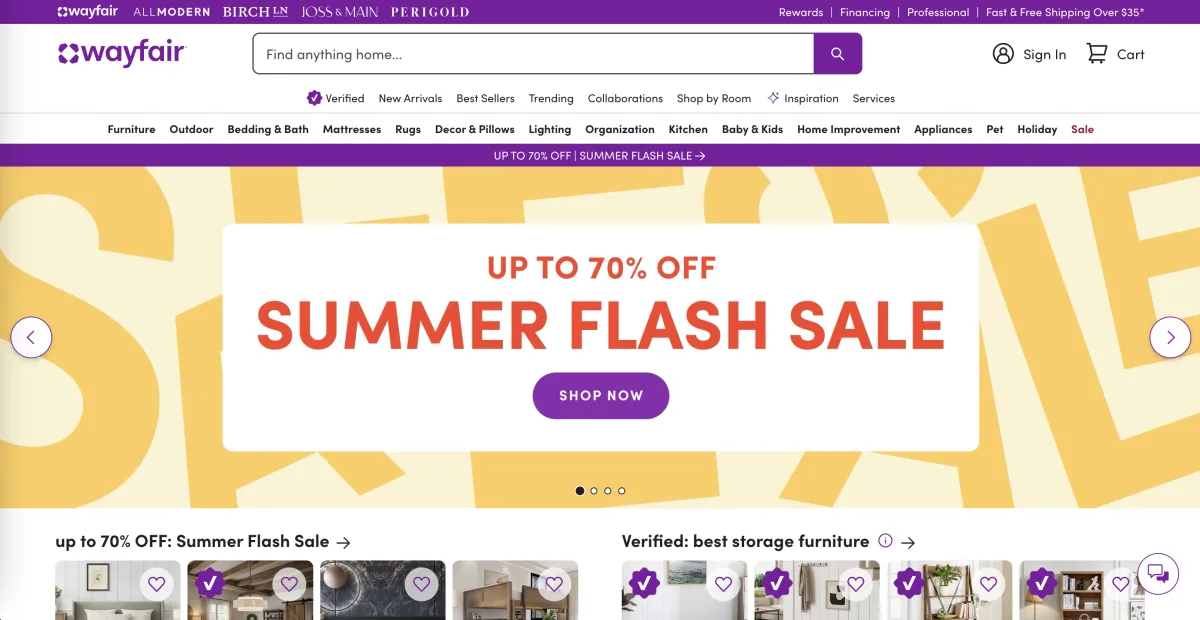
Wayfair's entire platform is built around one category: home goods, furniture, and decor. That specialization shows in ways that matter when you're buying a sofa or a dining table.
Wayfair's search tools let you filter by exact dimensions, room type, style, and material in ways that Amazon's generalist search cannot replicate. Its room visualization tools reduce the uncertainty that makes buying furniture online risky. And its delivery policies for large items — white-glove delivery, room-of-choice placement — are specifically designed for the logistics challenges of buying heavy, bulky items online. Amazon's standard fulfillment handles these edge cases poorly by comparison.
The honest limitation: Wayfair's return process for large furniture items can be cumbersome, and quality control across its many third-party suppliers is inconsistent. Read reviews carefully — particularly for upholstered furniture and items with mechanical components — more than you would on a platform with tighter supplier standards.
How Amazon Stacks Up Against These Alternatives
| Shopping Need | Best Platform | Why Not Amazon? |
|---|---|---|
| Handmade / custom gifts | Etsy | Amazon results are mostly mass-produced despite "handmade" labels |
| Outdoor gear | REI | Expert curation, real-activity organization, conservation mission |
| Everyday essentials | Walmart | Competitive pricing, no subscription required, in-store returns |
| Eco-friendly household | Grove Collaborative | Independently verified, curated selection vs. unverifiable Amazon claims |
| Price-first / low-stakes | Temu / SHEIN | Dramatically lower prices; trade-offs in quality and shipping time |
| Collectibles / live auctions | Whatnot | Live bidding, community authentication — static listings can't compete |
| Social discovery | TikTok Shop | Products shown in context of actual use |
| Home furniture | Wayfair | Category-specific search, large-item delivery, room visualization |
What About Warehouse Clubs — Costco, Sam's Club, BJ's?
Worth a mention: for bulk purchasing of groceries, household staples, and electronics, warehouse clubs offer a value proposition that Amazon struggles to match. Unlike Prime, a warehouse club membership gives you access to physical store pricing on fresh food, gasoline, and bulk goods — categories where Amazon's logistics make cost-competitive delivery difficult.
Our comparison of Costco vs. Sam's Club vs. BJ's covers which wholesale club makes the most sense by household size and shopping habits, and our full Costco review for 2026 goes deeper on whether the membership pays for itself.
Frequently Asked Questions
Is there a single platform that replaces Amazon for everything?
No — and that's the wrong framing. Amazon's breadth was built over decades with enormous infrastructure investment. The more useful question is which platform does a specific job better than Amazon. Most shoppers who diversify end up using two or three platforms for different purposes rather than finding one replacement.
Are Amazon alternatives actually cheaper?
It depends entirely on the category. Temu and SHEIN are often dramatically cheaper for basic goods, with trade-offs in quality and shipping time. Walmart is frequently price-competitive on brand-name products without requiring a subscription fee. Etsy and REI are not competing on price — they're competing on quality, curation, and values. "Cheaper" is only one dimension of value, and it's not the most important one for every purchase.
How do I know if a seller on these platforms is trustworthy?
Check the seller's review history, look at the volume of completed transactions, read negative reviews specifically to understand failure modes, and verify return policies before purchasing. On Etsy, shop age and review count are particularly important signals. On Walmart Marketplace and Wayfair, check whether the item is fulfilled by the platform itself or by a third-party seller — return processes differ significantly.
Should I use price-tracking tools when shopping on any of these platforms?
Yes, especially for higher-ticket items on Amazon and Walmart. Tools like CamelCamelCamel track Amazon price history over time, so you can see whether a "sale" price is actually a discount from the historical norm or just the everyday price with a strikethrough. Our guide to deal alert apps and price trackers for 2026 covers the most reliable options.
What about eBay — is it still relevant in 2026?
eBay remains significant for used goods, rare items, and consumer electronics. According to Forbes Advisor, eBay holds approximately 3% of U.S. e-commerce sales and receives around 872 million site visits annually. For a specific discontinued item — a vintage camera lens, a console game from a specific era — eBay's auction and fixed-price listings are hard to beat. It didn't make the primary recommendations here because it serves a narrower use case, but it is far from irrelevant.
Are there ethical concerns with Temu and SHEIN?
Yes, and they deserve honest acknowledgment. Both platforms have faced scrutiny over labor conditions in their supply chains, environmental impact from high-volume production, and data privacy practices. These have been reported by mainstream outlets and investigated by regulatory bodies in multiple countries. Shoppers who weigh ethical sourcing in their purchasing decisions should research these issues before using either platform. The low prices reflect real trade-offs somewhere in the supply chain.
The Decision Framework: Match Your Need to the Right Platform
Rather than ranking these platforms against each other, here's how to choose:
- Buying something handmade, personalized, or from an independent maker? Start on Etsy. Check seller reviews and shop history before purchasing.
- Buying outdoor gear, hiking equipment, or camping goods? Check REI first — especially its clearance and used-gear sections.
- Buying everyday household staples or brand-name electronics? Compare Walmart directly against Amazon. No subscription required, in-store returns available.
- Want verified non-toxic household or personal care products? Use a curated platform like Grove Collaborative rather than sorting through Amazon claims you can't verify.
- Buying furniture or home decor? Wayfair's category-specific search tools and large-item delivery options make it the stronger choice for most furniture purchases.
- Price is the primary driver and delivery speed isn't critical? Temu and SHEIN offer genuine savings on low-stakes purchases — go in with clear expectations about quality variability, shipping timelines, and documented ethical concerns.
- Buying collectibles, trading cards, or vintage items? Whatnot's live-auction format and community authentication practices serve this category better than any static marketplace.
- Discovering products through content you already watch? TikTok Shop's integrated purchase flow makes sense for lifestyle purchases — set a mental budget before browsing.
The best Amazon alternatives in 2026 are not trying to be Amazon. They're trying to be better than Amazon at something specific — and in most cases, they succeed. The practical move is to build a small, deliberate set of go-to platforms matched to how you actually shop.
This guide is based on publicly available market data, cited third-party sources, and verified consumer reporting. It does not reflect hands-on testing of each platform by Trusted Buyer Report. Affiliate commissions may be earned through links in this article; our editorial assessment is completed before any affiliate relationship is applied. Read our full disclosure →