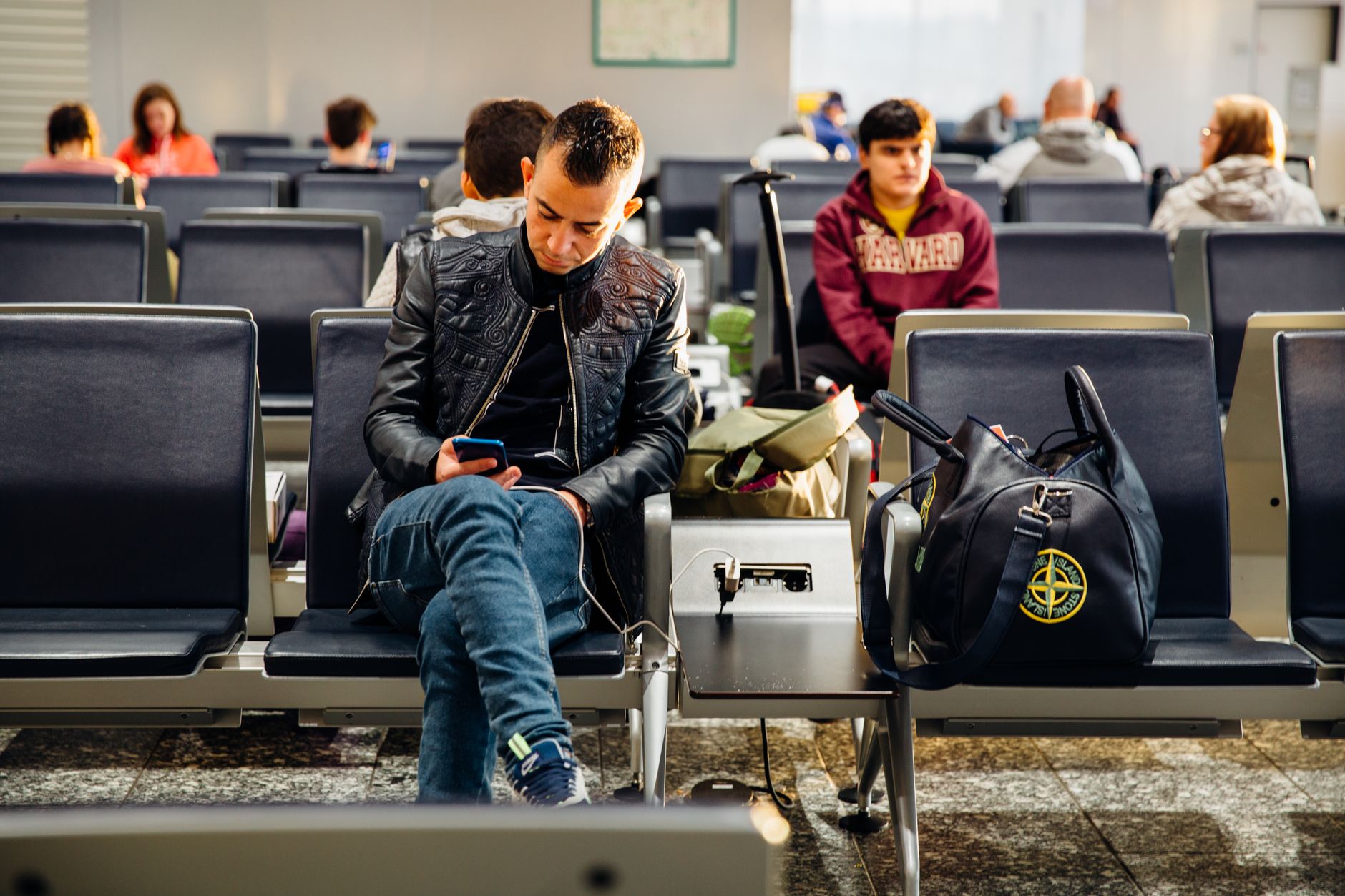
Here is a fact that should reframe how you evaluate lounge access entirely: according to Airport Dimensions research, 57% of frequent travelers surveyed globally now visit a lounge at some point during their travels — and leisure passengers are steadily displacing the traditional business traveler as the dominant lounge user. That shift matters because it is the single biggest reason why the lounge you paid to access through a premium credit card may already be full when you arrive.
The standard comparison article will tell you that Priority Pass has more than 1,800 locations and that Amex Centurion Lounges are beautiful. Both statements are true. Neither one tells you whether you will get a seat at Houston IAH on a Friday afternoon. This article does.
Why Lounge Access Is Harder to Use Than the Brochure Suggests
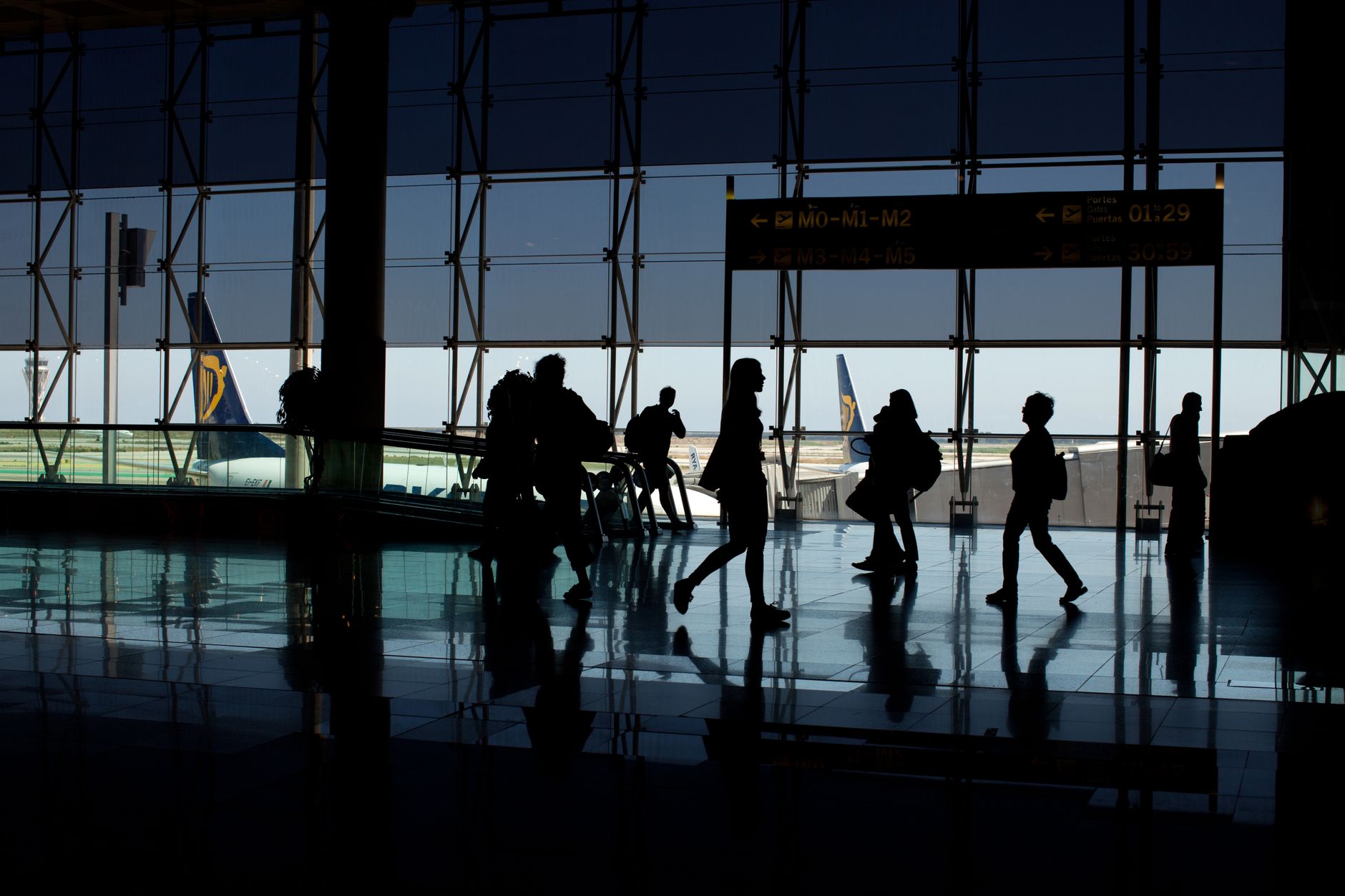
The CardRatings team documented this problem with uncomfortable specificity: a writer arrived at the Centurion Lounge at George Bush Intercontinental Airport (IAH), waited 30 minutes on the waitlist, and upon finally gaining entry found every seat taken — standing with a plate in one hand and a phone in the other. That is not an edge case. It is a predictable outcome at high-traffic Centurion locations during peak hours, and it represents a real gap between the marketed benefit and the lived experience.
The demand surge has a clear structural cause. Airport Dimensions research found that 19% of lounge visitors globally gain entry through Priority Pass specifically, while a growing share are leisure travelers who acquired lounge access through premium card sign-up bonuses rather than through years of elite airline status. The result is that the same lounges that once served a relatively small cohort of road warriors now absorb a much broader and less predictable audience.
Checking lounge capacity before you clear security is no longer a nice-to-have tip — it is a practical necessity if you are relying on a single lounge option at a busy hub. Most major lounge programs, including Amex Centurion, now offer digital tools or apps to check availability in advance. The Priority Pass app shows participating lounges, operating hours, and current restrictions. Using these tools before committing to a 15-minute walk across the terminal is the first habit shift this article recommends.
Understanding the Three Lounge Ecosystems: What Each One Actually Is
These three programs are not variations of the same product. They are structurally different systems that solve different problems.
Priority Pass is a third-party membership network. It aggregates access to more than 1,800 lounge locations globally, operated by independent lounge operators, airlines, and in some cases restaurants. Priority Pass does not own or control the quality of any individual location — it acts as a key that unlocks a wide range of spaces with widely varying standards. According to Forbes Advisor, Priority Pass covers more than 1,800 locations compared to Centurion's 25-plus airports.
Amex Centurion Lounges are proprietary spaces owned and operated by American Express. Every design decision, food program, and staffing standard is controlled by Amex, which is why the experience is consistent across locations. The tradeoff is geographic concentration — there are currently 16 Centurion Lounges in the United States, meaning travelers flying through smaller regional airports may find no Centurion option at all.
The Amex Global Lounge Collection is worth distinguishing from the Centurion Lounge specifically, because many readers conflate the two. The Global Lounge Collection is a broader umbrella bundled with the Platinum Card that includes seven component memberships: Centurion Lounges, American Express Lounges, Delta SkyClub, Escape Lounges, Priority Pass (free enrollment required), Airspace Lounges, and Plaza Premium Lounges. This is the full access package, not just the Centurion brand.
Hip Hip is a newer entrant in the lounge access space. Unlike Priority Pass, which aggregates existing third-party lounges, or Amex, which operates proprietary spaces, Hip Hip operates as a more curated, app-based lounge discovery and access platform. Its network is smaller than either established player, but its model is designed around flexibility and ease of on-demand access rather than card-linked membership. Travelers who fly infrequently or who want lounge access without committing to a high-annual-fee card are the primary audience Hip Hip targets.
Network Size vs. Network Quality: The Stat That Misleads Most Travelers

The number 1,800 sounds decisive. It is not, for most travelers. What matters is whether any of those 1,800 locations are at the airports you actually use — and whether those locations are dedicated lounges or restaurant credits at a food court.
According to the TPG Awards 2026, the Amex Global Lounge Collection reported 158 locations in the U.S. across 62 airports — the largest domestic footprint of any single card program. The next-largest competitor had 87 lounges across 48 airports. That gap is substantial, and it reflects the advantage of the Global Lounge Collection's bundled structure rather than the Centurion brand alone.
The honest framing is this: Priority Pass wins on raw global count. The Amex Global Lounge Collection wins on domestic U.S. coverage breadth. Centurion Lounges win on consistent quality at the specific airports where they exist. Hip Hip wins on accessibility for travelers who do not want to pay a ? annual fee to get started.
Forbes Advisor's direct comparison table makes the quality-versus-quantity tension explicit: Centurion Lounges at 25-plus airports versus Priority Pass at 1,800-plus locations. But the Centurion network has a practical fallback built in — Escape Lounges operate as Centurion Studio Partners at airports where no full Centurion property exists, giving Platinum cardholders a usable option even at secondary airports.
Inside the Centurion Lounge Experience: What You Actually Get
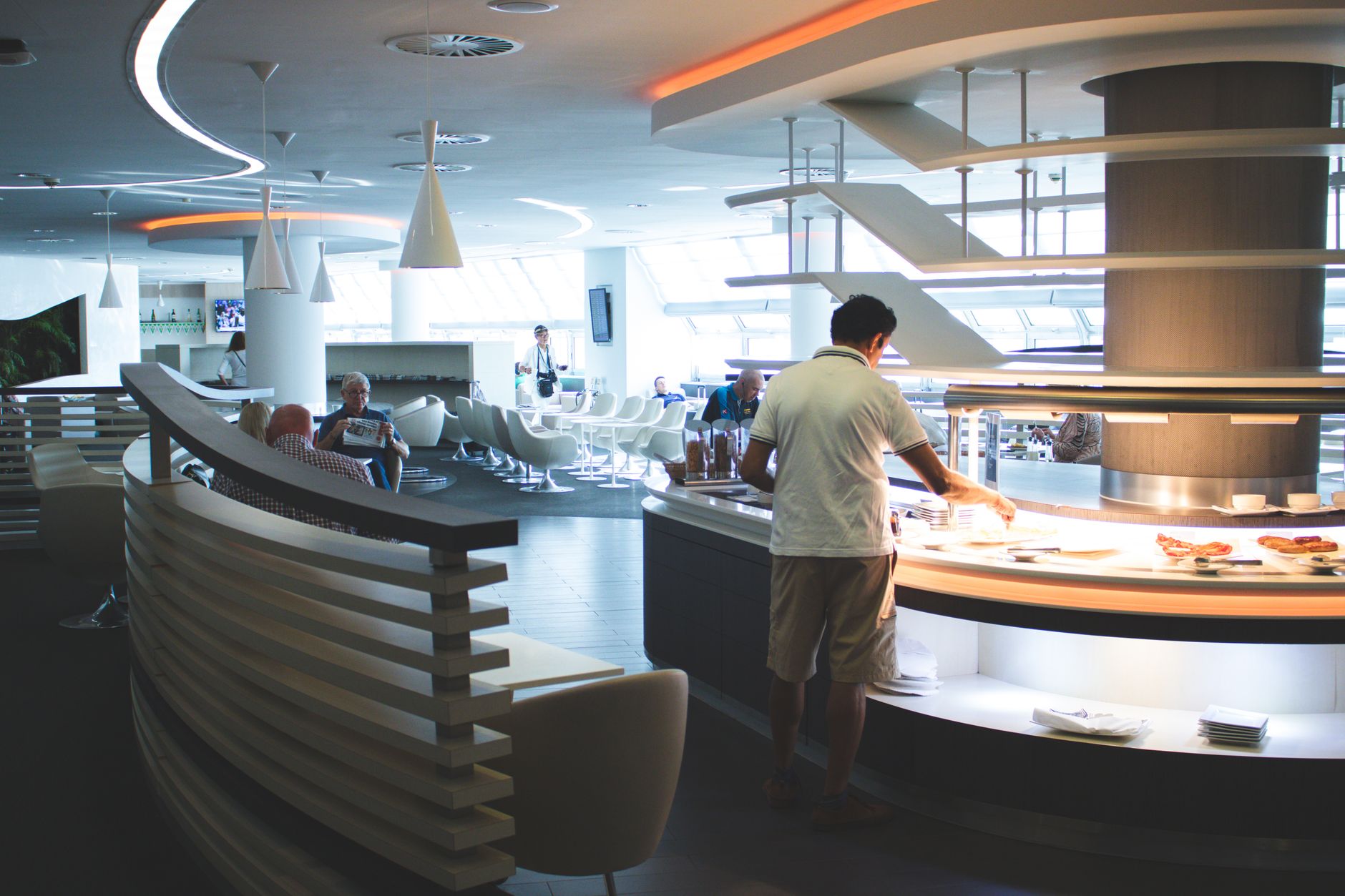
The reputation is earned. InsideTheUpgrade describes Centurion Lounges as offering spa treatments, exceptional food programs, hidden speakeasy concepts, and premium interior design that stands apart from the beige carpet and packaged snack aesthetic of a generic airport lounge. These are not exaggerations — they reflect a deliberate brand investment by Amex in making the Centurion Lounge a differentiator.
The Salt Lake City Centurion Lounge has been cited by The Points Guy as potentially the finest location in the entire network following its recent opening. In 2026, Amex debuted a new concept called Sidecar by Centurion Lounge in Las Vegas — a quicker, more intimate dining experience specifically designed for travelers with a flight departing within 90 minutes. Amex plans to expand the Sidecar concept to Charlotte Douglas International Airport in 2027, and it is similar in philosophy to Capital One's Landing concept.
The guest fee structure is where the math changes for many travelers. Each adult guest costs ?, and each child costs ?, according to InsideTheUpgrade. A family of four — two adults and two children — would pay ? in guest fees on top of the card's annual fee just to use the lounge together. That is a real cost that most comparison articles bury in footnotes.
Amex also changed its Centurion Lounge access rules effective July 8, 2026. According to A Dose of Travels, guests must now be on the same flight as the cardholder to gain entry. This eliminates the previous flexibility of bringing a companion traveling on a different flight, and it represents a meaningful tightening of the benefit.
Centurion Lounge Locations in 2026: Domestic and International Coverage
There are currently 16 Centurion Lounges open in the United States. According to InsideTheUpgrade, domestic locations include Atlanta, Charlotte, Dallas–Fort Worth, Denver, Houston, Las Vegas, Los Angeles, Miami, New York (JFK), New York (LGA), Philadelphia, Phoenix, Seattle, San Francisco (temporary), and Washington D.C. A 16th location rounds out the current domestic footprint.
Internationally, The Points Guy reports 15 Centurion Lounges open abroad across 11 airports. InsideTheUpgrade lists international locations including Buenos Aires, Delhi, Hong Kong, London, Melbourne, Mexico City, Monterrey, Mumbai, Stockholm, and Sydney.
Confirmed 2026 expansions include a new Centurion Lounge at Newark Liberty International Airport (EWR), noted by both Forbes Advisor and The Points Guy. A Centurion Lounge at Amsterdam Airport Schiphol (AMS) is also planned for 2026. Looking further ahead, a Boston Logan International Airport (BOS) location is planned for 2029.
If your home airport or frequent connection is not on this list, the practical fallback is Escape Lounges. Forbes Advisor specifically notes that travelers departing from airports without a Centurion Lounge may be able to use Escape Lounges as a Centurion Studio Partner within the broader network — a meaningful gap-filler that does not require switching cards.
Priority Pass in 2026: Where It Wins and Where It Falls Short

Priority Pass wins on one dimension without contest: geographic reach. More than 1,800 participating locations means that in almost any international airport of meaningful size, a Priority Pass member will find something. For travelers who frequently pass through secondary European, Asian, or Latin American airports where Centurion has no presence, Priority Pass provides coverage that no proprietary lounge network can match.
The quality variance is the honest counterpoint. A Priority Pass lounge in a major hub like London Heathrow or Singapore Changi can be genuinely excellent. A Priority Pass "lounge" at a smaller U.S. regional airport may be a ? restaurant credit at a bar near the gate. Both count as Priority Pass locations in the headline number.
Card issuers have also been quietly restricting Priority Pass benefits. Some have removed restaurant credit access from their bundled Priority Pass benefit, meaning the card you hold may not unlock the same range of location types as a standalone Priority Pass membership. Katie's Travel Tricks specifically flags that if your home airport's main Priority Pass option is a restaurant credit, you should target cards like the Bank of America Premium Rewards Elite or the US Bank Altitude Connect, which still support that access type.
The Priority Pass app is genuinely useful for managing these inconsistencies. It shows participating lounges, operating hours, and restrictions by airport, which allows you to make an informed decision before committing to a long terminal walk.
The Overcrowding Problem: What No One Tells You Before You Sign Up

The CardRatings account of the Houston IAH Centurion Lounge waitlist is not an anomaly — it is a symptom of a structural supply-demand imbalance. Premium card issuers have aggressively marketed lounge access as a headline benefit, dramatically expanding the cardholder base eligible for entry. The number of lounge seats has not grown at the same rate.
Airport Dimensions research confirms the demand side of this equation: leisure travelers are slowly displacing traditional business travelers in lounges, and the overall share of frequent travelers who visit lounges has reached 57% globally. More people want lounge access, and the most desirable lounges — particularly Centurion locations at major hubs — bear the brunt of that pressure.
The July 8, 2026 same-flight guest rule change at Centurion Lounges is partly a structural response to this problem. By requiring guests to be on the same departing flight as the cardholder, Amex reduces the scenario where a cardholder brings multiple companions traveling on different itineraries, which was a meaningful contributor to peak-hour crowding.
Practical strategies that actually help: check lounge capacity through the app before clearing security; visit during off-peak hours (mid-morning on weekdays, not Friday afternoon); identify a backup lounge at the same airport so you have an alternative if the primary location is at capacity. Travelers with access to the full Amex Global Lounge Collection have more fallback options than those relying on a single Centurion location.
Guest Policies Compared: The Hidden Cost That Changes the Math

Guest policy is where the comparison between these programs diverges most sharply for travelers who regularly bring companions.
- Amex Centurion Lounges: Cardholders may bring up to two companions. Each adult guest costs ?; each child costs ?. As of July 8, 2026, guests must be on the same flight as the cardholder. A couple traveling together pays ? per visit just for the second person.
- Priority Pass (bundled with cards): Guest policies vary by the card issuing the benefit. Some cards offer two free guests per visit; others charge per guest or limit the number of guests entirely. The Amex Platinum's bundled Priority Pass enrollment offers unlimited entry for the Platinum member plus two complimentary guests, according to the American Express website.
- Hip Hip: As a newer platform, Hip Hip's guest model is structured around individual access passes rather than companion benefits tied to a card account, which can be more flexible for solo travelers but less economical for families.
The math for a family of four using Centurion Lounges regularly is worth doing explicitly. Two adult guests at ? each plus two children at ? each equals ? per visit in guest fees alone, on top of the ? annual fee for the Platinum Card. If that family flies together four times per year and uses the lounge each time, guest fees alone total ? — nearly matching the annual fee itself.
Which Option Fits Your Travel Pattern: A Decision Framework
There is no single correct answer here. The right lounge access program depends on where you fly, how often, and with whom.
Choose the Amex Platinum (Centurion + Global Lounge Collection) if:
- You regularly fly through major U.S. hubs where Centurion Lounges exist — Atlanta, Dallas, New York, Los Angeles, Miami, or similar.
- You travel solo or with one companion and can absorb the ? guest fee without it eroding the value calculation.
- You want a consistently high-quality experience and are willing to pay the ? annual fee to get it.
- You want the broadest domestic U.S. coverage — 158 locations across 62 airports per TPG Awards 2026.
Choose a Priority Pass-focused card if:
- You frequently travel internationally through airports where Centurion has no presence.
- Your home airport has no Centurion Lounge but does have a solid Priority Pass location.
- You want lounge access at a lower annual fee than the Amex Platinum requires.
- You are comfortable with quality variance across locations and use the Priority Pass app to vet options in advance.
Consider Hip Hip if:
- You fly infrequently — perhaps four to eight times per year — and cannot justify a ? annual fee for lounge access alone.
- You want on-demand, pay-per-use flexibility without a long-term card commitment.
- You are a solo traveler who values ease of access over the full-service premium experience.
The most important step before choosing any of these programs is to look up your actual home airport and top three destination airports against each network's coverage map. Katie's Travel Tricks recommends using the Priority Pass website and the bank lounge comparison charts to map your specific airports before committing to any card.
Frequently Asked Questions
Is Priority Pass still worth it in 2026?
For international travelers who pass through airports where Centurion Lounges do not exist, Priority Pass remains the most geographically comprehensive option available. Its value depends heavily on which card bundles the benefit and whether that card's version of Priority Pass still includes restaurant credits. Verify your specific card's terms before assuming full network access.
Can I bring my family into a Centurion Lounge for free?
No. As of current policy, each adult guest costs ? and each child costs ?. You may bring up to two companions. Since July 8, 2026, those guests must also be on the same departing flight as you. For families of three or more, guest fees can add up quickly and should be factored into the overall value calculation.
What happens if the Centurion Lounge is full when I arrive?
You may be placed on a waitlist, as documented by CardRatings at Houston IAH. To reduce this risk, check lounge capacity through the Amex app before clearing security, visit during off-peak hours, and identify a backup lounge at the same airport — Escape Lounges are available at some airports as a Centurion Studio Partner fallback.
How many Centurion Lounges are opening in 2026?
Two new Centurion Lounges are expected to open in 2026: one at Newark Liberty International Airport (EWR) in the U.S. and one at Amsterdam Airport Schiphol (AMS) internationally, according to Forbes Advisor and The Points Guy.
Does the Amex Platinum include Priority Pass?
Yes. The Platinum Card includes free enrollment in Priority Pass as part of the Amex Global Lounge Collection, with unlimited entry for the cardholder plus two complimentary guests per visit, according to the American Express website. This is separate from Centurion Lounge access and expands coverage to airports where no Centurion property exists.
What is Sidecar by Centurion Lounge?
Sidecar is a new dining concept Amex debuted in Las Vegas in 2026. It is designed for travelers with a flight departing within 90 minutes, offering a quicker and more intimate experience than a full Centurion Lounge visit. A second Sidecar location is planned for Charlotte Douglas International Airport in 2027, per The Points Guy.
Final Recommendation
The best airport lounge access in 2026 is not the one with the most locations or the most Instagram-worthy interior. It is the one that reliably gives you a seat at the airports you