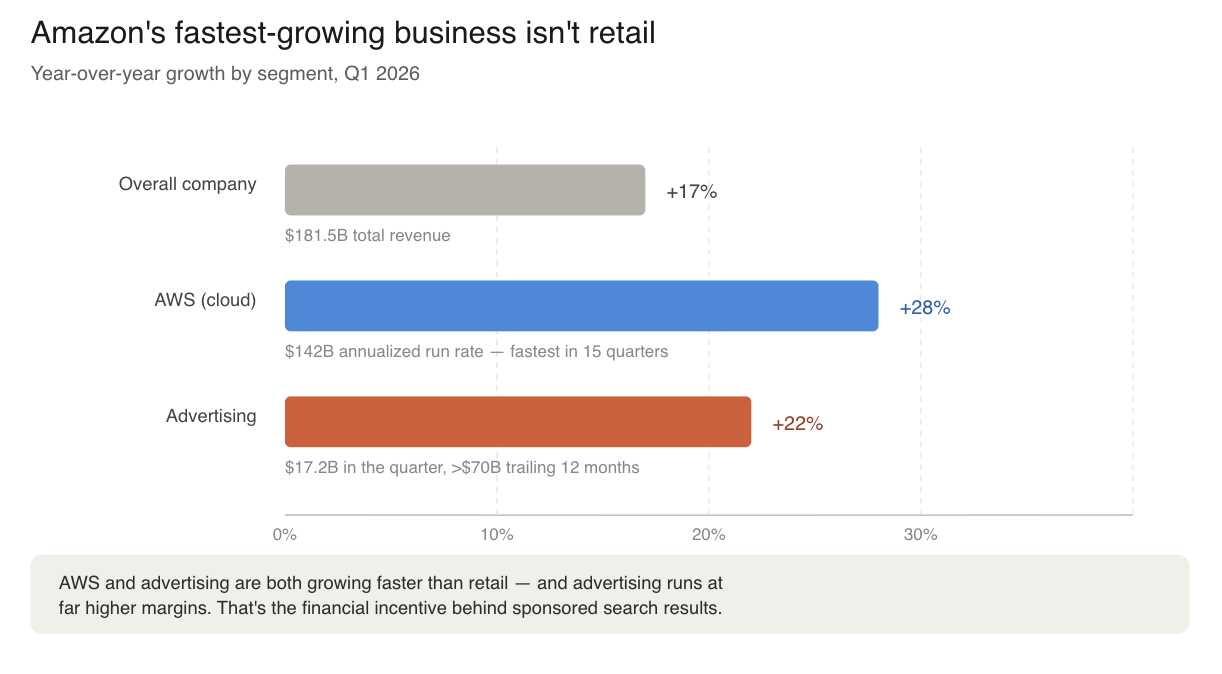
Here is a statistic that should reframe how you think about Amazon in 2026: despite years of headlines about fake reviews, counterfeit products, and rising prices, Amazon became the first company in history to post over $700 billion in annual revenue, closing 2025 at $716.9 billion in net sales — and Q1 2026 alone brought in $181.5 billion, up 17% year over year, according to Digital Commerce 360's coverage of the Q1 2026 results and Amazon's own SEC earnings filing. That is not the number of a platform shoppers are abandoning. It is the number of a platform that has become so deeply embedded in daily life that most people use it even when they have doubts about it.
Those doubts are legitimate. Shoppers in 2026 are navigating a more complicated Amazon than the one they signed up for — cluttered search results, review systems they no longer fully trust, and a nagging sense that they might be paying more than they need to. This article addresses those concerns directly, using verified data and honest comparisons, so you can decide when Amazon genuinely serves you and when a better option exists. If you want broader context on where Amazon fits into your overall spending strategy, The Ultimate US Shopping & Money-Saving Guide 2026 covers the full landscape of where and how to shop smarter this year.
The Honest Problem: Why Shoppers Are Second-Guessing Amazon in 2026
Open Amazon and search for a USB-C cable. You will likely see dozens of near-identical listings — similar packaging, similar brand names you have never heard of, star ratings ranging from 3.8 to 4.7, and review counts anywhere from 12 to 47,000. Deciding which one is actually good requires more investigative work than most people want to do when buying a five-dollar cable. That friction is real, and it is one of the most consistent complaints among everyday shoppers in 2026.
The review problem compounds this. According to CLOSO's 2026 review integrity analysis, black-market review purchases are still available through Facebook groups and Telegram channels, where sellers pay via PayPal to receive reviews from accounts that have reviewed multiple products from known bad actors. Amazon's fraud detection system, called Project Zero, tracks signals like unusual review velocity and interconnected buyer graphs — but the analysis makes clear that the system is not catching everything.
Pricing assumptions have also shifted. Many shoppers still operate on the mental model that Amazon is automatically the cheapest option, but that assumption deserves scrutiny in 2026. Walmart, Temu, and direct-brand websites have all become more competitive, and the rise of sponsored product placements on Amazon means the first results you see are often paid, not the best value. These are not fringe complaints from edge-case users. They are structural features of how the platform now operates, and understanding them is the starting point for shopping Amazon intelligently.
Amazon's Scale in 2026: What the Platform Actually Looks Like Today
Amazon began as an online bookstore. It is now something closer to a logistics and technology conglomerate that happens to sell books. The company employs over 1.5 million people worldwide, operates more than 175 fulfillment centers, and maintains a delivery fleet of over 400,000 vehicles, according to Deep Research Global's 2026 company analysis. Its Q4 2025 results — reported in February 2026 — showed Amazon crossing $200 billion in quarterly revenue for the first time in its history, at $213.4 billion, with AWS growing 24% year over year to mark its fastest pace in 13 quarters. By Q1 2026, AWS growth had accelerated further to 28%, its fastest growth in 15 quarters, reaching a $142 billion annualized revenue run rate, according to Amazon's own Q1 2026 SEC filing.
For shoppers, this scale has two sides. The fulfillment infrastructure means Amazon can deliver to most U.S. addresses within one to two days, a capability that competitors have not fully replicated. The breadth of assortment — spanning groceries, electronics, apparel, furniture, and prescription medications — means you can consolidate purchases in a way that no single physical retailer can match. Amazon's mobile app consistently ranks among the top downloaded shopping apps globally on both the Apple App Store and Google Play, according to Marketing LTB's Amazon Statistics 2026, which tells you where most of these transactions are actually happening — on phones, not desktop browsers.
The other side of that scale is noise. A marketplace with hundreds of millions of listings is inherently harder to navigate than a curated retailer. When Amazon opened its platform to third-party sellers, it gained enormous assortment depth but lost direct control over product quality and authenticity. That trade-off is the root cause of most shopper frustrations in 2026.
The Review Trust Problem: How Real Is It, and Can You Navigate It?
Review manipulation on Amazon is not a myth. It is a documented, ongoing problem that the platform is actively but imperfectly fighting. CLOSO's 2026 analysis describes Project Zero's specific detection signals: review velocity anomalies (a product selling two units per day suddenly receiving ten reviews in one day), buyer graph connections linking reviewers to known bad-actor sellers, and PayPal or gift card refund trails that indicate incentivized reviews. These are sophisticated signals, but the black-hat tactics have evolved in parallel.
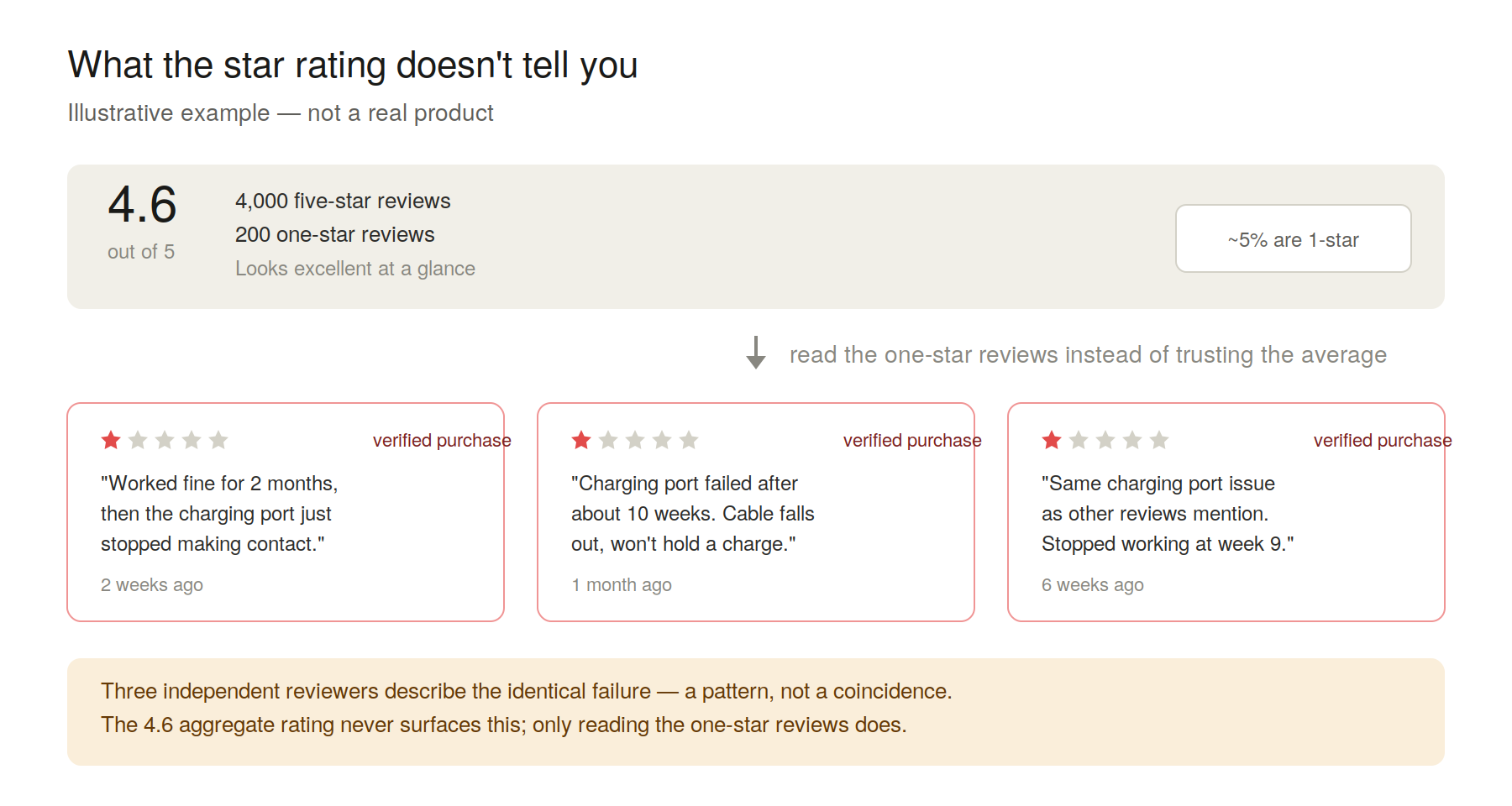
As a shopper, you have practical tools to protect yourself. Reading one-star and two-star reviews first is one of the most effective strategies — not because negative reviews are always accurate, but because patterns in negative reviews reveal real product failures that five-star reviews will never mention. A product with 4,000 five-star reviews and 200 one-star reviews all describing the same charging port failure is telling you something important that the aggregate rating obscures.
Third-party review analysis tools have also matured. As discussed in a 2026 YouTube analysis on Amazon product research methods, AI-powered review analyzers can process all reviews for a specific product's ASIN and surface recurring complaints or praise patterns — a task that would take hours to do manually. These tools are available to shoppers, not just sellers.
Amazon's Vine program and its legacy Early Reviewer Program are worth understanding as a shopper. Vine invites trusted reviewers to receive free products in exchange for honest reviews. The reviews are labeled, and they are generally more reliable than anonymous five-star ratings — but they are still incentivized, which means you should read them critically rather than treating them as independent validation. Amazon's review ecosystem significantly influences conversion rates for listings, according to Marketing LTB, which is precisely why sellers invest so heavily in gaming it.
Pricing Reality Check: Is Amazon Actually the Cheapest Option in 2026?
The honest answer is: sometimes, but not reliably. Amazon's pricing advantage has eroded in specific categories as competition has intensified from Walmart, Temu, and Shein. Amazon's response has been to lean harder into its advertising business rather than compete purely on price — and that business is now substantial. Amazon's advertising revenue reached $17.2 billion in Q1 2026 alone, up 22% year over year, pushing the trailing-twelve-month total past $70 billion for the first time, according to Digital Commerce 360 and Amazon's own Q1 2026 results.
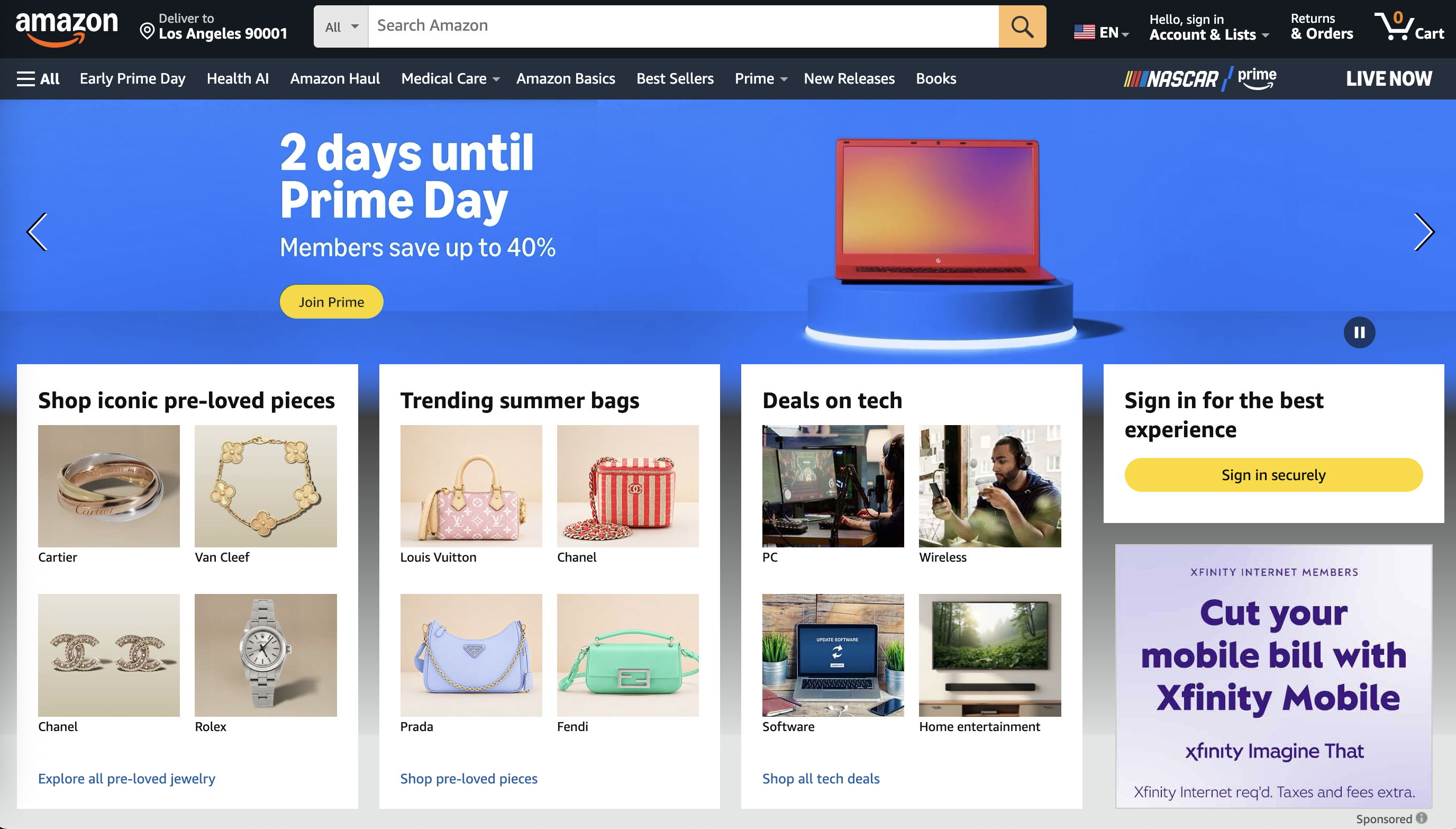
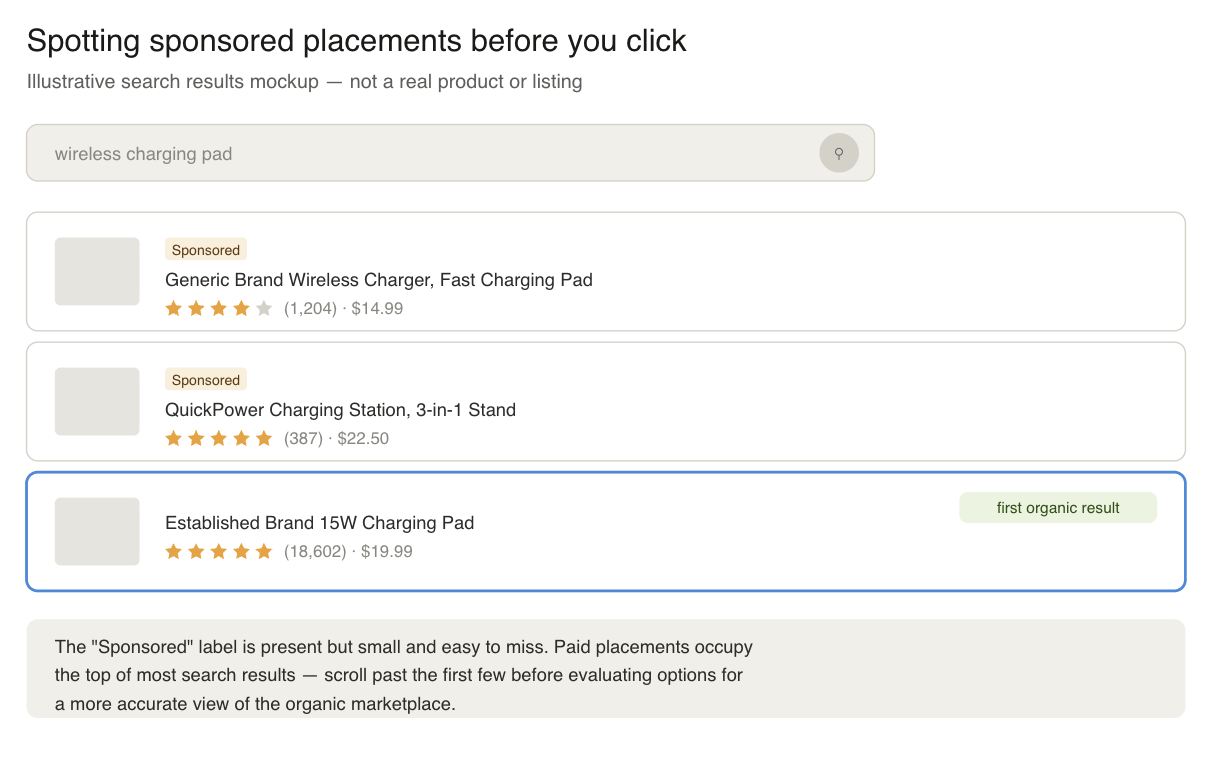
That advertising business matters for shoppers in a specific way. Advertising operates at far higher margins than retail — commonly cited in the 50%+ range, compared to single-digit margins for retail sales — which means the financial incentive to surface sponsored products prominently is enormous. When you search for a product on Amazon and the first four results all carry a small "Sponsored" label, you are looking at paid placements, not organic best-value matches. Many shoppers scroll past these without registering them as ads.
Where Amazon's pricing genuinely holds up: Subscribe & Save for consumables. According to Marketing LTB, this program drives meaningful repeat purchases in categories like household supplies, personal care, and pet food — and the discounts (typically 5-15% depending on subscription count) are real and stackable with coupons. For products you buy every month, Subscribe & Save is one of Amazon's clearest value propositions. Worth noting: on Amazon's Q1 2026 earnings call, CEO Andy Jassy told investors that average prices of products on Amazon had actually decreased year over year, even as unit volume grew 15% — the highest growth rate since the end of pandemic-era lockdowns.
For one-time purchases, especially in electronics and branded goods, the practical approach is a 60-second price check. Pull up the same item on Walmart.com and the brand's direct website before buying. You will not always find a better price, but when you do, the savings can be significant — and buying directly from a brand eliminates counterfeit risk entirely.
Product Quality and Counterfeits: What Categories Are Riskiest and Safest?
Counterfeit and quality risk on Amazon is not evenly distributed. It clusters in specific categories, and knowing which ones helps you shop more selectively rather than applying blanket skepticism to everything.
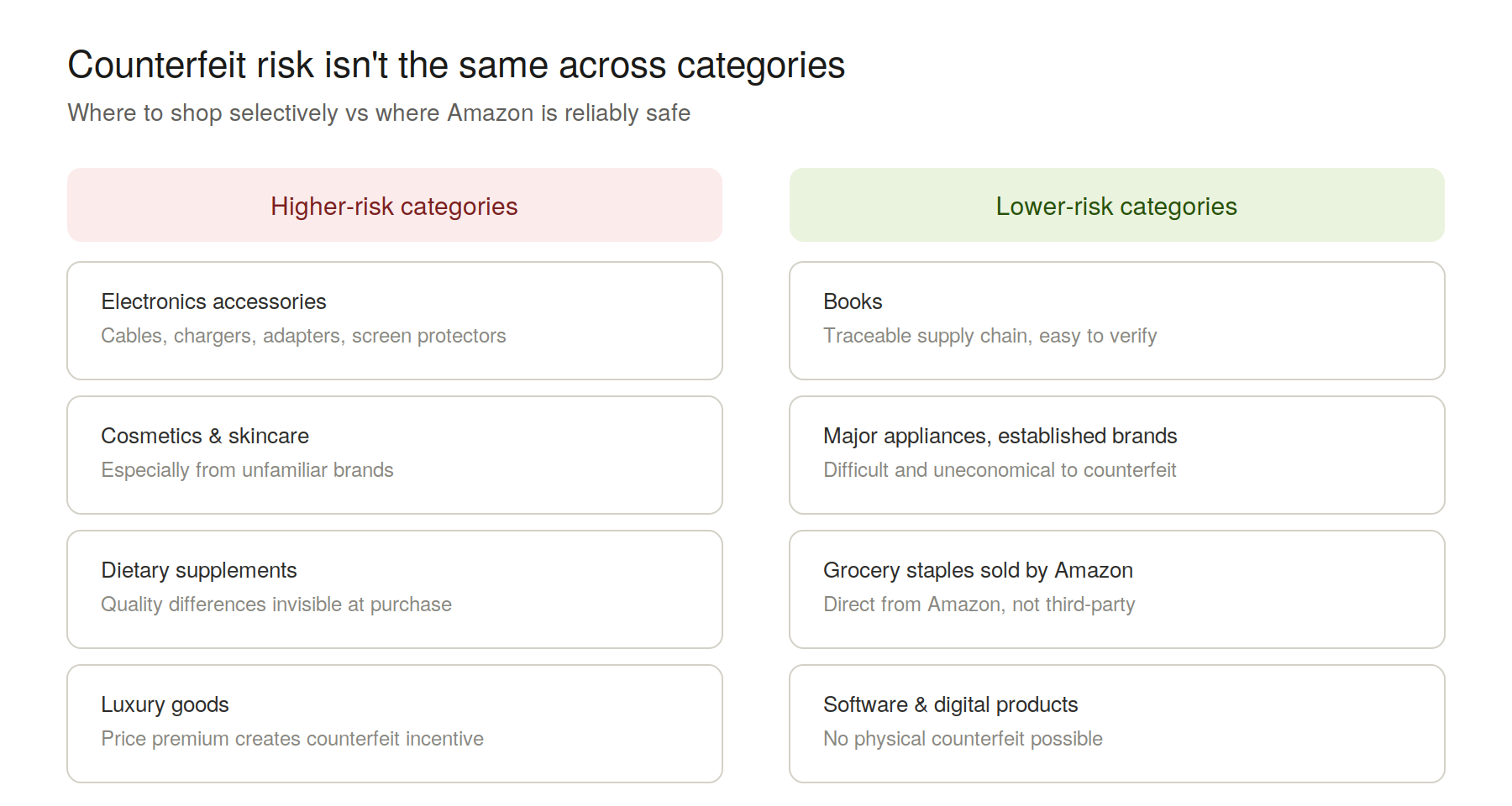
Higher-risk categories include electronics accessories (cables, chargers, adapters, screen protectors), cosmetics and skincare from unfamiliar brands, dietary supplements, and luxury goods. These categories share a common trait: the products are easy to manufacture cheaply, the authentic versions command a price premium that creates a counterfeiting incentive, and quality differences are not always visible at the point of purchase.
Lower-risk categories include books, major appliances from established brands (a Samsung refrigerator or a KitchenAid stand mixer is difficult to counterfeit and easy to verify), grocery staples sold directly by Amazon, and software or digital products. The supply chain for these items is more traceable, and the economics of counterfeiting them are less attractive.
Amazon's retail assortment now spans groceries, apparel, electronics, and more — a genuine convenience advantage, according to Marketing LTB, but one that requires category-specific judgment from shoppers rather than uniform trust. The same platform that reliably delivers your laundry detergent may not be the safest place to buy a phone charger from a brand you have never encountered.
A practical filter: look for listings marked "Ships from and sold by Amazon.com" rather than third-party sellers. When Amazon itself is the seller, the authenticity guarantee is stronger. Amazon Business, the platform's B2B arm, operates with additional verification layers — but those are not automatically available to consumer shoppers, as Marketing LTB notes in its overview of Amazon's enterprise commerce features.
Amazon's private label products — sold under brands like Amazon Basics, Solimo, and Presto — occupy a middle ground. The prices are often lower than branded equivalents, and you are trusting Amazon's own quality control rather than an unknown third party. For commodity items like batteries, HDMI cables, or cleaning supplies, Amazon Basics is generally a reasonable choice. For anything where brand expertise matters — running shoes, kitchen knives, skincare — the private label trade-off is less obvious.
The Competitive Landscape: How Amazon Stacks Up Against Walmart, Temu, and Direct Brands in 2026
Walmart has closed the gap more than most Amazon loyalists realize. Its e-commerce infrastructure has matured significantly, and for shoppers who live near a Walmart store, the option to order online and pick up in store within hours is a genuine convenience advantage that Amazon cannot replicate without a physical retail footprint. Walmart's pricing on grocery and household staples is frequently competitive with or better than Amazon, and its return process — walk into any store — is arguably simpler than Amazon's label-and-ship workflow.
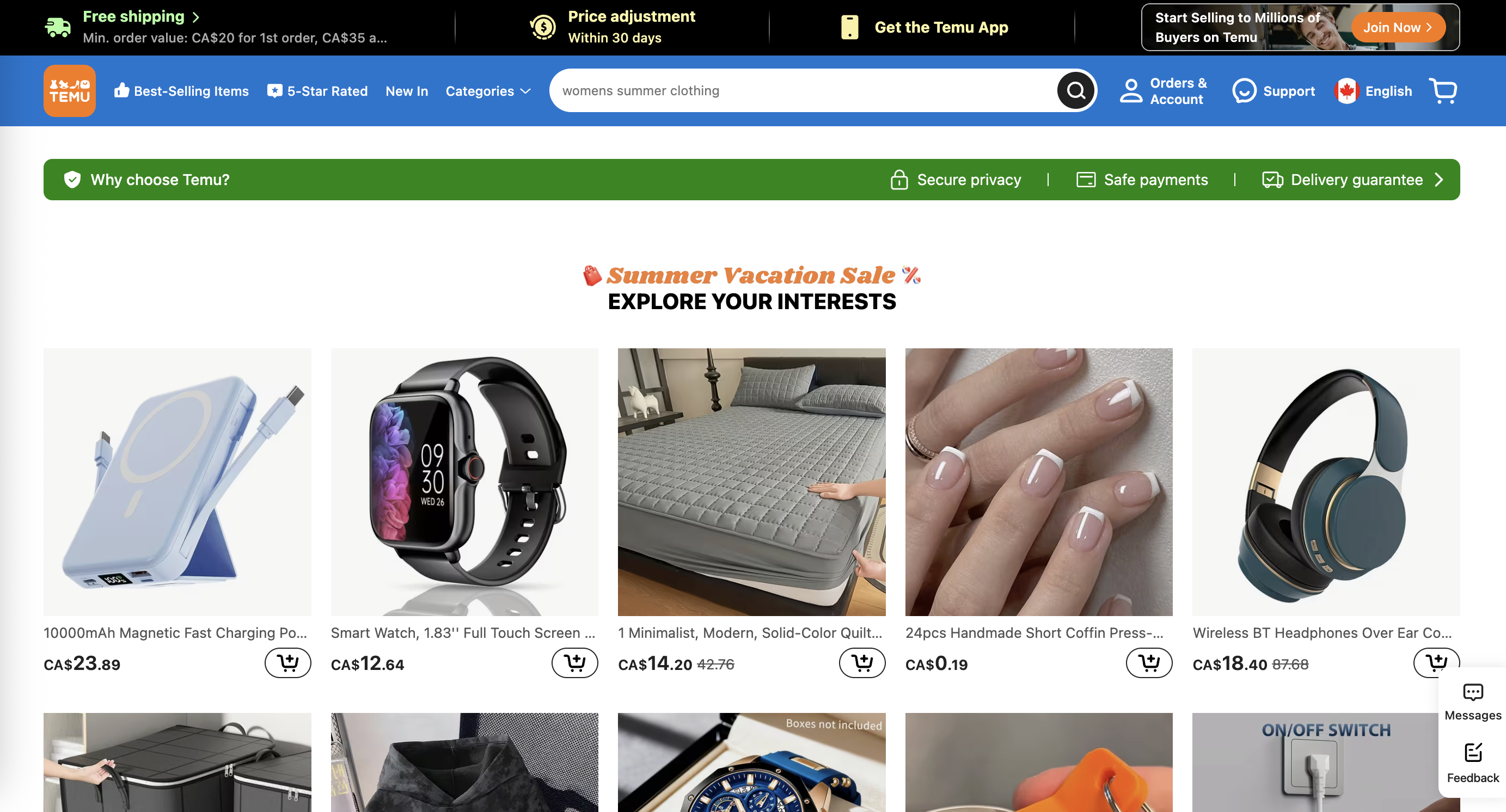
Temu and Shein compete on a different axis: price, at the expense of almost everything else. If you need a generic phone case, a set of kitchen utensils, or basic clothing basics and you are willing to wait two to three weeks for delivery, Temu can undercut Amazon significantly. The trade-offs are real, though — shipping times are longer, quality is unpredictable, consumer protection mechanisms are less robust, and the environmental cost of ultra-cheap fast fashion and disposable goods is a consideration some shoppers factor in.
Direct-brand websites deserve more consideration than they typically get. For products from brands like Anker (electronics accessories), Patagonia (outdoor apparel), or Dyson (home appliances), buying directly from the brand's website often matches Amazon's price while offering better warranty support, direct customer service, and zero counterfeit risk. The inconvenience is having separate accounts and shipping timelines across multiple sites — but for high-value purchases, that friction is worth it.
Amazon is not losing ground to these competitors so much as redefining its strategy — leaning into delivery speed, Prime ecosystem lock-in, and advertising revenue rather than competing on pure price, backed by a committed $200 billion in 2026 capital expenditure aimed largely at AI infrastructure and same-day delivery expansion. That framing is useful for shoppers: Amazon's real advantage in 2026 is speed and convenience, not necessarily cost.
Amazon's AI and Search Changes: How the Shopping Experience Has Shifted
Amazon's search results in 2026 are not a neutral ranking of the best products at the best prices. They are an algorithmically curated surface shaped by advertising spend, seller performance metrics, and AI-driven relevance signals. Understanding this does not mean Amazon's search is useless — it means you need to engage with it actively rather than passively.
The Buy Box is the most consequential algorithmic feature most shoppers never think about. When multiple sellers offer the same product, Amazon's algorithm selects one offer to appear as the default "Add to Cart" option. According to Marketing LTB, the Buy Box and sponsored ads are the two primary levers for seller visibility on the platform. As a shopper, clicking "Other Sellers on Amazon" on a product page sometimes reveals the same item at a lower price from a different seller — a check that takes ten seconds and occasionally saves meaningful money.
Sponsored products are the other layer. With Amazon's advertising business now exceeding $70 billion in trailing-twelve-month revenue, paid placements are a dominant feature of most search result pages. The "Sponsored" label is present but small. Training yourself to scroll past the first few results before evaluating options gives you a more accurate picture of the organic marketplace.
AI review analysis tools have emerged as a genuine consumer resource. The approach described in the 2026 Amazon product research analysis — feeding a product's ASIN into an AI analyzer to surface patterns across thousands of reviews — is available to shoppers, not just sellers. Tools like Fakespot and ReviewMeta have offered versions of this for years; newer AI-native tools are faster and more granular. For any purchase over fifty dollars, spending two minutes with a review analyzer is a reasonable due diligence step. Amazon's own Rufus shopping assistant, used by 250 million customers in 2025, now surfaces sponsored product and brand prompts directly within its responses — useful for product discovery, but worth remembering that some of what Rufus highlights is paid placement too.
Final Recommendation: A Decision Framework for Shopping Amazon in 2026
Amazon in 2026 is neither the effortless bargain paradise it once appeared to be nor the fraud-riddled wasteland its harshest critics describe. It is a mature, complex marketplace that rewards informed shoppers and penalizes passive ones. Here is a practical framework for deciding when to use it:
- Use Amazon confidently for: Prime-eligible items where delivery speed matters, Subscribe & Save on consumables you buy regularly, books and media, major appliances from established brands sold directly by Amazon, and Amazon Basics products for commodity needs.
- Use Amazon with extra diligence for: Electronics accessories (verify seller, check reviews with a third-party tool), supplements and cosmetics (prefer brands with verified third-party testing), and any product category where you see dozens of near-identical listings from unfamiliar brands.
- Consider alternatives for: Fashion and commodity goods where Walmart or direct-brand pricing is competitive, high-value branded items where buying direct eliminates counterfeit risk, and any purchase where you are not in a hurry and Temu or a discount retailer offers a meaningfully lower price with acceptable quality trade-offs.
The practical habit that makes the most difference: before adding anything over fifty dollars to your Amazon cart, spend 60 seconds checking the seller (is it Amazon itself, or a third-party?), scanning the one and two-star reviews for patterns, and doing a quick price comparison on one competitor site. That three-step check does not take long and consistently improves purchasing outcomes.
Frequently Asked Questions
Is Amazon still the cheapest place to shop online in 2026?
Not reliably. Amazon remains competitive on many categories, particularly for Prime members who value fast shipping, but Walmart, direct-brand websites, and category-specific retailers frequently match or beat Amazon's prices. The Subscribe & Save program is one of the clearest genuine savings mechanisms Amazon offers. For everything else, a quick price comparison before purchasing is worth the 60 seconds it takes.
How serious is the fake review problem on Amazon?
Serious enough to warrant active skepticism, but not so pervasive that all reviews are worthless. Amazon's Project Zero system flags suspicious patterns — unusual review velocity, interconnected reviewer networks, refund-based incentives — but black-market review networks still operate, as documented by CLOSO's 2026 analysis. Reading one and two-star reviews specifically, and using third-party AI review analyzers for significant purchases, meaningfully reduces your exposure to manipulated ratings.
What is the safest way to buy on Amazon and avoid counterfeits?
Filter for listings marked "Ships from and sold by Amazon.com" — these carry stronger authenticity guarantees than third-party marketplace listings. For high-risk categories like electronics accessories, cosmetics, and supplements, consider buying directly from the brand's website instead. Major branded appliances and books carry much lower counterfeit risk regardless of seller.
How do sponsored products affect what I see when I search on Amazon?
Significantly. Amazon's advertising business — now over $70 billion in trailing-twelve-month revenue — is one of its highest-margin revenue streams, and sponsored product listings occupy prominent positions in most search results. These are paid placements, not organic best-value matches. The "Sponsored" label is present but easy to miss. Scrolling past the first few results before evaluating options gives you a more accurate view of what the marketplace actually offers.
Is Amazon Prime still worth it in 2026?
For shoppers who make frequent purchases and value one-to-two day delivery, Prime's core shipping benefit remains its strongest argument. The additional benefits — Prime Video, Prime Music, Prime Reading — add value for households that use them. For occasional shoppers who buy a few items per year, the annual cost may not justify the membership. The calculation depends almost entirely on how often you order and how much delivery speed matters to you.
How does Amazon compare to Walmart for everyday shopping in 2026?
Walmart has closed the gap considerably, particularly for grocery and household staples where its pricing is frequently competitive. Shoppers with a Walmart store nearby benefit from same-day pickup that Amazon cannot match. Amazon's advantage remains assortment breadth and delivery infrastructure for non-grocery categories. The practical answer is that neither platform dominates the other across all categories — using both based on what you are buying is smarter than defaulting to one.