The Misconception Most Shoppers Carry Into a Zappos Purchase

Most people assume Zappos's legendary return policy functions as a product warranty. It does not. The 365-day return window covers fit dissatisfaction and change-of-mind returns — not manufacturing defects. That distinction, buried in the fine print and absent from most reviews, is responsible for a significant share of the frustration you will find in negative customer accounts. Understanding it before you buy is the single most useful thing this review can give you.
With that corrected, the fuller picture of Zappos in 2026 is genuinely interesting. The service model works exceptionally well for specific types of shoppers and specific types of purchases. For others, it adds cost without adding value. This review walks through both sides with specifics.
The Scenario That Makes Zappos Worth Considering (or Reconsidering)

Picture this: you need to buy a pair of running shoes as a birthday gift. You know the brand, roughly the style, but not the recipient's exact size — and their birthday is in ten days. With most online retailers, that situation is genuinely stressful. Return windows of 30 days, restocking fees of 10–15%, and paid return shipping labels that cost more than you expect all make the wrong-size outcome painful.
Zappos was built specifically to dissolve that friction. According to ConsumerAffairs, Zappos offers a full 365-day return window, free return shipping for all US customers, and free one-business-day shipping on exchanges. For the gift scenario above, that means the recipient can swap the shoes themselves, at no cost, without involving you at all.
The same logic applies to a runner ordering two sizes of the same trail shoe to compare fit at home, or someone with wide feet who needs to test shoes with their orthotics before committing. These are real, common situations where Zappos's model provides concrete financial and logistical value — not just a warm feeling about customer service.
Whether that model holds up consistently in practice is a different question. The answer is: mostly yes, with specific and predictable exceptions.
What Zappos Actually Is in 2026: A Quick Orientation
Zappos is an online retailer that started as a footwear-only platform and has since expanded into apparel and accessories. It operates as an Amazon subsidiary but maintains a distinct brand identity, its own customer service culture, and its own return infrastructure. The Amazon relationship provides logistics scale; the Zappos brand provides the service reputation.
Its core value proposition has never been price. It has always been service: free shipping both ways, a return window that dwarfs industry norms, and customer support available around the clock. As noted in the Zappos Business Analysis on StudyCorgi, the platform's primary customer base skews toward shoppers aged 20–40, male and female, middle social class, concentrated in urban and suburban US markets. Geographically, 87.14% of Zappos's business is domestic, per SimilarWeb data cited in the same source.
The practical implication: Zappos is designed for the American online shopper who values convenience and service over rock-bottom pricing. If you fit that profile and you are shopping for footwear — particularly in a category where fit uncertainty is high — the platform is worth understanding in detail. If you are shopping from outside the US, or if lowest price is your primary criterion, the calculus changes significantly.
For shoppers navigating broader wardrobe decisions beyond footwear, the Fashion & Apparel Buying Guides 2026 covers the wider landscape of online apparel retailers with the same evaluative framework used here.
The Return Policy in Plain Language: What 365 Days Actually Means
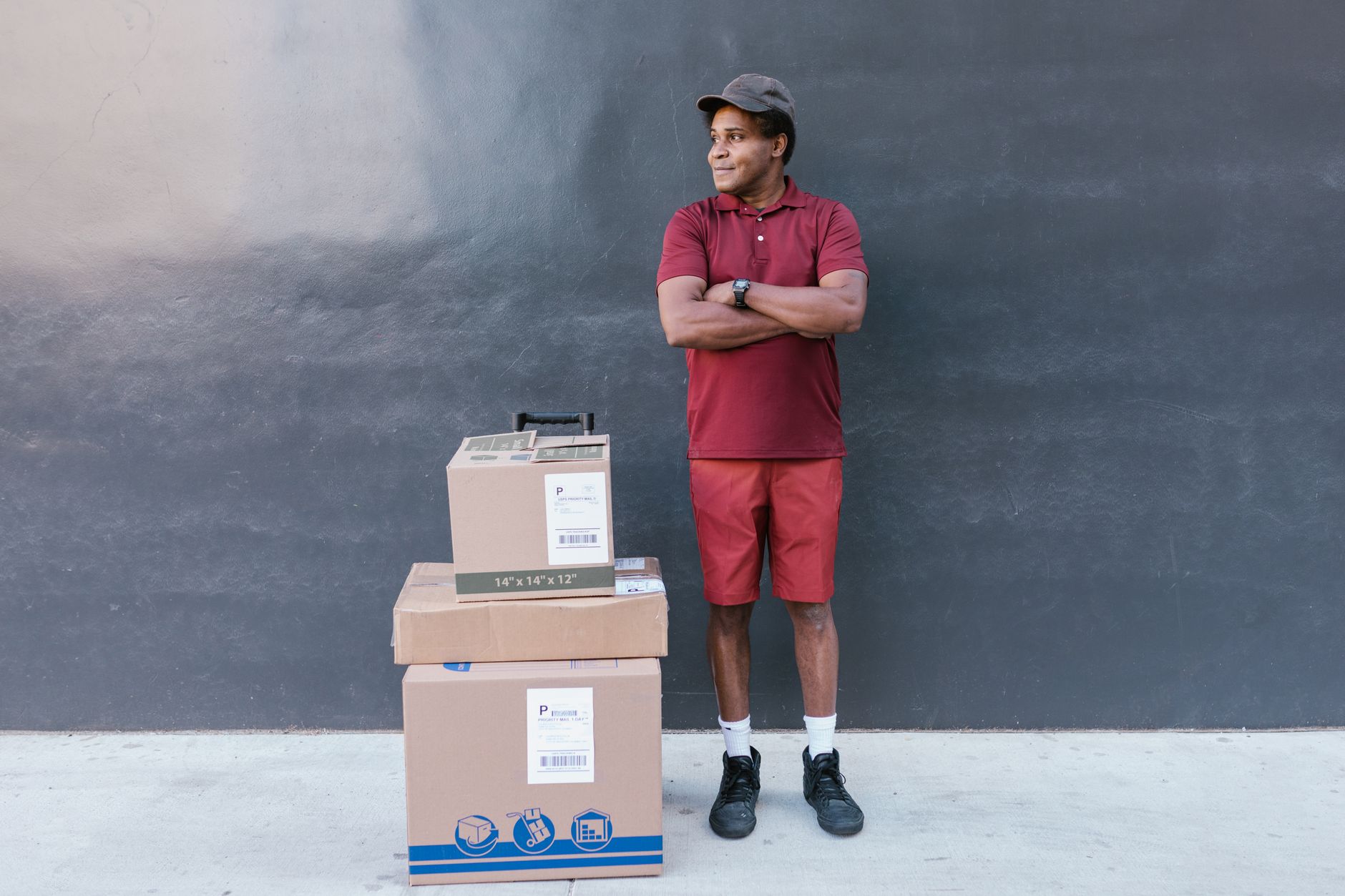
The 365-day return policy is Zappos's most cited feature, and it is genuinely one of the most generous in online retail. Here is exactly what it covers and what it does not.
What the Policy Covers
- Items returned within 365 days of purchase that are unworn or only tried on indoors
- Full refund to the original payment method, no restocking fee
- Free return shipping label provided to all US customers
- Exchanges shipped with free one-business-day delivery — a meaningful upgrade over the standard return-and-reorder process at most retailers
What the Policy Does Not Cover
The return policy is not a product warranty. If you buy a pair of shoes, wear them regularly for two months, and the sole begins to separate — that is a manufacturing defect, not a fit issue. That situation falls under the manufacturer's warranty, which is typically handled separately and is often under 90 days. This is where customer frustration concentrates.
A reviewer identified as Jason from Fort Worth, TX, writing on ConsumerAffairs in November 2025, described exactly this scenario: defective shoes, a warranty shorter than 90 days, and a resolution process that felt inadequate. His complaint was not about the return policy — it was about the expectation gap between Zappos's service reputation and the reality of a warranty claim on a defective product.
According to Renascence.io's analysis of Zappos's customer experience, a HubSpot survey found that 81% of customers who have a positive return experience are more likely to make another purchase. That statistic reflects the return policy working as designed — for fit and satisfaction returns. It does not reflect the warranty experience, which is a separate and less celebrated process.
The practical takeaway: if you are returning shoes because they do not fit, the process is seamless. If you are seeking remedy for a product that failed during normal use, you are navigating a manufacturer warranty, not Zappos's return policy, and the experience may be considerably less smooth.
Shoe Selection: Breadth, Brands, and What You Can Realistically Find
Zappos carries a wide catalog spanning athletic, casual, dress, and specialty footwear. The platform is not a boutique — it is a broad-selection retailer, which means its strength is coverage rather than curation. If you are looking for a specific Nike running shoe in a half size, or a wide-width dress shoe that most department stores do not stock, Zappos is often a more productive starting point than a brand's own website or a general marketplace.
Shoppers with non-standard sizing needs — wide widths, extended sizes, orthopedic-friendly styles — frequently report finding more options on Zappos than elsewhere in a single search. That breadth is a genuine differentiator, not a marketing claim.
As documented in the Miracuves business model breakdown of Zappos, the platform deliberately expanded its assortment beyond footwear into apparel and accessories as a growth strategy — following the same service-first model that built its shoe business. For gift buyers, that breadth matters: you can find something appropriate without visiting multiple sites, and the return policy covers the recipient if the choice misses.
Pricing, though, is generally at or near MSRP. Zappos is not a discount retailer and does not position itself as one. If you are looking for last season's Nike Pegasus at a markdown, you will likely find a better price elsewhere. If you need a specific shoe in an unusual size with the option to return it a month later if it does not work out, Zappos earns its price premium.
Customer Service: What 24/7 Support Looks Like in Practice
Zappos offers phone support 24 hours a day, seven days a week. That is genuinely rare in e-commerce — most online retailers offer business-hours chat at best. Live chat and email are also available. According to ConsumerAffairs, representatives are reachable by all three channels, and the phone line is staffed around the clock.
The culture behind that support is worth understanding. As described in the Zappos case study on Scribd and corroborated by the CliffsNotes summary of Zappos's model, representatives receive extensive training and are empowered to resolve issues rather than deflect them. The internal philosophy — often described as "delivering WOW" — is not just a tagline. It shapes how calls are handled, including the absence of rigid call-time limits that most contact centers impose.
Positive customer experiences consistently describe fast, human, no-script problem resolution. The Miracuves analysis frames this as a deliberate growth mechanism: customers who receive fast delivery, easy returns, and human support remember the brand and recommend it, creating a referral loop that reduces dependence on paid acquisition over time.
The honest counterpoint: service quality is not universally consistent. A second reviewer on ConsumerAffairs, writing in September 2025, described a "horrible experience" without elaborating further — a reminder that individual interactions vary. The negative reviews that do appear tend to cluster around warranty disputes and product quality issues rather than failures in the return or exchange process itself. That pattern suggests the service infrastructure works as designed, but the design has a gap: it handles satisfaction returns well and defect claims less reliably.
Shipping: Speed, Reliability, and What Free Actually Covers
Standard shipping to US addresses is free with no minimum order. Exchanges are shipped with free one-business-day delivery. Both of these are confirmed by ConsumerAffairs and represent a meaningful practical advantage over retailers that charge for return shipping or require you to reorder and wait for standard delivery on an exchange.
Zappos has historically used shipping speed as a surprise-and-delight mechanism — shipping orders faster than the stated window without announcement. This practice, documented in multiple case studies including the Scribd Zappos case study, is part of how the brand built its word-of-mouth reputation in its early years. Whether this still happens consistently in 2026 is harder to verify, but the baseline of free, reliable shipping remains intact.
One clear limitation: the free shipping and free return model applies to US customers. International shoppers do not receive the same benefits, which is a significant constraint given that 87.14% of Zappos's business is already domestic. If you are outside the US, the value proposition looks considerably different.
For a practical scenario: if you exchange a pair of shoes on a Monday, you can realistically have the replacement by Tuesday. For someone who bought shoes for a wedding or event the following weekend, that turnaround has real value.
Pricing and Value: Is Zappos Competitive or Convenient?
Zappos prices are generally at or near full retail. The ConsumerAffairs overview describes Zappos as having "reasonable prices," which is accurate in the sense that you are not being gouged — but you are also not finding deals. The value is in the service infrastructure, not the sticker price.
That said, the free return policy has real financial value that is easy to undercount. Consider the comparison: you buy a pair of shoes from a cheaper retailer for ? less than Zappos's price. The shoes do not fit. The return costs ? in shipping plus a 10% restocking fee on a ? shoe — that is ? in friction costs. The Zappos purchase at full price, returned for free, costs nothing beyond the initial purchase. The math can favor Zappos even when the sticker price does not.
As the StudyCorgi Zappos Business Analysis notes, the platform's competitive advantage is explicitly service-based, not price-based. That is a deliberate positioning choice, not an oversight. Shoppers who understand this going in make better decisions about when to use Zappos and when to look elsewhere.
The 365-day return window also has an indirect financial benefit: it removes the urgency from a purchase decision. You do not need to rush a decision about whether to keep something. That reduction in purchase anxiety is worth something, particularly for high-consideration purchases like specialty athletic footwear or dress shoes for a formal event.
Where Zappos Falls Short: Honest Limitations to Know Before You Buy
Zappos sells third-party brands. It does not manufacture shoes. That means product quality is entirely outside its control, and when a shoe fails — sole separation, stitching failure, material breakdown — the path to resolution runs through the manufacturer's warranty, not Zappos's return policy.
The warranty coverage for defective products is often under 90 days, as Jason from Fort Worth, TX noted in his November 2025 review on ConsumerAffairs. His specific frustration: he did not want to return the shoes — he wanted either a refund or a functional replacement for a defective product. The warranty process did not deliver that. This is a legitimate and underreported limitation.
The gap between the 365-day return policy and a sub-90-day product warranty creates a window — roughly three to ten months — during which a defective product may have no clear remedy. The shoes are past the warranty. They are worn, so they cannot be returned under the satisfaction policy. The customer is left with a defective product and limited options. That outcome is not unique to Zappos — it reflects how retail warranty structures work broadly — but Zappos's service reputation creates an expectation that the gap will not exist.
Other honest limitations worth naming:
- The free shipping and return model is US-only. International customers face a materially different experience.
- Zappos is not the right platform for price-driven shoppers who know their size and style with certainty. You will almost always find a lower price elsewhere.
- Specific colorways and limited-edition releases may not be available, or may sell out faster than on brand-direct sites.
- Negative reviews, while a minority of the overall volume, are real and tend to reflect genuine service failures — not just unreasonable expectations.
How Zappos Compares to Buying Directly from a Brand or Other Online Retailers
Buying directly from a brand's website — Nike, New Balance, Birkenstock — typically offers stronger warranty support because the brand owns the product relationship end-to-end. If a shoe fails, the brand can replace it directly without the intermediary layer that Zappos adds. For shoppers who prioritize defect coverage, buying direct is worth considering.
Zappos's advantage over brand sites is breadth. You can compare Nike, Brooks, and HOKA trail shoes in a single search, filter by width, and return whichever pair does not work — without opening three browser tabs and managing three separate return processes. For shoppers who are still deciding between brands, that consolidation has real value.
Compared to general marketplaces, Zappos offers a more curated footwear experience with consistent service standards. On a general marketplace, seller quality varies enormously. On Zappos, the return and service infrastructure is uniform across the catalog.
For gift buyers, Zappos's model is particularly well-suited. The recipient can initiate an exchange themselves, without the giver being involved, within a full year of the purchase date. That is a level of flexibility that most retailers — including brand-direct sites — do not match.
For price-driven shoppers who know exactly what they want, comparison shopping before purchasing is advisable. Zappos does not typically offer the lowest price on a known model. A shopper who has worn the same Brooks Ghost in the same size for three years does not need Zappos's return policy — they need the best price, and they should look for it accordingly.
Frequently Asked Questions
Does Zappos's 365-day return policy cover defective shoes?
No. The 365-day policy covers fit and satisfaction returns for unworn or gently tried-on items. Defective products fall under the manufacturer's warranty, which is typically under 90 days. This distinction is a common source of customer frustration, as documented in multiple ConsumerAffairs reviews from 2025.
Is return shipping actually free, or are there conditions?
Return shipping is free for all US customers with no minimum purchase requirement, according to ConsumerAffairs. There is no restocking fee. The free return model does not apply to international orders.
How fast is Zappos shipping in 2026?
Standard shipping is free and generally reliable. Exchanges are shipped with free one-business-day delivery. Zappos has historically shipped orders faster than the stated window as a service practice, though this is not guaranteed on every order.
Is Zappos good for people with wide feet or unusual sizes?
Yes, more so than most single-brand sites. Zappos carries a broad range of widths and extended sizes across multiple brands, making it a practical starting point for shoppers with non-standard sizing needs. The free return policy also means you can order multiple widths without financial risk.
Does Zappos price-match other retailers?
Zappos does not prominently advertise a price-match policy. Its pricing is generally at or near MSRP. Shoppers prioritizing the lowest price should compare across platforms before purchasing.
Can the gift recipient initiate a return or exchange themselves?
Yes. The return policy allows the recipient to initiate the process directly, without requiring the original purchaser to be involved. This makes Zappos particularly practical for gift purchases where size certainty is low.
Final Recommendation: Who Should Use Zappos and Who Should Not
Zappos earns its reputation in a specific set of circumstances. Use it when fit uncertainty is high — when you are buying for someone else, ordering a new brand for the first time, or dealing with sizing needs that require trying multiple options. The free return model removes the financial risk from that uncertainty in a way that genuinely changes the math.
Use it when you need fast exchange turnaround. The one-business-day exchange shipping is a real operational advantage for time-sensitive situations.
Use it when you value 24/7 human customer support and want to know a phone number will be answered at 11pm if something goes wrong with your order.
Do not use Zappos as your primary channel if you are buying a shoe you have worn before and know fits, and your primary goal is the lowest price. You will almost certainly find a better price elsewhere, and you do not need the return infrastructure if you already know the shoe works for you.
Do not rely on Zappos's service reputation to cover you if a shoe develops a manufacturing defect after 90 days of wear. That situation is governed by the manufacturer's warranty, and the experience — based on documented customer accounts — is less reliable than the return process for fit issues.
The clearest summary: Zappos is a service-first retailer that prices accordingly. Its model works best for shoppers who value flexibility, breadth, and support over price optimization. For those shoppers, it is one of the most well-designed online retail experiences available. For everyone else, it is a reasonable option with specific, predictable limitations worth knowing in advance.
Shoppers building out a broader online purchasing strategy — including tools for managing subscriptions, tracking deliveries, or securing accounts across multiple retail platforms — may also find value in the Software & Apps Buyer's Guide 2026: VPN, Security & Productivity, which covers the digital infrastructure side of smart online shopping.