

We may earn a commission when you use our links to make a purchase. This article was researched and drafted with AI assistance, then reviewed and fact-checked by a human editor before publishing. Read our methodology →
The short answer: Sam's Club is worth it in 2026 — but only for the right household. If you drive frequently and have a Sam's Club gas station nearby, the Plus tier pays for itself. If you're a high-volume spender who books travel, Costco's Executive tier delivers more total value. The real problem is that most people renew on autopilot without ever running the numbers. This review does that math for you.
Sam's Club raised membership fees by 20% in May 2026 — the first increase in several years — and gave basic-tier members nothing new in return. That single fact is enough to justify reconsidering a membership you've been renewing without thinking.
The fee increase is real. But so are the legitimate benefits for the right household. This review covers what changed, what both tiers actually deliver, how Sam's Club compares to Costco on every major dimension, and which household profile should choose which club — or neither.
What Changed at Sam's Club in 2026
Sam's Club raised its basic Club membership fee and its Plus tier fee effective May 1, 2026, according to the News-Journal Online. The basic tier increase works out to roughly 20%.
For Club (basic) members, the price went up with zero new benefits attached. No expanded perks, no added services — just a higher bill.
Plus members did receive one meaningful change: the Sam's Cash earning cap increased, giving high-spending Plus members more annual reward potential. Whether that improvement justifies the higher Plus fee depends entirely on your annual spend — and we'll work through the exact break-even math below.
Here's what makes 2026 different from prior years: Costco has not announced a comparable fee increase. That creates a genuine pricing gap between the two clubs' entry-level memberships for the first time in a while, and it changes the calculus for households that previously didn't have a strong reason to prefer one over the other.
Sam's Club is transparent about where this money is going. The company has publicly committed to opening 30 new locations (roughly 15 per year), remodeling all 600 existing clubs, and — in its own words — becoming "the world's best club retailer," with a goal to double membership and more than double sales over the next eight to ten years, per the News-Journal Online. The fee increase is funding that expansion. The question is whether you personally benefit from it.
Sam's Club Membership Tiers in 2026: What You Actually Get
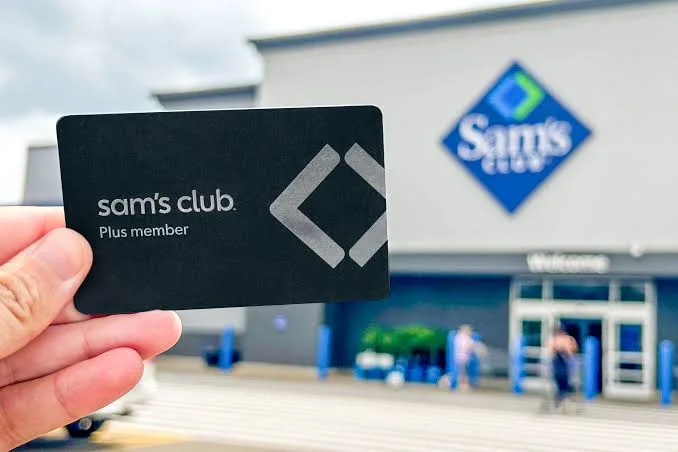
Club (Basic) Tier
The basic Club membership covers:
- In-club shopping access
- Sam's Club gas station access
- Scan & Go mobile checkout (scan items as you shop, pay on your phone, skip the line)
- Free curbside pickup
- 100% satisfaction guarantee with a full membership fee refund if you're unsatisfied at any point during the year
What the basic tier does not include: cash-back rewards on purchases. That's a Plus-only benefit.
Plus Tier
Plus adds three meaningful benefits on top of everything in the basic tier:
- 2% Sam's Cash back on qualifying purchases, awarded monthly and loaded to your membership card
- Free shipping on most online orders
- Early shopping hours — access before the club opens to the general public
According to Sam's Club's official membership terms, the 2% Sam's Cash can be applied in-club, through the app, online, or toward membership renewal — or redeemed as cash. The annual earning cap was increased in 2026.
The Break-Even Math for Plus
This is the calculation most people skip, and it's the most important one.
You're paying more per year for Plus than for the basic tier. At 2% back on qualifying purchases, you need to spend a specific dollar amount at Sam's Club annually just to break even on that premium. Once you hit that threshold, every additional dollar spent earns real cash back. Once you hit the annual cap, you stop earning — so extremely high-volume spenders may eventually find Costco's higher reward ceiling more valuable (more on that below).
The 100% satisfaction guarantee makes this easy to test. Join, track your spending for three months, and do the math at renewal time.
Sam's Club vs. Costco: Side-by-Side Comparison
| Feature | Sam's Club Basic | Sam's Club Plus | Costco Gold Star | Costco Executive |
|---|---|---|---|---|
| Annual fee | Higher than before | Higher than before | $65 | $130 |
| Cash-back rewards | None | 2% (capped) | None | 2% (up to $1,250/yr) |
| Reward cap | — | Lower than Costco | — | $1,250/year |
| Gas savings | ✓ | ✓ + extra savings | ✓ | ✓ |
| Scan & Go checkout | ✓ | ✓ | ✗ | ✗ |
| Free curbside pickup | ✓ | ✓ | Limited | Limited |
| Free shipping (online) | ✗ | ✓ | ✗ | ✗ |
| Travel booking platform | ✗ | ✗ | ✓ (Costco Travel) | ✓ (Costco Travel) |
| Satisfaction guarantee | Full refund | Full refund | Full refund | Full refund |
| US store count | ~600 | ~600 | ~600 | ~600 |
Costco pricing per Costco's official membership page. Sam's Club pricing per Sam's Club's official membership page.
Gas Savings: Sam's Club's Clearest Advantage
If there's one category where Sam's Club consistently outperforms Costco, it's fuel. Sam's Club is recognized for offering stronger per-gallon discounts, particularly for Plus members who receive an additional fuel savings benefit on top of the standard member price, according to both MMCG Invest's 2026 market analysis and PrimeWay Federal Credit Union's comparison.
The math is concrete: a household that buys 50 gallons per month at a savings of just $0.10 per gallon saves $60 per year on fuel alone. At $0.15/gallon savings, that's $90 — enough to cover a significant portion of the basic membership fee before you've bought a single paper towel.
Here's something worth knowing: many Sam's Club members who originally joined for bulk grocery savings end up staying primarily for fuel. If your regular commute passes a Sam's Club station, the gas benefit alone can justify membership even if your in-club grocery spending is modest.
Costco also operates fuel stations and offers competitive pricing — but Sam's Club's Plus-tier fuel benefit and its integration with Walmart's fuel infrastructure gives it a structural edge for drivers. If gas savings are your primary reason for joining a warehouse club, Sam's Club is the stronger choice in 2026.
Checkout Experience: Sam's Club's Scan & Go Is a Genuine Time-Saver

One of the most underappreciated differences between the two clubs is the in-store checkout experience.
Sam's Club's Scan & Go feature lets you scan items with your phone as you add them to your cart, then pay and walk out without ever touching a checkout lane. For anyone who has stood in a Costco line on a Saturday afternoon — and those lines are long — this difference is not trivial.
The American Customer Satisfaction Index Shipping Study 2025 ranked Sam's Club above Costco for the first time, driven significantly by the Scan & Go experience, according to MMCG Invest's analysis. Costco offers no comparable scan-and-go option and relies entirely on traditional checkout lanes.
Time has real value. If a Sam's Club trip takes 35 minutes and a Costco trip takes 70 minutes because of checkout queues, that difference compounds meaningfully over dozens of visits per year. For working parents, professionals, or anyone who treats shopping as a task to complete rather than an experience to linger in, Sam's Club's digital investment creates a concrete advantage.
Free curbside pickup is available to all Sam's Club members — so you can order online, pull up, and have your order loaded without entering the store at all. Costco's curbside and delivery options are more limited and rely on third-party services.
Groceries and Bulk Buying: How Product Selection Compares

Both clubs deliver genuine savings over traditional grocery stores on high-volume staples — breakfast cereal, cooking oil, paper goods, cleaning supplies, canned goods. That's not marketing language; the savings are real and consistent in these categories.
Where the clubs diverge:
Store brand quality: Costco's Kirkland Signature brand has built a strong reputation for consistency across a wide range of products — olive oil, nuts, clothing, batteries. Sam's Club's Member's Mark has improved substantially and is competitive on everyday items, but Kirkland's reputation remains stronger in consumer perception. If private-label quality matters to your household, Costco has the edge.
Premium and organic selection: Costco leads on specialty cheeses, imported wines, organic produce, and premium cuts of meat, per Investopedia's analysis. Sam's Club's strength is everyday staples at competitive prices, not specialty or premium categories.
Product reliability: This is an underrated risk at Sam's Club. Real members on 20somethingfinance.com have described dropping their membership after a product they relied on was discontinued and replaced with a new brand at a significantly higher price. If you budget around specific Sam's Club items, a product change or discontinuation can erase the value you calculated when you joined. Warehouse club loyalty is conditional — it holds only as long as the specific items your household relies on remain available at the price point you expect.
A note on bulk buying math: Warehouse packaging is not automatically cheaper per unit than sale prices at conventional grocery stores, particularly for perishables. The savings are real when you buy what you actually use. They evaporate — and reverse — when bulk quantities expire before you can consume them.
If you're evaluating your full household subscription spending, our US Shopping Money-Saving Guide 2026 covers how to stack warehouse club memberships with other savings tools to get the most out of every dollar.
Costco's Advantages: Higher Reward Cap and Costco Travel
For households with high annual spending, Costco's structure delivers more absolute value in two specific areas.
The reward ceiling gap. Costco Executive's annual reward cap is $1,250 — significantly higher than Sam's Club Plus's cap. A household spending $25,000+ per year at a warehouse club earns more at Costco because it takes longer to hit that ceiling. Very high-volume shoppers get penalized by Sam's Club Plus's lower cap in a way that Costco Executive doesn't replicate.
Costco Travel. This is the benefit Sam's Club simply cannot match. Costco offers competitive pricing on vacation packages, rental car bookings, hotel stays, and cruises through its own travel platform. Members who book regularly through Costco Travel often report annual savings that dwarf the membership fee itself. Sam's Club has no comparable travel service. If your household spends meaningfully on travel and you want one membership to reward both grocery and travel spending, Costco Executive is the stronger financial choice.
Customer service and return policy. PrimeWay Federal Credit Union reports a 90% customer satisfaction rate for product quality and staff helpfulness at Costco — consistently above Sam's Club in consumer surveys. Costco's electronics return policy (most items returnable at any time, no questions asked) is among the most generous in US retail. For households buying televisions, laptops, or appliances, that policy has real dollar value.
Costco's financial performance reflects how deeply members value the experience. According to MMCG Invest's 2026 market analysis, Costco's fiscal 2025 closed with membership fee revenue up 10% year-over-year, and Q2 FY2026 membership fee revenue climbed 13.6%. Members aren't just staying — they're actively renewing at higher rates.
For a full three-way breakdown that also includes BJ's Wholesale Club, see our Costco vs. Sam's Club vs. BJ's 2026 comparison — useful if you're in the Northeast where BJ's has a strong regional footprint.
Locations and Availability: A Practical Factor That Changes Everything
None of the benefits above matter if the nearest club is 40 miles away.
Sam's Club operates approximately 600 stores across 45 U.S. states and Puerto Rico, with plans to open six new locations in 2026 in Tennessee, California, and Texas, according to The Senior List. Walmart's backing gives Sam's Club a geographic footprint that reaches suburban and mid-size markets where Costco often doesn't have a presence.
Costco has a smaller store count but concentrates locations in higher-density markets. In major metro areas, you likely have access to both. In mid-size cities or suburban markets, Sam's Club may be the only warehouse club option within a practical driving distance — which makes the Costco comparison moot.
Proximity also changes the gas savings math. A Sam's Club gas station five minutes from your house delivers more real-world value than one 25 minutes away, even if the per-gallon savings are identical. Factor your actual driving patterns into the decision, not just the theoretical benefit on paper.
Sam's Club vs. Other Shopping Alternatives in 2026
Warehouse clubs aren't the only way to buy in bulk or find low prices. It's worth knowing where Sam's Club fits in the broader landscape.
Walmart.com — Sam's Club's parent company — offers competitive pricing on many of the same everyday items without a membership fee. Our Walmart Online Review 2026 covers pricing, grocery delivery, and electronics in detail if you're weighing whether the membership pays off versus just shopping Walmart directly.
Amazon gives you access to a massive product catalog, often at competitive per-unit prices, and Prime membership is broadly useful across categories. See our Amazon Review 2026 for a full breakdown, and our Best Amazon Alternatives 2026 if you want to diversify beyond a single platform.
For deal-stacking on top of a membership: tools like CamelCamelCamel and browser extensions can surface price drops and cashback opportunities across retailers. Our Best Deal Alert Apps 2026 guide covers the most effective tools for US shoppers.
If electronics deals are your primary interest, also check our Best Buy Review 2026 for a retail competitor with strong price-match policies.
Who Should Join Sam's Club in 2026
Choose Sam's Club (Basic) if:
- You have a Sam's Club gas station on or near your regular commute or driving route. Fuel savings alone can justify the basic membership.
- You want the fastest possible checkout experience. Scan & Go is a genuine time-saver with no Costco equivalent.
- Sam's Club is the only warehouse club within practical driving distance.
- You primarily buy everyday staples — paper goods, snacks, cleaning supplies — and don't need premium or specialty product selection.
- Your household is two or more people who can realistically consume bulk quantities.
Choose Sam's Club Plus if:
- Your annual in-club spending falls in a range where the 2% Sam's Cash meaningfully reduces your net membership cost.
- You shop online at Sam's Club regularly and benefit from free shipping.
- You want early access shopping hours.
Choose Costco if:
- Your household spends heavily enough to benefit from Costco Executive's higher reward cap — roughly households where the difference in cap limits between the two clubs matters.
- You book travel regularly and want Costco Travel to consolidate those savings.
- You buy high-value electronics or appliances where Costco's return policy provides meaningful protection.
- Premium and organic product selection is important to your household, and Kirkland Signature's quality consistency matters to you.
- Customer service quality is a priority and you're willing to pay the higher entry price for a consistently higher-rated experience. See our full Costco Review 2026 for a detailed breakdown.
Skip both clubs if:
- Your household is one or two people who can't realistically consume bulk quantities before items expire.
- You live far enough from both clubs that drive time cancels out the savings.
- Your annual spending at a warehouse club would be too low to justify even the basic membership fee.
Both clubs offer 100% satisfaction guarantees with full refunds at any point during the membership year. There's minimal financial risk in trying either one. If you're genuinely uncertain, join the club that's geographically closer, track your actual spending for 90 days, and make a data-driven decision at renewal.
Frequently Asked Questions
Did Sam's Club raise its membership prices in 2026?
Yes. Sam's Club increased both its Club (basic) and Plus membership fees effective May 1, 2026 — the first increase in several years. The basic tier saw approximately a 20% increase with no new benefits added for existing members. Plus members received an increased Sam's Cash earning cap.
Is Sam's Club worth it if I already have Amazon Prime?
They serve different purposes. Amazon Prime is primarily an e-commerce and digital services membership. Sam's Club adds value mainly through in-club bulk grocery shopping, fuel savings, and the Plus tier's cash-back rewards. Many households carry both without significant overlap — but if budget is a concern, compare your actual purchase patterns against what each membership delivers. Our Amazon Review 2026 can help you assess Prime's value side of that equation.
Can I cancel my Sam's Club membership and get a refund?
Yes. Sam's Club offers a 100% membership satisfaction guarantee. If you're dissatisfied at any point during your membership year, you can cancel and receive a full refund of your membership fee — no partial refunds, no prorating required.
Is Sam's Club Plus better than Sam's Club Basic in 2026?
It depends on your annual spend. The Plus tier earns 2% Sam's Cash on qualifying purchases, plus free shipping and early shopping hours. If you spend enough at Sam's Club annually that the 2% cash back covers or exceeds the price difference between Plus and Basic, Plus is the better value. If you shop infrequently, Basic may be sufficient — or neither tier may justify renewal.
How does Sam's Club compare to BJ's Wholesale Club?
BJ's is primarily a Northeast US regional club that accepts manufacturer coupons (a meaningful differentiator) and tends to carry smaller package sizes than Sam's Club or Costco. For a full three-way comparison, see our Costco vs. Sam's Club vs. BJ's 2026 guide.
How This Review Was Researched
This review is based on publicly available membership terms and pricing from Sam's Club and Costco, third-party consumer analysis from MMCG Invest and PrimeWay Federal Credit Union, reporting from the News-Journal Online, and verified member feedback aggregated from 20somethingfinance.com and The Senior List. It does not reflect hands-on product testing by Trusted Buyer Report. All claims are cited to their sources. Read our full methodology →
Reviewed by the Trusted Buyer Report editorial team. Trusted Buyer Report may earn a commission from purchases made through links on this page, at no additional cost to you. Full affiliate disclosure →