Affiliate disclosure: We may earn a commission when you use our links to make a purchase. This does not affect our editorial assessment, which is finalized before any affiliate link is applied. Read our full disclosure →
Research note: This review is based on manufacturer specifications, REI's official announcements, third-party industry analysis, and aggregated verified customer feedback. It does not reflect hands-on testing by Trusted Buyer Report. See our methodology →
TL;DR — REI 2026 at a Glance
- Membership: $30 one-time lifetime fee; earns a 10% Co-op Member Reward on eligible full-price purchases
- Dividend math: You need to spend $300 at full price to recover the $30 fee — one mid-range jacket typically clears that
- Watch out: Sale items, Outlet purchases, rentals, and used gear are excluded from dividend calculations
- New in 2026: Product Impact Standards v4.0 (April 17, 2026) mandates longer-lasting construction, reduced packaging, and inclusive sizing across all brands REI stocks
- Spring 2026 launches: Updated Sahara Shade apparel line with ShadeFactor50™ fabric; new Westward camping family (tent, tarp, chairs, self-inflating beds)
- Bottom line: REI membership pays off clearly for full-price shoppers and frequent online orderers. If you primarily shop REI's sales and Outlet, the dividend is lower than advertised.
You're on REI.com at 11pm, about to drop $200 on a tent. Someone mentioned the membership dividend. You do the quick math — does a $30 fee actually pay back? And is the gear itself good enough to justify REI over buying direct from Black Diamond or Patagonia?
Most REI reviews don't answer both questions. They describe membership perks without explaining the exclusions that make the math very different for sale shoppers. This review gives you the actual numbers. For broader context on how REI fits into the 2026 outdoor retail landscape, our Outdoor & Sports Gear: 2026 Buyer's Guide covers the full category.
REI Co-op Brand vs. Third-Party Brands: What the Review Data Actually Shows
REI sells its own branded gear alongside Patagonia, Arc'teryx, Black Diamond, Smartwool, and Darn Tough — all in the same store. Most retailers avoid that kind of direct comparison. REI leans into it.
Here's what the review data looks like as of mid-2026:
| Product | Price | Reviews | Avg. Rating |
|---|---|---|---|
| REI Co-op Sahara Shade Hoodie (men's) | $59.95 | 1,047 | ⭐ 4.6 |
| REI Co-op Sahara Shade Hoodie (women's) | $59.95 | 1,257 | ⭐ 4.6 |
| REI Co-op Sahara Convertible Pants (men's) | $79.95 | 1,028 | ⭐ 4.2 |
| REI Co-op Active Pursuits T-Shirt | $39.95 | 196 | ⭐ 4.5 |
| Darn Tough Hiker Micro Crew Cushion Socks | Higher | 1,353 | ⭐ 4.7 |
| Smartwool Performance Hike Light Cushion Crew | Higher | 388 | ⭐ 4.7 |
A 4.6-star average across more than 1,000 reviews on the Sahara Shade Hoodie is not a vocal minority. That's consistent performance. The Convertible Pants' 4.2-star dip across a similar sample hints at fit variability worth reading into before you purchase.
The third-party socks score marginally higher — and they cost more. The co-op model doesn't automatically make REI's own label the best choice in every category. What it does is set a documented quality floor across all brands on its shelves, which brings us to the 2026 standards update.
What REI's 2026 Product Impact Standards Actually Change
On April 17, 2026, REI published Product Impact Standards v4.0. Three primary advances:
- Longer-lasting gear construction — vendor-facing durability requirements, not optional brand initiatives
- Reduced packaging waste — brands must demonstrate progress on packaging reduction to maintain REI distribution
- Expanded inclusive sizing and representation — extended size ranges are a compliance issue, not just a PR signal
These are requirements for brands that want shelf space at REI, not marketing language. REI's 25 million member base gives it real leverage: when your largest retail customer tells you to change your packaging or lose distribution, you change your packaging.
What the standards do well: They create a documented, auditable floor. Most specialty outdoor retailers don't publish comparable vendor compliance frameworks. You can actually hold REI accountable to a versioned document.
What they don't guarantee: Best-in-class performance on every product. "Preferred attribute" status is a spectrum — a product can qualify by meeting one criterion (say, recycled packaging) while being outperformed on durability by a competitor that doesn't sell through REI at all.
According to Emerger Strategies' analysis of v4.0, 48% of REI's 2024 sales came from products with at least one preferred sustainability attribute. The 2026 update is designed to move that number up — but it won't flip to 100% overnight.
For sustainability-motivated shoppers: Treat the standards as a meaningful signal, not a guarantee. Still read individual product certifications — recycled content labels, bluesign certification, Fair Trade status — rather than relying solely on REI's umbrella approval.
The $30 Membership Math: How the Dividend Actually Works
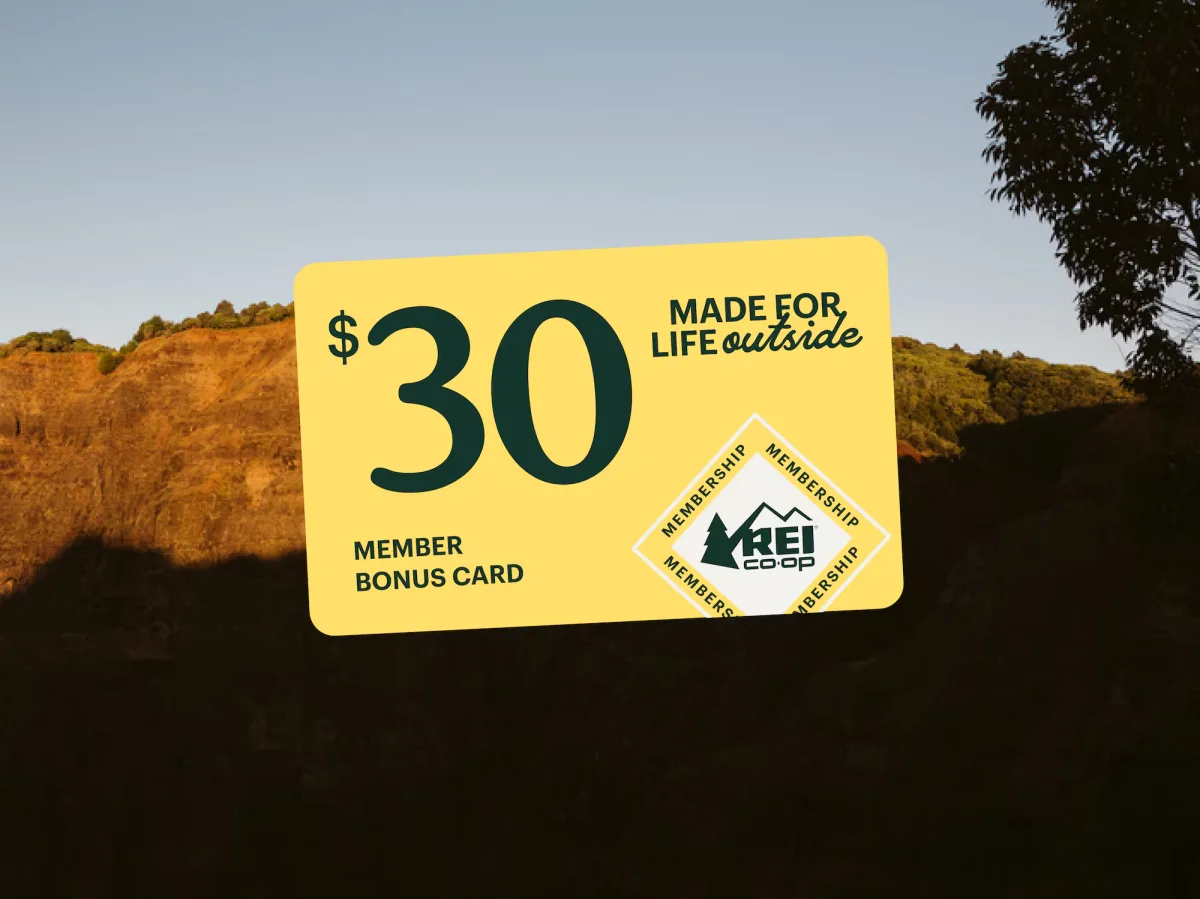
The REI membership costs a one-time $30 lifetime fee — not an annual subscription. That structure changes the break-even calculation significantly. You only need to recover $30 total, not $30 per year.
The core benefit is the 10% Co-op Member Reward (the "dividend"), paid each March on eligible purchases from the prior calendar year. Per REI's official membership terms, it's described as "typical but not guaranteed" — a qualifier most summaries omit.
Secondary benefits include:
- Free U.S. standard shipping with no minimum order
- Access to the Member Collection (limited-edition and early-release products)
- Contributions to the REI Cooperative Action Fund (a 501(c)(3) supporting outdoor access and equity)
The exclusions that change your math
The following categories do not count toward your dividend, per REI's own terms:
- REI Outlet items
- Sale and clearance items
- Discounted items
- Used gear
- Rentals, labor, and shop services
- REI classes and events
- Memberships, passes, and tickets
- Shipping charges and gift cards
Here's the problem: if you primarily shop REI during its sale events, your actual dividend is much lower than 10% of total annual spend. A buyer who spends $500 at REI but does half of that during sales earns a dividend on only $250 — netting $25 back. That still covers the lifetime fee once, but it's not the 10%-on-everything figure that casual descriptions imply.
Two buyer scenarios:
| Scenario | Total REI Spend | Full-Price Portion | Dividend Earned |
|---|---|---|---|
| Primarily sale shopper | $500 | $250 | $25 |
| Full-price buyer | $500 | $500 | $50 |
The free shipping benefit is where sale-heavy shoppers can still extract real value — especially for frequent small orders of accessories, fuel canisters, or replacement parts where shipping fees would otherwise add up quickly.
Spring 2026 Gear Highlights: Sahara Shade Updates and the New Westward Line
REI's spring 2026 launch covers two areas: updates to the Sahara Shade apparel line and the introduction of the Westward camping family.
Sahara Shade: What Changed for 2026
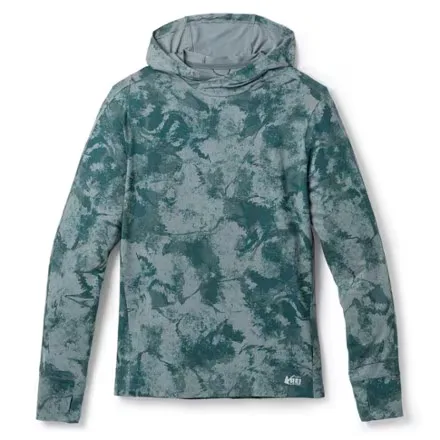
The Sahara Shade Hoodie has been REI's best-selling apparel item for several years. The 2026 update rebrands its proprietary fabric as ShadeFactor50™ — UPF50+ protection built into the material's fiber structure, not applied topically.
Why that matters: topical sun protection degrades with washing. Fiber-inherent UPF doesn't. If you wash your sun shirt frequently or use it across multiple seasons, that's a meaningful durability claim.
New 2026 silhouettes:
- REI Sahara Shade Regular Fit (men's) — $59.95
- REI Sahara Shade Straight Hem (women's) — $59.95
- Original hoodie — $59.95 (both)
- Kids' — $49.95
- Toddler — $39.95
All 2026 styles include updated thumbhole construction and a vent/ponytail hole in the hood. Small ergonomic changes — experienced sun-shirt users will recognize these as practical improvements, not cosmetic updates. If you're shopping for waterproof hiking footwear to pair with sun protection apparel, our Best Hiking Boots 2026 guide covers waterproof and lightweight options across price tiers.
Westward Camping Line: Prices and What They're Designed For
The Westward family spans car camping and basecamp use — not ultralight backpacking. Here's the full lineup with prices:
| Product | Price |
|---|---|
| Westward 4 Tent | $349 |
| Westward Shelter | $199 |
| Westward Camp Tarp Set | $129 |
| Westward Padded Folding Chair | $89.95 |
| Westward Chair | $69.95 |
| Westward Dreamer Double Self-Inflating Bed | $199 |
| Westward Dreamer Self-Inflating Bed (long wide) | $149 |
| Westward Dreamer Self-Inflating Bed (long x-wide) | $169 |
The Westward 4 Tent at $349 positions below premium four-season tents from MSR or Big Agnes while sitting above budget car-camping alternatives. Important: if you're considering the Westward 4 for backpacking rather than car camping, verify its weight spec first — it's engineered for campsite comfort, not pack weight.
The self-inflating beds ($149–$199) target car campers who want sleeping-pad comfort without the manual inflation process. For paddlers who camp, this fits well alongside our Best Kayaking & Paddleboarding Equipment 2026 guide if you're outfitting a base camp near the water.
REI Gear Durability: Where the Standards Sit vs. the Broader Market
Durability claims are universal across the outdoor industry. According to WifiTalents' 2026 industry statistics report, the global outdoor apparel market reached $34.4 billion in 2023, up from $31.1 billion in 2022. The global camping gear market hit $35.3 billion. Every major brand in these segments makes durability claims.
What distinguishes REI's approach: documentation. The Product Impact Standards are published, versioned, and updated on a schedule. Most specialty outdoor retailers don't publish comparable vendor compliance frameworks, which means you have a reference document to hold REI accountable to — rather than relying on marketing copy alone.
Durability in outdoor gear operates across multiple dimensions: material longevity, seam and construction integrity, repairability, and performance retention after repeated washing. REI's 2026 standards address the first two most explicitly. Repairability — replacing zippers, resoling shoes, patching shells — is less directly addressed, though REI's used gear program implies some commitment to product lifespan.
One counterpoint worth noting: The Trek's 2026 hiking gear trend analysis flags that feature-heavy gear (extra pockets, ergonomic additions, hood vents) can add weight and increase drying time — trade-offs that matter for long-distance backpackers even when they're irrelevant for day hikers or car campers. The Sahara Shade's 2026 additions are minor enough that weight impact is negligible, but buyers eyeing the Westward tent or sleeping systems for anything other than car camping should verify specifications.
For technical gear across multiple disciplines — rock climbing, hiking, paddling — our Best Camping & Hiking Gear 2026 guide provides category-by-category comparisons that put REI's house brand in context alongside specialist alternatives. Climbers specifically should check Best Rock Climbing Gear 2026 for gear that REI stocks alongside its own-brand offerings.
Inclusive Sizing in 2026: What the Standards Mean in Practice
The outdoor industry has a documented history of designing technical gear around a narrow demographic range. Extended sizing in waterproof shells, insulated jackets, and climbing harnesses has historically been an afterthought.
REI's 2026 Product Impact Standards make inclusive sizing a vendor compliance issue. Brands seeking REI distribution must demonstrate progress on size range availability — not just gesture toward it in brand messaging.
The Sahara Shade line's extension down to toddler sizing is one concrete example. The more meaningful test is at the extended adult end — plus sizes and tall/petite options in technical categories where fit directly affects performance and safety.
Practical advice for shoppers in extended sizes: Standards set a floor; execution determines whether that floor is reached. Check REI.com's size availability filters for specific product categories before visiting a store to verify whether the 2026 commitments are showing up in actual inventory.
Who Benefits Most from REI Membership? A Buyer Profile Breakdown

The math is straightforward once you know your own shopping habits.
REI membership pays off clearly if you:
- Buy at least one or two full-price gear items per year — a single tent, jacket, or sleeping bag at full price typically exceeds the $300 threshold needed to recover the $30 fee in dividends
- Order online frequently, even for small items — free standard shipping with no minimum adds up quickly across accessories, nutrition products, and replacement parts
- Want early access to limited-edition products through the Member Collection
- Value the co-op model — contributions to the Cooperative Action Fund for outdoor equity are a meaningful benefit for some buyers
REI membership delivers limited financial return if you:
- Shop primarily during sales or at the Outlet — those purchases are excluded from the dividend, which dramatically reduces your effective return
- Only buy consumables — fuel canisters, energy gels, sunscreen at low price points generate small dividends even at full price
- Use REI mainly for rentals, classes, or repairs — none of those spending categories count toward the reward
- Purchase used gear through REI's resale program — also excluded from dividend eligibility
Frequently Asked Questions
Is the REI membership fee annual or one-time?
It's a one-time $30 lifetime fee, not an annual subscription. You pay once and remain a member indefinitely. This makes the break-even calculation simpler than annual programs — you only need to recover $30 total, not $30 per year.
What is excluded from the REI dividend?
According to REI's membership terms, the following do not count toward your Co-op Member Reward: REI Outlet purchases, sale and clearance items, discounted items, used gear, rentals, shop services, REI classes and events, memberships, passes, tickets, shipping charges, and gift cards. Full-price purchases of regularly priced merchandise are the primary eligible category.
What is ShadeFactor50™ and is it better than other UPF fabrics?
ShadeFactor50™ is REI Co-op's proprietary branding for UPF50+ sun protection fabric used in the Sahara Shade line. The protection is built into the fiber structure — not topically applied — which means it doesn't degrade with washing. Most reputable UPF-rated garments from major outdoor brands use similar construction, so ShadeFactor50™ is competitive rather than uniquely superior. The inherent protection claim is accurate and meaningful compared to cheaper sun shirts using topical treatments.
Do REI's Product Impact Standards apply to third-party brands?
Yes. The standards are vendor-facing requirements that apply to all products REI stocks — not just its own branded items. Brands seeking distribution through REI must meet or actively work toward the preferred sustainability and quality attributes defined in the standards. The 2026 v4.0 update covers longer-lasting construction, reduced packaging waste, and inclusive sizing across the entire assortment.
Is the Westward camping line suitable for backpacking?
No. The Westward line is designed for car camping and basecamp use. The Westward 4 Tent at $349 is optimized for campsite comfort, not ultralight performance. Backpackers prioritizing pack weight should look at REI's dedicated backpacking tent line or third-party options like Big Agnes or MSR — both available through REI.
How does REI compare to buying outdoor gear direct from brands?
REI's main advantage is breadth — you can compare REI Co-op branded gear against Patagonia, Arc'teryx, Black Diamond, and dozens of other brands in one place, with consistent return policies and the dividend on full-price purchases. Buying direct sometimes offers better pricing or exclusive colorways, but you lose cross-brand comparison and the dividend. Specialty retailers focused on a single discipline (climbing, skiing, paddling) often carry deeper technical assortments than REI does in their specific niche.
Final Verdict: Is REI Worth It in 2026?
For full-price shoppers who buy at least one piece of technical gear per year: Yes — the $30 lifetime fee pays for itself quickly, and the 2026 Product Impact Standards give you a documented basis for trusting the brand selection on REI's shelves.
For sale-and-Outlet buyers: The dividend is smaller than most summaries suggest. REI is still worth using for its selection and return policy, but don't budget for a 10% return on your total annual spend if you primarily shop during sale events.
For outdoor enthusiasts across disciplines: REI's house brand gear sits at a strong mid-to-upper-mid price point with solid review data. It's not always the best option in every category — the third-party socks data makes that clear — but the co-op's vendor leverage on quality and sustainability standards is a real differentiator in a crowded market.
This article was drafted with AI assistance and fact-checked by our editorial team before publishing. How we use AI → | Review methodology →