
This article was researched and drafted with AI assistance, then reviewed and fact-checked by our editorial team before publishing. Our reviews synthesize manufacturer specifications, independent sources, and verified customer feedback. We do not accept payment for rankings. How we review · Affiliate disclosure
Quick Verdict

IKEA is not one product — it's a portfolio. The PAX wardrobe system and HEMNES solid-pine dressers are genuinely durable at their price point. BILLY bookcases and KALLAX shelving units deliver excellent value for renters and home offices. Upholstered sofas and outdoor furniture have real durability limits you should understand before buying.
Who should buy IKEA: First-apartment furnishers, renters, home office builders on a budget, buyers who want modular storage they can reconfigure over time.
Who should look elsewhere: Buyers furnishing a forever home, anyone needing heavy-daily-use upholstered seating for 10+ years, households in harsh outdoor climates.
TL;DR — 5 things to know before you buy:
- Quality varies sharply by category; bedroom storage and solid-wood dining are IKEA's strongest lines.
- Assembly difficulty ranges from 45-minute solo builds (KALLAX) to 4-hour two-person jobs (PAX with doors).
- IKEA's modular systems extend effective lifespan because you replace components, not entire units.
- Total cost of ownership — product + delivery + optional TaskRabbit assembly — matters more than sticker price.
- IKEA's US footprint reached 52 large-format stores + 18 plan-and-order points in FY25, with 4 more openings planned for 2026.
The Framing Most IKEA Reviews Get Wrong
Most IKEA debates start from a broken premise: either IKEA is "good quality" or it isn't, as if a single verdict applies to the entire catalog. It doesn't.
A PAX wardrobe with soft-close hinges and a LACK side table built around a honeycomb cardboard core are not the same product category wearing the same brand name. They use different materials, are engineered to different durability standards, and carry different price-to-lifespan expectations. Judging both with one verdict is like reviewing "food from restaurants" — the frame is too wide to be useful.
Once you treat IKEA as a portfolio rather than a monolith, the right question becomes: which IKEA products are right for my specific situation? That's what this review answers, category by category.
If you're building out a full home and want to understand where IKEA fits among other major furniture retailers, the Furniture & Appliances Buyer's Guide 2026 covers the broader competitive landscape including Ashley, Wayfair, and mid-range alternatives.
IKEA's US Market Position in 2026

IKEA is not a niche player or a nostalgia brand coasting on past momentum. According to IKEA's US FY25 Annual Summary, the company posted $9.3 billion in total US sales in fiscal year 2025, with $5.9 billion coming from ecommerce alone. Nearly 61 million people visited IKEA stores in person; over 457 million visited online.
Globally, Statista reports IKEA generated nearly €45 billion in revenue in FY25 — roughly four times its revenue from 25 years ago. That scale funds the supply chain infrastructure that keeps prices structurally low and product availability consistent across the US.
At the close of FY25, IKEA operated 52 large-format US stores and 18 plan-and-order points, with four additional locations planned to open in 2026. The plan-and-order point format — smaller locations where you consult staff, see key displays, and arrange home delivery — meaningfully reduces the barrier for buyers in secondary markets who previously had to drive hours to the nearest full-size store.
On the competitive side, Statista notes that Amazon and Walmart rank higher in US consumer awareness than IKEA, which means IKEA competes on style differentiation and the in-store experience, not raw price leadership alone. The IKEA Family Rewards program reached 25 million US members in FY25, a 17% increase year-over-year — a signal of strong repeat-buyer loyalty rather than one-time purchasers.
How IKEA's Pricing Model Works (and What It Means for Durability)
IKEA's prices are not low because the company ignores quality. They're low because the entire business model is engineered around cost reduction at every stage: flat-pack shipping dramatically reduces transport volume; particleboard, MDF, and honeycomb cardboard cores hit specific price points by design; and the buyer provides the assembly labor.
Here's the key insight most buyers miss:
This is a deliberate design philosophy, not an accident. Understanding it changes how you evaluate each piece.
The BILLY bookcase illustrates the model working well — particleboard with a foil finish, assembles in under 30 minutes, costs a fraction of a comparable solid-wood alternative. It won't last 40 years under heavy load, but for a home office or rental apartment, it doesn't need to.
The POÄNG chair takes a different approach: a bent-laminated wood frame (genuinely durable) paired with replaceable cushion covers. That design philosophy — durable structure, maintainable surfaces — is what to look for across IKEA's catalog.
The LACK side table is the most transparent example of the trade-offs. Its core is honeycomb cardboard — almost entirely air — which keeps weight and cost minimal. The result looks clean, ships easily, and costs around $10. It's not a structural workhorse. Knowing that upfront prevents the frustration of expecting performance the product was never engineered to deliver.
Furniture Quality by Category: What Holds Up and What Doesn't
This is the section most reviews skip. Here's an honest category-by-category breakdown based on materials, construction engineering, and documented real-world performance.
Bedroom Storage: PAX and HEMNES
Verdict: IKEA's strongest category.
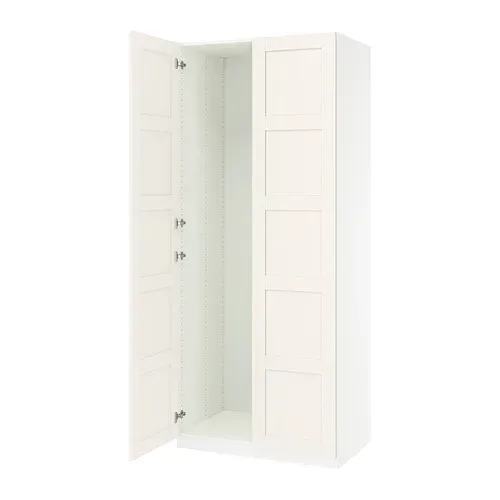
The PAX wardrobe system uses particleboard carcasses with solid wood or wood-veneer door options. Hardware quality — hinges, drawer runners, soft-close mechanisms — is consistently reliable. The modular design lets you reconfigure or add components years later without replacing the entire unit, which meaningfully extends effective lifespan.
HEMNES dressers, available in solid pine, represent genuine durability at their price tier. If you're buying IKEA bedroom storage and want pieces that will handle daily use for 8–10 years, these lines are a strong choice.
For a broader look at bedroom furniture options across price tiers, see our Best Mattresses 2026 guide — which covers how your bed frame choice affects mattress compatibility.
Sofas and Upholstered Seating
Verdict: Serviceable for 3–5 years; weaker for heavy daily use.
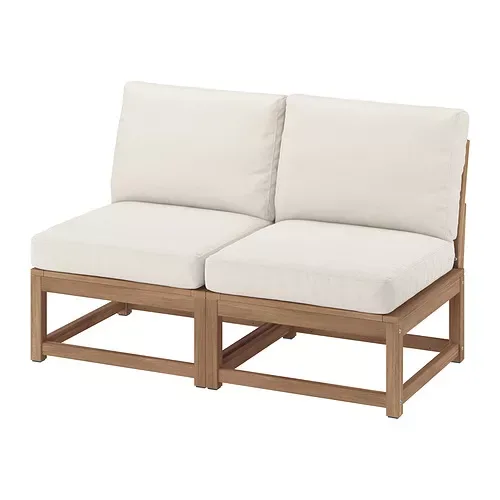
The KIVIK and SÖDERHAMN sofas use durable internal frames, and the cover-replacement system is a genuine long-term advantage — you can refresh the look without buying a new sofa. The consistent complaint across verified owner reviews is fabric wear at high-contact points after two to three years of daily use. PU leather options degrade noticeably faster than fabric, particularly in warm climates or high-use households.
Here's the honest calculation: if your living room sofa will see daily heavy use from a family, a mid-range Ashley or local-retailer alternative may offer better foam density and fabric durability at a comparable or slightly higher total price over a 7-year window.
Dining Tables and Chairs
Verdict: Solid wood lines are strong; composite/glass combinations disappoint long-term.
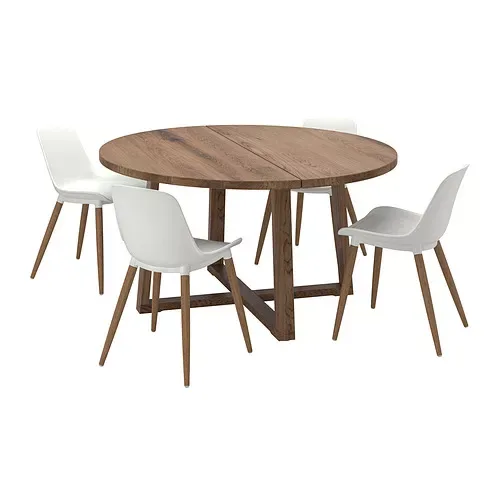
The MÖRBYLÅNGA table (solid oak veneer on an oak frame) handles daily family use well. INGOLF chairs in solid pine are reliable, repairable, and hold up over years of regular use. These are worth the slightly higher price within the IKEA range.
Where IKEA dining furniture consistently disappoints: glass-top and particleboard-base combinations show edge wear, surface scratching, and joint loosening faster than their solid-wood counterparts. If a dining table is the one piece you need to last a decade under daily use, choose a solid wood IKEA line or consider stepping up to a mid-range alternative.
Our Best Dining Room Tables & Chairs 2026 guide covers the full range from IKEA's price tier through luxury solid-hardwood options if you're comparing across brands.
Beds and Bed Frames
Verdict: MALM and HEMNES are solid bets; slat systems have a known limitation.
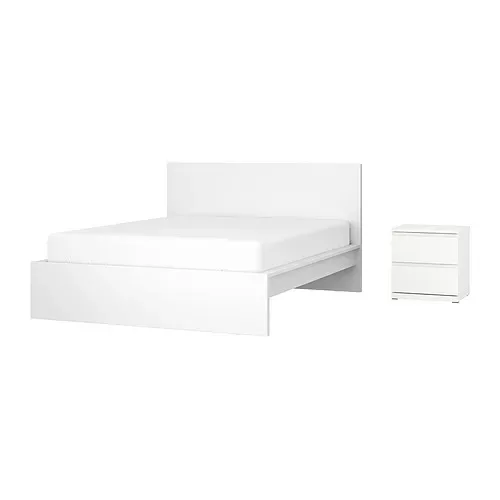
MALM and HEMNES bed frames are among IKEA's most-purchased products, and verified owner consensus is positive for their price tier — stable construction, consistent hardware, an aesthetic that holds up. The slat systems (LURÖY and LÖNSET) are functional but may need supplementing with a bunkie board or additional slats for heavier mattresses or buyers who prefer a firmer base.
That's a known limitation worth factoring into your purchase decision rather than discovering after delivery.
Outdoor Furniture
Verdict: Budget balcony furniture — don't benchmark it against premium alternatives.
IKEA outdoor furniture is appropriate for a small apartment balcony or a low-traffic patio where you want style at a low price point. It is not appropriate for a high-use deck in a coastal or high-UV environment where you expect a 10-year lifespan.
The honest frame: evaluate IKEA outdoor pieces as light-duty, entry-level patio furniture and they deliver. Hold them to premium-poly-lumber or marine-grade-aluminum benchmarks and they will disappoint. For weather-resistant outdoor furniture that can handle harsh conditions, our Best Outdoor Furniture 2026 guide covers options purpose-built for durability.
Office and Children's Furniture
Verdict: Excellent home office value; children's lines are appropriately practical.
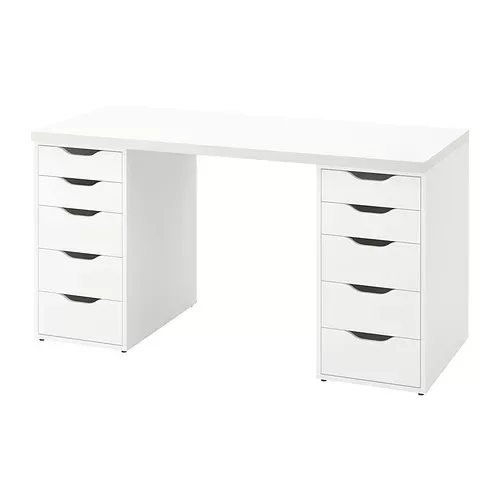
The ALEX drawer unit + LAGKAPTEN desk combination is one of IKEA's best value propositions — smooth drawer action, a stable surface, and enough configuration options to fit most home offices. These are not suited for commercial environments or buyers who need a standing desk with integrated cable management, but for a dedicated home workspace they're hard to beat at the price.
If you're setting up a home office and need a chair to match, our Best Office Chairs 2026 guide covers ergonomic options from sub-$200 picks through high-end Herman Miller alternatives.
Children's lines — TROFAST storage and SUNDVIK cribs and beds — are practical, certified-safe, and designed for a defined life stage. Lower durability ceilings are entirely appropriate here; children outgrow furniture faster than furniture wears out.
TV Stands and Entertainment Centers
IKEA's KALLAX shelving and BESTÅ system are popular home entertainment choices, offering modular flexibility and clean Scandinavian aesthetics. For a full comparison of TV stand options across price ranges, see our Best TV Stands & Entertainment Centers 2026 roundup.
Is IKEA Assembly Really That Hard? Honest Time Estimates
Assembly difficulty depends entirely on which product you're building. Here's a realistic breakdown:
| Product | Time Estimate | People Needed | Difficulty |
|---|---|---|---|
| LACK shelf / side table | 20–30 min | 1 | Easy |
| KALLAX shelving unit | 45–60 min | 1 | Easy |
| ALEX drawer unit | 45–60 min | 1 | Easy |
| MALM 4-drawer dresser | 60–90 min | 1–2 | Moderate |
| HEMNES bed frame | 90–120 min | 2 | Moderate |
| BRIMNES 3-door wardrobe | 120–180 min | 2 | Moderate-Hard |
| PAX wardrobe with doors + interior | 2–4 hours | 2 | Hard |
Common failure points — and how to avoid them:
- Cam locks not fully tightened on first assembly cause joints to loosen over time. Tighten until firm, not just snug.
- Dowels misaligned often require partial disassembly to correct. Dry-fit before applying force.
- Back panels bowing if not secured at every anchor point. Confirm each anchor before moving on.
None of these are catastrophic — they're predictable and fixable. Knowing them upfront prevents the frustration of discovering them six months later.
IKEA's TaskRabbit assembly partnership is worth factoring into your total cost calculation. For a PAX wardrobe or a full bedroom set, professional assembly can save 3–5 hours of effort. If your time has clear value, this is a practical trade-off, not an extravagance.
IKEA's spare parts service — available online and in-store — means a missing cam lock or stripped dowel doesn't require returning the product. The 2026 IKEA app includes augmented reality room planning and digital assembly guides for newer products, which meaningfully reduces reliance on paper instructions for complex builds.
IKEA Value Assessment: When It Makes Sense and When It Doesn't
IKEA delivers strong value in these situations:
- First apartments and starter homes
- Children's rooms (functional for a defined life stage)
- Rental properties where durability over 15 years isn't the goal
- Home offices on a budget
- Any space you expect to reconfigure within 5 years
- Buyers who want modular systems (PAX, KALLAX, BILLY) they can expand over time
IKEA is the wrong choice when:
- You're furnishing a forever home and want pieces you'll pass on
- Your household has very high daily-use demands on upholstered seating
- You're furnishing an outdoor space in a harsh climate
- You have a strong aversion to assembly and don't want to pay for TaskRabbit
The total cost of ownership calculation matters more than sticker price. Always include: product price + delivery fee (IKEA delivery fees vary by order size and distance) + optional assembly service + realistic replacement timeline.
A $400 IKEA sofa replaced after 5 years costs more over a decade than a $650 mid-range alternative that lasts 8–10 years. Run the numbers for your situation rather than defaulting to the lower sticker price.
According to YouGov's BrandIndex analysis, value remains the primary driver of IKEA consideration among US adults, with particularly strong scores among 18-to-34-year-olds — a finding backed by daily surveys weighted by age, gender, race, education, and region, making it a reliable signal rather than anecdotal.
A note on sustainability: According to Astute Analytica's US Furniture Market Report 2026, 76% of US shoppers report willingness to pay more for sustainable products. IKEA has made public sustainability commitments around renewable materials and circular design, but it is not yet positioned as a premium sustainable brand. If sustainability is your primary criterion, dedicated sustainable furniture brands offer stronger credentials — though at higher price points.
Wondering how to style your space once you've picked your pieces? Our roundup of Best Home Decor Online Stores 2026 covers where to find accessories, art, and textiles to complement IKEA furniture.
IKEA's US Expansion in 2026: What It Means for Shoppers
IKEA's US retail strategy is deliberately moving away from a single model of large warehouse stores in major metro areas.
The 14 new retail locations opened in FY25 included two small-format stores — in Arcadia, CA and San Marcos, TX — and nine plan-and-order points with integrated pickup in markets including Charlotte, NC; Roseville, MN; Ontario, CA; and Colma, CA, per IKEA's FY25 US Annual Summary.
What this means for you: Plan-and-order points let you see key products in person, consult with staff, and arrange delivery without the full warehouse experience. This directly reduces the barrier for buyers in suburban and secondary markets who previously had to drive hours to the nearest large-format store or order entirely online without seeing the product.
With $5.9 billion in US ecommerce sales in FY25, a growing share of IKEA buyers never visit a physical location. That makes online product research — including reading category-level reviews, checking dimensions carefully, and using the IKEA room planner — more important than ever. The inability to sit on a sofa or open a drawer before buying is a real limitation of online IKEA shopping; it's worth making a plan-and-order point visit for high-investment pieces if one is accessible to you.
Forbes reports that Wayfair is simultaneously expanding its physical US presence — intensifying competition in in-store furniture browsing. The home furnishings retail environment in 2026 is competitive and under real pressure from inflation and shifting consumer confidence, making IKEA's continued expansion notable.
IKEA vs. Key US Competitors
| IKEA | Wayfair | Ashley | Walmart | |
|---|---|---|---|---|
| Quality consistency | High (own brand) | Variable (3rd party) | High | Variable |
| Style | Scandinavian/modern | Wide range | Traditional/transitional | Basic |
| Assembly required | Yes, most pieces | Varies | Varies | Varies |
| Price tier | Budget–Mid | Budget–Mid | Budget–Mid | Budget |
| In-store browsing | 52+ stores + POPs | Limited (expanding) | 1,000+ stores | Yes |
| Modular systems | Strong | Limited | Limited | Limited |
IKEA vs. Wayfair: IKEA offers consistent house-brand quality control; Wayfair aggregates hundreds of third-party manufacturers, making quality harder to predict. For buyers who want to know exactly what they're getting, IKEA's house-brand model is a genuine advantage. For a comprehensive look at Wayfair's strengths and weaknesses, see our Wayfair Review 2026.
IKEA vs. Ashley Furniture: Ashley operates at a similar price tier but with a stronger emphasis on upholstered furniture durability and a more traditional aesthetic. Ashley's sofas and sectionals generally use higher-density foam and more durable fabric than comparable IKEA options. For dining and bedroom furniture, the comparison is more category-specific — IKEA's solid-wood bedroom lines compete credibly with Ashley's mid-range offerings.
IKEA vs. Walmart and Target: For the absolute lowest price with no assembly complexity, Walmart and Target compete directly. IKEA typically wins on style differentiation and modularity at comparable price points; Walmart wins on convenience and immediate availability for buyers who need something today.
IKEA vs. Bob's Discount Furniture: Bob's — which planned 20 new US stores in 2025 per Astute Analytica — targets a similar value-conscious buyer. Bob's requires less assembly and offers more traditional upholstered furniture styles. IKEA wins on modular storage systems, home office setups, and design coherence. Bob's wins for buyers who want assembled upholstered pieces without the IKEA aesthetic or DIY commitment.
IKEA Category Quality at a Glance
| Category | Best Line | Durability | Best For |
|---|---|---|---|
| Bedroom Storage | PAX, HEMNES | ★★★★☆ | Renters, families, long-term use |
| Dining (solid wood) | MÖRBYLÅNGA, INGOLF | ★★★★☆ | Daily family dining |
| Bed Frames | MALM, HEMNES | ★★★★☆ | Most buyers |
| Bookcases/Shelving | BILLY, KALLAX | ★★★★☆ | Home offices, rentals |
| Home Office | ALEX, LAGKAPTEN | ★★★★☆ | WFH setups |
| Sofas | KIVIK, SÖDERHAMN | ★★★☆☆ | Light-use living rooms |
| Dining (composite) | Glass/MDF combos | ★★☆☆☆ | Short-term/temporary |
| Outdoor | APPLARO, JUTÖ | ★★☆☆☆ | Small balconies only |
Frequently Asked Questions
Is IKEA furniture good quality in 2026?
Quality depends entirely on the category. IKEA's bedroom storage (PAX, HEMNES), solid-wood dining furniture (MÖRBYLÅNGA, INGOLF), and modular shelving (BILLY, KALLAX) are genuinely good at their price points. Upholstered sofas and outdoor furniture have real durability limits. Evaluating IKEA by product category gives you a far more accurate picture than any single-verdict review.
How long does IKEA furniture typically last?
Solid-wood IKEA pieces — HEMNES, INGOLF, MÖRBYLÅNGA — can last a decade or more with normal use. Particleboard and MDF pieces are typically engineered for 5–8 years of normal use. Heavy daily use, moisture exposure, or frequent moves shorten that timeline. IKEA's modular systems extend effective lifespan because individual components can be replaced without discarding the whole unit.
Is IKEA assembly really that difficult?
Simple pieces — KALLAX, ALEX, LACK — are straightforward and most buyers complete them solo in under an hour. Complex multi-part assemblies like PAX wardrobes or BRIMNES wardrobes require two people and 2–4 hours. The difficulty is real but manageable. IKEA's TaskRabbit partnership offers a paid assembly option worth considering for large pieces.
How does IKEA compare to Wayfair for value?
IKEA offers more predictable quality because it controls its own product lines. Wayfair aggregates third-party manufacturers, making quality variable. On style-per-dollar, IKEA often outperforms Wayfair at similar price points. Wayfair's advantage is selection breadth. For a detailed side-by-side, see our Wayfair Review 2026.
Does IKEA deliver across the US?
Yes. IKEA offers home delivery from its stores and online. Delivery fees vary by order size, distance, and whether you use a large-format store, small-format store, or plan-and-order point. With 52+ store locations plus 18 plan-and-order points as of FY25, coverage across major US markets is strong.
Is IKEA worth it for a home office setup?
Yes, for most home office use cases. The ALEX drawer unit and LAGKAPTEN desk combination offers smooth drawer action, a stable surface, and flexible configuration at a price that's hard to match from other furniture brands. Pair it with a quality ergonomic chair — see our Best Office Chairs 2026 guide — and you have a functional workspace without overpaying.
Final Verdict: Who Should (and Shouldn't) Buy IKEA in 2026
Buy IKEA if you are:
- Furnishing a first apartment or temporary space
- Setting up a home office on a budget
- Looking for modular storage (PAX, KALLAX, BILLY) you can expand over time
- Furnishing a child's room for a defined age window
- A renter who doesn't need 15-year durability
Look elsewhere if you are:
- Furnishing a permanent home with high daily traffic
- Prioritizing upholstered seating durability above all else
- Furnishing an outdoor space in a coastal or high-UV climate
- Unwilling to assemble furniture and don't want to pay for TaskRabbit
IKEA in 2026 is a strong value brand for the right buyer and the wrong choice for others. The key is knowing which category of the portfolio you're shopping — and holding each piece to the right benchmark.
We may earn a commission when you use our links to make a purchase. This does not affect our recommendations — our editorial assessments are completed before any affiliate link is applied.