Reviewed by the Trusted Buyer Report editorial team. This article was researched and drafted with AI assistance, then fact-checked by a human editor before publishing. We may earn a commission when you use our links — commissions are applied only after editorial rankings are locked. How we review → | AI ethics →
How this guide was researched: This article synthesizes grip performance data, thickness specs, and materials analysis from four independent sources with documented testing methodology: OutdoorGearLab (18-mat dataset with separate dry and wet grip scoring), Wirecutter (long-term multi-year testing), Yoga Journal (hands-on tester notes across practice types), and Garage Gym Reviews (hot yoga-specific evaluations). Additional insights from yoga teacher Jerilyn Frisbie, Hugger Mugger's hot yoga guide, and Woman & Home. Trusted Buyer Report has not conducted hands-on testing of these mats.
TL;DR — Quick picks
- Best overall: JadeYoga Harmony Mat (4.75mm, natural rubber, Wirecutter top pick)
- Best for hot yoga: Manduka GRP Adapt 2.0 (highest wet grip in tested field: 8.5/10)
- Best eco mat: Prana Verde (perfect 10/10 materials score + 10 dry / 8 wet grip)
- Best for joint sensitivity: Manduka PRO 6mm (9/10 dry grip, most cushioning tested)
- Best travel mat: Manduka eKO SuperLite (1.5mm, folds flat, 2 lbs)
- Best upcycled: Suga Recycled Wetsuit Yoga Mat (100% diverted neoprene)
- Avoid for sweaty practice: Gaiam Performance Dry-Grip (3.5/10 wet grip), Alo Yoga Warrior Mat (4.5/10 wet)
The Wet Grip Problem Nobody Warns You About
Here is a fact that most yoga mat marketing will never tell you: a mat that scores 10 on dry grip can drop to 4.5 the moment moisture enters the picture. That is not a minor dip. In a heated vinyasa class or a Bikram session, that gap is the difference between a stable Warrior III and a dangerous slip.
According to grip testing published by OutdoorGearLab across 18 yoga mats, the wet grip collapse is real, measurable, and almost never disclosed on a product page. The Gaiam Performance Dry-Grip — a mat whose very name implies moisture resistance — scores 6.5 dry and 3.5 wet. That is a 46% performance drop under the exact conditions its marketing targets.
The reason this happens comes down to surface material chemistry, not thickness or price. There are three behaviors at play:
- Polyurethane top layers (Liforme, Manduka GRP) absorb moisture and increase friction as you sweat — they activate under heat.
- PVC surfaces (common in budget mats) are hydrophobic when wet. Moisture sits on top rather than being absorbed, turning the surface into something close to wet tile.
- Natural rubber (JadeYoga, Manduka eKO) provides consistent traction but can still degrade if the surface is untextured or if sweat volume is extreme.
If you practice hot yoga, Bikram, or power yoga, wet grip is the number you should look at first, not last. Everything else — price, brand, color — is secondary to whether the mat will hold you when your hands are soaked.
How Grip Is Actually Tested: Behind the Scores
Grip scores from credible sources are not subjective impressions. They reflect documented protocols that are worth understanding before you compare numbers.
OutdoorGearLab's methodology uses a weighted scoring system separating two distinct performance modes:
- Static hold: can you maintain a pose without sliding, tested in the most common anchor positions (Downward Dog, Warrior II, plank)?
- Dynamic movement: do hands and feet stay planted through transitions, where the shear force on the mat surface changes direction rapidly?
Wet grip tests apply a measured quantity of water to the mat surface before evaluation — simulating sweat rather than testing in ambient dry conditions. This is the step most consumer reviewers skip.
Within OutdoorGearLab's scoring framework, materials account for 20% of the total score, reflecting consumer demand for sustainable construction. Care and cleaning carries 15% weight — which matters more than it sounds. Body oil residue, cleaning product buildup, and environmental dust all degrade surface traction over time. A mat that is difficult to clean will grip worse at month six than it did on day one.
Wirecutter's approach differs: their staff writer has used yoga mats across multiple workout types for over a decade, evaluating long-term performance rather than controlled lab scores. This catches durability issues and surface degradation that short-term testing misses — including Lululemon The Mat's well-documented tendency to lose grip character after heavy use.
Garage Gym Reviews focuses specifically on hot yoga conditions and documents one nuance that lab testing can miss entirely: the Liforme mat's grip takes several minutes to activate in dry conditions, which can feel slippery at the start of a session. Once moisture is present, performance improves significantly. If you run a dry warm-up before transitioning to heated work, this behavior matters.
Yoga Journal uses named hands-on testers and separates assessments by practice type — their Liforme Classic designation as best hot yoga mat reflects actual heated class use, not extrapolated lab scores.
Full Grip Rankings: All 18 Mats, Dry vs. Wet
The table below presents OutdoorGearLab's dry and wet grip scores for all 18 tested mats. The gap between the two columns is where most buying decisions go wrong.
| Mat | Dry Grip | Wet Grip | Grip Drop | Verdict |
|---|---|---|---|---|
| Prana Verde | 10.0 | 8.0 | −2.0 | Excellent both conditions |
| Manduka eKO | 10.0 | 7.0 | −3.0 | Best dry; moderate wet |
| Manduka GRP Adapt 2.0 | 9.5 | 8.5 | −1.0 | Best wet grip tested |
| Jade Harmony 2.0 | 9.5 | 7.0 | −2.5 | Top eco performer |
| Manduka PRO | 9.0 | 7.0 | −2.0 | Best thick mat |
| Liforme Original | 9.0 | 7.0 | −2.0 | Best hot yoga (activates with moisture) |
| Jade Voyager | 9.0 | 7.0 | −2.0 | Strong travel option |
| Iuga Eco Friendly Non Slip | 8.0 | 7.0 | −1.0 | Budget-friendly consistency |
| Yokohama Unity Cork Pro | 7.5 | 6.0 | −1.5 | Good for dry/restorative |
| Manduka eKO SuperLite | 7.5 | 5.0 | −2.5 | Travel only — not for hot yoga |
| Alo Yoga Warrior Mat | 7.0 | 4.5 | −2.5 | ⚠ Poor wet performance |
| Lululemon The Mat | 6.5 | 4.5 | −2.0 | ⚠ Avoid for sweaty practice |
| Gaiam Performance Dry-Grip | 6.5 | 3.5 | −3.0 | ⚠ Worst wet in tested field |
| Gaiam Premium 6mm | 6.0 | 4.0 | −2.0 | Budget; not for heated yoga |
| YogaAccessories | 5.5 | 4.0 | −1.5 | Entry-level only |
| Gaiam Premium Reversible | 5.0 | 5.0 | 0 | Consistent but mediocre |
| Yoga Design Lab Combo | 4.0 | 4.0 | 0 | Consistent but low baseline |
| Primasole Foldable | 3.0 | 3.0 | 0 | Unsuitable for active practice |
Source: OutdoorGearLab 18-mat dataset
Reading this table: three patterns emerge.
First, the Manduka GRP Adapt 2.0 leads on wet grip (8.5) and also shows the smallest performance drop (−1.0) of any high-performing mat. This is the defining choice for hot yoga practitioners.
Second, the Prana Verde is the most consistent high performer: perfect 10 dry, 8.0 wet, perfect materials score. It is the rare mat that excels across all three key dimensions simultaneously.
Third, price and brand recognition do not predict wet grip. The Alo Yoga Warrior Mat retails above most budget options yet collapses to 4.5 wet. Lululemon The Mat — a prestige product — drops identically. The Gaiam Performance Dry-Grip, despite its name, posts the worst wet score in the entire dataset at 3.5.
Thickness Guide: How Many Millimeters Do You Actually Need?
The instinct to buy the thickest mat available is common — and often counterproductive. Here is why.
More cushioning reduces proprioceptive feedback — the sensory information your feet and ankles use to maintain balance. In a standing balance sequence, a 6mm mat can actually make poses harder than a 4mm mat, because your foot is sinking into a compressible surface rather than sensing a stable floor. For balance-heavy practices like Iyengar or slow flow, this matters more than joint protection.
Thickness ranges and what they actually mean
1.5mm — Travel and portability The Manduka eKO SuperLite is the benchmark here. At 2 lbs and 1.5mm, it folds flat into a bag and is the only mat in the tested field designed around portability first. Grip scores drop significantly at this thickness (7.5 dry, 5.0 wet), so it suits occasional or travel practice rather than daily heated sessions.
3–3.5mm — Minimalist grip-focused The 42 Birds Cork Lightweight Mat at 3.5mm represents this tier — light enough for travel (approximately 2.8 lbs), thin enough for ground connection, cork top for moderate sweat resistance. Garage Gym Reviews notes it suits hot yoga travel use, but its thin cushioning is not appropriate for practitioners with sensitive knees or wrists.
4–4.75mm — The general-purpose sweet spot The majority of top-ranked mats sit in this range. Hugger Mugger's 2026 hot yoga guide specifically recommends 3–5mm as the optimal range for heated practice, balancing comfort with ground connection. The Liforme Original at 4.2mm and JadeYoga Harmony Mat at 4.75mm both fall here — high grip scores, adequate joint protection, manageable weight.
5–5.5mm — Standard studio thickness Lululemon The Mat at 5mm and the Suga Recycled Wetsuit Mat at 5mm occupy this range. Slightly more cushioning without significant proprioception sacrifice. Suitable for mixed practice including restorative sequences. Yoga Journal testers specifically preferred the 5mm Suga over the 6mm version, noting it struck the better balance between comfort and responsiveness.
6mm and above — Maximum cushioning The Manduka PRO at 6mm and the Hugger Mugger Para Rubber XL at 6.2mm are the main representatives. These are designed for restorative yoga, Pilates, meditation, or practitioners with significant joint sensitivity. The Manduka PRO still scores 9.0 on dry grip — the thickness does not come at a severe grip cost — but the weight is a real barrier at 3.4kg (7.5 lbs). Daily commuting with a 6mm mat is a genuine physical commitment. For home-only practitioners, that trade-off disappears.
Thickness decision matrix
| Your primary concern | Recommended thickness | Why |
|---|---|---|
| Hot yoga / heavy sweat | 4–4.75mm | Ground connection + sweat-active surface |
| Joint sensitivity (home use) | 6mm | Manduka PRO: high grip and max cushion |
| Travel / portability | 1.5–3.5mm | Weight matters more than cushion |
| Balance-heavy practice | 3.5–4.5mm | Proprioception requires firm surface |
| General studio practice | 4–5mm | Works across styles without compromise |
| Restorative / Pilates | 5–6mm | Cushion prioritized over ground feel |
Individual Mat Deep-Dives: Specs, Weight, and Who Each Suits
Manduka GRP Adapt 2.0
Grip: 9.5 dry / 8.5 wet (best wet in tested field) | Thickness: 5mm | Material: Natural rubber + polyurethane top
The GRP Adapt 2.0 is the only mat in OutdoorGearLab's dataset to score above 8.0 on wet grip while also maintaining a 9.5 dry score. The polyurethane surface activates with moisture — performance actually improves slightly as sweat accumulates rather than degrading. This is the defining feature separating it from every other mat at or below its price point.
Who it suits: Hot yoga practitioners, Bikram students, anyone whose practice regularly involves significant sweat. The GRP series is Manduka's hot yoga-specific line, and the Adapt 2.0 is the updated version with improved grip texture.
Limitation: At 5mm and with the rubber/polyurethane construction, it is heavier than the Liforme at comparable thickness. Not the choice for lightweight travel.
Prana Verde

Grip: 10.0 dry / 8.0 wet | Materials score: 10.0/10 | Construction: Natural rubber
The Prana Verde posts the highest dry grip score in the dataset (tied with the Manduka eKO) and holds at 8.0 wet — one of the strongest wet retention rates tested. It also earns a perfect 10 from OutdoorGearLab's materials scoring, reflecting its natural rubber construction and documented sustainability commitments.
Who it suits: Eco-conscious practitioners who also want top-tier grip performance and don't want to choose between values and function. The Prana Verde is the only mat in the tested field that scores 10 on dry grip and 10 on materials — a combination no other mat achieves.
Limitation: Pricing sits at the premium tier. If budget is the primary constraint, the JadeYoga Harmony Mat at a lower price point achieves comparable results.
JadeYoga Harmony Mat
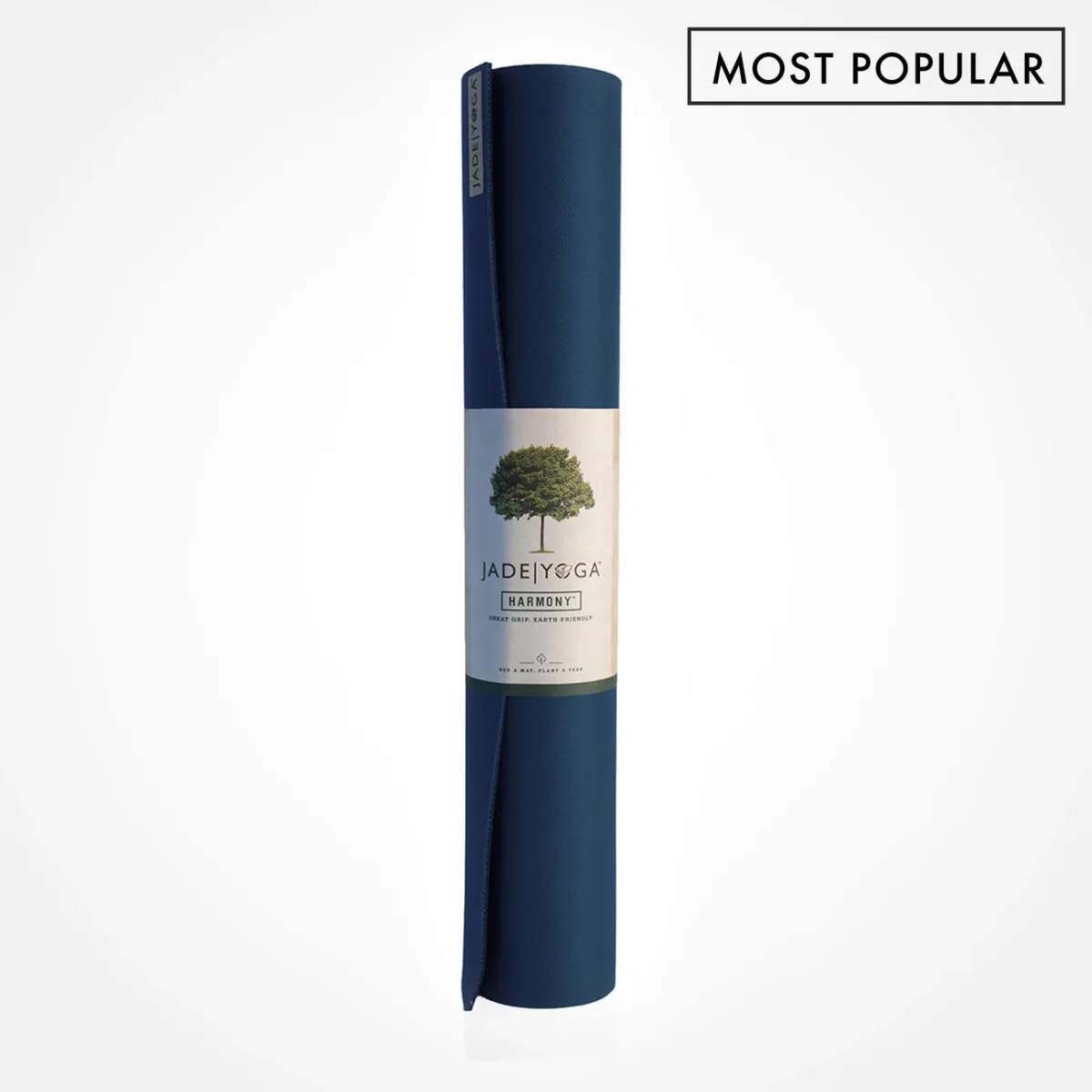
Grip: 9.5 dry / 7.0 wet | Thickness: 4.75mm | Dimensions: 68×24 in (74×24 also available) | Weight: 4.5 lbs | Material: Open-cell natural rubber
Wirecutter lists the JadeYoga Harmony Mat as its top overall pick based on long-term testing, citing durability, consistent grip, and the brand's environmental commitments. JadeYoga plants one tree for every mat sold — a commitment verified by multiple Yoga Journal testers who specifically mentioned it as a meaningful differentiator.
The open-cell natural rubber construction provides cushioning that responds to pressure without the spongy feel of closed-cell foam. At 4.75mm, it sits in the general-purpose sweet spot — thick enough for knee and wrist protection, thin enough for standing balance sequences.
Who it suits: Most practitioners. The JadeYoga Harmony is genuinely the right default recommendation for studio yoga, home practice, gentle flow, and anything other than the most extreme hot yoga conditions. If you are buying your first serious mat, this is the one to start with.
Limitation: Natural rubber degrades if exposed to direct sunlight over time. Store away from UV if you practice outdoors regularly.
Liforme Original
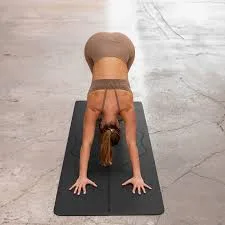
Grip: 9.0 dry / 7.0 wet | Thickness: 4.2mm | Dimensions: 72.8×26.8 in | Weight: ~5.5 lbs | Material: Natural rubber + eco-polyurethane top
Yoga Journal designates the Liforme Classic as its best hot yoga mat for 2026, consistent with the polyurethane surface's moisture-activation behavior. The surface grip improves as sweat accumulates — the opposite of most mats — which is why Garage Gym Reviews specifically evaluated it for heated conditions and found it outstanding once moisture was present.
The Liforme also features its proprietary AlignForMe alignment system: laser-etched guidelines marking hand, foot, and center positions for 17 different postures. This is not decorative — for practitioners working on alignment precision or teaching themselves without a mirror, it adds genuine functional value.
Who it suits: Serious hot yoga practitioners, alignment-focused practice, anyone who wants a premium mat that improves with use rather than degrading.
Limitation: The grip feels less secure in the first 3–5 minutes of a dry session before body heat and initial moisture activate the surface. If you run a long dry warm-up, this initial delay can be disconcerting. Garage Gym Reviews specifically notes this behavior and recommends wiping the surface with a damp cloth before practice to accelerate activation.
Manduka PRO
Grip: 9.0 dry / 7.0 wet | Thickness: 6mm | Weight: 3.4kg (7.5 lbs) | Material: PVC (closed-cell) | Warranty: Lifetime
The Manduka PRO is the benchmark for thick, cushioned mats. Woman & Home designates it the best luxury thick mat for 2026. Unusually for a 6mm mat, it maintains a 9.0 dry grip score — the extra thickness does not compromise surface traction significantly.
The closed-cell surface does not absorb sweat, which simplifies cleaning but means the PRO is not a hot yoga mat. Moisture sits on the PVC surface rather than being absorbed, and wet grip drops to 7.0 — adequate for moderate sweat but not for Bikram conditions.
The lifetime guarantee is genuinely meaningful: Manduka backs the PRO against material defects and structural failure for the life of the mat, which is relevant when the product costs significantly more than budget alternatives.
Who it suits: Joint-sensitive practitioners, home practitioners who prioritize cushioning, Pilates and restorative yoga, anyone who does not need to transport the mat regularly.
Limitation: 3.4kg is heavy. If you carry your mat anywhere — studio, gym, car — this weight becomes a real burden. Also, PVC construction scores lowest in materials ratings. If environmental impact matters to you, the Manduka PRO is not the right choice despite its performance.
Manduka eKO
Grip: 10.0 dry / 7.0 wet | Material: Natural rubber | Best for: Dry conditions, eco-conscious buyers
The Manduka eKO scores a perfect 10 on dry grip — the highest in the dataset alongside the Prana Verde — and earns a strong materials score (8.0) for its natural rubber construction. The wet grip of 7.0 is adequate for moderate sweat but lags behind the GRP Adapt 2.0 and Prana Verde in genuinely wet conditions.
Who it suits: Practitioners whose studio runs at room temperature, anyone prioritizing maximum dry-condition grip, eco-conscious buyers who practice primarily in non-heated environments.
Manduka eKO SuperLite
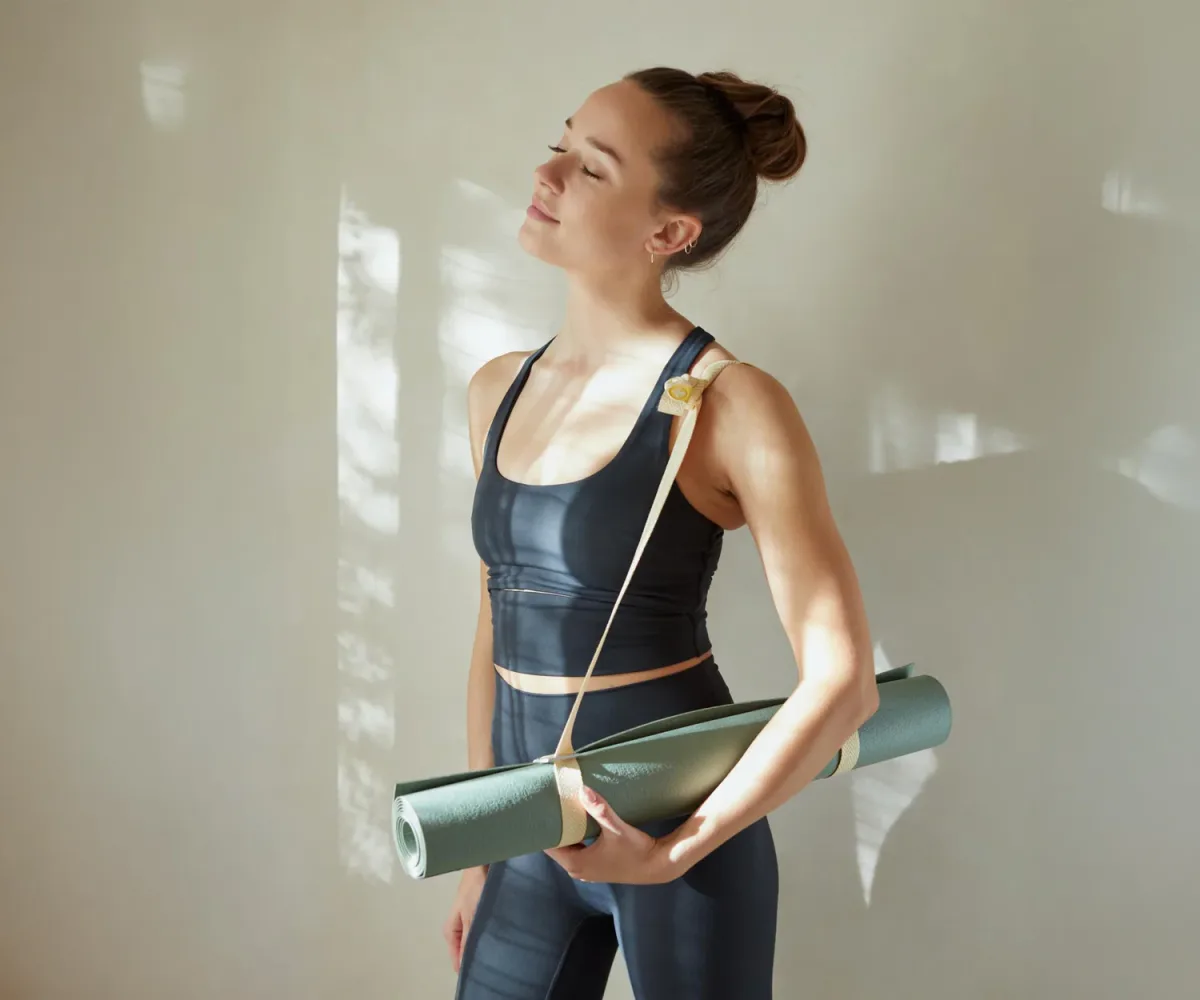
Grip: 7.5 dry / 5.0 wet | Thickness: 1.5mm | Weight: ~2 lbs | Material: Natural rubber
The eKO SuperLite is the only mat in the tested dataset designed primarily around portability. At 1.5mm, it folds (not just rolls) flat into a bag, weighs approximately 2 lbs, and packs alongside clothing for travel. The grip trade-off is real — 5.0 wet means it is not suitable for heated sessions — but for practitioners who need a travel mat for resort classes, conference trips, or supplemental home practice, it is the field's clearest choice.
Who it suits: Frequent travelers who want a mat for light or moderate practice on the road. Not a daily driver for serious practitioners.
Jade Harmony 2.0
Grip: 9.5 dry / 7.0 wet | Material: Natural rubber | Best for: Eco-focused buyers wanting top grip
An updated version of the original Jade mat, with natural rubber construction and the same tree-planting program. Scores identically to the original Jade Voyager on grip but carries improved durability in the updated formulation.
Iuga Eco Friendly Non Slip
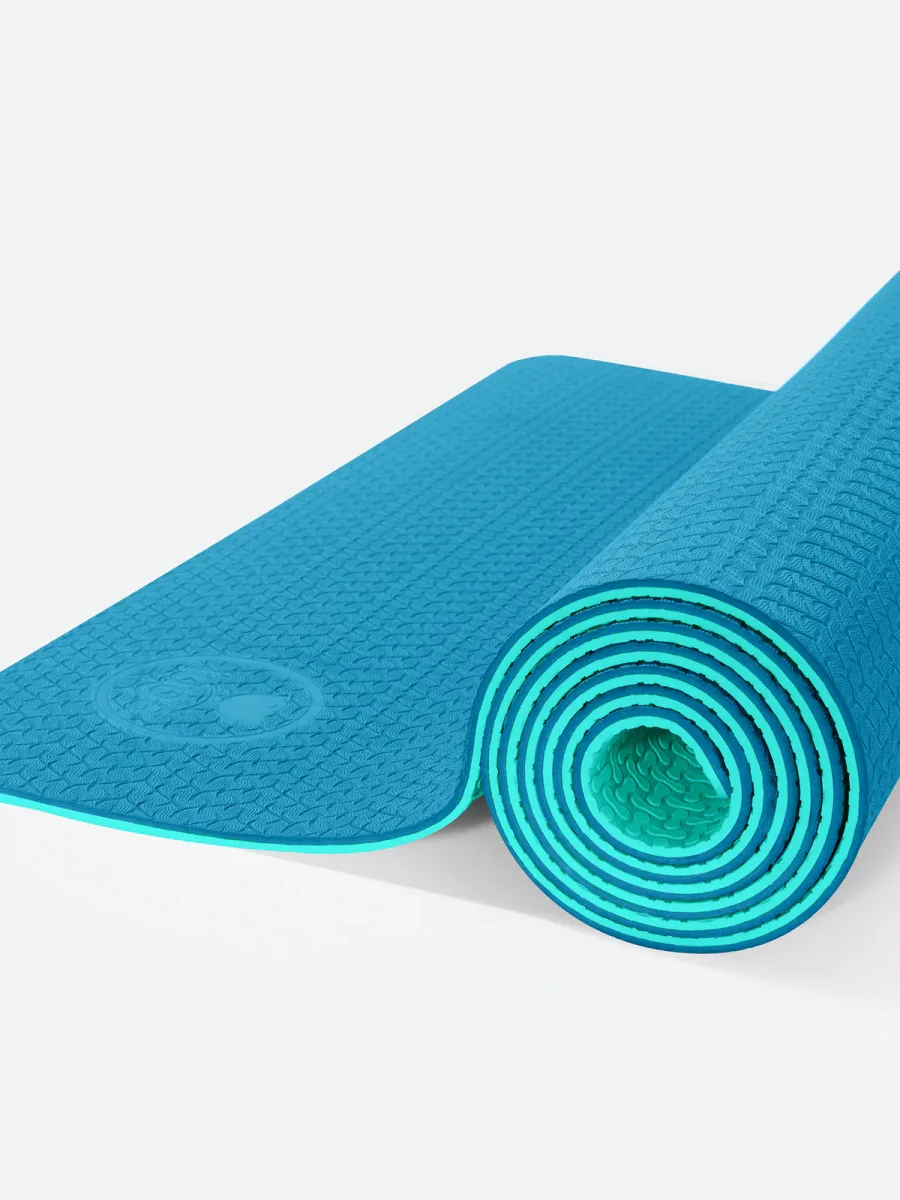
Grip: 8.0 dry / 7.0 wet | Grip drop: Only −1.0 | Position: Best budget consistency
The Iuga stands out in the data for one reason: a wet grip drop of only 1.0 — matching the Manduka GRP Adapt 2.0 for tightest performance consistency in the tested field. This is unusual for a mat in its price range. The 8.0 dry grip places it below the top tier, but the 7.0 wet grip puts it above most mid-range options and every budget mat tested.
Who it suits: Budget-conscious practitioners who practice in heated environments and need wet grip consistency without paying premium prices.
Yokohama Unity Cork Pro
Grip: 7.5 dry / 6.0 wet | Construction: Cork top / natural rubber base
Cork mats occupy a specific niche: naturally antimicrobial, odor-resistant, genuinely renewable material, but moderate grip performance in wet conditions (6.0). The Yokohama Unity Cork Pro is suitable for gentle flow, restorative yoga, and light studio practice. For hot yoga or power flow with heavy sweating, the 6.0 wet score is not adequate.
Suga Recycled Wetsuit Yoga Mat
Grip: Not separately scored in OutdoorGearLab dataset | Thickness: 5mm | Dimensions: 72×25 in | Weight: 5 lbs | Material: 100% recycled neoprene
The Suga mat represents an entirely different materials category: 100% recycled neoprene sourced from surf wetsuits diverted from landfill. The sustainability credentials are specific and verifiable — not a vague "eco" claim. Yoga Journal designates it best upcycled yoga mat for 2026. Testers specifically preferred the 5mm version over the 6mm, noting better balance between cushion and responsiveness.
Who it suits: Buyers for whom material provenance is the primary purchase criterion and who want a thick, cushioned mat for general practice.
Gaiam Performance Dry-Grip
Grip: 6.5 dry / 3.5 wet | Warning: Worst wet performance in 18-mat dataset
This mat's naming and marketing directly imply moisture resistance. The 3.5 wet grip score — the lowest in OutdoorGearLab's entire tested field — makes it a dangerous choice for any heated or sweaty practice. It is not recommended for hot yoga, power yoga, or any session involving significant perspiration. The Gaiam Performance Dry-Grip illustrates exactly why wet grip testing matters: marketing language does not substitute for measured performance.
Lululemon The Mat 5mm
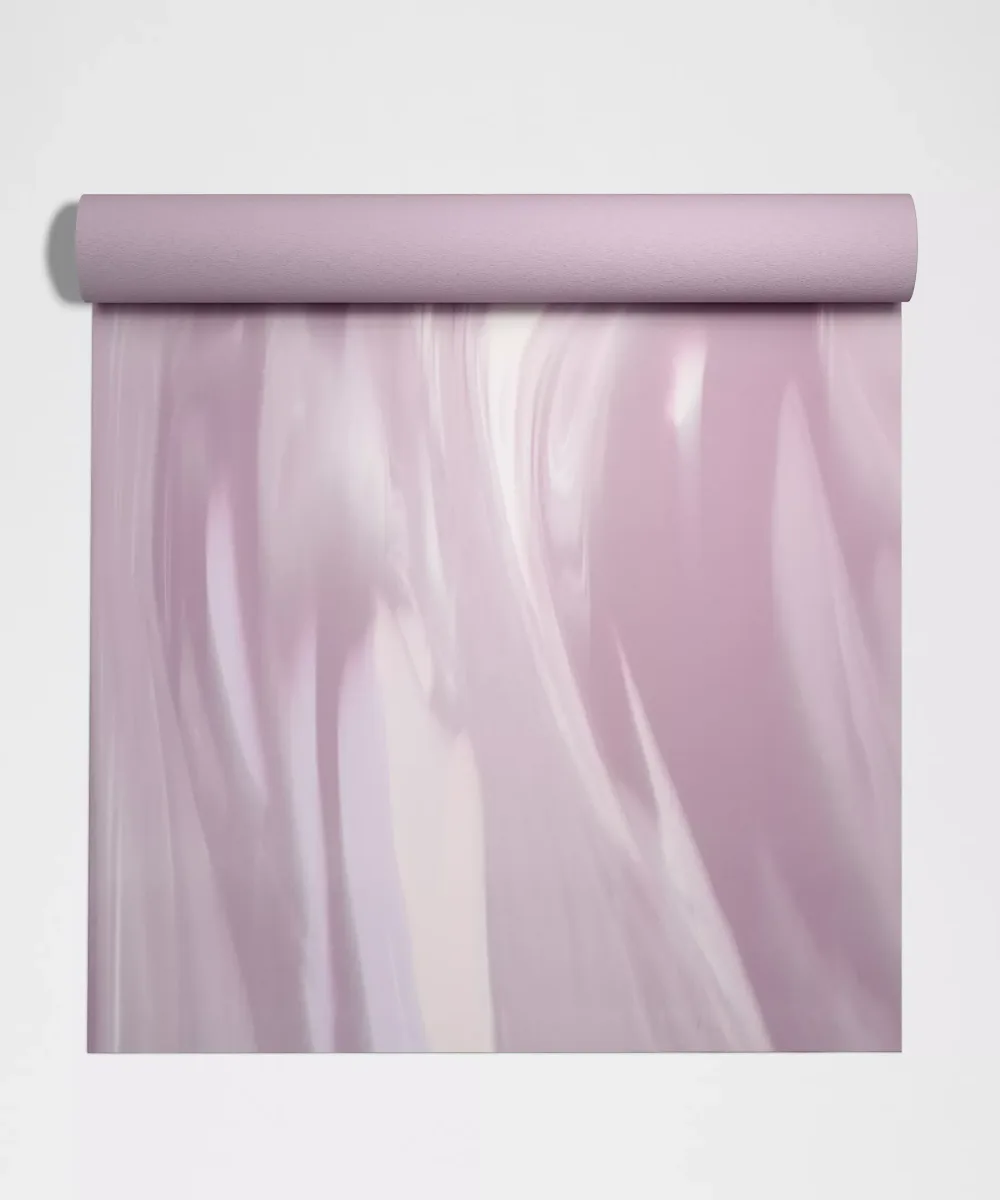
Grip: 6.5 dry / 4.5 wet | Thickness: 5mm | Dimensions: 71×26 in | Weight: 5.24 lbs | Materials score: 4.0/10
Lululemon The Mat occupies a complicated position: premium pricing, mediocre grip scores, and the second-lowest materials score in the tested dataset. Its five-material construction (natural rubber, synthetic rubber, polyurethane, nylon, polyester) is engineered for durability and cushion feel but creates significant end-of-life disposal complexity — materials that cannot be separated cannot be recycled cleanly.
Yoga teacher Jerilyn Frisbie notes it is "great when new" but requires more frequent replacement than natural rubber alternatives, and the 4.5 wet grip confirms it is not a reliable choice for sweaty practices.
Who it suits: Lululemon brand loyalists buying for occasional, light-sweat practice. For anyone who practices hot yoga, sweats heavily, or cares about environmental impact, the data does not support the price premium.
Alo Yoga Warrior Mat
Grip: 7.0 dry / 4.5 wet | Warning: Significant wet grip collapse
Similar positioning to The Mat: premium brand, above-average price, below-average wet performance. The 2.5-point drop from dry to wet is substantial, and the 4.5 wet score places it in the same unreliable territory as the Gaiam budget options for heated practice.
Eco Materials Decoded: What Natural Rubber, Cork, TPE, and PVC Actually Mean
The word "eco-friendly" appears on a wide range of yoga mat packaging. What's behind the label varies enormously.
Natural rubber
Tapped from rubber tree bark without felling the tree. Biodegradable, high-performance, long-lasting. The most sustainable high-performance mat material currently available. The JadeYoga Harmony Mat and Jade Harmony 2.0 both use natural rubber; both score well on materials in OutdoorGearLab's testing.
One caveat: natural rubber is derived from the Hevea brasiliensis tree, and latex allergies — while uncommon — are a genuine contraindication. Anyone with known latex sensitivity should confirm material composition before purchasing.
Cork
Harvested from cork oak bark without felling the tree — the bark regenerates over 9–12 years, making cork one of the most renewable materials in commercial use. Naturally resists bacteria and odor. Limitation: moderate wet grip (6.0 in OutdoorGearLab testing), better suited to dry or light-moisture practice than to hot yoga.
TPE (Thermoplastic Elastomer)
A synthetic blend. Recyclable in some facilities, not biodegradable. Falls between PVC (lowest sustainability) and natural rubber (highest) on the environmental spectrum. A reasonable middle-ground choice for buyers who want to avoid PVC without paying natural rubber prices.
PVC (Polyvinyl Chloride)
Durable, inexpensive, and the dominant material in budget mats. Also the material with the most documented environmental concerns in both manufacturing and end-of-life disposal. JeriLyn Frisbie Yoga explicitly flags these concerns, recommending independent research into PVC impact. Gaiam Premium mats use PVC and score 5.0–6.0 in OutdoorGearLab's 20%-weighted materials category — among the lowest in the dataset.
Recycled / upcycled materials
The Suga Recycled Wetsuit Mat is the only mat in the tested field built from diverted waste material. 100% recycled neoprene from surf wetsuits is its material composition — specific, verifiable, and not a marketing abstraction. This category is emerging; more brands are exploring similar approaches, but Suga is the only tested option with verifiable upcycled content in the 2026 dataset.
Materials Scores: Which Mats Earn Eco Credentials
OutdoorGearLab weights materials at 20% of total score. Here is how the tested mats rank on that dimension specifically:
| Mat | Materials Score | Primary material |
|---|---|---|
| Prana Verde | 10.0 | Natural rubber |
| Manduka eKO | 8.0 | Natural rubber |
| Jade Harmony 2.0 | 8.0 | Natural rubber |
| JadeYoga Harmony Mat | 8.0 | Natural rubber |
| Liforme Original | 7.5 | Natural rubber + eco-PU |
| Jade Voyager | 7.5 | Natural rubber |
| 42 Birds Cork Lightweight | 7.5 | Cork / natural rubber |
| Yokohama Unity Cork Pro | 7.0 | Cork / natural rubber |
| Iuga Eco Friendly | 7.0 | TPE blend |
| Manduka GRP Adapt 2.0 | 6.5 | Natural rubber + PU |
| Manduka eKO SuperLite | 6.5 | Natural rubber |
| Yoga Design Lab Combo | 6.0 | Recycled microfiber top / rubber |
| Gaiam Premium Reversible | 6.0 | PVC |
| Gaiam Premium 6mm | 5.5 | PVC |
| YogaAccessories | 5.5 | PVC |
| Gaiam Performance Dry-Grip | 5.0 | PVC |
| Lululemon The Mat | 4.0 | Multi-material blend |
| Alo Yoga Warrior Mat | 4.0 | Synthetic polyurethane |
Source: OutdoorGearLab materials scoring, 20% weight in overall score
The pattern is clear: natural rubber and cork mats cluster at the top; PVC options cluster at the bottom; Lululemon's complex five-material construction and Alo's synthetic polyurethane score lowest alongside budget PVC mats. Research and Markets identifies JadeYoga, Liforme, Suga International, and Ecoyoga as the primary sustainability-focused manufacturers in this segment.
Best Mat by Practice Type
Hot yoga, Bikram, or heavy sweating
Primary criterion: wet grip score
The Manduka GRP Adapt 2.0 leads the tested field at 8.5 wet. The Prana Verde follows at 8.0. Both are the only mats in the dataset to maintain wet grip above 8.0 — every other mat drops to 7.0 or below.
Avoid: Gaiam Performance Dry-Grip (3.5 wet), Alo Yoga Warrior Mat (4.5 wet), Lululemon The Mat (4.5 wet), Gaiam Premium 6mm (4.0 wet), Manduka eKO SuperLite (5.0 wet).
If budget is a constraint in this category, the Iuga Eco Friendly Non Slip delivers 7.0 wet grip — same as the Manduka PRO and Liforme — at significantly lower cost.
General studio practice (dry to moderate sweat)
Primary criterion: balanced dry/wet performance + durability
The JadeYoga Harmony Mat is Wirecutter's top pick after long-term testing and the right default recommendation for most practitioners. At 4.75mm, natural rubber, 9.5 dry / 7.0 wet, it covers the majority of practice styles without the weight of a 6mm mat or the grip compromise of budget PVC.
The Manduka eKO is the alternative for anyone prioritizing maximum dry-condition grip and practicing in non-heated environments (10 dry / 7 wet, 8.0 materials score).
Eco-conscious buyers
Primary criterion: materials score + grip performance
The Prana Verde is the only mat in the tested field that earns a perfect score on both dry grip (10) and materials (10). The Jade Harmony 2.0 combines strong grip (9.5 dry / 7.0 wet) with natural rubber construction and JadeYoga's verified tree-planting program. For buyers who want upcycled materials specifically, the Suga Recycled Wetsuit Mat is the only option in the tested field built entirely from diverted waste material.
Joint-sensitive practitioners and restorative yoga
Primary criterion: thickness (6mm) + grip
The Manduka PRO is the answer here — 6mm, 9.0 dry grip, lifetime guarantee. The grip score at this thickness is notably high compared to other thick mats, meaning joint protection does not come at a serious traction cost. The caveat is weight (3.4kg) and PVC construction. For home practitioners, the weight is irrelevant. For eco-conscious buyers, the Hugger Mugger Para Rubber XL at 6.2mm offers natural rubber construction at comparable thickness.
Travel and occasional practice
Primary criterion: weight and packability
The Manduka eKO SuperLite (1.5mm, ~2 lbs, folds flat) is the only tested mat designed specifically around portability. Grip scores drop significantly at this thickness (7.5 dry / 5.0 wet), so it suits travel practice rather than regular heated sessions. The 42 Birds Cork Lightweight Mat (3.5mm, ~2.8 lbs) is the next step up — slightly better grip, still light enough for travel bags, with cork's natural antimicrobial properties (useful when using hotel or studio floors).
Beginners buying their first mat
Primary criterion: value, balanced performance, and ease of care
The JadeYoga Harmony Mat is the right recommendation even for beginners — its performance holds up over years of use, which means you are not replacing it in 18 months. If budget is genuinely tight, the Iuga Eco Friendly Non Slip offers 8.0 dry / 7.0 wet at a significantly lower price point and is the best value option in the tested field with consistent wet grip.
Avoid for beginners: The Primasole Foldable (3.0/3.0 grip scores) and Yoga Design Lab Combo (4.0/4.0) are unsuitable for any practice beyond occasional light stretching and should not be purchased as a "starter" mat.
How to Choose: 5 Questions Before You Buy
1. How much do you sweat, and does your studio use heat?
This is the primary filter. Hot yoga, Bikram, or power yoga in a heated studio → wet grip is non-negotiable. Target 7.5+ wet. For room-temperature practice with light perspiration, 6.0+ is adequate. For restorative or light stretching, the wet grip score is not a critical decision factor.
2. Do you carry your mat, or does it stay at home?
If you commute to a studio, weight matters as much as performance. A 3.4kg mat (Manduka PRO) carried 20 minutes each way adds up. The sweet spot for commuters is 4–5mm thickness at 4–5 lbs — the JadeYoga Harmony (4.5 lbs) and Liforme (5.5 lbs) both fit this profile. If the mat lives at home permanently, weight is irrelevant and you can prioritize cushioning.
3. Do you have joint sensitivity — specifically knees or wrists?
If yes, prioritize thickness (5mm+) and grip simultaneously. The Manduka PRO at 6mm achieves 9.0 dry grip while maximizing cushioning. For a lighter alternative with 4.2mm thickness, the Liforme provides adequate wrist and knee protection for most practitioners who are not managing acute injury.
4. How much does environmental impact matter to you?
If materials sustainability is a primary criterion, eliminate PVC mats entirely. The Gaiam range, Lululemon The Mat, and Alo Yoga Warrior Mat all score 4.0–6.0 on materials. Choose from the natural rubber cluster (JadeYoga, Prana Verde, Manduka eKO, Liforme) or cork options (Yokohama, 42 Birds). If you want verifiable upcycled content, the Suga mat is currently the only option in the tested field.
5. What is your realistic budget for a mat you will use for 3+ years?
Budget mats (Gaiam Premium range, YogaAccessories, Primasole) cluster at 3.0–6.0 on both grip dimensions and 5.0–6.0 on materials. They are adequate for occasional, light-sweat practice and genuinely not adequate for anything more demanding. If you practice 3+ times per week, investing in a mid-to-premium mat ($80–$150) is more cost-effective over 3 years than replacing a $30 mat annually.
Cleaning, Care, and Longevity: What Happens After Month Six
OutdoorGearLab weights care and cleaning at 15% of its total score — a signal that post-purchase maintenance is a meaningful performance factor, not an afterthought.
Why cleaning matters for grip: Body oil, cleaning product residue, and environmental dust accumulate on mat surfaces. On polyurethane tops (Liforme, Manduka GRP), residue buildup reduces the micro-texture that creates friction. On natural rubber (JadeYoga, Manduka eKO), oil saturation can cause the surface to feel slick. A mat that is difficult to clean performs measurably worse at month six than it did on day one.
Material-specific cleaning notes:
- Natural rubber (JadeYoga, Manduka eKO, Prana Verde): Wipe with a damp cloth after practice. Mild soap solution (diluted dish soap or specific yoga mat cleaner) for deeper cleaning. Do not submerge in water — the open-cell structure absorbs liquid and can degrade the rubber. Air dry completely before rolling.
- Polyurethane top (Liforme, Manduka GRP Adapt): These surfaces are more tolerant of moisture by design. Wipe with a slightly damp cloth. Most brands recommend mat-specific cleaners rather than general household sprays — alcohol-based cleaners can break down the polyurethane layer over time. The Liforme specifically recommends its branded cleaner.
- PVC mats (Manduka PRO, Gaiam range): The closed-cell surface is the most forgiving to clean — moisture does not penetrate. A damp cloth with mild soap is sufficient. PVC mats can be rinsed in a bathtub without damage, unlike open-cell rubber mats.
- Cork mats (Yokohama, 42 Birds): Cork is naturally antimicrobial — bacteria do not colonize it the way they do synthetic surfaces. Light wiping after practice is usually sufficient. Deep clean with a damp cloth and diluted white vinegar if needed. Avoid harsh soaps that can strip cork's natural oils.
Signs your mat needs replacing:
- Flaking or peeling on the top surface
- Persistent slickness even after cleaning (surface saturation or breakdown)
- Thinning or compressed areas under high-contact zones (hands, feet, knees)
- Persistent odor that cleaning does not resolve
The Manduka PRO's lifetime guarantee is the most meaningful warranty in the tested field — if material failure causes these issues, Manduka replaces it. Natural rubber mats typically last 3–5 years under regular use. Budget PVC mats often show performance degradation within 12–18 months of daily practice.
FAQ
What is the best yoga mat for hot yoga in 2026?
The Manduka GRP Adapt 2.0 posts the highest wet grip score in the 18-mat OutdoorGearLab dataset at 8.5/10 — the clearest hot yoga choice. The Liforme Original is Yoga Journal's designated best hot yoga mat, with its polyurethane surface activating (rather than degrading) with moisture. Both are significantly better wet-condition performers than any Gaiam product, Lululemon The Mat, or Alo Yoga Warrior Mat.
Does a thicker yoga mat mean better grip?
No — and in some cases the opposite is true. Thick mats compress slightly under pressure, reducing the ground feedback your feet and ankles use for balance. A 6mm mat can make standing balance poses harder than a 4mm mat. Grip is determined by surface material, not thickness. The Manduka PRO at 6mm maintains strong dry grip (9.0) because its PVC surface provides traction regardless of cushioning depth, but the grip performance comes from the material, not the thickness.
Is the Lululemon yoga mat worth it?
Based on the tested data, no — not for the price. Lululemon The Mat scores 6.5 dry and 4.5 wet, placing it below mid-range alternatives at comparable or lower prices. Its materials score of 4.0 is the second-lowest in the 18-mat dataset. Yoga teacher Jerilyn Frisbie notes it performs well when new but requires more frequent replacement than natural rubber alternatives. For the price Lululemon charges, the JadeYoga Harmony Mat or Liforme Original both outperform it on grip, materials, and longevity.
What does "eco-friendly" actually mean on a yoga mat label?
It depends entirely on the specific claim. Natural rubber is biodegradable and tapped without killing the tree — genuinely sustainable. Cork is similarly renewable. "Eco" on a PVC mat often refers only to the absence of specific chemicals (latex-free, PVC-free, phthalate-free) rather than any positive environmental characteristic. The Suga Recycled Wetsuit Mat's "upcycled" claim is the most verifiable in the tested field: 100% recycled neoprene from surf wetsuits is a specific, auditable material sourcing claim, not marketing language. When evaluating eco claims, look for the specific material, not the adjective.
How often should I replace my yoga mat?
For natural rubber mats used 3–4 times per week: 3–5 years. For PVC budget mats at the same frequency: 12–24 months. The signs to watch: persistent slickness after cleaning, surface flaking or peeling, thinning in high-contact zones. The Manduka PRO has a lifetime guarantee against material defects. JadeYoga mats are generally regarded as more durable than the average rubber mat.
Can I use a yoga mat towel instead of buying a better mat?
Yes — a yoga towel placed over a lower-grip mat effectively solves the wet-surface problem by adding an absorbent layer. This is a common workaround in hot yoga classes where participants use studio mats. The limitation is added cost and setup, and the towel-mat combination can shift during practice if not anchored. For practitioners who already own a mat with mediocre wet grip, a yoga towel is a practical fix. For practitioners buying new, choosing a high wet-grip mat (Manduka GRP Adapt 2.0, Prana Verde, Liforme) eliminates the need.
What is the lightest yoga mat for travel?
The Manduka eKO SuperLite at approximately 2 lbs and 1.5mm is the lightest and most packable mat in the tested dataset. It folds rather than just rolling, making it genuinely bag-compatible. Grip scores drop significantly (7.5 dry / 5.0 wet), so it is not suitable for hot yoga or serious daily practice — it is designed specifically as a travel supplement.
Are cork yoga mats good?
Cork mats (Yokohama Unity Cork Pro, 42 Birds Cork Lightweight) are a genuine eco choice with naturally antimicrobial surfaces, but they score moderately on grip under wet conditions (6.0 in OutdoorGearLab testing). They are well-suited to dry or light-sweat practice, restorative yoga, and practitioners prioritizing sustainability over maximum grip performance. For hot yoga or heavy-sweat sessions, natural rubber or polyurethane-top mats outperform cork.
Final Verdict
The yoga mat market in 2026 has a data problem: most marketing optimizes around dry performance and ignores the wet-condition collapse that affects a significant fraction of practitioners. The gap between a mat's dry and wet grip score is more predictive of real-world satisfaction than any single specification on the product page.
The clear framework:
For hot yoga or heavy sweat → Manduka GRP Adapt 2.0 (8.5 wet, tightest grip drop in tested field) or Liforme Original (Yoga Journal's hot yoga pick, activates with moisture).
For general practice and long-term value → JadeYoga Harmony Mat (Wirecutter top pick, 4.75mm natural rubber, tree-planting program, 9.5 dry / 7.0 wet).
For the best eco credentials with no grip compromise → Prana Verde (perfect 10 on both dry grip and materials, 8.0 wet).
For maximum cushioning at home → Manduka PRO (6mm, 9.0 dry grip, lifetime guarantee — best for joint sensitivity).
For travel → Manduka eKO SuperLite (1.5mm, ~2 lbs, folds flat).
For value with strong wet consistency → Iuga Eco Friendly Non Slip (8.0 dry / 7.0 wet, −1.0 grip drop — same wet score as mats costing 3× more).
The one universal recommendation: check the wet grip score before any purchase. If a mat does not publish that data, treat it as a signal the number is not favorable.
We may earn a commission when you use our links to make a purchase, at no additional cost to you. Our editorial recommendations are finalized before any affiliate link is applied. Read our affiliate disclosure →