This guide is based on manufacturer specifications, independent testing data from Wirecutter and Treeline Review, and verified owner feedback aggregated from multiple sources. It does not reflect hands-on testing by Trusted Buyer Report. Drafted with AI assistance and fact-checked by our editorial team before publishing. We may earn a commission when you use our links.
Your dog slipped under the fence three minutes ago. You open the tracker app — and it shows a location that's six minutes old. That gap, six minutes at full sprint, is the difference between a ten-minute search and a two-hour neighborhood canvass. If you've ever stood in your backyard staring at a spinning loading icon, you already know why choosing the right GPS tracker matters far more than most buying guides let on.
The short version: For most US dog owners, the Fi Series 3+ wins on battery life and durability. Tractive GPS is the better choice if you travel internationally. For health monitoring — especially senior cats — SiiPet LitterLens addresses a need that no pure GPS tracker even attempts. And if you're in a rural area with poor cell coverage, the Dogtra Pathfinder 2 is the only product that works without a cellular network at all.
The rest of this guide explains why — including the technology trade-offs most product pages never disclose.
What to Know Before You Buy: GPS, Bluetooth, and Cellular Aren't the Same Thing
Marketing copy uses "GPS" as a catch-all term, but the technology inside these devices varies significantly — and those differences determine exactly when and where a tracker will fail you.
GPS chips determine location. Cellular networks send it to your phone. Most consumer pet trackers pair a GPS chip with an LTE cellular modem that transmits your pet's coordinates to a cloud server, which your app then displays. Remove the cellular signal — rural road, dead zone, remote trail — and the tracker knows where your pet is. You don't.
Bluetooth trackers like Apple AirTag work on an entirely different model. They don't use cellular at all. Instead, they rely on a crowd-sourced network of nearby devices (in AirTag's case, other iPhones) to anonymously relay the tag's location. In a dense urban area, this works surprisingly well. In a rural field or forest, it can fail completely. AirTag is a practical option for urban indoor-outdoor cats — but it has a hard ceiling.
The most complete off-grid solution is radio-frequency GPS. The Dogtra Pathfinder 2 uses GPS to determine location and transmits it directly to a handheld receiver over radio frequency — no smartphone, no cellular, no subscription. It updates every two seconds across a nine-mile range. If your dog works in terrain where cell coverage is patchy or nonexistent, this is the only category that reliably works. Wirecutter's GPS pet tracker testing evaluated more than 30 field outings across two cities with different cellular infrastructure — the kind of multi-condition testing that catches the gaps single-location reviews miss.
Understanding which technology your chosen tracker uses is the single most important decision you'll make before spending $100 or more on hardware, plus a multi-year subscription.
Quick Comparison: Top Pet GPS Trackers & Smart Collars (2026)
| Device | Primary Use | Tracking Tech | Battery Life | Waterproofing | Subscription | Best For |
|---|---|---|---|---|---|---|
| Fi Series 3+ | GPS location | GPS + LTE | Up to 25 days (real-world) | IP68 + IP66k | Required | Active dogs, escape artists, US-based owners |
| Tractive GPS | GPS location | GPS + LTE | Up to 3 months (standard mode) | IPX7+ | Required | International travel, long battery priority |
| Whistle Go Explore | GPS + activity | GPS + LTE | Moderate | Yes | Required | Small breeds, fitness-focused owners |
| PetPace 3.0 | Clinical health monitoring | Biosensors | Varies | Yes | Required | Dogs with chronic conditions, breeders |
| FitBark 2 | Activity + sleep tracking | Accelerometer | Long | Yes | Not required | Vet data sharing, long-term health trends |
| SiiPet LitterLens | AI health monitoring | AI + camera | N/A (home unit) | N/A | Required | Senior cats, early kidney risk detection |
| Apple AirTag | Crowd-sourced location | Bluetooth + UWB | ~1 year (replaceable) | IP67 | Not required | Urban indoor-outdoor cats, close-range |
| Dogtra Pathfinder 2 | GPS + training | GPS + radio frequency | Long | Yes | Not required | Rural dogs, off-grid tracking |
Three distinct product philosophies emerge from this table. Pure GPS trackers prioritize finding a lost pet. Health-first smart collars monitor physiology and behavior. Hybrid devices attempt both — with the trade-offs that implies. Knowing which problem you're actually trying to solve is what narrows this list from eight options to one.
If you're evaluating these alongside other pet care purchases, our complete pet products review for 2026 covers nutrition, cameras, and wearables across species in a single guide.
Fi Series 3+ vs. Tractive GPS: The Two Most-Recommended Trackers, Side by Side
These two devices appear in every credible 2026 roundup for good reason. They're also meaningfully different in ways that matter depending on where you live and how your dog behaves.
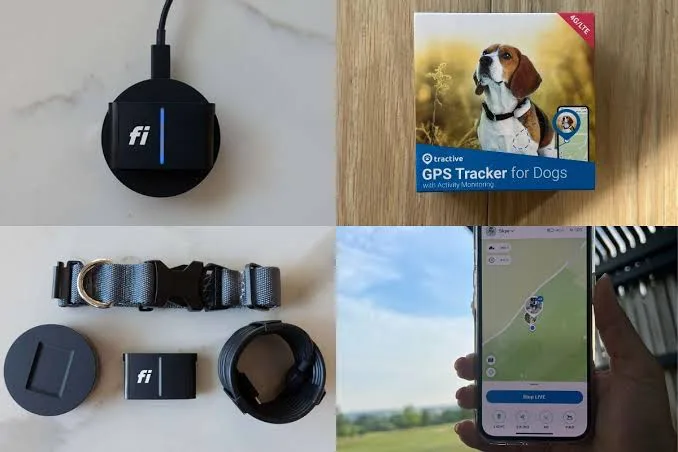
Battery life: Fi outperforms its own specs
Treeline Review's field testing found the Fi Series 3+ lasting 25 days in real-world use despite a manufacturer specification of up to 14 days. In practice, you're charging this device roughly twice a month — not weekly. That's a meaningful difference for owners who forget to charge or travel with their dogs.
Tractive's stated battery life runs up to three months in standard tracking mode — but that figure changes substantially in LIVE mode (updates every 2–3 seconds), which is the mode most owners actually use when their pet is missing. Standard mode battery life is impressive; live-mode battery life is not the headline number.
Durability: Fi wins on hardware ratings
The Fi Series 3+ carries both IP68 and IP66k waterproof ratings — the latter covers high-pressure water jets, which matters for dogs that swim in rivers or get hosed down after muddy walks. Pull resistance is rated at over 400 lbs, documented by Jakoba German Shepherds, who tested a Fi collar on a Livestock Guardian Dog with free roam of a 20-acre property.
Geographic coverage: Tractive wins for travel
Tractive operates in over 175 countries, making it the clear choice for owners who relocate internationally or travel abroad with their pets. Fi's network is US-focused and built primarily on AT&T, while the Fi Mini runs on Verizon — a distinction that matters if one carrier significantly outperforms the other in your area.
One practical difference worth knowing
Treeline Review notes that Fi differentiates between walks and drives by cross-referencing the owner's phone location data. Tractive does not. On Tractive's historical map, your dog appears to have "walked" everywhere you've driven with them. It's not a safety issue — but it makes activity history harder to interpret meaningfully.
Fi's behavioral insights (the app's attempts to flag unusual activity patterns) are described as "genuinely interesting but difficult to verify" in independent testing, partly because the app doesn't account for weather. A rainy day that keeps your dog indoors looks identical to a genuine behavioral change. Don't treat app alerts as diagnostic signals without corroborating information.
When GPS Isn't Enough: The Rise of AI Health Monitoring in Smart Collars
The pet tracker market is quietly splitting into two product philosophies. GPS-first devices answer: "Where is my pet?" Health-first devices answer: "Is my pet well?" These aren't competing answers to the same question. They're answers to entirely different concerns.

SiiPet LitterLens sits at the health-monitoring extreme. It uses AI-driven analysis of litter box behavior — including automated waste photography and analysis — to monitor urinary and digestive health across multiple cats. Its target use case is specific: cats with early kidney risk and senior pets where subtle behavioral changes can indicate serious disease before clinical symptoms appear. According to SiiPet's 2026 product comparison data, AI integration in pet health tracking is growing at 45% annually, driven by owners shifting spend from reactive treatment toward proactive prevention.
This is not a GPS tracker. It doesn't tell you where your cat is. It tells you whether your cat's kidneys are under stress. For owners of senior cats, that distinction is the whole point.
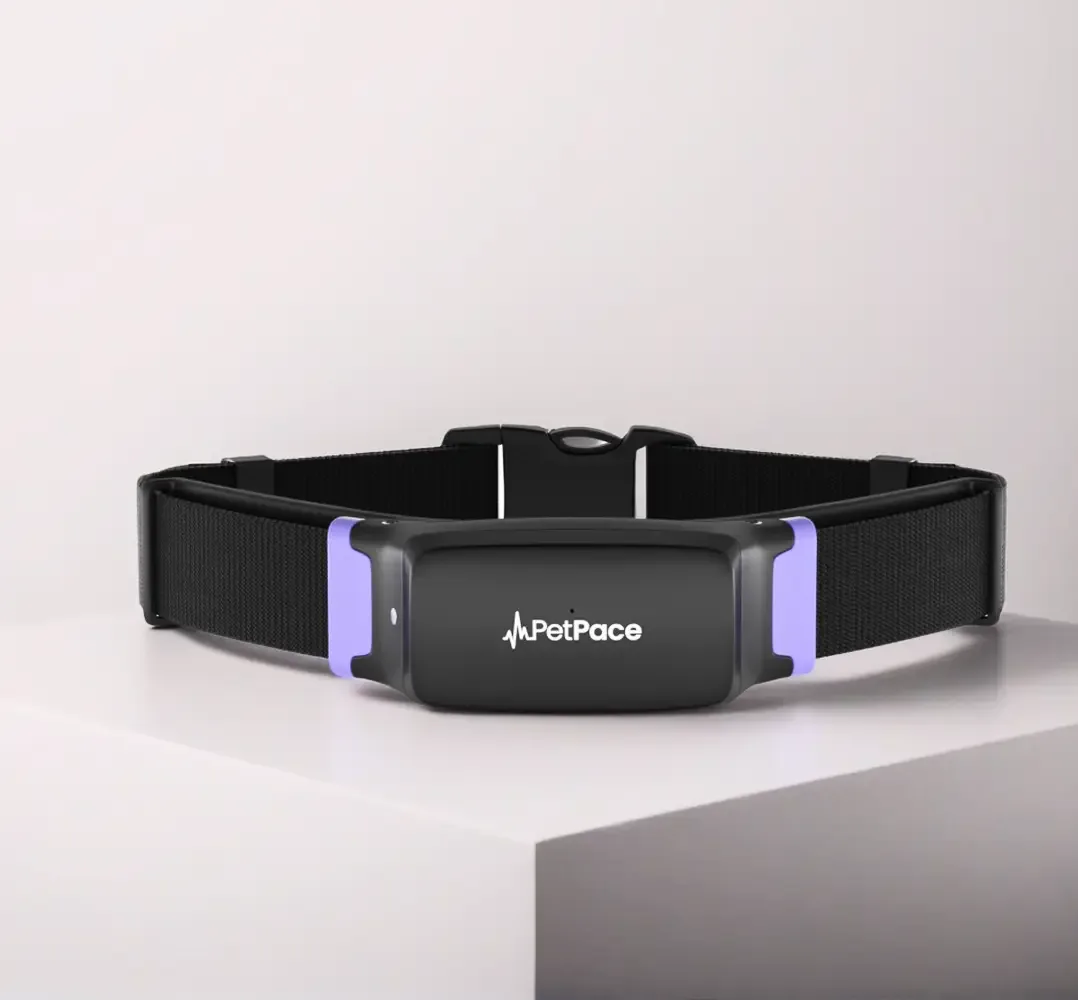
PetPace 3.0 occupies a different niche: clinical-grade biometric monitoring for dogs. It tracks heart rate and body temperature and uses proprietary algorithms to detect pain indicators — data most useful for dogs with chronic conditions, post-surgical recovery, or breeders monitoring breeding stock. Its narrower application makes it less versatile than Fi or Tractive, but for the right owner, it provides data that no consumer GPS tracker attempts to collect.
FitBark 2 takes a lower-intensity approach — activity levels, sleep quality, and health trends over time — with no subscription required. SpaceHawk GPS recommends pairing FitBark 2 with a standalone GPS tracker like Tractive rather than using it alone: FitBark handles the health data layer, Tractive handles location. FitBark is also widely used in veterinary research, making it a credible choice if you want to share objective activity data with your vet or trainer. If you're also exploring online training tools to complement behavioral data, our best pet training tools and online courses guide covers that side of the picture.
Cat-Specific GPS Trackers: Why Your Dog's Collar Won't Work for Your Cat
Cat owners are underserved by most GPS tracker guides, which are written primarily with dogs in mind. The physical and behavioral differences between cats and dogs create genuinely different requirements — and most guides don't acknowledge them.
Weight is the first constraint. Veterinary guidelines generally recommend that nothing worn around a cat's neck exceed 10% of body weight. For a 9-pound domestic shorthair, that ceiling is low. Most consumer GPS trackers designed for dogs exceed this threshold outright.
Cats roam differently. A dog on a 20-acre property follows predictable paths. A cat in an urban neighborhood might be in your garden, three houses over, or inside a neighbor's garage — and the transitions happen quickly and unpredictably. Real-time update frequency matters more for cats than geofencing, because a geofence alert that fires after your cat has already traveled two blocks is less useful than one that fires within seconds.
Wirecutter's testing explicitly notes that the same device can perform differently depending on which species version you're using. Don't assume dog-version test results apply to the cat version of the same product.
For outdoor cats with wide roaming ranges, consumer GPS collars often fall short in rural or low-density areas. Apple AirTag in a compatible collar holder remains a practical low-cost option for urban indoor-outdoor cats — zero subscription, year-long battery, reasonable coverage in high-iPhone-density areas. Understand its ceiling: once your cat wanders into a low-density neighborhood, the crowd-sourced network goes quiet.
For multi-cat households focused on health, SiiPet LitterLens is purpose-built for the species. It monitors litter box behavior — a reliable early indicator of urinary tract and kidney disease — without any GPS component. Pair it with an AirTag if you also need basic location tracking.
If you're building out a full monitoring setup, a pet camera for remote monitoring can fill the indoor visibility gap that GPS and litter trackers both leave.
Subscription Fees vs. One-Time Cost: What a Pet GPS Tracker Actually Costs Over Two Years
The sticker price is rarely the real cost. For most cellular-based devices, the subscription fee paid over two or three years exceeds the hardware price — sometimes by a significant margin.
How the pricing structure works: Real-time GPS trackers that use LTE (Fi, Tractive, Whistle) require an active cellular subscription to function. The GPS chip determines location, but the cellular modem is what sends that location to your phone. Without a subscription, the device is effectively offline. This isn't a marketing decision — someone has to pay for the cellular data.
According to DataIntelo's Pet GPS Tracker Market Report, integrated smart collars in the premium tier typically range from $100–$200 for the hardware. Add subscription costs over 24 months and the total cost of ownership for a premium GPS collar can easily reach $300–$500 or more. Verify current subscription pricing directly with manufacturers before purchasing — promotional first-year rates often revert in year two.
Subscription-free GPS options exist, but they involve real trade-offs:
- Dogtra Pathfinder 2 uses radio-frequency transmission to a dedicated handheld receiver. No cellular network, no subscription, 9-mile range. The trade-off: you need to carry the handheld receiver, and the system is built for active field use rather than passive background monitoring from your phone. Per independent analysis, Dogtra fills the gap between budget trackers and premium Garmin systems at roughly one-third the price of a Garmin Alpha setup.
- FitBark 2 carries no subscription, but it's a health and activity tracker — it provides no GPS location.
- Apple AirTag has no subscription and provides crowd-sourced location, with all the limitations covered above.
One honest framing: If you're considering a smart collar primarily for health monitoring and see GPS as a secondary benefit, the subscription cost is easier to justify. If you want GPS location only and rarely use health features, you're paying for functionality you don't use. Match the device to your actual priority — not the marketing copy's priority.
You can order most of these devices through Chewy or Amazon. If you're deciding where to buy, our Chewy review for 2026 covers shipping reliability, return policy, and Autoship savings in detail. Pet subscription boxes like BarkBox also sometimes include tracker discounts — see our best pet subscription boxes guide if you're bundling purchases.
How to Choose: A Decision Framework by Pet Type and Owner Priority

Your dog is an escape artist or roams a large property
Choose Fi Series 3+ or Tractive GPS. Both are consistently top-ranked for location accuracy and connection speed in independent testing. Choose Fi if you're primarily in the US and want the most durable hardware. Choose Tractive if you travel internationally or want the longest battery life in standard tracking mode.
You have a senior cat or a cat with kidney disease risk
Choose SiiPet LitterLens. It's not a GPS tracker — but it monitors the behavioral indicators that flag urinary and kidney issues before clinical symptoms appear. Pair it with an Apple AirTag in a compatible collar holder if you also want basic location tracking for an indoor-outdoor cat. Proper nutrition plays a role here too; our best cat food guide for 2026 covers wet vs. dry diets and kidney-supportive formulas with vet analysis.
Your dog has a chronic health condition
Choose PetPace 3.0 for biometric monitoring, paired with a GPS tracker if location is also a concern. Share PetPace data with your veterinarian — heart rate and temperature monitoring provides objective data that subjective owner observation misses. Diet matters alongside monitoring; see our vet-recommended dog food guide for brands that support dogs with ongoing health needs.
You live in a rural area with poor cellular coverage
Choose Dogtra Pathfinder 2. The radio-frequency system doesn't depend on cellular infrastructure, covers nine miles, and requires no subscription. The optional dedicated handheld receiver removes smartphone dependency entirely — the right setup for field dogs, hunting dogs, or any breed that regularly works beyond cell range.
You want health trend data without ongoing subscription costs
Choose FitBark 2, ideally paired with an Apple AirTag for basic location. FitBark tracks activity and sleep over time with no subscription, is compatible with vet-sharing features, and is light enough for most breeds. Understand it won't give you real-time GPS — that's the trade-off for zero ongoing cost.
You have an urban indoor-outdoor cat and a limited budget
Apple AirTag in a compatible holder. Zero subscription, year-long battery, IP67 water resistance, and reliable location tracking in high-density urban areas. Know its ceiling before you commit: rural areas, parks with low iPhone density, and any large building interior can create dead zones.
FAQ: What Pet GPS Tracker Buyers Actually Ask
Does a GPS tracker work without cell service? Most consumer GPS trackers (Fi, Tractive, Whistle) require cellular signal to send location data to your phone. The GPS chip still calculates location, but without cellular connectivity, that data doesn't reach you. The Dogtra Pathfinder 2 is the main exception — it transmits directly to a handheld receiver over radio frequency, with no cellular dependency.
Are pet GPS trackers waterproof? Most quality trackers carry IPX7 or IP68 ratings, meaning they can handle submersion in water. IP66k (on the Fi Series 3+) adds protection against high-pressure water jets. Check the specific rating for your device — "water-resistant" and "waterproof" mean different things.
Can I use one GPS tracker for both a dog and a cat? Technically yes in some cases, but it's not recommended. Most GPS trackers designed for dogs are too heavy for small cats. Cat-specific versions exist for some brands (Tractive has a cat version). Always verify weight against veterinary guidelines (10% of body weight maximum for collar-worn items).
What's the difference between a GPS tracker and a smart collar? A GPS tracker primarily answers "where is my pet?" A smart collar typically adds health monitoring: activity levels, sleep quality, heart rate, and in some cases behavioral analysis. Some devices combine both; others specialize in one.
Is a subscription required for all GPS trackers? No. GPS trackers that use cellular LTE networks (Fi, Tractive, Whistle) require ongoing subscriptions. Trackers that use radio-frequency transmission (Dogtra Pathfinder 2) do not. Activity monitors without GPS (FitBark 2) and Bluetooth crowd-sourced tags (Apple AirTag) also have no subscription requirement.
Reviewed by the Trusted Buyer Report editorial team. This guide is research-based — we synthesize manufacturer specifications, independent test data, and verified owner reviews, and cite our sources. We don't accept payment for rankings. How we review · Affiliate disclosure