How this guide was researched: This guide synthesizes expert testing data, verified buyer feedback, and sizing specifications from multiple independent travel publications — including Wirecutter, Good Housekeeping, Condé Nast Traveler, OutdoorGearLab, Forbes Vetted, and The Independent. It does not reflect hands-on testing by Trusted Buyer Report. All brand recommendations are based on cited third-party evaluation. This article was drafted with AI assistance and reviewed by our editorial team before publishing. We may earn a commission from purchases made through links on this page. Read our full disclosure.
TL;DR — Quick verdict:
- Trips under 5 days: A quality carry-on (21–22") eliminates fees and baggage claim delays.
- Trips 5–10 days: A medium checked bag (24–26") is the most versatile; clears the 62-linear-inch limit on all major carriers.
- Avoid the 27–29" large bag unless you pack very light — it frequently exceeds the 50-lb weight limit even when not full.
- Hard vs. soft: Polycarbonate hard shells for fragile-item protection; soft-sided for longer lifespan and exterior pocket access.
Most travelers start luggage shopping backwards — picking a bag based on what's on sale, then figuring out if it fits. The smarter move: match the bag to the trip before you pack. Wrong sizing costs you money at every check-in counter.
This guide is structured as a decision framework. It moves from the core trade-offs (carry-on vs. checked, hard vs. soft) through tested recommendations for each traveler profile — so you can skip straight to what applies to you.
If you're also planning the full logistics of your trip, our Complete Travel Buyer's Guide 2026 covers flights, hotels, and vacation planning in the same evidence-based depth.
The Hidden Cost of Choosing the Wrong Luggage Size
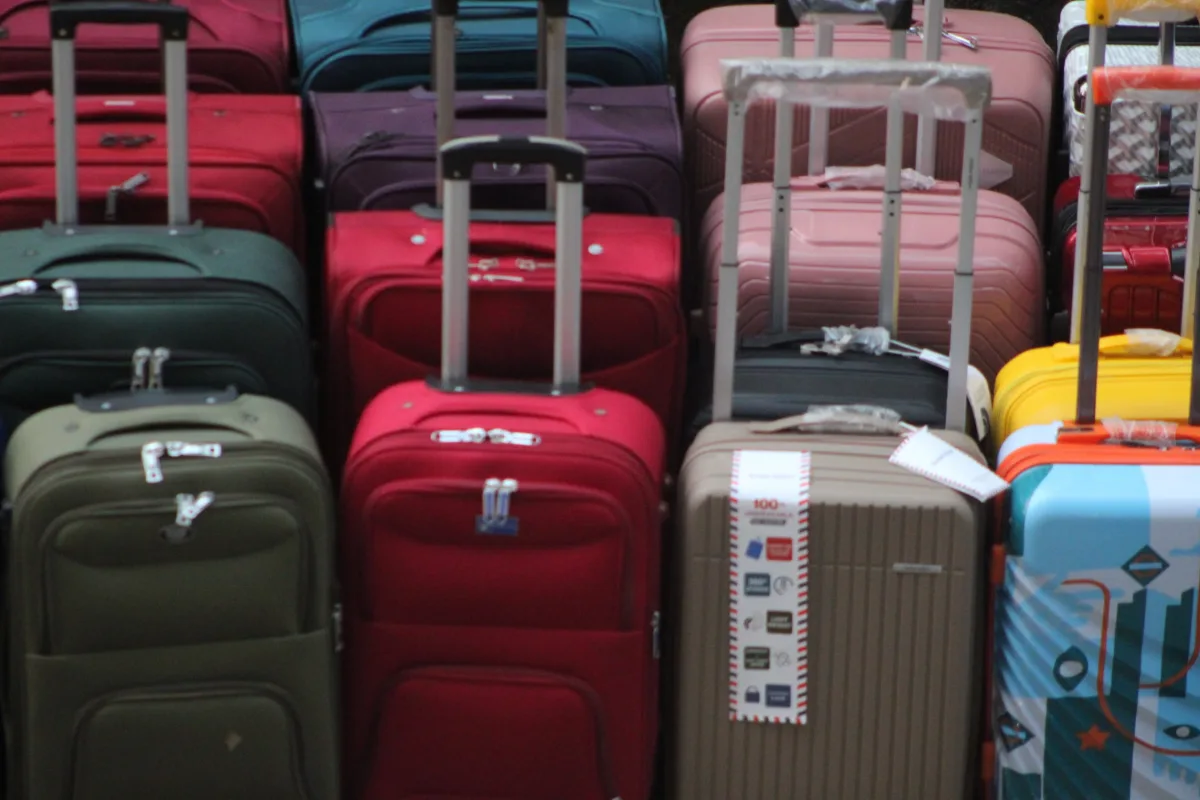
The most common misconception about luggage is that bigger means more flexibility. In practice, it often means the opposite.
Wirecutter's tester Caleigh Waldman packed a 29-inch Platinum Magna 2 for a two-week trip to New Zealand — and didn't even fill it completely. The bag still exceeded the 50-pound weight limit on every single flight of that trip, resulting in overweight baggage fees at every check-in. That isn't a packing failure. It's a luggage selection failure.
The problem compounds across multi-destination trips. Cobblestoned streets in Edinburgh, stair-only metro stations in Tokyo, tight hotel elevators in Rome — oversized bags create friction at every point of contact. No amount of spinner-wheel quality fixes a bag that's too big for the infrastructure you're navigating.
Here's the practical rule that cuts through the noise:
- Carry-on: trips up to 5–7 days on a single or well-connected itinerary
- Medium checked bag (24–26"): 7+ days or terrain-heavy destinations
- Large checked bag (27–29"): only if you're packing unusually light AND have verified your packed weight at home
If you're still figuring out your travel logistics — whether to fly carry-on-only on budget airlines or build in checked-bag costs — our guide to the best flight deal sites and apps in 2026 breaks down where to find the best fares alongside fee transparency.
Carry-On vs. Checked Bag: How to Decide
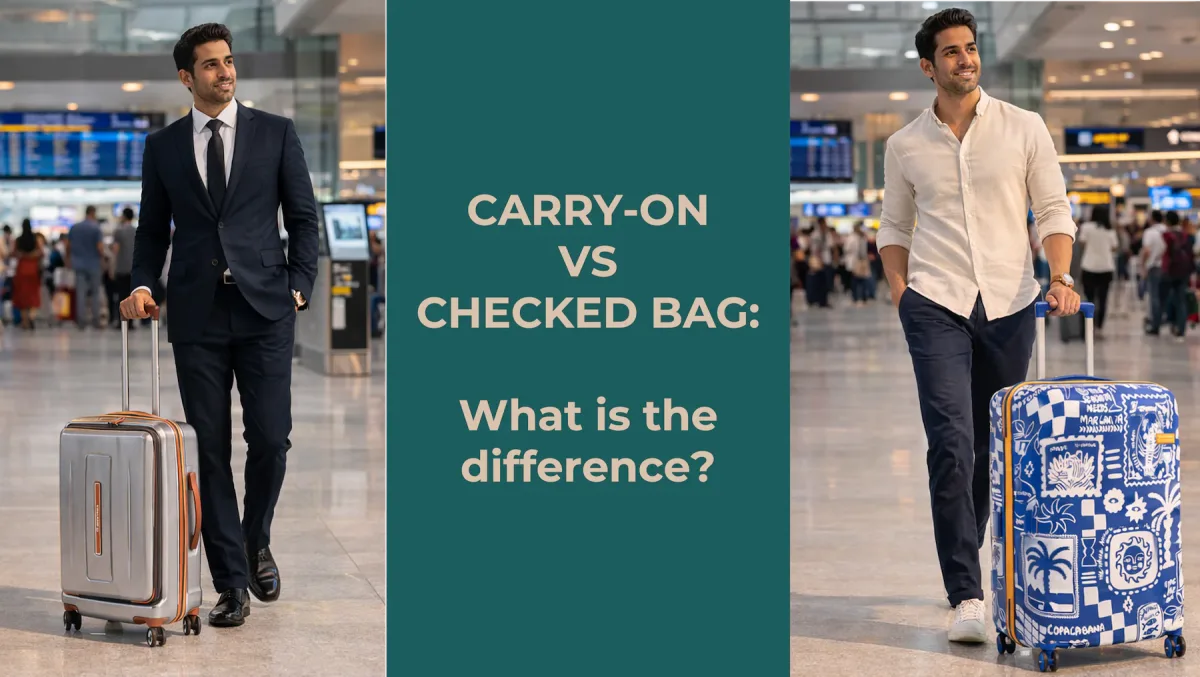
Most travelers default to the bag they already own. The better approach: decide based on trip length, airline mix, and itinerary demands — before you start packing.
The Case for Carry-On Only
Carry-on-only travel eliminates checked-bag fees (which run roughly $30–$60 per direction on most U.S. domestic routes and higher on international), removes the baggage claim wait, and eliminates lost-bag risk on tight connections — a real advantage when transiting through multiple carriers.
The catch: size compliance varies significantly by airline.
The standard carry-on limit for most U.S. carriers is 22 x 14 x 9 inches (including wheels and handle), according to The Independent. But that's a U.S.-domestic standard. Many non-U.S. carriers enforce stricter size and weight limits. A bag that fits in a United or Delta overhead bin may get gate-checked on a regional European or Asian carrier.
Yahoo Shopping travel experts advise that for international travel, choosing a suitcase slightly smaller than the U.S. maximum is the safer bet — especially on low-cost carriers outside North America.
Carry-on works best when: You're traveling 5 days or fewer, flying major carriers with consistent size enforcement, and your destination doesn't require bulky gear or formal wear.
The Case for Checked Bags
For trips longer than seven days — or any trip requiring terrain-specific gear, multiple pairs of shoes, or bulky clothing — a checked bag removes the compression gymnastics of carry-on-only travel.
The sizing decision within the checked bag category matters more than most people realize:
| Checked Bag Size | Dimensions (approx.) | Linear Inches | Weight Risk |
|---|---|---|---|
| Medium (24–26") | 24–26" tall | 56–60 linear in. | Low — clears 62-in. limit on all major carriers |
| Large (27–29") | 27–29" tall | 62–68 linear in. | High — can exceed 50 lb. even when not fully packed |
The 24–26" medium bag is the sweet spot for international travel. At approximately 56–60 linear inches, it clears the 62-linear-inch limit on all major carriers — including United, Delta, American, British Airways, and Lufthansa — with room to spare.
Budget airline note: If any leg of your trip includes a budget carrier, carry-on size restrictions tighten considerably. Our comparison of the best budget airlines in 2026 — Spirit, Frontier, and Southwest covers each carrier's current baggage policies in detail.
Hard-Sided vs. Soft-Sided Luggage: What Testing Actually Shows
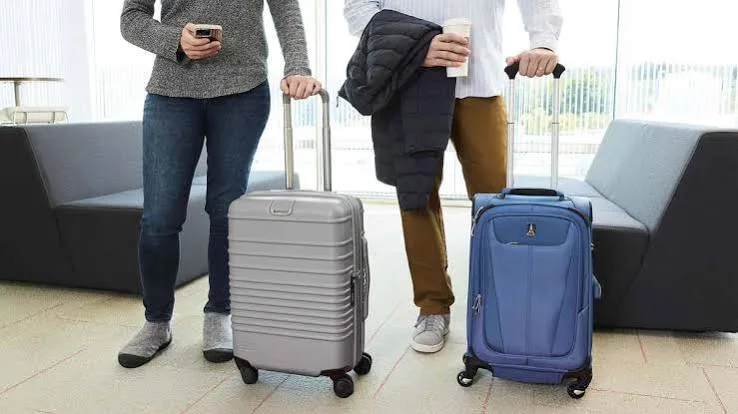
The hard-vs-soft debate gets oversimplified into "hard is more durable." Testing data tells a more nuanced story.
Durability: Soft Often Outlasts Hard
Wirecutter found that soft-sided luggage typically has a longer lifespan than hard-sided bags made of ABS plastic or polycarbonate. Hard-sided shells can crack under extreme stress — even though they resist normal impact well. Quality soft-sided fabrics absorb and flex rather than fracture.
Soft-sided bags also offer exterior pockets — something no hard-sided bag can match — which meaningfully improves organization and quick-access retrieval for frequent travelers.
Packing Volume: Soft Wins
Good Housekeeping testers who evaluated soft-sided bags specifically noted how much they could fit inside, attributing this directly to the flexible design. A soft-sided bag with slight give at the seams often fits more than its stated volume suggests — useful for the return trip when you've accumulated extras.
Hard-sided suitcases earned high marks for appearance ("stylish and easy to roll," one tester noted), but the packing volume advantage of soft shells was clear.
Hard Shell: When It Actually Wins
Hard-sided bags offer better protection for fragile items — electronics, glass gifts, camera gear — because the rigid structure resists deformation. If your checked bag regularly carries breakables, a hard shell reduces risk in ways soft construction can't match.
Within hard-sided options: polycarbonate is the preferred material over ABS. It's lighter and more flexible, meaning it absorbs impact without cracking as readily. ABS bags tend to be heavier and more brittle under repeated stress.
The practical split:
- Checking a bag with fragile items + rough handling exposure: Hard-sided, polycarbonate construction
- Carry-on that needs to squeeze into overhead bins or tight car trunks: Soft-sided, slight give is a genuine functional advantage
- Long-term durability priority: Soft-sided generally outlasts hard-sided ABS
What to Look For in a Carry-On in 2026
Not all carry-ons are built the same, and the difference between a budget bag and a premium one isn't just branding. Expert testing in 2026 identified these as the features that actually affect your experience:
Wheel quality is the most noticeable differentiator in daily use. Spinner wheels should glide smoothly across carpet, tile, and uneven pavement. Yahoo Shopping testers used a multi-surface obstacle course to evaluate wheel performance — a more reliable test than a showroom spin.
Handle sturdiness varies significantly. Good Housekeeping testers noted that some budget-brand handles showed wobble under load even when the same bags' wheels performed well. A loose handle becomes physically exhausting across a long airport transit.
Compression systems — adjustable interior panels — keep contents from shifting during transit and help maximize packing space. This matters more on longer trips where you're opening and repacking frequently.
Interior organization: Separate laundry bags, mesh pockets, and hanging pockets reduce packing chaos. These features sound minor until you're unpacking at midnight and everything has shifted.
TSA-approved locks: Standard on quality carry-ons. Some 2026 models offer trackable locks that sync with a smartphone — useful for multi-country itineraries where bags pass through multiple handlers.
Built-in battery packs: A practical feature for long-haul travel. Key caveat: airline lithium battery regulations vary, and some carriers require removable batteries to be taken out before the bag is checked. Verify your airline's policy before flying.
Expansion capability: A YouTube head-to-head test of seven 2026 carry-ons noted that one bag's expansion, calculated across the full circumference of the suitcase, added substantially more volume than the raw inch measurement suggested. Worth testing in-store if packing volume is a priority.
Grab handles: An underside grab handle makes lifting into overhead bins meaningfully easier — especially when the bin is above shoulder height. Good Housekeeping specifically cited this as a functional differentiator on its top-tested carry-on.
Best Carry-On Luggage of 2026: Top-Tested Picks
The following picks come from expert testing across multiple publications. Each serves a different traveler profile — understanding why a bag earned its recommendation is more useful than a simple ranking.
Away The Bigger Carry-On — Best Overall Carry-On
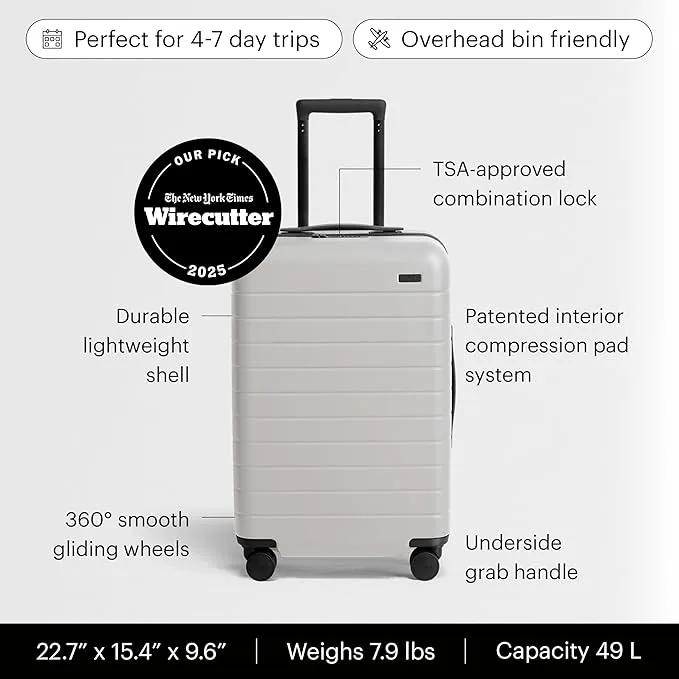
Best for: Frequent flyers who need 4–7 days of packing without checking a bag.
Forbes Vetted named this the top carry-on pick after testing by experienced globetrotters across varied trip types. The polycarbonate shell is lightweight and highly functional. It fits a standard overhead bin while offering four to seven days of packing space — compared to three to five days for Away's standard Carry-On.
Forbes Vetted deputy editor Jane Sung highlighted quiet wheels and a well-executed compression system as standout features. Condé Nast Traveler commerce writer Jessica Chapel tested it on a flight to New Mexico, a bus ride to New Jersey, and weekend car trips from New York — adding real-world multi-modal testing to the carry-on credentials.
What it trades: It's not the cheapest option. If budget is the primary constraint, the Samsonite Freeform below delivers proven reliability for less.
Arlo Skye Zipper-Front Carry-On — Best for Design-Conscious Travelers
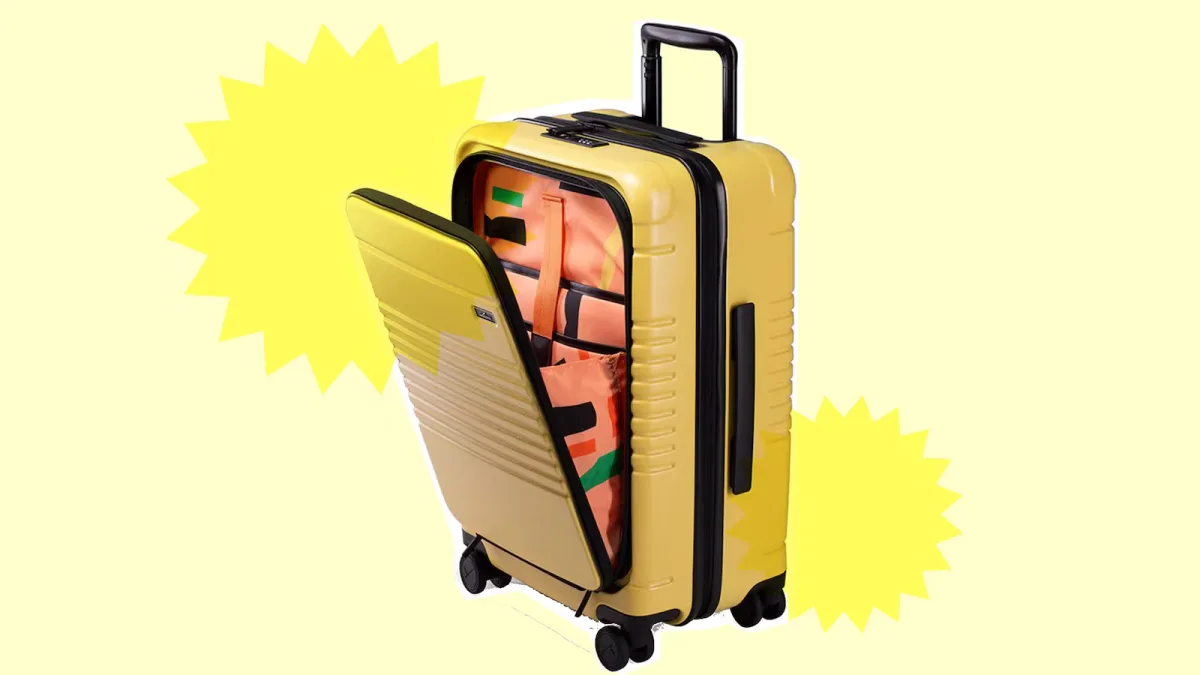
Best for: Travelers who want aesthetics and performance in equal measure.
Condé Nast Traveler senior features editor Megan Spurrell has taken this bag to Peru, upstate New York, and Montauk, describing it as "the perfect carry-on" for its combination of design and reliability. Associate editor Charlie Hobbs tested the updated model on a summer beach trip and used it to move between apartments — a stress test well beyond airport corridors. His summary: "It glides on the sidewalk like an Olympic skater on the rink."
What it trades: Premium pricing and limited colorway availability depending on season.
Samsonite Freeform Carry-On — Best Value
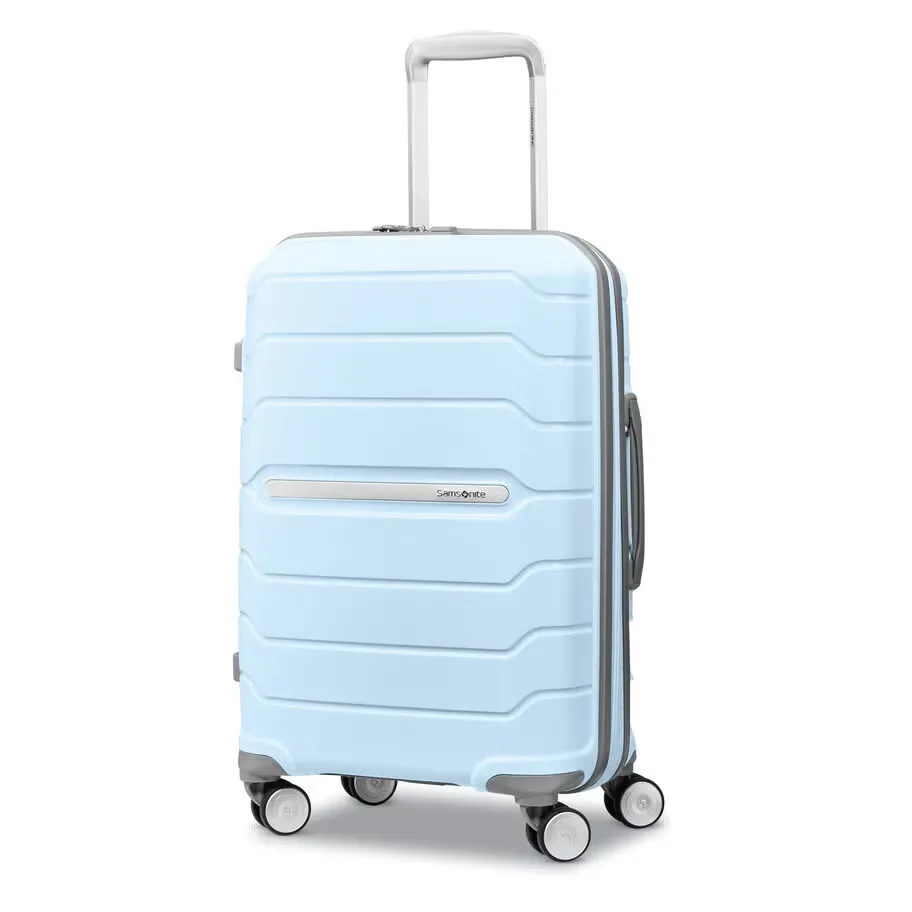
Best for: Value-focused buyers who want dependable performance without premium pricing.
Samsonite's long manufacturing history means consistent quality control, available replacement parts, and reliable warranty service — factors that matter more over years of use than they do at first purchase. The Freeform earned recognition in 2026 research for strong capacity and above-average durability at its price point.
What it trades: Fewer premium interior organization features compared to higher-priced options.
Good Housekeeping's Top-Tested Carry-On — Best for Organized Packers
Best for: Methodical packers who want structured interior systems.
Good Housekeeping awarded its top carry-on rating based on three features: adjustable compressive panels, a separate laundry bag for dirty clothes or shoes, and an underside grab handle for overhead bin lifting. For travelers who pack by system and want the bag to do organizational work for them, these features are genuinely useful — not marketing additions.
What it trades: The price reflects the premium interior features; if you pack loosely, you may not use all of them.
Best Checked Luggage of 2026: What Expert Testers Recommend
Checked bag recommendations depend on trip length and travel frequency. Here's what multiple testing outlets found.
Away The Medium Suitcase — Best Hard-Sided Checked Bag
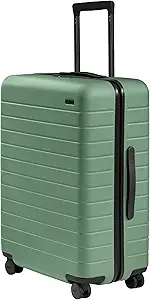
Best for: Frequent international travelers who prioritize durability and consistent airline compliance.
Wirecutter named the Away The Medium Suitcase its top pick for hard-sided checked luggage, testing it alongside The Large. The polycarbonate construction balances durability with manageable weight. The medium size (24–26") sits in the range that Traveler's Choice identifies as most versatile for international travel — clearing the 62-linear-inch limit while remaining navigable in tight urban environments.
SwissGear Sion — Best Value Soft-Sided Checked Bag

Best for: Occasional travelers who want a solid soft-sided bag without a premium price.
OutdoorGearLab testers described the SwissGear Sion as taking a "back to basics" approach. Two external pockets and a detachable toiletries bag were standout features. The compression system is minimal — two narrow straps — and OutdoorGearLab explicitly notes it is not recommended for frequent, extensive travel. For occasional use, it delivers reliable value.
What it trades: Not built for road-warrior frequency. The compression system won't manage a heavy load the way premium bags do.
Antler Bag — Best Capacity-Focused Soft-Sided Option
Best for: Warm-climate packing or trips without many bulky items.
The Independent tested the Antler bag under deliberately stressful conditions — adding a weighted blanket and fluffy robe alongside standard clothing to push the compression system. The bag claims capacity for 18–21 outfits. The double-buckled compression pad performed well under added weight, and three mesh pockets plus a hanging toiletries pocket keep the interior organized.
Note: For warm-climate packing or lightweight-item trips, actual capacity exceeds the stated outfit count.
OutdoorGearLab 2026 Award Structure
OutdoorGearLab's 2026 testing round awarded separate recognition across four categories: Best Overall Checked Luggage, Best Upgraded Softshell, Best Hardshell for Most People, and Best Value Softshell. This multi-category approach reflects the reality that no single checked bag is the right answer for every traveler.
How to Avoid Overweight Baggage Fees
Overweight fees are one of the most avoidable travel costs — and one of the most common. Three practical steps:
- Choose medium over large. A 24–26" bag is far less likely to exceed 50 lbs than a 27–29" bag, even when packed to capacity.
- Weigh your packed bag at home. A luggage scale costs under $15 and eliminates guesswork entirely. Weigh with your typical load — not an optimistic estimate.
- Know your airline's limit. Most U.S. domestic carriers set 50 lbs as the checked bag weight limit. International business class allowances vary. Budget carriers sometimes set lower limits. Always check before departure.
If your trip involves multiple airlines or connection cities — especially with mixed-carrier international routing — it's worth reviewing the best travel insurance plans in 2026, which can cover baggage delay, loss, and trip interruption if a misrouted bag derails your plans.
Also worth noting: some travel credit cards include complimentary checked bags on specific airlines, which can make a medium checked bag effectively free on qualifying itineraries. Our best travel credit cards for 2026 covers which cards offer the most practical baggage benefits.
Packing Smarter: When Luggage Alone Isn't Enough
Even the right suitcase gets frustrating without an organized packing system. Packing cubes — compression or standard — transform the interior of both carry-ons and checked bags from a pile to a system.
Our guide to the best travel backpacks and packing cubes in 2026 covers which packing cube sets actually compress meaningfully versus those that just reorganize without saving space — a distinction that matters when you're trying to maximize a carry-on.
Frequently Asked Questions
What is the standard carry-on size for 2026?
For most U.S. carriers, the standard carry-on limit is 22 x 14 x 9 inches, including wheels and handle, according to The Independent. This varies by airline. International carriers — especially regional and low-cost carriers in Europe and Asia — often enforce stricter size and weight limits. Always verify your specific airline's current policy before flying, particularly on budget carriers outside the U.S.
Is polycarbonate or ABS better for hard-sided luggage?
Polycarbonate is generally the better choice. It's lighter and more flexible than ABS, meaning it absorbs impact without cracking as readily. Most premium hard-sided carry-ons — including Away's lineup — use polycarbonate. ABS is more common in budget hard-sided bags and tends to be heavier and more brittle under repeated stress.
Does soft-sided or hard-sided luggage last longer?
According to Wirecutter, soft-sided luggage typically has a longer lifespan than hard-sided bags made of ABS or polycarbonate. Hard shells can crack under extreme stress. Quality soft-sided fabrics absorb impact and flex rather than fracture — and exterior pockets add organizational utility that grows in value over time.
What size checked bag is best for a one-week international trip?
A 24–26-inch medium checked bag is the right choice for a seven-day international trip. At approximately 56–60 linear inches, it clears the 62-linear-inch limit on all major carriers, fits enough clothing and shoes for a week, and remains manageable in tight urban environments — hotel elevators, metro stations, cobblestoned streets — where a large bag becomes a real obstacle.
Are built-in battery packs in carry-ons worth it?
For long-haul or multi-country itineraries, a built-in battery is a practical feature. Key caveat: if you plan to check the bag on any leg of your trip, some carriers require removable batteries to be taken out before the bag goes below deck. Verify airline-specific lithium battery policy before flying — regulations vary by carrier and route.
Why does my carry-on keep getting gate-checked?
The most common reason: the bag meets U.S. domestic size limits but exceeds limits enforced by a connecting or codeshare carrier. Secondary reason: overhead bin space is full and gate agents are checking all remaining bags regardless of size. Choosing a bag slightly smaller than the maximum U.S. standard reduces gate-check risk, particularly on international or regional legs.
Should I buy luggage as a set?
Sets offer price efficiency but limit flexibility. A traveler who sometimes needs only a carry-on and sometimes needs a checked bag benefits more from two standalone bags optimized for each purpose than from a matched set where both bags are average. If you primarily use one size, buy that size first.
Final Recommendation: A Decision Framework
Rather than a single "best" bag, here's a practical decision tree based on the testing data in this guide:
Trip under 5 days, domestic, single carrier: → Carry-on. Away The Bigger Carry-On or Arlo Skye Zipper-Front handles this comfortably without fees or baggage claim delays.
Trip 5–7 days, mixed domestic and international: → Carry-on works if your airlines are consistent about enforcement. Choose a bag slightly under maximum U.S. dimensions. Samsonite Freeform is a solid value pick for this use case.
Trip 7+ days or terrain-heavy destinations: → Medium checked bag (24–26"). Away The Medium Suitcase for hard-sided reliability; SwissGear Sion for value; Antler for warm-climate packing volume.
Frequent business traveler with fragile items: → Hard-sided polycarbonate carry-on + medium hard-sided checked bag. Away covers both categories with consistent build quality.
Occasional traveler, budget-conscious: → Samsonite Freeform carry-on + SwissGear Sion checked bag. Both deliver reliable performance well below premium pricing.
One last thing worth planning alongside your luggage: staying connected while you travel. If your itinerary spans multiple countries, an eSIM eliminates the roaming fees and SIM-swap logistics that can derail even a well-packed trip. Our guide to the best international eSIMs and travel WiFi devices in 2026 covers the top options by destination region.
Trusted Buyer Report is an independent, research-based site. Articles are drafted with AI assistance and reviewed by a human editor before publishing. Affiliate commissions are added only after editorial assessment is complete — they do not influence recommendations. Methodology · Affiliate disclosure · AI ethics policy