This guide was researched and drafted with AI assistance, then reviewed and fact-checked by our editorial team before publishing. Our analysis synthesizes data from The Toy Association's 2026 Trends Report, Fortune Business Insights, Grand View Research, GM Insights, Cognitive Market Research, Wirecutter (19 toys tested with children aged 3–13 over one year), Forbes Vetted, The Toy Insider, Inspirely, Thoson, Toytooth, and Snugglebug. We cite every source. We don't accept payment for rankings. How we review · Affiliate disclosure
Quick Verdict: Best Kids Toys in 2026 by Age and Category
The most important insight before reading a single product description: "educational" on toy packaging is entirely unregulated. Any manufacturer can print it. The framework in this guide tells you how to verify the claim before spending money.
Here's the fast map by age and category:
- Best toddler STEM toy: Magnetic tiles (ages 3+) and LEGO Duplo Classic (from 18 months)
- Best preschool building toy: Wooden unit blocks — decades of research behind them
- Best ages 6–8 STEM pick: ThinkFun Gravity Maze (logic + spatial reasoning) or Snap Circuits Extreme (real electronics)
- Best ages 9–12 STEM pick: Spintronics Act One + Act Two Bundle (circuit theory made physical)
- Best robotics/coding: Sphero programmable robots (scales from visual blocks to JavaScript)
- Best subscription kit: Crunch Labs (progressive engineering challenges, sustains engagement into teens)
- Best classic toy: Oversized Connect 4 (ages 4+), pretend play kitchen sets (ages 2–7)
- Best gross motor: Piccalio Acrobat Balance Beam (18 months–8 years)
TL;DR — The Framework Before the Products
- "Educational" is unregulated. Any manufacturer can print it. The two-question test that actually works: Does the toy invite decision-making? Does it allow failure and retry without punishment? Yes to both = genuinely developmental.
- "STEM toy" has no legal definition in the US or EU. Look for STEM.org authentication, named museum partnerships, or documented curriculum alignment from a named publisher.
- Ages 8–10 is the peak STEM engagement window — spatial reasoning is most responsive to physical input and attention span is long enough for multi-step engineering builds (Inspirely, 2026).
- Block play correlates with 15% higher math scores on standardized tests, according to multiple studies cited by Thoson. This holds from preschool through early elementary.
- Open-ended toys have a longer developmental lifespan. A $50 magnetic tile set usable from age 3 to 8 beats a $50 single-skill toy exhausted in three months. Price comparison should factor in years of use.
- The North American STEM toys market is projected to reach $5.9 billion by 2035, with the US holding 84.6% market share (Yahoo Finance). More products doesn't mean better products — the volume of low-value kits is rising alongside the genuine ones.
- Engineering and construction kits are the most validated category, holding approximately 20% of total STEM toys market share (Fortune Business Insights) and carrying the lowest risk of purchasing something that underdelivers.
Why "Educational" on the Box Means Almost Nothing
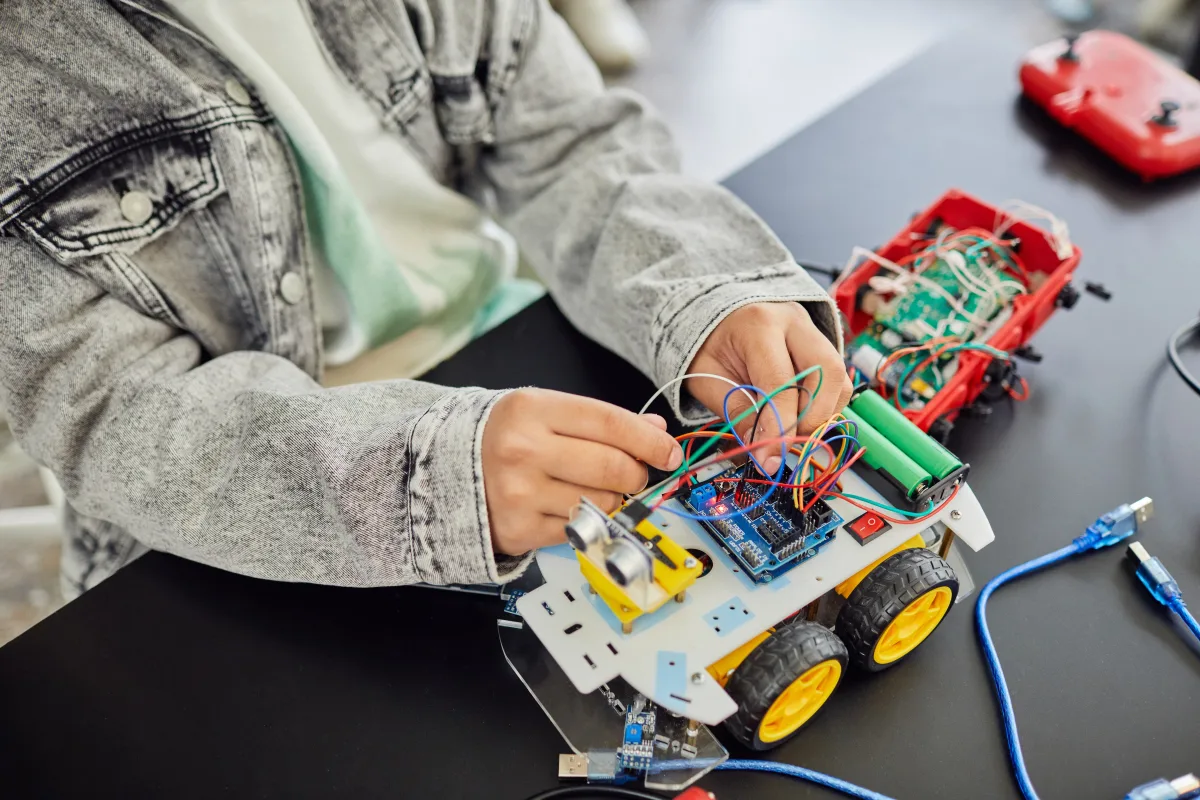
Here's a counterintuitive fact that should change how you shop: the term "STEM toy" has no legal or regulatory definition anywhere in the United States or European Union. And the word "educational" on packaging is equally unregulated — any manufacturer can print both on any box without meeting a single documented standard.
The typical outcome: a parent buys something that claims to "teach engineering," the child builds one fixed model in 25 minutes, and the completed object sits on a shelf because there's nothing left to do with it. The only decision the child made was which color piece to snap on first. As Thoson's 2026 guide puts it directly, many toys carrying the STEM label "deliver no genuine learning" — the label is applied to products that are fundamentally novelty items with a science-adjacent theme.
The distinction between a toy that performs for the child and a toy that makes the child perform is the most useful framework in this guide. A light-up toy that plays a song when a button is pressed gives the child a reward without requiring decision-making. A marble run requires planning, observation, and adjustment when the marble doesn't make it through a turn. Both can be fun. Only one builds cognitive capability.
The two-question test. Before buying any toy, apply these: Does it invite the child to make decisions? Does it allow for failure and retry without punishment? If both answers are yes, you're looking at something genuinely developmental — regardless of what the box says.
How This Guide Was Researched
This is a research-based guide — Trusted Buyer Report has not hands-on tested each product. Our analysis draws from:
- Wirecutter: tested 19 toys with children aged 3–13 over one year; hosted a hands-on testing session at Northeastern University's Roux Institute in May 2025 with 15 children aged 3–15, observing ease of setup, durability, and whether kids returned to the toy voluntarily
- Forbes Vetted: Best Toys for Toddlers 2026 — LEGO Duplo, Play-Doh, Piccalio Balance Beam
- The Toy Insider 2026: Top Toys list including Oversized Connect 4, PAW Patrol Ride On, Fisher-Price Jungle Gym
- The Toy Association 2026 Toy & Play Trends report: 78% of US parents want toys that develop creativity and problem-solving; throwback toy trend data
- Inspirely 2026: STEM kit evaluation framework; ages 8–10 as peak engagement window; open-ended depth as primary quality criterion
- Thoson 2026: block play and 15% higher math scores; magnetic tiles and spatial reasoning; marble run physics analysis
- Toytooth 2025–2026: parental engagement as learning multiplier; Engino brand analysis; age-appropriate challenge calibration
- Fortune Business Insights: engineering toys at 20% of STEM toys market share; market growth projections
- Grand View Research: Asia Pacific CAGR of 7.8% 2025–2030
- GM Insights: NSF citation on early STEM contact and problem-solving; Mattel/Teacher Created Materials partnership signal
- Cognitive Market Research: market segmentation by age group
- Yahoo Finance / North America STEM Toys Market 2026: $5.9B projection by 2035; Sphero, LEGO, Ravensburger as leading brands
The 7-Point Evaluation Framework: How to Verify Any STEM Toy Before Buying
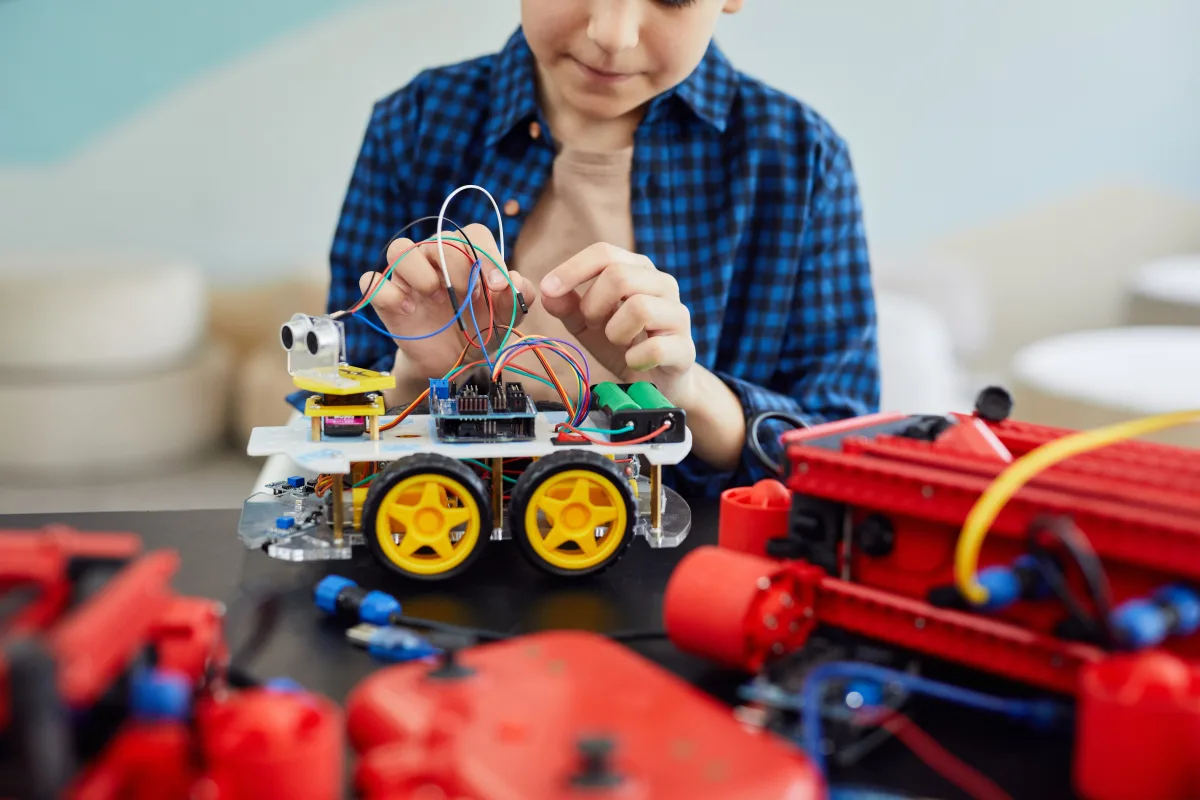
Use this checklist before purchasing any toy marketed as "educational" or "STEM." It works in a store aisle, on a product page, or while reviewing any other guide's recommendations.
1. Independent authentication. A self-awarded badge means nothing. Look for named third-party verification — STEM.org authentication is the most commonly cited credible standard in 2026. A STEM.org authenticated kit has been independently assessed against documented learning outcomes. Museum partnerships and curriculum alignment documentation from named educational publishers (like Teacher Created Materials) are also credible signals. If you can't find the authenticating organization's name outside the brand's own website, treat the claim as unverified.
2. Open-ended depth. Ask: what does the child do after the first build? A kit with no extension activities, no variation potential, and no experimental variables has a hard educational ceiling. The best kits function as learning platforms — the structure gets built, then modified, then broken down and rebuilt differently. As Inspirely states, a kit with genuine open-ended extension value "functions as an experiential learning platform long after the structured build."
3. Does the child do the thinking, or does the kit do it for them? Count the number of real decisions the child makes during the activity. If every step has exactly one correct answer shown in the instructions, the child is executing, not problem-solving. The best kits require the child to encounter a failure state and figure out why. That's the distinction between following a script and genuine engineering thinking.
4. Age-appropriate challenge. The kit should sit in the child's zone of proximal development — just above their current ability, not far beyond it. Too easy produces boredom within 15 minutes. Too hard without scaffolding produces frustration and permanent abandonment. Check independent reviews from parents whose children are the same age as yours, not just the age range printed on the box.
5. Hands-on physical mechanism. Physical manipulation of components builds spatial reasoning and fine motor skills in ways that screen-based simulations don't fully replicate. The National Science Foundation, cited by GM Insights, states that "children who have contact with STEM reasoning early on develop greater problem-solving capabilities" — and the research base is grounded in physical, hands-on engagement.
6. Safety certifications. For children under 14, verify CE marking (EU), ASTM F963 (US), or EN71 (UK/EU) as appropriate. These are baseline requirements, not indicators of educational quality — but their absence is a red flag about the manufacturer's overall standards.
7. Durability and reusability. Components that survive repeated use support iterative experimentation. A kit whose pieces break after two builds cannot support the trial-and-error cycle that genuine engineering learning requires. Read reviews for mentions of fragile connectors or brittle plastic — these are functional learning limitations, not just quality complaints.
How to Match a Toy to Your Child's Developmental Stage
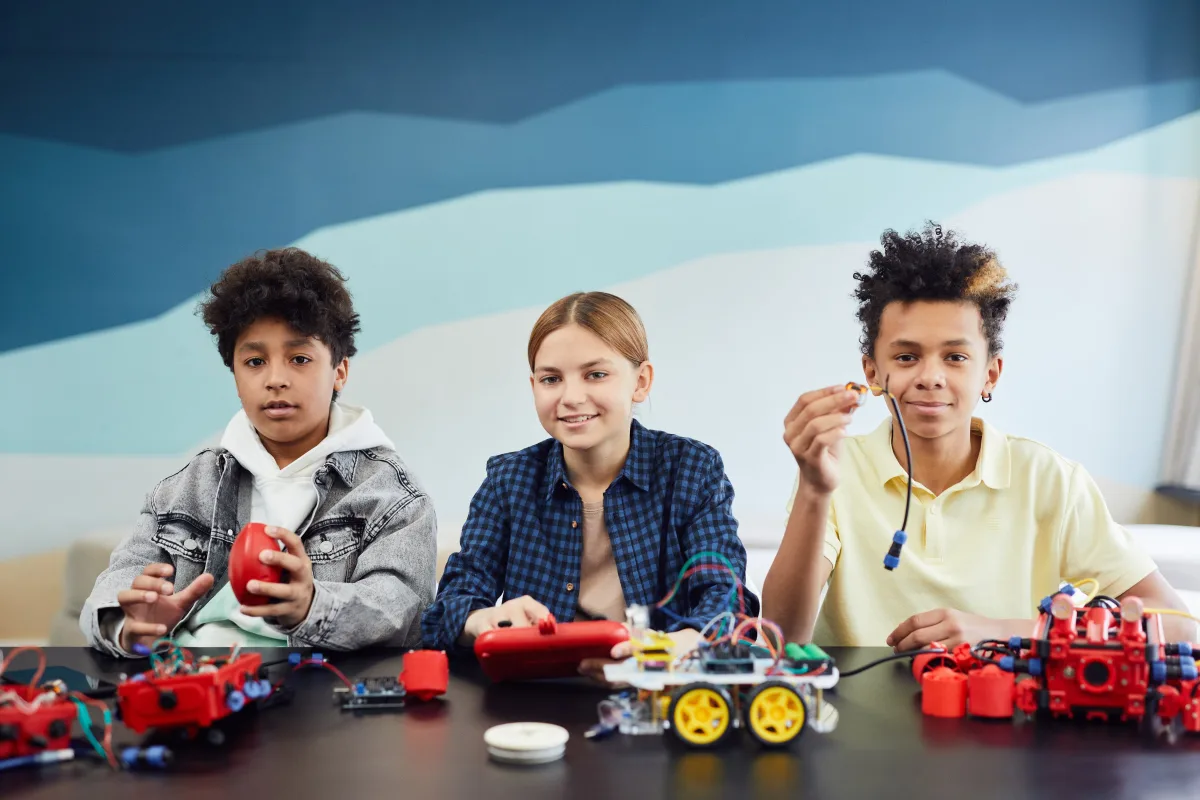
Age labels on toy packaging exist primarily as liability guidelines, not developmental prescriptions. A four-year-old with strong fine motor skills and one still developing them need meaningfully different toys, even though both are "age 4."
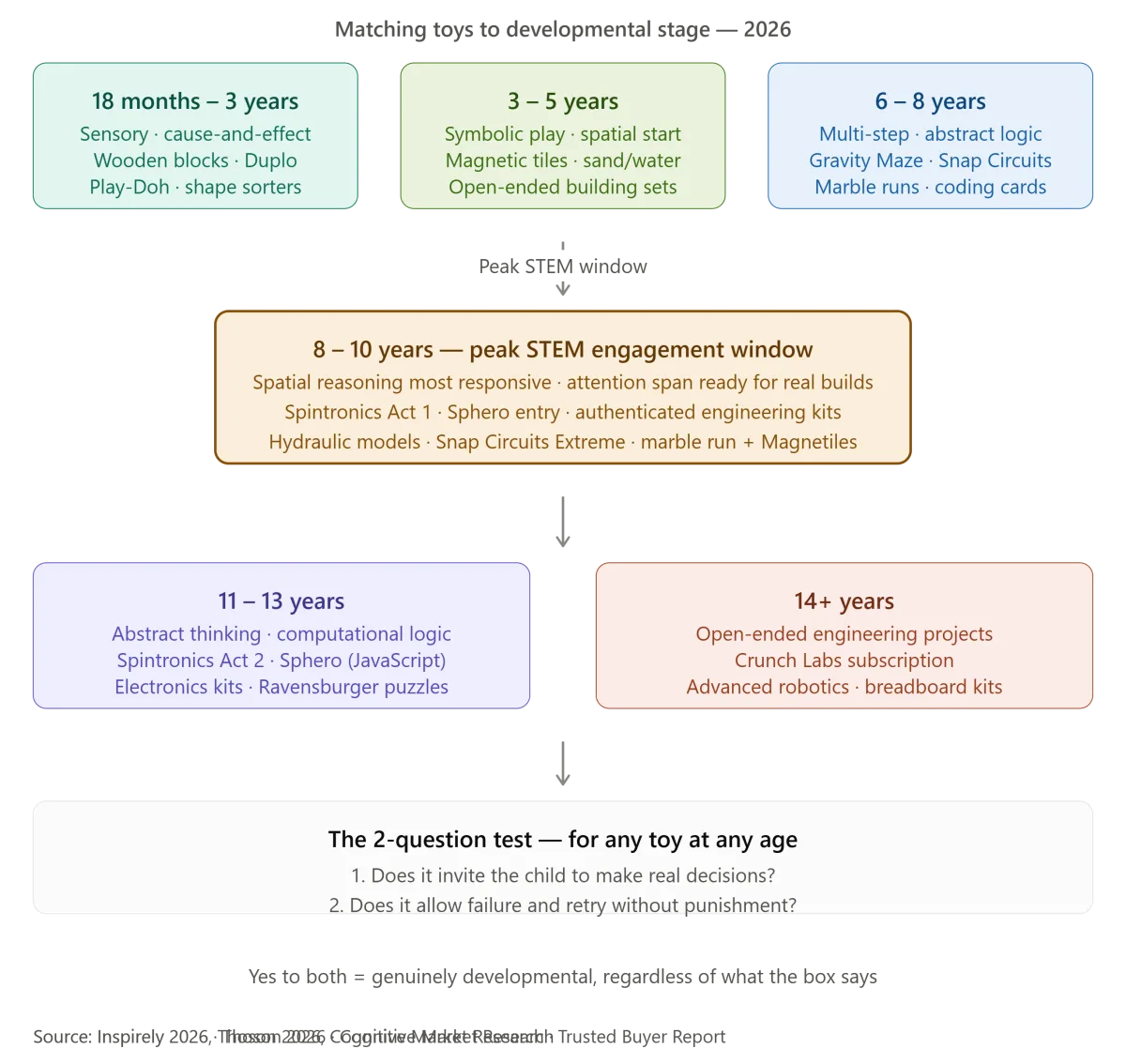
Child development research uses the concept of the "zone of proximal development" — the most effective learning happens just above a child's current ability. A toy that's too easy produces boredom. A toy that's too complex produces frustration and abandonment. The right toy stretches the child slightly: one they can almost do, but need to think about.
| Age window | Developmental focus | Best toy types |
|---|---|---|
| 18 months–3 years | Sensory exploration, cause-and-effect, large motor | Tactile, large-scale, forgiving; shape sorters, stacking toys |
| 3–5 years | Symbolic play, sorting, early spatial reasoning | Building sets, water/sand play, magnetic tiles |
| 6–8 years | Multi-step instruction, abstract cause-and-effect, sustained focus | Marble runs, logic puzzles, snap circuits |
| 8–10 years | Peak STEM window — sustained focus, spatial reasoning most responsive | Authenticated engineering kits, robotics, coding toys |
| 11–13 years | Abstract thinking, computational logic, independent project work | Programmable robotics, electronics kits, chemistry sets |
| 14+ | Open-ended engineering, real project workflows | Advanced electronics platforms, subscription engineering kits |
Best STEM Toys for Toddlers and Preschoolers (Ages 18 Months–5 Years)

At this stage, the most effective toys are tactile, large, and physically forgiving. Small parts are both a safety hazard and a developmental mismatch — fine motor control is still developing, and frustration with fiddly pieces derails learning before it starts.
Magnetic Tiles (Ages 3+)
The standout category for this age group. According to Thoson's STEM guide, magnetic tiles develop 3D spatial thinking, are easy for small hands to connect, and support light exploration when tiles include translucent panels. The connection mechanism is forgiving — tiles snap together with satisfying feedback and structures that fall apart are easily rebuilt. Unlike rigid building systems, magnetic tiles allow experimentation with angles and enclosures that would be impossible with standard blocks. A quality set bought at age 3 will still be used at age 8 as challenges grow with the child.
Wooden Unit Blocks
Among the oldest STEM toys in existence, and the research behind them remains some of the strongest in early childhood education. Thoson notes they teach fundamental physics — balance, gravity, structural stability — through direct physical experience. A child who stacks a tower too high and watches it fall is running a physics experiment without any instruction required. Multiple studies show block play correlates with 15% higher scores on standardized math tests.
LEGO Duplo Classic Building Set (From 18 Months)
Forbes Vetted recommends this from 18 months. The oversized bricks are manageable for small hands, play is entirely open-ended, and the packaging doubles as storage. It's the entry point to a building system that scales with the child for years — a meaningful long-term value consideration.
Play-Doh (Ages 2+)
Forbes Vetted includes Play-Doh for its often-overlooked developmental benefit: modeling compound builds the hand strength children need to grip crayons and pencils. Hand strength is a prerequisite for writing, and writing is foundational to all academic learning. The Play-Doh Shapes & Colors Dino Starter Set includes chunky tools that store inside the dinosaur — practical for cleanup.
One category to approach with caution at this age: toys that perform for the child. A light-up toy that plays a song when a button is pressed is entertainment, not development. These aren't harmful, but they're not building the cognitive muscles that open-ended toys develop. Use them for entertainment; don't treat them as your primary developmental investment.
Best STEM Toys for Early Elementary Kids (Ages 6–8)
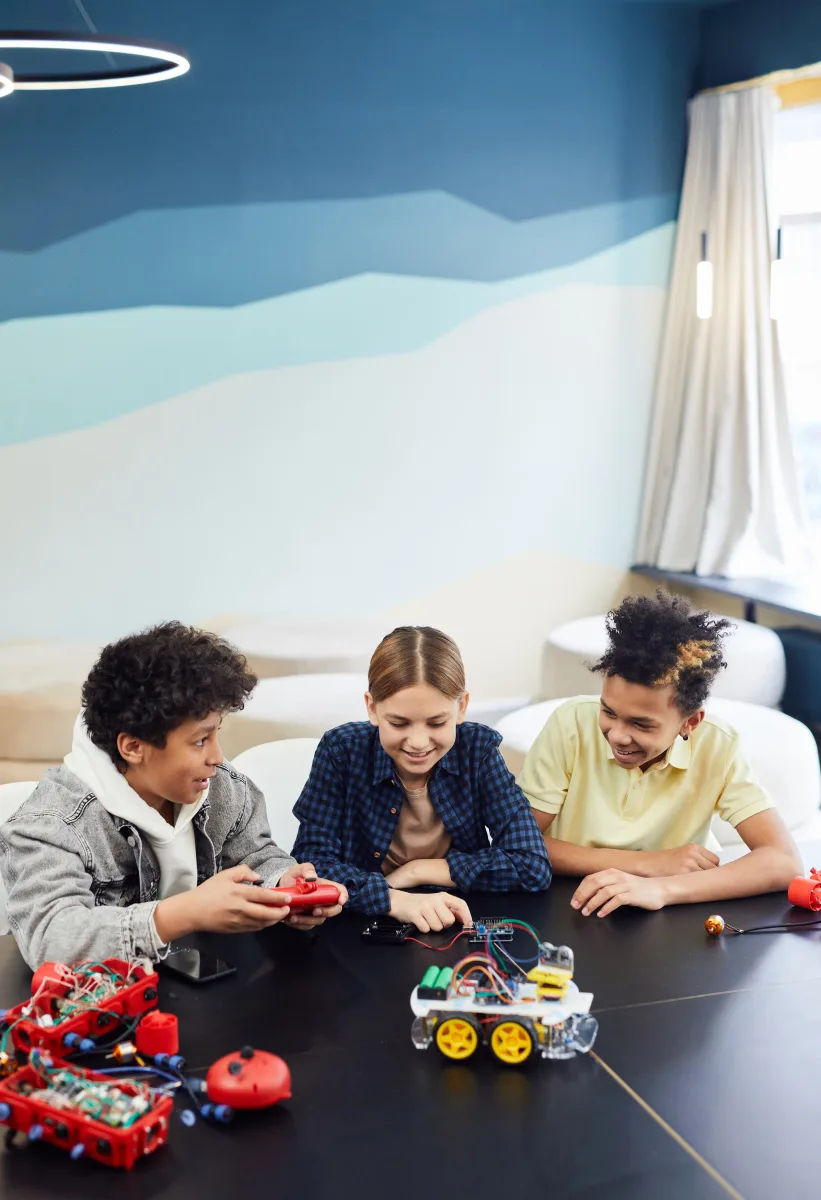
Children in this range have crossed a meaningful developmental threshold: they can follow multi-step instructions, sustain focus on longer projects, and reason about cause and effect in more abstract ways. The toys that serve them best introduce moving parts, logical sequencing, and iterative problem-solving.
ThinkFun Gravity Maze
One of the most consistently recommended STEM toys for ages 6–8. A marble-run logic puzzle that teaches spatial reasoning, 3D planning, and problem-solving. Challenge cards range from beginner to expert, meaning the same set grows with the child's abilities over several years. Screen-free, and the physical format makes abstract spatial concepts concrete and visible.
Snap Circuits Extreme
Introduces real electronics education through color-coded components that snap together without soldering. Capable of building radios, alarms, lights, and sensors — actual functional electronics, not simulations. The snap-together format is accessible to children who aren't yet ready for breadboard wiring, while the underlying concepts (series circuits, parallel circuits, resistance) are genuine electrical engineering. This is a toy where the child builds something that works — a qualitatively different experience from building something that looks like it works.
Marble Runs (as a category)
Exceptional STEM tools for this age. Thoson recommends them specifically for physics experiments involving momentum, gravity, and prediction. The design-test-redesign loop is built into the play — if the marble doesn't make it through a turn, the child has to figure out why and adjust. That iterative process is the foundation of engineering thinking, and it happens naturally without adult prompting. Combine with Magnetiles to allow the child to design custom track configurations, extending the learning considerably.
KidsFirst Coding & Robotics
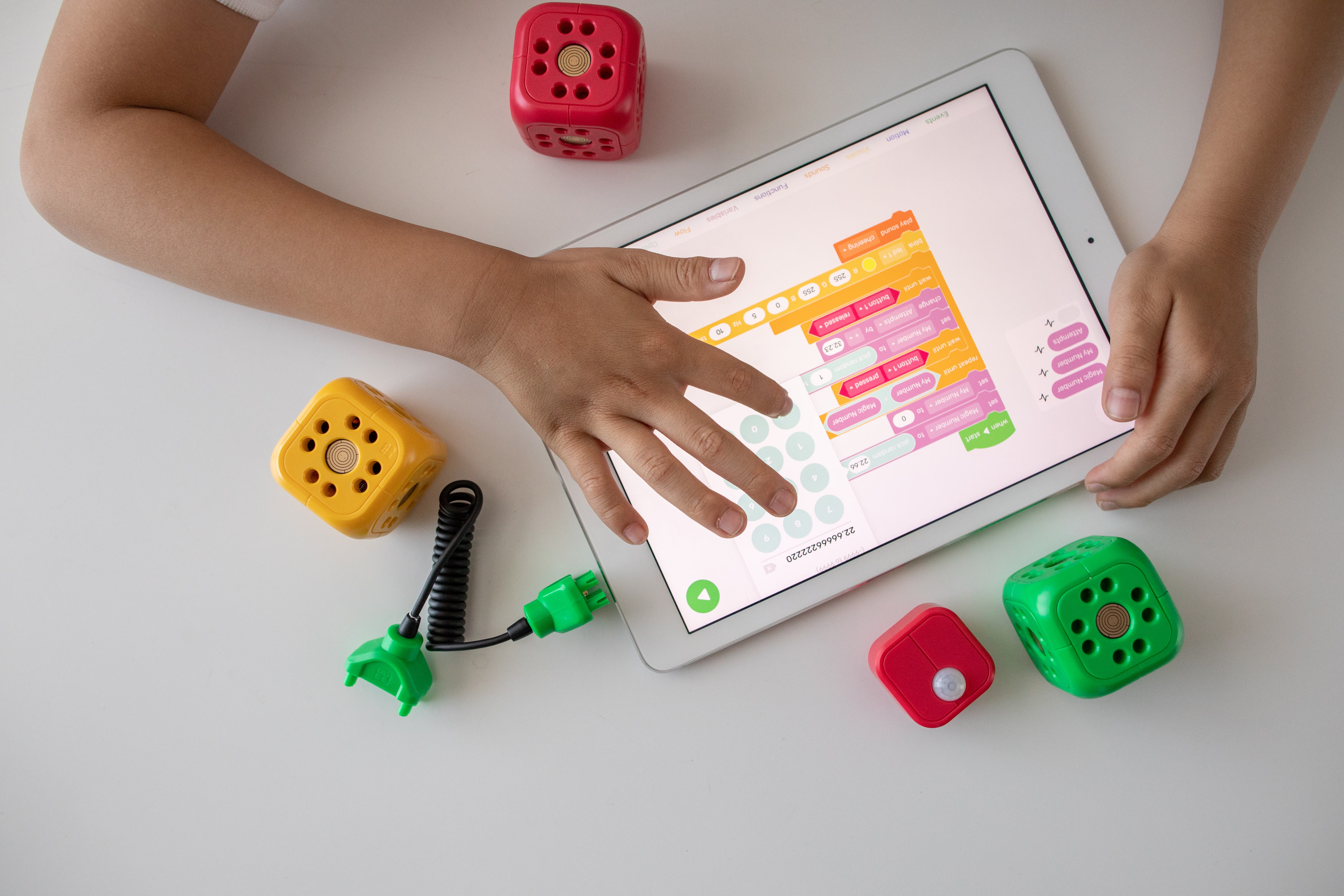
The best option for introducing programming concepts without a screen. Uses cards or tiles to represent instructions, making the logic of sequencing tangible before a child ever types a line of code. This is the foundational concept behind all programming, delivered physically.
Best STEM Toys for Tweens and Older Kids (Ages 9–13)
Ages 9–13 are often the most underserved age group in toy marketing, which skews heavily toward younger children. But this is a critical window for STEM engagement — abstract thinking is emerging, children can work independently on sustained projects, and the complexity of challenges they can handle increases substantially.
Spintronics Act One + Act Two Bundle
One of the most genuinely innovative STEM products in the 2026 market. Mechanical components — gears, springs, and chains — represent electrical components like resistors, capacitors, and inductors. A child builds a physical machine that behaves like an electrical circuit, making abstract circuit theory tangible and visible. Act One introduces the concepts; Act Two expands the system. Buying the bundle avoids outgrowing Act One quickly. Highly recommended for ages 9–12 who have moved past basic circuit kits.
Sphero Programmable Robots
Identified by the North America STEM Toys Market Report as one of three leading brands shaping the 2026 market alongside LEGO and Ravensburger. Sphero robots support coding in multiple languages — beginning with visual block-based coding and scaling to JavaScript as skills develop. The physical robot provides immediate, visible feedback when code runs correctly or incorrectly, which is a more motivating learning loop than a screen-only coding environment.
Advanced Robotics Kits (Ages 9–12)
Thoson's developmental guide recommends advanced robotics for this window, specifically for children who can follow detailed instructions and sustain focus on complex tasks. The critical differentiator: look for kits that require the child to write or modify logic, not just assemble a pre-designed machine that runs one fixed script. Wonder Workshop's Dash robot allows open-ended mission creation and sits at the high end of this spectrum.
Crunch Labs Engineering Subscription (Ages 8–Teen)
A subscription-based engineering kit where each delivery introduces a new mechanical or engineering challenge. Independent reviewers note it sustains engagement across age groups over multiple months because the challenges are progressive, not novelty-based. Notably, teenagers have been reported returning to it voluntarily — an unusually strong signal of genuine engagement depth. Worth evaluating if your child has exhausted single-purchase kits.
Ravensburger Complex Puzzle and Game Systems
One of the three leading brands shaping the 2026 STEM market per the Yahoo Finance market report. Ravensburger's puzzle and game systems at the 9–12 level develop logical thinking and spatial reasoning through non-digital means — a useful complement to screen-based coding tools for parents managing device time.
The Five Core STEM Toy Categories: What Each One Actually Develops
Engineering and Construction Kits
The most validated category in the market, holding approximately 20% of total STEM toys market share — the largest single segment (Fortune Business Insights). This dominance reflects sustained demand across age groups and geographies. The best kits introduce real physical principles through a working model the child can test: a hydraulic bridge kit teaches fluid mechanics through an actual hydraulic mechanism, not a picture of one.
Engino, noted by Toytooth for combining engineering principles with play quality, produces kits with multiple build configurations, documented mechanical principles, and durable components rated for repeated assembly. Fat Brain Toys is consistently cited for combining engineering-focused design with age-appropriate challenge levels. Both brands prioritize exploration over completion — the clearest way to identify a quality engineering kit at a glance.
If you're uncertain which category to choose: engineering and construction kits carry the lowest risk of disappointment across the 6–13 age range.
Science Experiment Kits
Value depends entirely on whether the experiments are genuinely variable. A kit that walks a child through a fixed sequence to a predetermined outcome is a demonstration, not an experiment. A quality science kit asks the child to form a hypothesis, change a variable, and observe a different result. Thoson describes the best versions as kits that "make chemistry tangible" — the physical reaction is the teaching moment, not the instruction booklet.
Coding and Robotics Kits
Quality varies more here than any other category. Look for kits where the child arranges actual logic — sequences, conditionals, loops — rather than following a color-coded button sequence with one correct answer. Computational thinking requires encountering failure and debugging, not executing a pre-solved puzzle. That distinction determines whether a child is genuinely learning to code or learning to follow instructions.
Math Manipulatives and Puzzle Toys
Consistently underestimated by parents, this category has among the strongest research support for early mathematics development. Pattern blocks, tangrams, and number-based construction sets develop geometric reasoning and number sense in ways worksheets cannot replicate. Also among the most durable and reusable STEM products — strong value per dollar over time. ThinkFun's range sits in this category alongside their marble run and logic puzzle products.
Technology and Electronics Kits
Breadboard-based electronics kits — where the child physically connects components and observes circuit behavior — offer substantially more open-ended value than single-project PCB kits. Marble runs occupy a hybrid position here: they teach momentum, kinetic and potential energy, gravity, slope, speed, and angles through direct physical experimentation. Combined with Magnetiles for custom track design, the learning surface expands considerably.
Classic Toys That Still Win in 2026 — And Why
Not every valuable toy is a STEM product, and parents who feel pressured to buy only "educational" items are working from a false premise. Classic toys persist across generations because they address developmental needs that don't change with technology cycles.
The Toy Association's 2026 Trends Report notes that throwback toys are returning to shelves and going viral — not just because of nostalgia, but because today's parents recognize that timeless play mechanics have lasting value.
Oversized Connect 4 (The Toy Insider 2026 Top Toys, ages 4+): teaches pattern recognition, forward planning, and graceful losing — a social-emotional skill no app teaches as effectively as a board game. The oversized format adds a physical, active dimension.
Pretend play sets (kitchens, puppet theaters, play food, dollhouses, ages 2–7): a child running a pretend grocery store is simultaneously practicing language, math (making change), social negotiation, and storytelling. These benefits are often more robust than what a single-skill electronic toy delivers and scale naturally as imagination grows.
Piccalio Acrobat Balance Beam (Forbes Vetted, 18 months–8 years): supports physical development that no screen-based product can replicate. Balance, coordination, and proprioception are foundational to overall development — and outdoor or active play is increasingly scarce in children's daily routines.
PAW Patrol Ride On and Fisher-Price Jungle Gym (The Toy Insider 2026): serve the same physical development function for younger children.
STEM vs. Classic vs. Electronic: The Honest Comparison
| Category | Developmental strengths | Limitations | Best for |
|---|---|---|---|
| STEM building toys | Spatial reasoning, math foundations, engineering thinking; long lifespan | Can be expensive; small parts in advanced sets | Ages 18 months+; scales with child |
| Classic board games | Strategic thinking, turn-taking, emotional regulation, social skills | Requires adult/sibling participation; limited solo play | Ages 4+; family play sessions |
| Pretend play sets | Vocabulary, narrative thinking, social-emotional development | Space-intensive; less structured | Ages 2–7; imaginative play stages |
| Electronic/app-connected toys | Engagement, some coding concepts, immediate feedback | Often passive; screen time concerns; rapid obsolescence | Ages 6+ as supplement, not primary toy |
| Gross motor toys | Physical development, coordination, balance | Weather/space dependent; limited cognitive challenge | All ages; essential complement to cognitive toys |
Final Decision Framework: Buy by Developmental Stage, Not by Price

→ Ages 18 months–3 years: LEGO Duplo (18 months+), Play-Doh for hand strength, large wooden blocks. Avoid small parts entirely. Prioritize tactile and physically forgiving.
→ Ages 3–5 years: Magnetic tiles as the primary investment — they scale from age 3 to 8. Wooden unit blocks. Sand or water play. Open-ended play that requires no instructions.
→ Ages 6–8 years: ThinkFun Gravity Maze for logic and spatial reasoning. Snap Circuits Extreme for real electronics. Marble runs for iterative physics thinking. KidsFirst Coding & Robotics for screen-free introduction to sequencing. Classic board games alongside STEM toys.
→ Ages 8–10 years (peak STEM window): Authenticated engineering kits with real mechanical principles. Spintronics Act One as a meaningful upgrade from basic circuits. Sphero entry-level robots for visual block-based coding. This is the age range where the highest-quality STEM investment pays off most clearly.
→ Ages 11–13 years: Spintronics Act Two bundle. Sphero scaling to JavaScript. Crunch Labs subscription for progressive challenges. Advanced robotics kits that require the child to write actual logic sequences. Ravensburger complex puzzle systems for non-digital reasoning.
→ For any age: the single most important test. Watch the first 15 minutes of play. If the child abandons without attempting to engage → too complex. If they engage briefly, get frustrated, and walk away → challenge too high. The right toy produces visible problem-solving: attempts, failures, adjustments, re-attempts. That cycle is the signal you're looking for.
Frequently Asked Questions
What actually makes a toy "educational"?
A toy is genuinely educational when it requires the child to make decisions, allows for failure and retry, and builds a specific skill through repeated engagement. The label on the box is unregulated and meaningless on its own. Apply the two-question test: Does it invite decision-making? Does it allow failure and retry without punishment? Yes to both = genuine developmental value, regardless of marketing language.
Are STEM toys worth the higher price?
Often yes, but only when the toy is open-ended and age-appropriate. A $50 magnetic tile set used from age 3 to age 8 delivers more value per dollar than a $50 single-skill toy developmentally exhausted in three months. Price comparison should factor in years of use, not just the sticker price. That said, some of the most effective STEM toys — wooden unit blocks, marble runs — are available at reasonable price points.
What age group benefits most from STEM kits?
According to Inspirely, ages 8 to 10 represent the peak STEM engagement window, when spatial reasoning is most responsive to physical input and attention spans are sufficient for multi-step engineering builds. Every age group benefits from age-appropriate STEM engagement — the key is matching the product to the developmental stage.
Is there a difference between a STEM toy and a STEM kit?
In practice, yes. A STEM toy is typically an open-ended play object — building blocks, magnetic tiles, a marble run — that develops STEM skills through unstructured play. A STEM kit usually involves a structured build or experiment with instructions, components, and a defined outcome. Both can be genuinely educational, but kits carry a higher risk of being single-use if they lack open-ended extension activities.
How do I know if a STEM certification is legitimate?
Search for the certifying organization independently. STEM.org is a documented third-party authenticator with a public assessment process. If a product displays a badge you cannot find information about outside the brand's own website, treat it as self-awarded with no verified meaning.
Do electronic toys have any developmental value?
Some do — particularly coding and robotics toys that require the child to program behavior rather than just observe it. The distinction is between toys that perform for the child (passive) and toys that require the child to make the toy perform (active). Sphero's programmable robots and Snap Circuits fall into the active category. Light-up toys that play songs when a button is pressed fall into the passive category.
Are subscription STEM kits worth the ongoing cost?
They can be, provided each delivery builds on prior learning rather than delivering unrelated novelty. Crunch Labs has been noted by independent reviewers for sustaining engagement across age groups over multiple months because the engineering challenges are progressive. Evaluate any subscription by asking whether the curriculum is documented and whether there's a clear learning arc across deliveries.
Are classic non-STEM toys still worth buying in 2026?
Absolutely. Board games develop strategic thinking, emotional regulation, and social skills that STEM toys don't address. Pretend play builds vocabulary, narrative thinking, and social-emotional development simultaneously. Gross motor toys address physical development that no cognitive toy replicates. A balanced toy environment includes all categories, not just STEM.
We may earn a commission when you use our links to make a purchase, at no additional cost to you. This helps fund this independent site. Our editorial rankings are completed before any affiliate link is applied and are never influenced by commercial relationships. Full disclosure →