This guide is based on manufacturer specifications, independent market research, third-party certifications, and verified customer feedback aggregated from multiple sources. It does not reflect hands-on testing by Trusted Buyer Report. This article was drafted with AI assistance and reviewed by our editorial team before publishing. We may earn a commission when you use our links to make a purchase.
Price is a poor predictor of quality in children's clothing. A $45 pair of pants with a blown-out knee by November — on a child with three more inches of growing ahead — costs more in real terms than a $32 pair that survives two seasons and a hand-me-down. That's the core problem with how most parents shop for kids' clothes, and it's the problem this guide is designed to solve.
Below, you'll find a breakdown of which kids' clothing brands in 2026 actually hold up to machine washing three times a week, playground wear, and rapid growth spurts — and which ones are genuinely worth what they charge. No padding, no affiliate-first rankings. Just the criteria that matter, the brands that meet them, and a decision framework you can use today.
The Biggest Misconception Driving Wasted Spending on Kids' Clothes
Most parents assume that spending more automatically means getting better quality. Brand-recognition marketing reinforces this — premium positioning signals durability before a single stitch is inspected. But according to Business Research Insights, consumer price sensitivity is one of the documented major restraints in the global kids' wear market precisely because rapid physical development shortens clothing lifespan regardless of brand tier. The $2 billion global market is growing, but quality-per-dollar hasn't kept pace.
The brands that consistently outperform aren't always the most recognized. They're the ones with specific construction commitments: dense cotton knits, reinforced stress points, colorfast dyes, and third-party material certifications that go beyond marketing language. Understanding those signals — before you open a product page — is what separates a good purchase from a frustrating one.
For a broader framework that covers how to evaluate children's products beyond clothing, including safety standards and material certifications across multiple categories, the Baby & Kids Product Reviews and Safety Guides 2026 is a useful reference point.
Five Criteria That Actually Predict Whether Kids' Clothes Are Worth Buying
Before any brand names, here's how to evaluate any kids' clothing brand you encounter — including ones not covered in this guide.
1. Fabric composition. Dr. Asmi Berry, a board-certified dermatologist cited by Forbes Vetted, recommends soft, breathable natural fibers — cotton and modal — for children because they regulate body temperature, reduce irritation risk, and hold up better structurally. Synthetic blends may look fine on a rack but often cause discomfort during active wear and degrade faster under repeated washing.
2. Wash durability. How a garment holds up after repeated machine washing is the single most predictive indicator of real-world value. Color fading, seam separation, and fabric pilling after five to ten washes are signs of poor construction regardless of price point. The practical test used by Forbes Vetted in their 2026 evaluation: does the garment hold up well enough to be passed to a second child?
3. Sizing consistency. Inconsistent sizing is one of the top complaints parents report when buying kids' clothing online, according to Online Clothing Study. Brands that size consistently let you buy ahead with confidence — which matters when you're trying to stock up during sales before a growth spurt.
4. Resale and hand-me-down potential. A garment that retains shape, color, and structural integrity through multiple owners has a lower true cost-per-use than a cheaper item that degrades in one season. Secondhand demand for a brand is one of the most honest signals of durability available — it's consumers voting with their own money.
5. Safety and material certification. OEKO-TEX certification means a fabric has been tested for harmful substances across the entire production chain. GOTS (Global Organic Textile Standard) verifies certified organic fibers and strict environmental processing criteria. Fair Trade certification addresses labor conditions. None of these are marketing labels — all require third-party auditing. For parents who don't have time to investigate every brand's supply chain, these certifications do meaningful due diligence on your behalf.
Brands That Lead on Durability: Built to Outlast the Growth Spurt

Durability in kids' clothing is measurable, not subjective. Garments that survive being passed to a second or third child, that hold color through dozens of washes, and that don't develop structural failures at stress points like knees and cuffs represent the actual top tier.
Hanna Andersson tops multiple independent durability rankings in 2026. Forbes Vetted named it the best baby clothes brand after real-life testing across three children, specifically citing its combination of durability, practicality, and style. The brand's construction philosophy — dense cotton knits, reinforced seams, colorfast dyes — directly drives its secondhand market performance. The honest trade-off: Hanna Andersson is priced at the higher end of the mid-range, so the value calculation depends on whether you plan to resell or pass items down. If you do, it frequently pencils out.
Patagonia Kids earns consistent high marks for durability, particularly in outerwear and activewear. Bounce Mkt notes that Patagonia pieces often look nearly new in the secondhand market — a direct result of material quality, not just brand perception. Patagonia is a premium brand at retail, but its secondhand availability makes it accessible at a fraction of original price while still delivering near-new performance.
Carter's occupies a different position: it's the dominant player in the US kids' apparel market, and according to Market Research Future, it continues to lead with an extensive, affordable range. Carter's durability is most evident in its basics — onesies and bodysuits designed specifically for frequent washing. The trade-off is that Carter's trend-forward pieces are less construction-focused than its basics line, so selective buying within the brand matters.
Brands That Lead on Affordability: Real Value, Not Just Low Price Tags
Affordability in kids' clothing is best evaluated on cost-per-wear, not sticker price. With that framing, here are the brands that deliver genuine value without requiring complex math every time you shop.
H&M Kids is cited by The Loyal Brand as a leader in budget-friendly trend responsiveness in 2026. The brand is well-suited for seasonal statement pieces or fast-changing style preferences in the tween years — items your child will outgrow before they wear out anyway. It's less suited for high-wear basics that need to survive dozens of washes.
Carter's multi-pack basics — particularly bodysuits and onesies — are highlighted by Online Clothing Study as the practical solution to the durability-versus-price dilemma for infants. Multi-pack formats lower per-unit cost while ensuring enough rotation to avoid over-washing any single item.
Old Navy and Target Kids are both listed among the top US market brands by MarkNtel Advisors. Neither competes with Hanna Andersson or Patagonia on construction quality, but for fast-outgrown basics and seasonal items, both offer competitive price points and broad sizing ranges. Old Navy's frequent sales events make buying ahead in the next size up particularly practical.
Sustainable and Organic Options That Don't Sacrifice Practicality
Sustainability in kids' clothing is no longer a niche preference. Business Research Insights identifies sustainability as a key growth driver in the global kids' wear market — brands that don't adapt face an increasing competitive disadvantage. For parents, this has produced a meaningful expansion of organic and ethically produced options at more accessible price points than existed three years ago.
Quince is highlighted by The Good Trade as a top choice for elevated kids' clothes at affordable prices. The brand uses OEKO-TEX certified organic cotton and keeps prices low through a direct-from-source model that bypasses traditional distribution. The Good Trade specifically recommends Quince's cotton t-shirt packs as a high-value organic basics option — roughly 52% below traditional retail prices for thick, soft fabric. For parents who want certified organic without a luxury premium, Quince is currently the clearest answer in the market.
Mightly focuses on activewear specifically. According to The Good Trade, Mightly is a Fair Trade Certified, women-owned brand producing kids' activewear from GOTS-certified organic cotton. Designs come from independent artists alongside classic patterns, making them genuinely appealing to kids — which matters, because clothes children refuse to wear have an effective cost-per-wear of zero. The brand was founded by moms with apparel industry experience, which shows in construction details designed for active use, not just softness at point of sale.
One useful note on sustainable brands and secondhand value: because organic and ethically produced garments tend to use higher-quality base materials and more careful construction, they often hold their condition through multiple owners. This makes the slightly higher upfront cost more defensible once you factor in resale recovery.
The Secondhand Strategy: Which Brands Hold Their Value and Why It Matters
Most kids' clothing lists ignore the secondhand market entirely. That's a significant omission for parents managing rapid growth spurts, because buying durable brands secondhand — or buying new with the intention to resell — is one of the most effective strategies for lowering the real cost of keeping kids clothed.
The logic: if a brand holds value in the secondhand market, it means the construction is genuinely lasting. Secondhand buyers are making quality judgments with their own money, which makes resale demand a more honest durability signal than any brand's marketing. As Bounce Mkt explains, certain brands retain their value due to high-quality craftsmanship, classic styling, and lasting durability — and those are the brands worth prioritizing whether buying new or used.
Patagonia and Hanna Andersson are the two brands most consistently cited for secondhand performance. Patagonia pieces can look as good as new in the resale market; Hanna Andersson garments were specifically evaluated by Forbes Vetted for their ability to hold up through a second child — a real-world durability test most brands quietly fail.
The practical application: if your budget doesn't stretch to Hanna Andersson or Patagonia at retail, buying these brands secondhand still delivers most of the durability benefit at a fraction of the price. Conversely, buying new from these brands lets you recover a meaningful portion of the cost when your child outgrows the items — effectively lowering your net spend per garment.
Age-by-Age Buying Strategy: What to Prioritize at Each Stage
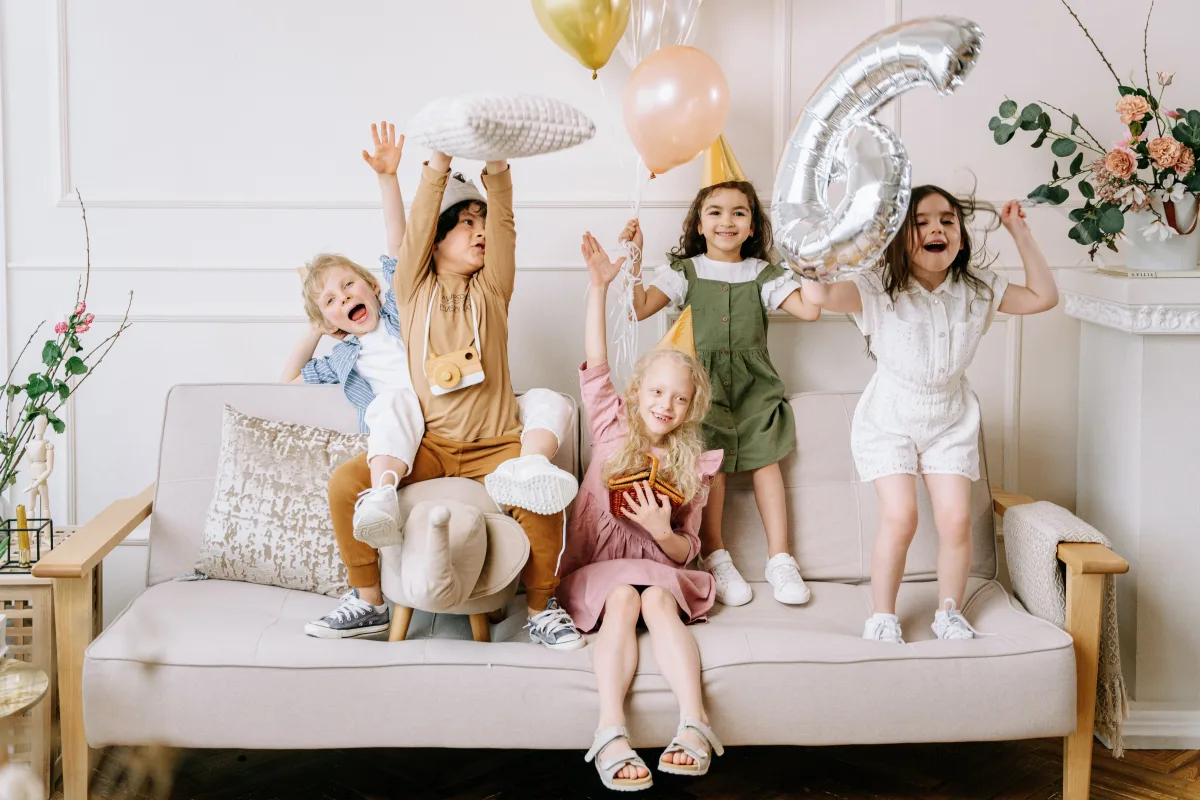
The right brand depends heavily on your child's developmental stage. The criteria that matter for a three-month-old are almost entirely different from what matters for a nine-year-old.
Infants (0–12 months): Growth is fastest here, so cost-per-item matters more than durability-per-item. Volume and softness are the functional priorities — not construction longevity. Multi-pack formats from Carter's are specifically designed for this stage. Organic certification matters more here than at any other stage because infant skin is most sensitive. If you're also setting up for a new baby, our guide to the best baby clothing brands in 2026 covers newborn and 0–12 month options in detail, including softness ratings and snap closure performance.
Toddlers (1–3 years): Mobility increases dramatically, and so does wear-and-tear. Reinforced knees, colorfast fabrics, and easy-on closures become critical. This is the stage where the quality gap between brands becomes most visible — a well-constructed pair of toddler pants from Hanna Andersson will typically outlast two pairs from a fast-fashion brand in the same timeframe.
School age (4–10 years): Fit consistency and wash durability are paramount. Kids this age wear favorites repeatedly, which means garments need to hold up through high-frequency washing. This is where the cost-per-wear math most clearly favors investing in quality. Hanna Andersson and Carter's basics both perform well here.
Tweens (10–14 years): Style preferences emerge strongly and sizing becomes more variable as body shapes diverge. Brands with extended size ranges and consistent fits — H&M Kids, Gap Kids, Old Navy — gain practical importance at this stage. Durability matters less than fit accuracy and style relevance.
Fortune Business Insights notes that the under-5-years segment is expected to grow significantly throughout the forecast period, driven by increasing newborn numbers and rising branded adoption among young children. This is reflected in the expanding range of infant and toddler options from Carter's and H&M Kids.
While you're planning for your child's needs by age, it's worth having the full picture on what else they'll need. Our guides to the best educational toys and STEM picks for kids in 2026 and the best kids' party supplies and decoration ideas round out the practical buying landscape across stages.
Honest Brand Comparison at a Glance
| Brand | Durability | Affordability | Certified Organic/Safe | Secondhand Value | Best For |
|---|---|---|---|---|---|
| Hanna Andersson | Excellent | Mid-to-high | Partial | High | School age, investment basics |
| Patagonia Kids | Excellent | Premium | Yes (many lines) | Very high | Outerwear, activewear |
| Carter's | Good (basics) | Affordable | No | Moderate | Infants, multi-pack basics |
| H&M Kids | Moderate | Very affordable | Some lines | Low-moderate | Trend pieces, tweens |
| Quince | Good | Affordable for organic | Yes (OEKO-TEX) | Moderate | Organic basics at value price |
| Mightly | Good | Mid-range | Yes (GOTS + Fair Trade) | Moderate | Active kids, ethical shoppers |
| Old Navy | Moderate | Affordable | No | Low | Seasonal basics, broad sizing |
Which Kids' Clothing Brand Should You Choose? A Decision Framework
There is no single best kids' clothing brand for every family. The right answer depends on your child's age, your budget structure, and how you shop. Here's a practical decision tree:
If you have an infant or toddler and budget is the primary constraint: Carter's multi-pack basics are your most efficient option. Buy in bulk during sales, prioritize cotton, and don't over-invest in items that will be outgrown in weeks. Pair with an occasional organic piece from Quince for items worn directly against sensitive skin.
If you have a school-age child and plan to resell or hand down: Hanna Andersson is worth the higher upfront cost. The construction genuinely holds through multiple children, and the secondhand recovery value is real. Treat it as a cost-per-wear calculation, not a sticker price comparison.
If you want organic certification without paying a luxury premium: Quince is currently the clearest answer. OEKO-TEX certified, direct-from-source pricing, and thick basics that last. Mightly is the better pick if your focus is activewear with GOTS certification.
If outerwear and activewear are the priority: Patagonia Kids is the durability leader. Buy secondhand if the retail price is a barrier — the quality difference from secondhand Patagonia to secondhand alternatives is significant.
If your child is a tween with strong style opinions: H&M Kids and Old Navy give you the range and price flexibility to keep up with fast-changing preferences without overspending on items that may be unwanted by next season.
The broader principle: match your investment level to the lifespan of the item. For infants cycling through sizes in weeks, price efficiency beats construction quality every time. For school-age kids who wear the same things repeatedly, construction quality beats price every time.
Frequently Asked Questions
What kids' clothing brand is most durable?
Hanna Andersson and Patagonia Kids consistently rank highest for durability in 2026. Both brands are specifically evaluated in independent reviews for their ability to hold up through multiple children and dozens of washes. If you're prioritizing durability above all else, either brand is a defensible choice — Hanna Andersson for everyday wear and Patagonia for outerwear and activewear.
Are expensive kids' clothes actually worth it?
Sometimes — but it depends on how you shop. Premium brands like Hanna Andersson and Patagonia justify their higher price when you factor in resale value and hand-me-down potential. Buying them secondhand, or reselling after your child outgrows them, can bring the effective cost down to or below what you'd spend on fast-fashion alternatives.
What safety certifications should I look for in kids' clothing?
OEKO-TEX (tested for harmful substances), GOTS (certified organic fiber and processing), and Fair Trade (labor conditions) are the three most meaningful certifications. All require third-party auditing. For infant clothing specifically, OEKO-TEX is the most important because young children's skin is most sensitive to chemical exposure from fabrics.
What's the best affordable kids' clothing brand?
Carter's multi-pack basics offer the best cost-per-item value for infants and toddlers. H&M Kids is the strongest option for affordable trend pieces in the tween years. Old Navy and Target Kids are both solid for broad-size-range basics at accessible prices.
Is it worth buying organic kids' clothing?
For infants and children with sensitive skin, yes — particularly for items worn directly against the skin. Quince makes OEKO-TEX certified organic basics accessible at non-premium pricing, which removes most of the usual cost barrier. For outerwear and non-skin-contact garments, conventional fabrics with solid construction are generally fine.
Reviewed by the Trusted Buyer Report editorial team. This guide is research-based — we synthesize manufacturer specifications, independent sources, and verified buyer feedback. We don't accept payment for rankings. How we review · Affiliate disclosure