This guide is based on manufacturer specifications, expert sources, industry market reports, and aggregated verified customer feedback. It does not reflect hands-on testing by Trusted Buyer Report. We may earn a commission when you click links to make a purchase — this has no effect on our recommendations, which are finalized before any affiliate link is applied. Full disclosure →
TL;DR — Key Takeaways
- Beginners: Start with a spinning rod-and-reel combo (6–7 ft, medium power). Skip baitcast until you can cast consistently.
- Intermediate: Specialize by technique and environment. Baitcast becomes viable once your mechanics are solid.
- Advanced/Pro: Carbon fiber rods, sealed smart reels, and GPS sonar are justified investments — but only if your skill level can extract their value.
- Saltwater anglers: Corrosion resistance isn't optional. Unsealed bearings in salt will degrade within months.
- Line matters more than most guides admit. Your line is your only physical connection to the fish.
- Eco switches with no performance trade-off: Lead-free sinkers and biodegradable lures are now regulation-equivalent in most US regions.
Why Picking the Right Fishing Gear in 2026 Is Harder Than It Looks
Here's a number worth sitting with: over 95 million fishing rods are sold annually worldwide — and yet the majority of anglers say they feel overwhelmed, not confident, when buying gear.
More choice has made the decision harder, not easier.
The global fishing apparel and equipment market reached USD 20.6 billion in 2025 and is projected to hit USD 21.8 billion in 2026, according to Intel Market Research. That growth has flooded shelves with smart reels, carbon fiber blanks, GPS sonar units, biodegradable lures — genuinely impressive innovations. But innovation without context is just noise.
The most expensive mistake anglers make isn't buying cheap gear. It's buying gear designed for a different skill level or environment than their own. A beginner who grabs a high-end baitcast reel before mastering casting mechanics will spend more time clearing backlash than fishing. An experienced saltwater angler using freshwater-rated equipment will find it corroded within a single season. Neither outcome is about the gear being bad — it's about the gear being wrong.
This guide cuts through that noise with a skill-tier and environment-first framework. Every section below is designed to give you a clear, actionable answer — not a list of products to scroll through.
If you're also comparing gear across sports, the 2026 Outdoor & Sports Gear Buyer's Guide covers the broader landscape of performance equipment decisions.
How to Match Fishing Gear to Your Skill Level: The Tier Framework
Before you look at a single product, identify your tier. Gear manufacturers rarely do this for you — they want to sell to everyone.
According to Business Research Insights, 61% of global fishing equipment demand comes from hobbyist anglers, with 39% from professional and tournament fishing. Despite that split, most marketing materials lean toward pro-level performance claims that are irrelevant to most buyers.
Here's how to self-identify:
Beginner Tier: Fewer than a dozen fishing trips, or still learning to cast
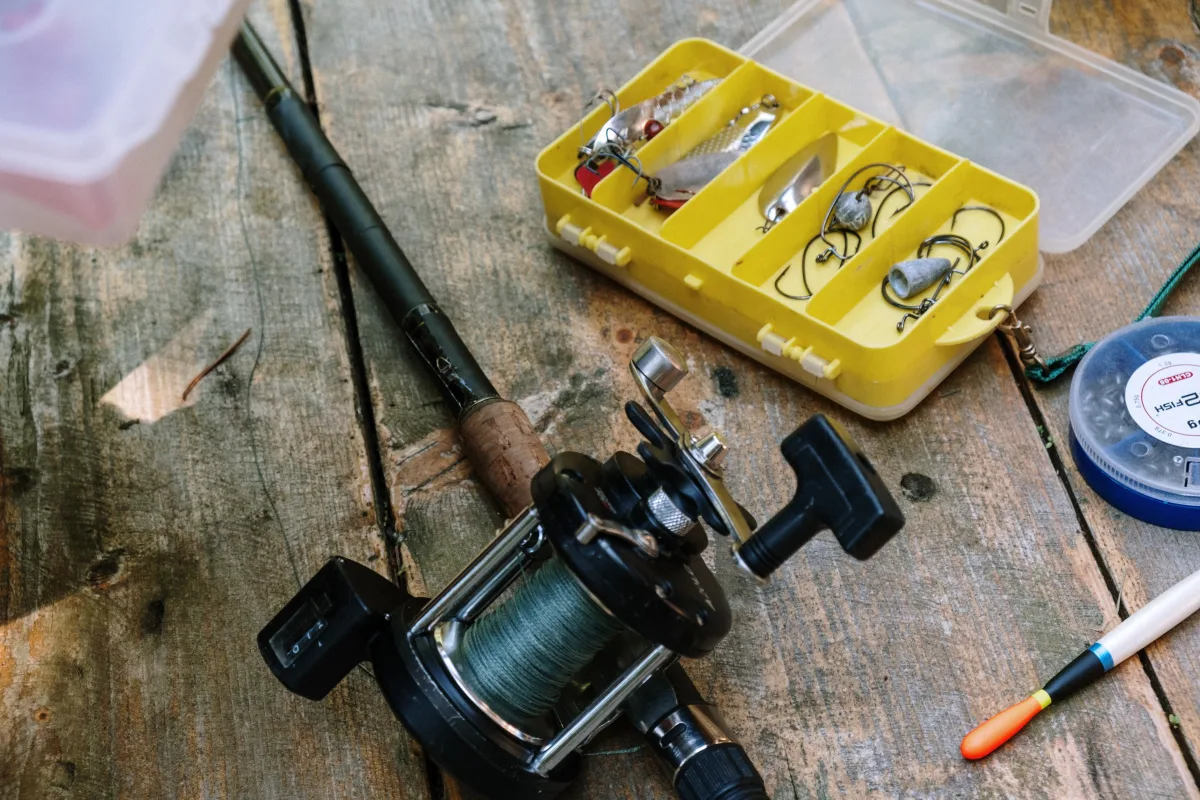
Your priority is simplicity and forgiveness. A spinning reel and rod combo is the right starting point — full stop. Spinning setups are easier to cast, harder to tangle, and far more forgiving of imperfect technique than baitcast systems.
What to look for:
- Medium-power, medium-action spinning combo
- 6- to 7-foot length
- Brands: Ugly Stik, Shakespeare, Zebco — durable, honest-performing entry-level options
Keep your setup simple until your casting and fish-fighting mechanics are consistent.
Intermediate Tier: Consistent casting, fished across multiple environments
Once you cast accurately, start specializing. Choose a primary technique — bass fishing, surf casting, fly fishing, ice fishing — and buy gear optimized for it.
The Speed Spin CRX Spinning Reel, highlighted at ICAST 2026 by Fishing the Midwest, is a strong intermediate option: smooth drag, reliable performance, and a price point that makes sense before committing to a premium reel.
At the intermediate-to-advanced crossover, the Lew's Accel RX Baitcast Combo is worth attention — its ParaMag RX braking system significantly reduces backlash, making baitcast more accessible for anglers ready to make that transition, per Hook & Barrel Magazine's Spring 2026 review.
Advanced / Pro Tier: Technique-first, fishing with specific purpose
At this level, sensitivity, precision, and technology integration justify their cost — because you have the mechanics to extract their benefits.
High-modulus carbon fiber rods, smart reels with programmable drag, and GPS sonar units are appropriate here. Roughly 38% of anglers globally already use this category of advanced equipment, per Business Research Insights. If you're not fishing consistently with deliberate technique, that technology will not improve your results.
Rods and Reels in 2026: What Has Actually Changed
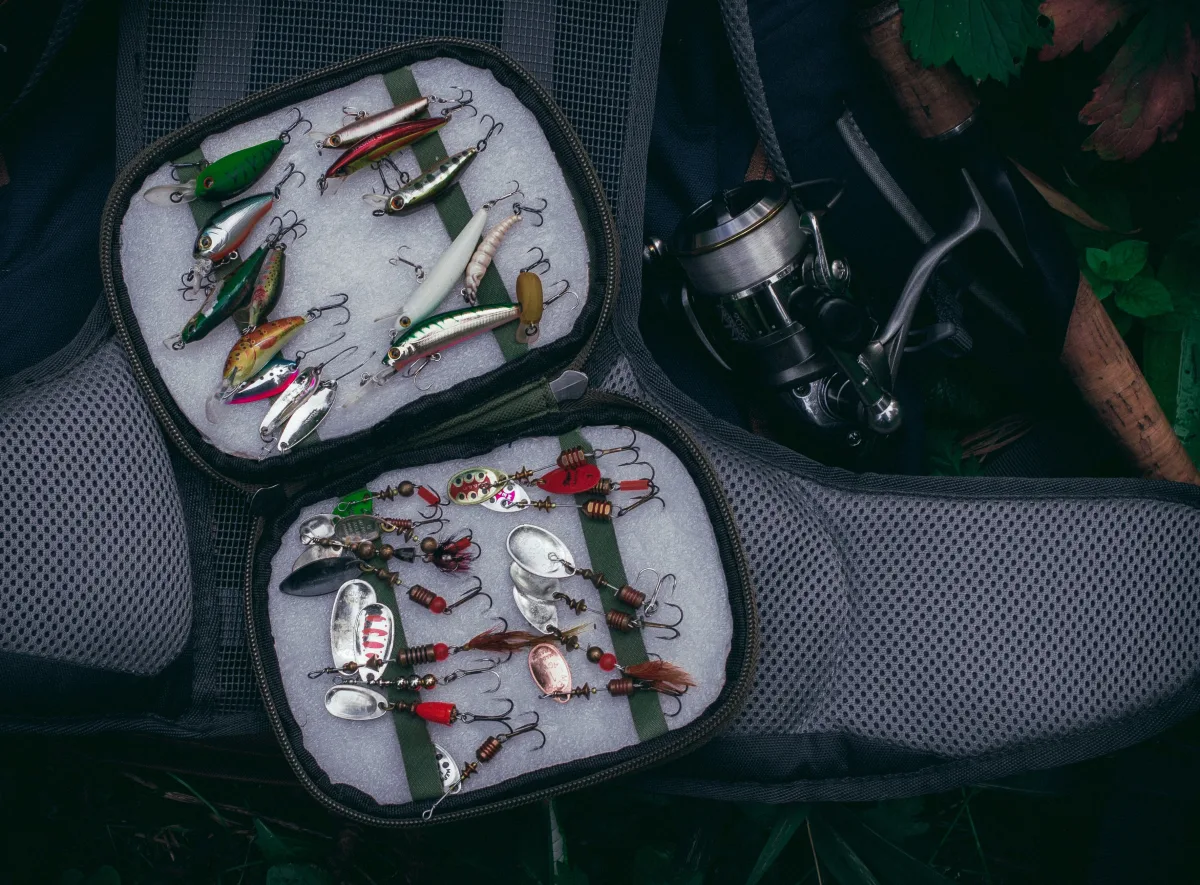
Two genuine shifts define rods and reels in 2026: materials and portability.
According to Business Research Insights, nearly 47% of new fishing products are now manufactured using lightweight composite materials, delivering a 28% durability improvement over traditional materials. Composite and carbon fiber blanks are lighter, more sensitive, and more resistant to fatigue fracture than the fiberglass rods that dominated entry-level fishing for decades. That's a real-world difference, not just a marketing claim.
Portability is the other dominant trend. 49% of new product launches in 2026 focus on portability features, including collapsible rods and compact tackle systems. Travel rods have improved to the point where a four-piece collapsible carbon fiber rod can perform comparably to a one-piece equivalent in most freshwater situations — a genuine upgrade for backpackers, kayak anglers, and anyone who flies to fish.
On the reel side, the Daiwa Certate SW spinning reel introduced Monocoque Body technology that improves structural rigidity for saltwater use without adding weight — cited by Intel Market Research as a notable 2024 innovation. It solves a real problem (flex under load from large saltwater fish) without a weight penalty.
The Rods, Reels, and Poles segment remains the largest in the market, projected to reach USD 6.5 billion at a 3.1% CAGR, according to PR Newswire.
The spec that still matters more than everything else
Here's what no amount of technology replaces: understanding rod action and power rating.
| Action | Where It Bends | Best For |
|---|---|---|
| Fast | Near the tip | Long casts, single hook sets |
| Medium | Middle third of blank | Treble-hooked lures, forgiving hooksets |
| Slow | Throughout the blank | Light line, small fish, finesse techniques |
Master this before spending a dollar more.
Fishing Line: The Overlooked Foundation of Every Setup
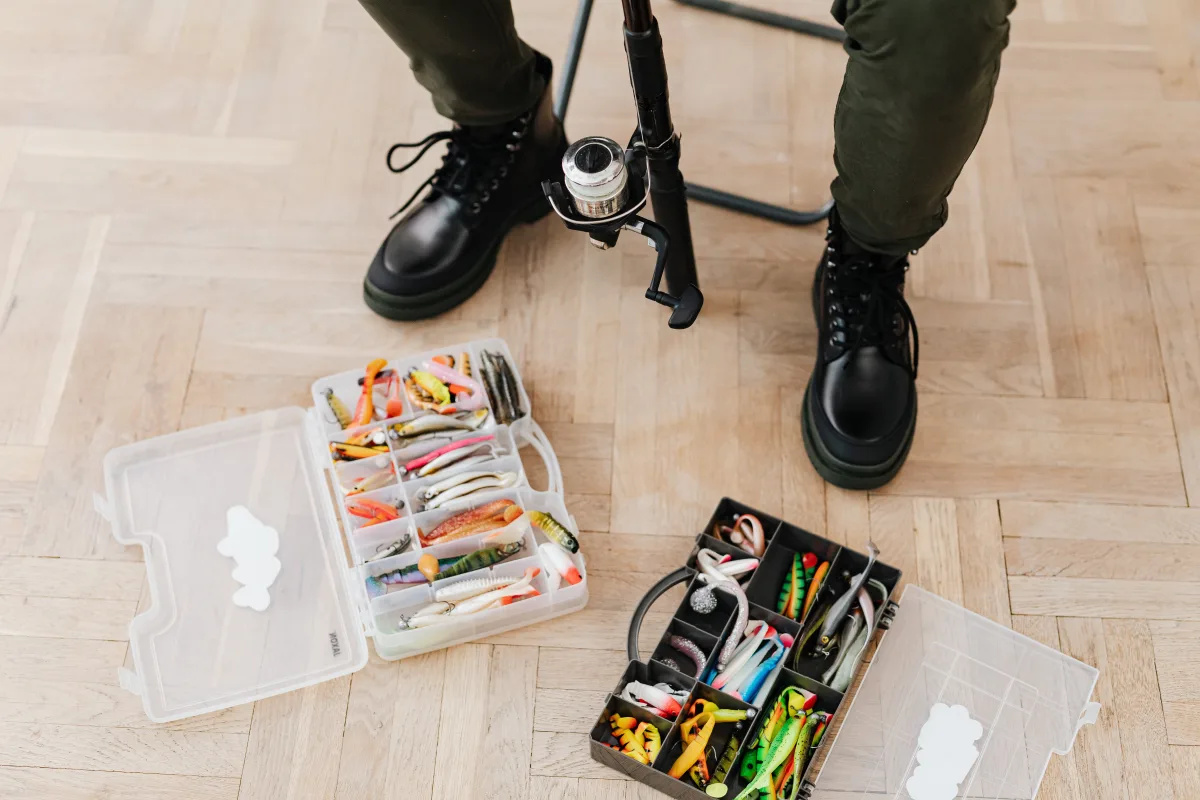
Most gear guides spend 80% of their word count on rods and reels and treat line as an afterthought. That's backwards.
Your line is the only physical connection between you and the fish. The wrong choice costs you catches regardless of how good your rod is.
The three main line types and when to use each
Monofilament Affordable, forgiving, and slightly stretchy — that stretch acts as a shock absorber, which helps with treble-hooked lures. Best for beginners and general freshwater use. Replace more often than you think; mono degrades with UV exposure even when stored.
Fluorocarbon Nearly invisible underwater due to its refractive index closely matching water. Low stretch gives excellent sensitivity. Essential as a leader material in clear water or when targeting pressured fish. More expensive than mono, but as a leader (not a main line), you use less of it.
Braided line Superior strength-to-diameter ratio, zero stretch, exceptional sensitivity. Southern Boating & Yachting identifies high-performance braided lines as the standard for offshore saltwater jigging — engineered for smooth casting, superior control, and durability in big-fish environments.
Pro pairing: Braided main line + 20–40 lb fluorocarbon leader. The braid gives sensitivity and strength; the fluoro gives abrasion resistance and low visibility at the business end.
Terminal tackle: where anglers overspend and under-replace
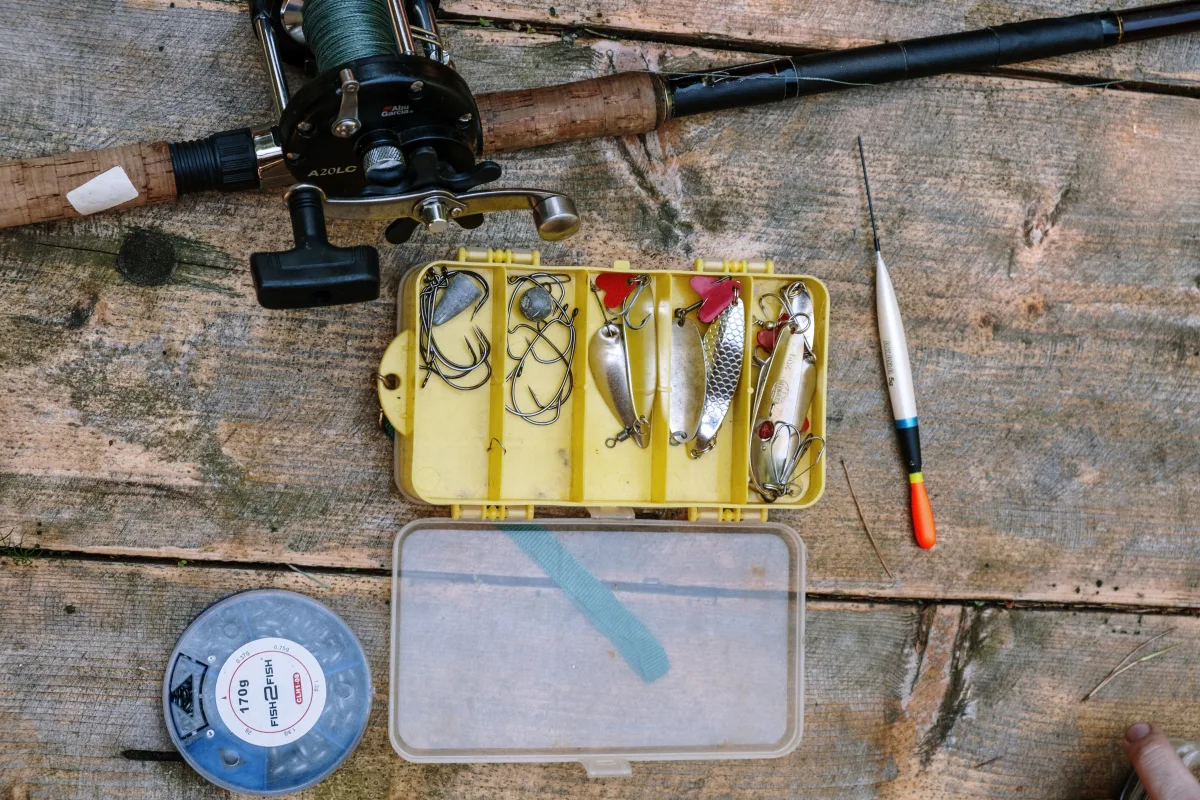
Hooks, sinkers, swivels, and snap links — most anglers overspend on branded terminal tackle when generic quality is often equivalent. The exception is hooks.
Hook sharpness degrades faster than most anglers replace them. A dull hook is one of the most common and least acknowledged reasons for missed strikes. The simple test: drag the point lightly across your thumbnail. If it skates without catching, it's dull. Replace it.
Lead-free sinkers deserve specific mention. Action Outdoors Limited's 2026 gear guide lists them as a key eco-friendly upgrade, and regulations in many US regions now require them. Performance is equivalent to traditional lead — there's no practical reason to avoid switching.
The Lures, Flies, and Baits segment is the fastest-growing category in the market, at a 4.7% CAGR per PR Newswire — driven in part by biodegradable and eco-conscious innovations.
Environment-Specific Gear: What to Buy Based on Where You Fish
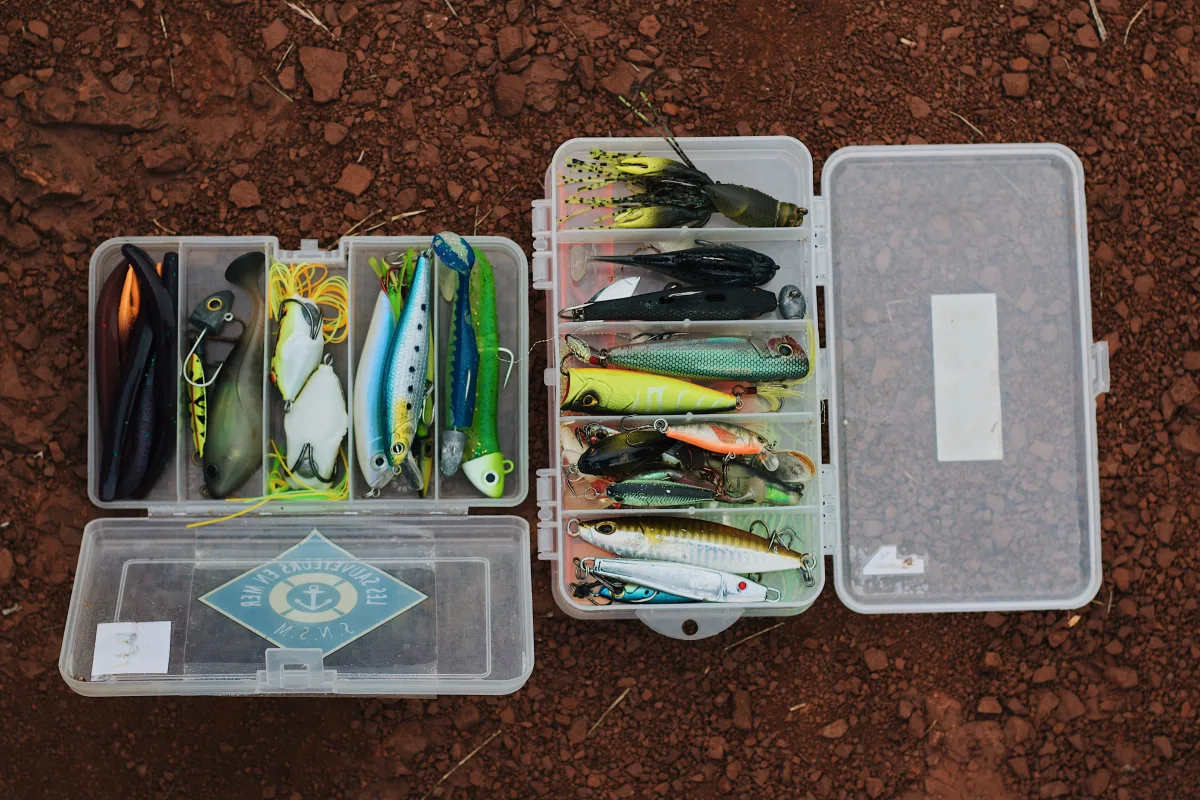
Your fishing environment is the single most useful filter for narrowing gear options. Freshwater and saltwater fishing are the two primary segments driving the sports fishing equipment market, per Cognitive Market Research — and that distinction should drive your buying decisions as much as it drives manufacturer design decisions.
Freshwater fishing
Priority: versatility and sensitivity.
A medium-power, medium-fast spinning or baitcast setup covers the majority of freshwater scenarios — bass, trout, walleye, pike. Sensitivity matters because freshwater species often bite subtly. Feeling that tap through your rod blank is the difference between a hook set and a missed fish.
Saltwater fishing
Priority: corrosion resistance — non-negotiable, not optional.
According to Ardent Tackle's 2026 innovations guide, saltwater anglers should focus specifically on sealed reels, corrosion-resistant rod guides, and saltwater-rated line. Salt is extraordinarily destructive to metal components. A reel with unsealed bearings used in saltwater will degrade within months regardless of how well you rinse it.
What to verify before buying any reel for saltwater use:
- Sealed drag system
- Corrosion-resistant stainless or titanium guides
- IPX waterproofing rating on any electronics
These features are worth the price premium. Replacing a corroded reel mid-season is not.
Fly fishing
Priority: balance and weight distribution.
Ardent Tackle's 2026 guide emphasizes balanced rods, smooth line control, and durable waders as the defining quality markers for fly fishing gear. A poorly balanced fly rod causes fatigue on long casting sessions and reduces accuracy.
Line selection matters as much as rod selection: weight-forward fly lines are the standard for beginners; double-taper lines offer more delicate presentations for technical dry fly fishing.
Shore and kayak fishing
Priority: portability and compactness.
Compact sonar units that mount without drilling, lightweight collapsible rods, and GPS tools add efficiency without bulk — highlighted by Ardent Tackle as the most practical technology upgrades for this style. A kayak angler carrying a heavy full-sized rod setup is working against themselves before the first cast.
If you're into other water sports alongside fishing, the Best Kayaking & Paddleboarding Equipment Guide for 2026 covers the hull and paddle side of the equation.
Smart Fishing Technology in 2026: What's Worth It and What's Hype
GPS-enabled fish finders have crossed an important threshold in 2026: they're genuinely accessible in both price and usability. They are no longer exclusively tournament-pro equipment. Roughly 38% of advanced anglers globally already use GPS-enabled fish finders and carbon fiber rods, per Business Research Insights — a figure that has grown steadily as unit costs have dropped.
What delivers clear value
Sonar for structure mapping is the highest-value technology for most anglers fishing unfamiliar water. Knowing where drop-offs, submerged vegetation, and hard-bottom transitions are located removes guesswork and puts you on fish faster. For shore and kayak anglers, compact sonar units that clip or suction-mount to a kayak hull are the most practical entry point — no drilling, no permanent installation.
Precision lures with embedded vibration chambers or scent-release technology work — but they require the angler to understand presentation technique. A vibrating lure retrieved at the wrong speed or depth won't outperform a basic jig fished correctly. Technology amplifies skill. It doesn't substitute for it.
What requires caution
Smart reels with digital drag systems and programmable cast control are a real innovation, but their value is technique-dependent. For finesse bass fishing where drag settings need to be precise and repeatable, a digital system offers a measurable advantage. For general recreational fishing, the added cost and complexity deliver diminishing returns.
Before buying any electronic fishing tool, check:
- Battery life under real fishing conditions (not lab conditions)
- Waterproofing rating — look for IPX7 or higher
- Ease of mounting and dismounting without specialized tools
Don't buy on headline feature lists. Buy on the specs that matter in the conditions you actually fish.
Eco-Friendly Fishing Gear in 2026: What to Look For
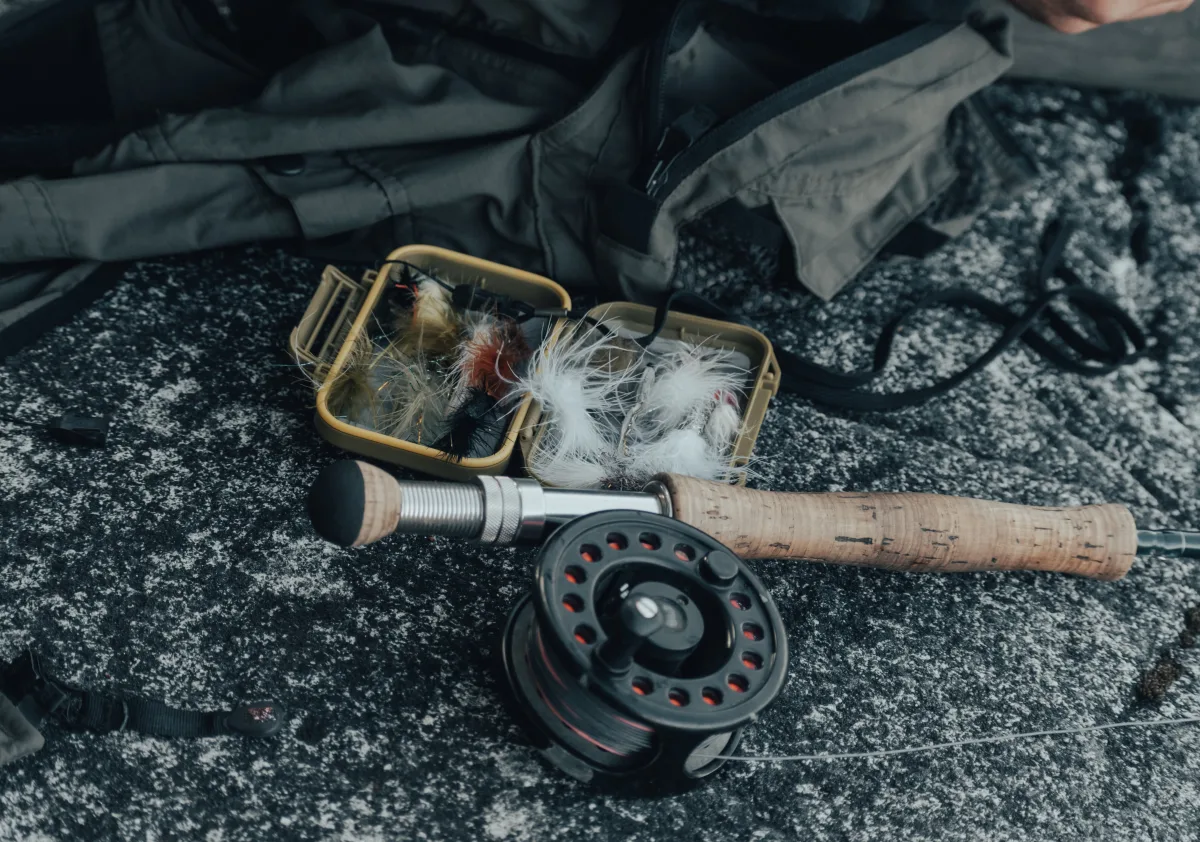
Sustainability is no longer a niche consideration — it's a documented market driver. Intel Market Research identifies sustainability concerns as a primary force pushing innovations like recycled materials and biodegradable lures across the industry. Key manufacturers including Shimano, Pure Fishing, Rapala VMC, and Simms Fishing have all incorporated sustainability into product development.
The highest-impact switches with no performance trade-off
Biodegradable lures are now widely available from major manufacturers and reduce long-term environmental impact when tackle is lost in the water — which happens to every angler eventually. Performance is equivalent to traditional lures at the same price point.
Lead-free sinkers are performance-equivalent to traditional lead weights and increasingly required by regional fishing regulations. If you fish in states with mandated lead-free zones, check local rules — non-compliance can result in fines. The switch costs nothing in performance.
Rubber-mesh landing nets reduce stress and injury to fish during handling. They're less abrasive to fish slime coats than traditional knotted nylon, which directly improves post-release survival rates for catch-and-release fishing. This is one of the lowest-cost, highest-impact changes available to any angler.
Eco-friendly choices also tend to align with longer product lifespans. Corrosion-resistant composite materials reduce replacement frequency — less waste and lower long-term cost. Sustainability and practicality point in the same direction here.
Essential Fishing Accessories Most Guides Skip
Experienced anglers know: the difference between a frustrating day and a productive one often comes down to accessories, not headline gear.
Action Outdoors Limited's 2026 gear guide identifies several must-have accessories that consistently make the shortlist for experienced anglers but rarely appear in top-10 rod-and-reel lists.
Precision line cutters A small investment that prevents ragged line ends and knot failures. Scissors and fingernails are not substitutes. Carry dedicated fishing line cutters.
Multi-tools and needle-nose pliers Essential for hook removal, split ring opening, and on-the-spot tackle adjustments. Needle-nose fishing pliers with a built-in line cutter cover most situations in a single tool.
Waterproof storage bags and dry boxes A soaked phone or ruined battery pack can end a trip faster than any gear failure. Protect electronics, bait, and sensitive gear before you need to.
Quality fishing knives For anglers who keep and process their catch, a proper fillet knife is essential. Look for stainless steel blades with strong edge retention in wet conditions.
Fish handling gloves Protect your hands from hooks, spines, and teeth. Equally important: reduce stress on the fish during handling, improving post-release survival rates.
UV-protective, moisture-wicking fishing apparel Long sessions in direct sun without proper UV protection cause real cumulative damage. Fishing-specific shirts with UPF 50+ ratings and vented construction are worth the investment for anyone spending more than a few hours on the water.
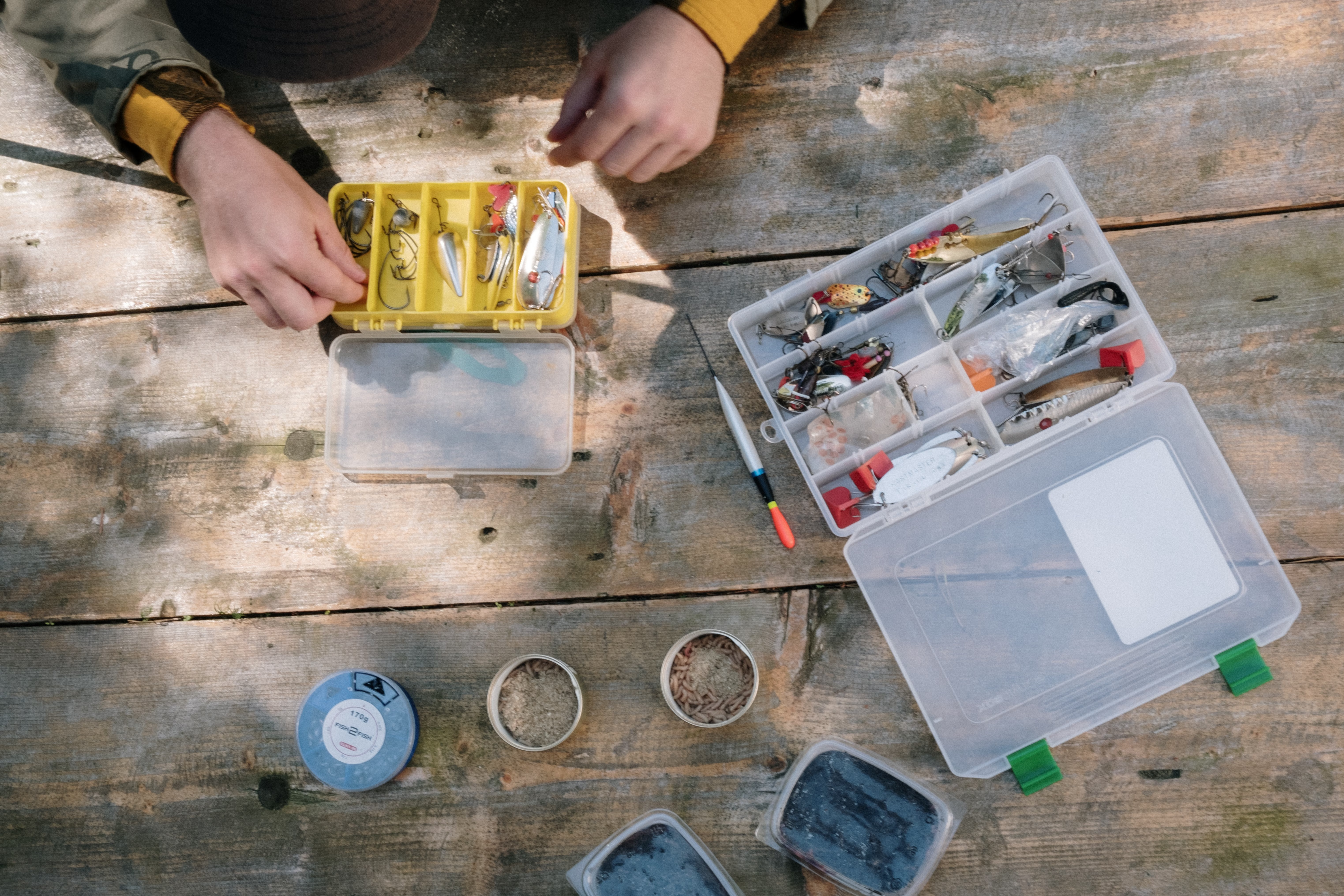
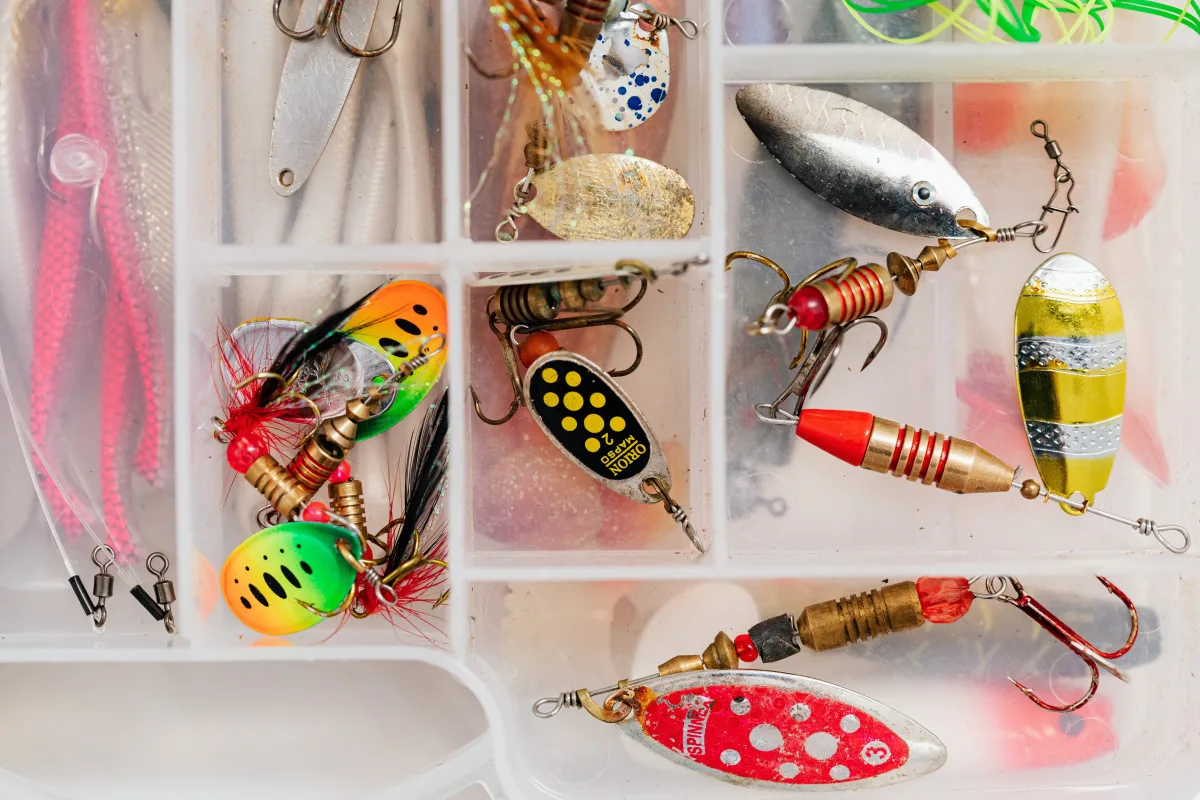
A well-organized tackle box system saves more time on the water than almost any gear upgrade. Compartmentalized boxes that separate hooks by size, lures by type, and terminal tackle by function eliminate fumbling — and fumbling costs you fishing time.
How This Guide Compares to Other Outdoor Gear Decisions
Fishing gear decisions share something with all outdoor equipment choices: the best setup is the one matched to your actual use case, not the one with the most features.
If you're building out a broader outdoor kit alongside your fishing setup, these guides cover adjacent decisions with the same framework:
- Camping and hiking equipment that complements multi-day fishing trips: Best Camping & Hiking Gear 2026
- Hiking boots for wading banks, trails to remote spots, and backcountry access: Best Hiking Boots 2026
- Electric bikes for reaching water access points and covering terrain: Best Electric Bikes 2026
- REI is one of the most common places anglers buy gear alongside camping equipment — our REI Review 2026 covers whether the Co-op membership is worth it and how their gear quality holds up.
Frequently Asked Questions
What is the best fishing gear setup for a complete beginner in 2026?
Start with a medium-power spinning rod and reel combo in the 6- to 7-foot range. Brands like Ugly Stik and Shakespeare offer reliable entry-level combos that are forgiving of imperfect casting technique. Pair it with 8–10 lb monofilament line, a basic selection of hooks, split shot sinkers, and a few soft plastic lures or live bait rigs. Keep the setup simple until your casting and fish-fighting mechanics are consistent.
Is a baitcast reel worth it for beginners?
No. Baitcast reels require precise thumb control during the cast to prevent backlash — a skill that takes real practice to develop. Beginners who start on baitcast setups spend more time clearing tangles than fishing. Move to baitcast once you can cast a spinning reel accurately and consistently.
What fishing line should I use in saltwater?
Braided line is the standard for saltwater fishing, particularly for offshore and jigging applications. Its superior strength-to-diameter ratio and zero stretch give you direct contact with the fish at depth. Use a fluorocarbon leader of 20–40 lb test between the braid and your lure or hook to add abrasion resistance and reduce line visibility.
Are GPS fish finders worth buying for recreational anglers?
Yes, if you regularly fish unfamiliar water or target depth-specific species. GPS-enabled fish finders have become significantly more affordable and user-friendly in 2026. For kayak and shore anglers, compact clip-on sonar units are the most practical entry point. If you fish the same small pond every weekend, the investment is harder to justify.
What eco-friendly gear changes make the most difference?
Switching to lead-free sinkers and biodegradable lures are the two highest-impact changes with the lowest performance trade-off. Both are now performance-equivalent to their traditional counterparts and increasingly required by regional fishing regulations. Switching to a rubber-mesh landing net is a low-cost, high-impact change for catch-and-release anglers.
How often should I replace my fishing hooks?
More often than you currently do. Hook sharpness degrades with use, storage, and saltwater exposure. The test: drag the hook point lightly across your thumbnail. If it skates without catching, it's dull. Replace hooks at the first sign of dullness — don't wait until they're visibly damaged. Dull hooks are one of the most underacknowledged causes of missed strikes.
What's the difference between a fast and a slow action rod?
Fast-action rods load near the tip — best for long casts and quick, single hook sets. Slow-action rods bend throughout the blank — best for light line, small fish, and techniques where a softer strike absorption helps. Medium-action rods split the difference and are the most versatile starting point for most freshwater scenarios.
Final Buying Framework: Match Gear to Your Reality
The best fishing gear in 2026 is not the most expensive gear or the gear with the most technology. It's the gear matched to your skill level, fishing environment, and realistic fishing frequency.
Use this before any purchase:
- Identify your tier: Beginner (spinning combo, simple terminal tackle), intermediate (environment-specific specialization), or advanced (precision tools and technology that your technique can actually use).
- Define your primary environment: Freshwater, saltwater, fly, shore/kayak, or ice. Each has non-negotiable requirements — especially saltwater, where corrosion resistance is mandatory, not optional.
- Set a realistic budget and stick to it: The market offers excellent performance at every price point. Spending more than your skill level justifies does not close the gap — it widens the frustration.
- Prioritize line and hooks over headline gear: Your rod can be excellent and your reel can be premium, but dull hooks and wrong-weight line will cost you fish every single trip.
- Upgrade incrementally: Every angler who has been fishing for 5+ years wishes they had started simpler and upgraded deliberately, not impulsively.
This article was researched and drafted with AI assistance, then reviewed and fact-checked by the Trusted Buyer Report editorial team before publishing. We synthesize manufacturer specifications, expert sources, and aggregated verified buyer feedback — and we cite our sources. How we review → · How we use AI →