
We may earn a commission when you use our links to make a purchase. This article was researched and drafted with AI assistance, then reviewed and fact-checked by our editorial team before publishing. Our recommendations are finalized before any affiliate link is applied. How we review →
You're standing in the pet food aisle — or scrolling through hundreds of options online — and your vet just said "look for something with good research behind it." Helpful in theory, but that doesn't tell you whether to grab the Purina Pro Plan, the Hill's Science Diet, or spend three times as much on a fresh food subscription.
Bottom line up front: The three brands most consistently recommended by veterinarians in clinical settings in 2026 are Purina Pro Plan, Hill's Science Diet, and Royal Canin — because they combine decades of peer-reviewed research, board-certified veterinary nutritionists on staff, and extensive feeding trial data. If you want a step up in ingredient quality and budget isn't the main constraint, The Farmer's Dog is the most credible fresh food option. For a middle-ground format between kibble and fresh, Spot & Tango UnKibble has a growing body of real-world results behind it.
This guide breaks down exactly what separates these brands, what veterinarians actually look for, and how to match the right food to your specific dog.
How this guide was researched: This guide is based on manufacturer specifications, expert veterinary sources, and verified customer feedback aggregated from PetMD, NBC News Select, Dog Food Advisor, and Pet Loves. It does not reflect hands-on testing by Trusted Buyer Report. We reviewed six leading brands across four food formats for this comparison.
Head-to-Head Comparison: Top Vet-Recommended Dog Food Brands of 2026
Before diving into individual brands, here's how the top options stack up across the most important decision criteria.
| Brand | Food Type | Primary Protein | AAFCO Compliant | Vet Nutritionist on Staff | Best Life Stage Fit |
|---|---|---|---|---|---|
| Purina Pro Plan Complete Essentials | Dry kibble | Chicken or salmon | Yes | Yes | All life stages |
| Hill's Science Diet Adult Dry | Dry kibble | Chicken | Yes | Yes | Puppies, adults, seniors |
| Royal Canin Small Breed Adult Dry | Dry kibble | Chicken by-product meal | Yes | Yes | Small breeds, 10 months–8 years |
| The Farmer's Dog | Fresh (refrigerated) | Beef, turkey, or pork | Yes | Yes | All life stages |
| Spot & Tango UnKibble | Gently cooked dry | Beef or turkey | Yes (all life stages) | Yes | All life stages |
| Just Food for Dogs | Gently cooked | Chicken, beef, or fish | Yes | Yes | Adults, seniors |
One important distinction: "vet-recommended" is not a regulated term. Some brands earn it because veterinarians prescribe them in clinical settings based on published research. Others earn it because their formulas are developed by board-certified veterinary nutritionists. Still others appear on vet-recommendation lists because the brand funds veterinary education or research programs. Knowing which category a brand falls into helps you evaluate the recommendation more critically.
For a broader look at how these distinctions play out across other pet product categories — including cat food, GPS trackers, and training tools — see our 2026 Pet Products Review: Dogs, Cats, and Small Pets.
How Veterinarians Actually Evaluate Dog Food

When a veterinarian recommends a dog food brand, they're applying a specific set of criteria — not just going with whatever they see advertised. Understanding those criteria lets you evaluate any brand on your own, including newer options your vet may not have reviewed yet.
The baseline standard is AAFCO compliance. The Association of American Feed Control Officials sets nutritional guidelines that define what "complete and balanced" means for dogs. But there are two ways a brand can claim AAFCO compliance: through a formulation statement (the recipe is calculated to meet nutrient minimums on paper) or through a feeding trial (the food was actually fed to dogs and tested for health outcomes). Veterinarians generally prefer brands that have conducted feeding trials because those results reflect real digestibility and absorption — not just theoretical nutrient calculations.
Beyond AAFCO, most veterinary nutritionists apply similar additional criteria: protein quality, ingredient transparency, processing method, independent testing, recall history, and whether the brand employs credentialed veterinary nutritionists. Recall history is particularly useful to check independently — the FDA maintains a public database of dog food recalls searchable by brand name.
The FDA's ongoing investigation into a potential link between grain-free diets and dilated cardiomyopathy (DCM) in dogs is another factor many veterinarians weigh. The research is not conclusive, but it has led most vets to be more cautious about recommending grain-free formulas without a specific medical reason.
A practical framework for evaluating any brand: ask whether the company employs board-certified veterinary nutritionists, whether their AAFCO compliance comes from feeding trials (not just formulation), and whether they have a documented history of proactive recalls (a sign of quality control, not a red flag).
Best Dry Kibble: Purina Pro Plan, Hill's Science Diet, and Royal Canin Compared
These three brands dominate vet clinic recommendations for a reason that goes beyond marketing: they have decades of published nutritional research, board-certified veterinary nutritionists on staff, and extensive feeding trial data. According to PetMD's vet-verified dog food guide, Hill's Science Diet, Purina Pro Plan, and Royal Canin are the brands most frequently cited by veterinarians in clinical practice.
Purina Pro Plan Complete Essentials
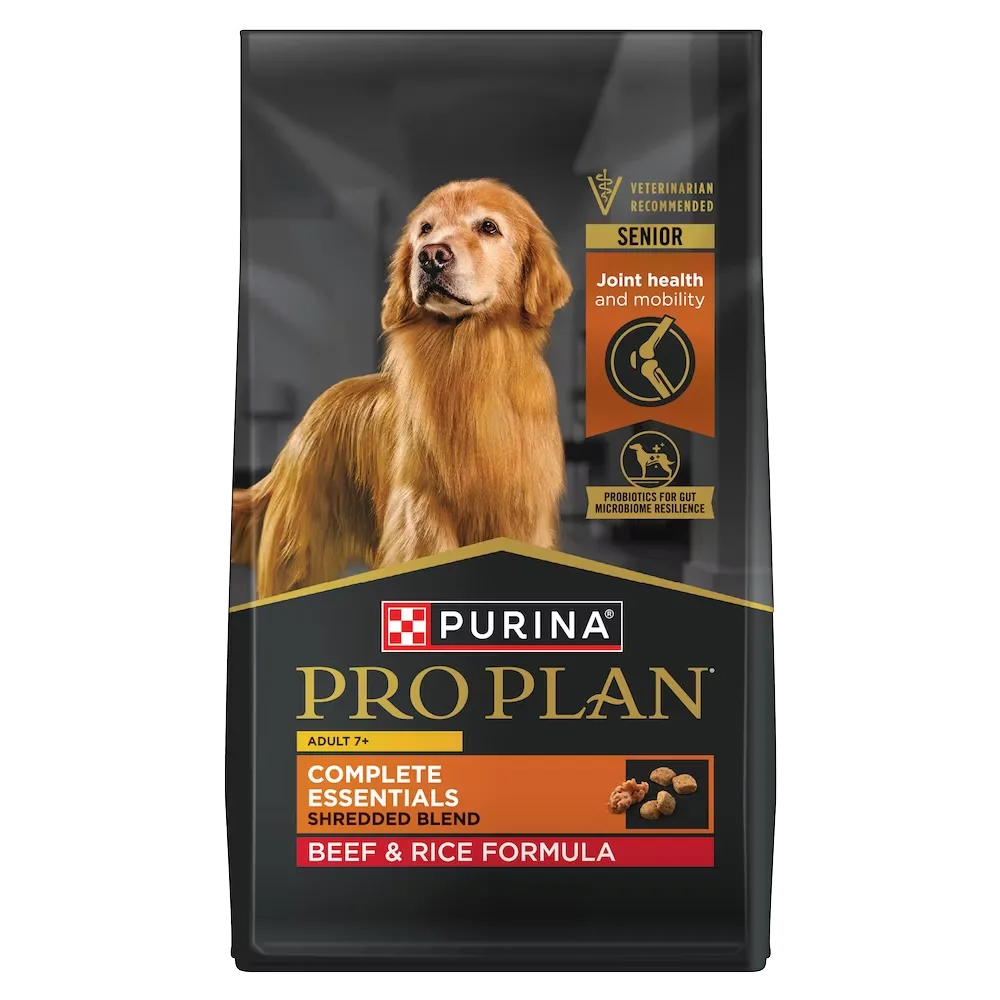
Purina employs several board-certified veterinary nutritionists involved in formula development. The Pro Plan line covers puppies, adults, seniors, and performance dogs, with formulas calibrated to different sizes and activity levels. The Complete Essentials line — the core adult maintenance formula — uses real chicken or salmon as the first ingredient, with a nutrient profile designed for long-term health rather than short-term palatability. It's widely available at retail stores and veterinary clinics, which makes it the most practical choice for most households.
Best for: Adult dogs of all sizes whose owners want clinical-grade research and easy availability.
Watch out for: Some formulas include corn and wheat, which some owners prefer to avoid (though both are highly digestible for most dogs).
Hill's Science Diet Adult Dry
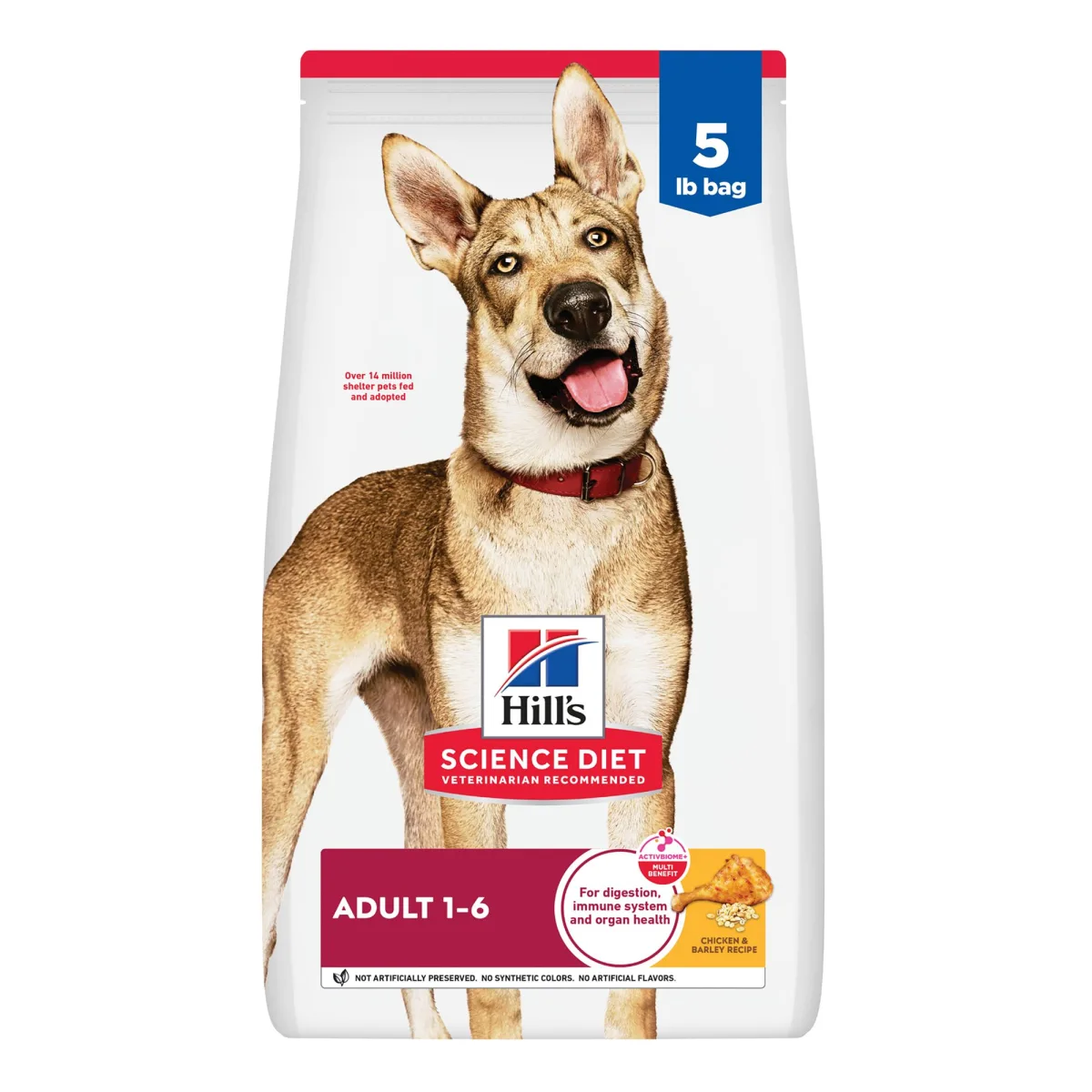
Hill's has built its reputation on clinical research and veterinary nutrition partnerships. The brand offers specific recipes for puppies, adults, seniors, and dogs with special health needs — including formulas targeting digestive health, skin and coat conditions, and joint support. The trade-off: Hill's recipes often use chicken by-product meal and corn as significant ingredients. Despite the marketing stigma around by-products, both are highly digestible — and the research behind Hill's formulas is among the strongest in the industry.
Best for: Dogs with specific health conditions, or owners whose vet has recommended a targeted formula.
Watch out for: Ingredient lists that look less impressive than boutique alternatives — but digestibility data matters more than ingredient prestige.
Royal Canin Small Breed Adult Dry
Royal Canin's standout feature is its breed-specific and size-specific approach. The Small Breed Adult formula is formulated for dogs weighing between 9 and 22 pounds, from 10 months to 8 years old. The kibble size is calibrated to small-breed jaw structure, which affects how well smaller dogs chew and digest their food — a detail most other brands don't address. Royal Canin also offers formulas for dogs with food sensitivities and gastrointestinal issues, making it one of the most versatile brands for dogs with specific health conditions.
Best for: Small-breed dogs, especially those with digestive sensitivities or a need for size-appropriate kibble.
Watch out for: Higher price point than other kibble options, and heavy availability through specialty retail and vet clinics rather than mass retail.
A common criticism of all three brands is that they use lower-quality ingredients compared to boutique alternatives. What the research shows, however, is that digestibility and bioavailability — how much nutrition the dog actually absorbs — are more important metrics than ingredient prestige. A named whole meat as the first ingredient doesn't automatically mean better nutrition if the overall formula is poorly balanced.
Best Fresh Dog Food: The Farmer's Dog

Fresh dog food means human-grade ingredients, minimally processed, refrigerated or frozen, and delivered via subscription. The Farmer's Dog is the most credible brand in this category and is favored by a growing number of veterinarians in 2026.
The Farmer's Dog builds each meal plan around the individual dog's age, weight, breed, and activity level. Recipes are developed by veterinary nutritionists and meet AAFCO nutritional standards — so they qualify as complete and balanced, not just "natural" in a marketing sense. "Human-grade" here has regulatory meaning: the food was produced, stored, and handled in a facility that meets human food safety standards, which is a documentable claim, not just a label.
The main drawback is cost. For a large-breed dog, the monthly subscription can be substantial — multiple times the cost of premium kibble. The subscription model also requires consistent refrigeration and planning. That said, if your dog has digestive issues, chronic skin problems, or simply isn't thriving on kibble, fresh food is worth considering as a diagnostic tool before assuming the problem is medical.
Best for: Dogs of all life stages whose owners want premium, fresh nutrition backed by science and are willing to pay the price premium for it.
Watch out for: Monthly costs that can run significantly higher than kibble, and the need to manage delivery schedules and refrigerator space.
If you want to compare what fresh-format pet food subscriptions look like alongside other subscription pet products, our Best Pet Subscription Boxes 2026 guide covers the format in more detail.
Best Gently Cooked and Alternative Format Options
Gently cooked dog food occupies the space between fresh refrigerated meals and traditional extruded kibble. The cooking temperature is lower than standard kibble production, which preserves more heat-sensitive nutrients while still eliminating pathogens. For owners who want better nutrition than kibble but find fresh food subscriptions impractical, this format is worth serious consideration.
Spot & Tango UnKibble
Spot & Tango describes their UnKibble as a "Fresh Dry" approach — shelf-stable and convenient, but produced through gentle cooking methods that maintain higher nutritional value than traditional extrusion. Recipes are formulated by veterinary nutritionists, meet AAFCO standards for all life stages, and contain no artificial fillers or flavors. The Beef & Barley formula shows a protein content of 34.2% — notably higher than most standard kibble options.
Real-world owner feedback from Dog Food Advisor is telling: multiple long-term users report resolved GI issues, improved coat condition, and positive veterinary feedback after switching to UnKibble. These are individual accounts rather than controlled studies, but they reflect the kind of observable health improvements that happen when a food format suits a particular dog's digestive system well.
Best for: Dogs with mild GI sensitivities whose owners want better nutrition than standard kibble without committing to a refrigerated subscription.
Watch out for: Higher cost than traditional kibble; the "fresh dry" format is newer and has less long-term clinical data than brands like Purina or Hill's.
Just Food for Dogs
Just Food for Dogs is known for transparency around ingredient sourcing and has board-certified veterinary nutritionists involved in recipe development. It's available both through subscription and in some retail locations (including select Petco stores), which gives it more practical flexibility than purely subscription-based competitors. Reviewers who feed it to their own dogs consistently cite ingredient quality and palatability as standouts.
Best for: Owners who want gently cooked food with more retail availability and flexibility than a pure subscription model.
Instinct Raw
Raw feeding remains a genuinely divisive topic in veterinary nutrition. Instinct Raw is the brand most often cited when veterinary professionals discuss raw feeding in the context of responsible sourcing and formulation. The honest reason many veterinarians don't recommend it broadly is bacterial contamination risk — particularly for households with immunocompromised people or dogs. Raw food requires careful handling, separate storage, and thorough sanitation. For generally healthy adult dogs in households without vulnerable individuals, raw feeding can be nutritionally appropriate — but it demands more owner diligence than any other format.
Best for: Experienced raw-feeding owners with healthy adult dogs and households without immunocompromised people or pets.
Not recommended for: Puppies, senior dogs, immunocompromised dogs, or households with young children or immunocompromised adults.
Choosing by Life Stage: Puppy, Adult, and Senior Dog Food Needs
Brand selection is only half the decision. The formula within a brand matters just as much, because nutritional requirements shift significantly across a dog's life.
Puppies require higher protein, fat, calcium, and phosphorus to support rapid growth, plus DHA for brain and eye development. Look for an AAFCO statement that says "growth" or "all life stages." Large-breed puppies specifically need a controlled calcium-to-phosphorus ratio — too much calcium during growth phases can contribute to developmental orthopedic disease. This is a distinction many owners miss when choosing puppy food, and it's why large-breed-specific puppy formulas exist as a separate category.
Adult dogs do best on maintenance formulas that balance macronutrients for healthy weight, digestive function, and coat condition. The AAFCO statement should say "maintenance" or "all life stages." Most of the brands in this guide have strong adult maintenance options; the right choice depends more on your dog's size, sensitivities, and activity level than on any single brand ranking.
Senior dogs may benefit from reduced calorie density, added joint support ingredients like glucosamine and chondroitin, and easily digestible protein sources. Critically, "senior" is not a defined AAFCO life stage — it's a marketing term. Senior formulas vary widely between brands, so read the actual nutrient profile rather than relying on the age label alone.
When you pick up any bag of dog food, find the AAFCO nutritional adequacy statement — usually printed near the guaranteed analysis panel. Confirm it matches your dog's current life stage before anything else on the label.
Small-Batch and Holistic Brands Worth Knowing

Not every quality dog food comes from a brand with a national marketing budget. Several smaller manufacturers maintain rigorous quality control and ethical ingredient sourcing that larger-scale producers can struggle to sustain.
Fromm is a family-owned brand with a long production history and a reputation for conservative, well-tested formulas. Petcurean is noted for independent testing standards and ingredient transparency. OC Raw follows a holistic formulation philosophy where every ingredient serves a functional purpose rather than acting as a filler.
The Whole Dog Journal's 2026 dry food picks include high-protein options with named whole meats as primary ingredients and minimal starchy fillers, with protein minimums of 23–35% and options with novel proteins like quail and lamb for dogs with sensitivities to common proteins.
The trade-off with small-batch brands is data. Petcurean and Fromm don't have the same volume of published feeding trial research as Hill's or Purina. That doesn't make them inferior — it means you're relying more on ingredient quality and manufacturing standards than on long-term clinical outcome data. Apply the same AAFCO and veterinary nutritionist criteria to these brands as you would to any major brand.
How to Read a Dog Food Label Without Getting Misled
Dog food labels contain specific regulated terms that carry precise meanings — and marketing language that carries none. Knowing the difference saves you from paying premium prices for claims that don't translate to nutritional value.
"Complete and balanced" is a regulated claim meaning the food meets AAFCO minimum nutrient profiles for the stated life stage. This is the most important label claim to look for.
"Natural" is regulated by AAFCO to mean no artificial flavors, colors, or preservatives — but it says nothing about ingredient quality or nutritional value.
"Human-grade" is not regulated by AAFCO for pet food labels in general, but is meaningful when a brand can document that its ingredients and facility meet FDA human food standards. The Farmer's Dog is one brand that meets this standard substantively.
Ingredient list order: ingredients are listed by weight before cooking. A whole meat listed first (e.g., "chicken") contains significant water weight, so its actual post-processing contribution may be smaller than a meal listed second (e.g., "chicken meal," which is already dehydrated and more protein-dense). Neither is inherently better — but understanding this prevents you from being misled by marketing language around ingredient position.
Guaranteed analysis: shows minimum protein and fat percentages and maximum fiber and moisture. To compare foods with different moisture levels accurately, you need to convert to a dry matter basis — a step that becomes important when comparing fresh food to kibble.
Where to Buy Vet-Recommended Dog Food
All six brands in this guide are available online. Purina Pro Plan, Hill's Science Diet, and Royal Canin are available at most major pet retailers — including Petco, PetSmart, and Amazon. The Farmer's Dog and Spot & Tango ship directly through subscription. Just Food for Dogs is available via subscription and at select Petco locations.
For those who prefer buying everything for their pet in one place, our Chewy Review 2026 covers whether Chewy's pricing, auto-ship discounts, and customer service make it the best online option for stocking up on brands like Purina Pro Plan and Hill's Science Diet — including how their Autoship pricing compares to Amazon Subscribe & Save for pet food specifically.
If you're thinking beyond food — monitoring your dog remotely while you're at work, or keeping tabs on a dog with a tendency to escape — our guides on best pet cameras for 2026 and best GPS trackers and smart collars cover those categories in the same depth.
Frequently Asked Questions
What dog food do vets recommend most often in 2026?
According to PetMD's vet-verified dog food guide, the brands most frequently recommended by veterinarians in clinical settings are Hill's Science Diet, Purina Pro Plan, and Royal Canin. These brands are favored because they have published peer-reviewed research, employ board-certified veterinary nutritionists, and have extensive feeding trial data. Fresh food brands like The Farmer's Dog are gaining traction among vets who want to recommend higher-quality ingredients, but they don't yet have the same volume of long-term clinical data.
Is grain-free dog food safe?
The FDA has been investigating a potential link between grain-free diets and dilated cardiomyopathy (DCM) in dogs since 2018. The research is ongoing and not conclusive, but most veterinary cardiologists and internists recommend against grain-free diets unless your dog has a specific medical reason to avoid grains. The brands most consistently recommended by vets — Purina Pro Plan, Hill's, and Royal Canin — all offer grain-inclusive formulas as their primary options.
What's the difference between AAFCO formulation and feeding trials?
AAFCO compliance via formulation means the recipe was calculated to meet minimum nutrient requirements on paper. AAFCO compliance via feeding trial means the food was actually fed to dogs over a defined period and tested for health outcomes. Feeding trials are the higher standard because they measure real digestibility and absorption, not just theoretical nutrient content. Purina Pro Plan, Hill's Science Diet, and Royal Canin all use feeding trials for their primary formulas.
Is fresh dog food worth the cost?
For dogs with chronic digestive issues, skin problems, or low appetite, fresh food can make a meaningful difference — and in some cases may reduce the frequency and cost of veterinary visits. For healthy adult dogs on a well-formulated kibble, the nutritional benefit is less clear-cut. The decision is as much about budget and lifestyle as it is about nutrition. A middle-ground option: use fresh food or gently cooked food as 20–30% of your dog's diet alongside a quality kibble.
How do I know if my dog's food is the right fit?
Signs that a food is working well: consistent stool quality, healthy weight maintenance, good energy levels, shiny coat, and minimal shedding. Signs of a poor fit: loose stools, excessive gas, itchy skin, dull coat, or consistent disinterest in eating. If your dog shows multiple signs of a poor fit, consult your veterinarian before switching — some of these symptoms have medical causes unrelated to food.
What training tools work best alongside a good diet?
Nutrition and training reinforce each other — a dog that's well-nourished is generally easier to train and more responsive. If you're working on behavior alongside optimizing your dog's diet, our Best Pet Training Tools and Online Courses 2026 guide covers the most effective tools and programs available this year.
Reviewed by the Trusted Buyer Report editorial team. This article was drafted with AI assistance and fact-checked before publishing. Trusted Buyer Report may earn a commission from purchases made through links on this page, at no extra cost to you. Our rankings are finalized before any affiliate link is applied. Full disclosure →