
This article was researched and drafted with AI assistance, then reviewed and fact-checked by our editorial team before publishing. We synthesize manufacturer specs, independent expert sources, and verified buyer reviews, and we cite our sources. We don't accept payment for rankings. How we review · How we use AI
We may earn a commission when you use our links to make a purchase. This helps fund this independent site — and our editorial assessments are always finalized before any affiliate link is applied.
Quick Answer: Which Collagen Format Should You Buy?
If you want the short version before diving into the details:
- For skin, hair, and nails → Marine collagen powder or liquid (Type I, 5–10g/day with Vitamin C)
- For joint and bone health → High-dose bovine powder with a clinically studied peptide like FORTIGEL (10–15g/day)
- For sports recovery → High-dose bovine peptides (15–22g/day) taken around training
- For convenience over clinical dose → Capsules (1–3g/day); good for consistency, not for high-dose goals
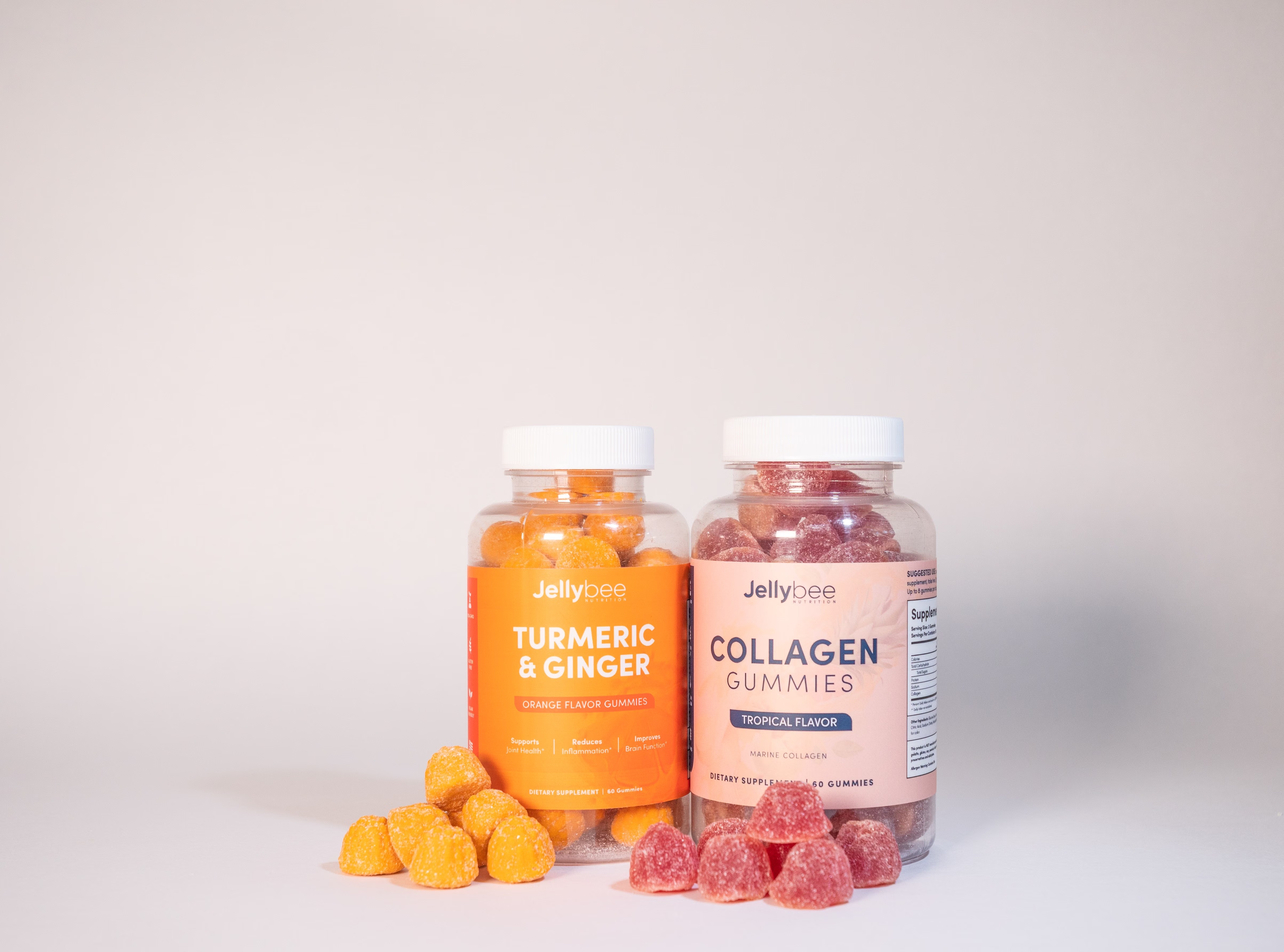
- For taste and habit-building → Gummies (2–3g/day); good for mild wellness support, not for targeted therapeutic goals
- If you're vegan → "Vegan collagen" products don't contain collagen — they support your body's own synthesis via Vitamin C, zinc, and amino acids
Now, here's why format and dose matter far more than the brand name on the label.
The Mistake That Costs Most Collagen Buyers Money
Most people assume that collagen supplements work the same way regardless of format — that picking between a powder, a gummy, or a capsule is like choosing a flavor of yogurt.
That assumption is expensive.
The format you choose directly affects the dose you receive, how bioavailable that collagen is, and whether you're even approaching the thresholds studied in clinical research. A gummy delivering 2–3 grams per serving and a powder delivering 22 grams per serving are not interchangeable products pursuing the same goal.
This guide breaks down the clinical differences between formats, explains what separates collagen sources, and maps specific products to specific health goals — so you spend your money on something that actually works for your situation.
This article sits within the Beauty Product Reviews & Buying Guides 2026 hub, which covers evidence-informed comparisons across skincare, wellness, and personal care. If you're thinking about collagen as part of a broader skin health strategy, our guides on best anti-aging skincare products in 2026 and best skincare routines by skin type give you the topical side of the picture to pair with the supplement side here.
Why Your Body Needs Collagen From an Outside Source
Collagen is the most abundant structural protein in the human body. It forms the scaffolding of skin, tendons, ligaments, cartilage, bones, and the gut lining — essentially the material holding your body's architecture together.
Your body synthesizes collagen naturally using amino acids — primarily glycine, proline, and hydroxyproline — with Vitamin C as a required cofactor. The problem: natural collagen production begins declining in your mid-20s and accelerates meaningfully after 40. UV exposure, smoking, high sugar intake, and chronic stress all speed up that decline.
Here's where supplementation becomes relevant. A 2026 meta-analysis published in the Aesthetic Surgery Journal evaluated 113 randomized controlled trials involving nearly 8,000 participants and found that collagen supplementation produced measurable benefits for skin elasticity and hydration, musculoskeletal health, and osteoarthritis — while evidence was weaker for cardiometabolic outcomes like blood pressure and cholesterol. This is the most comprehensive data we currently have on what collagen supplements can and can't do. (Source: Time / ScienceDaily reporting on the Anglia Ruskin University meta-analysis, June 2026)
One critical distinction before we go further: intact collagen molecules are too large to be absorbed efficiently through the gut wall. The supplement form that matters is hydrolyzed collagen — also called collagen peptides — which has been enzymatically broken down into smaller amino acid chains that the body can absorb and use. If a collagen supplement doesn't specify "hydrolyzed" or "peptides," check the label more carefully before buying.
Collagen Types: Match Type to Goal Before You Choose a Format
There are 29 known types of collagen in the human body, but three account for roughly 80% of total collagen in your tissues:
| Collagen Type | Where It's Found | Best For |
|---|---|---|
| Type I | Skin, hair, nails, tendons, bones | Skin aging, hair and nail health |
| Type II | Joint cartilage | Joint support, osteoarthritis |
| Type III | Skin (alongside Type I), gut lining, blood vessels | Skin elasticity, gut health |
Marine collagen is particularly high in Type I, with an amino acid profile closely resembling human Type I collagen — which makes up 80–90% of the collagen in skin, hair, and nails. Bovine collagen is rich in Types I and III. Chicken-derived collagen (from sternum) is the primary source of Type II, making it common in joint health formulations.
Knowing which type you need is the first filtering decision. Format and dose come second.
Powders vs. Gummies vs. Capsules vs. Liquid: What You Actually Get
This is the question most collagen articles skip. Here's a format-by-format breakdown based on dose, absorption, practical compliance, and honest trade-offs.
Collagen Powders: Highest Dose, Best Value Per Gram
Powders deliver the highest collagen dose per serving by a significant margin. Top-rated options on expert lists range from 16–22 grams per serving — far above what any capsule or gummy format can practically achieve.
The real-world clinical data supports higher doses for musculoskeletal goals. A 2025 PMC-indexed review of 28 clinical trials found that <a href="https://pmc.ncbi.nlm.nih.gov/articles/PMC12739960/" rel="nofollow">the average daily collagen dosage across studies was 8.4g/day</a>, with dermatologic studies clustering around 2.5–10g/day and musculoskeletal studies often using higher amounts. Powders are the only format where hitting those doses without swallowing 10+ pills is practical.
Biggest trade-off: Solubility and habit formation. Some powders clump in cold liquids or alter the texture of drinks. This matters more than it sounds — a powder you stop taking after two weeks delivers zero benefit regardless of its dose.
Best powders based on expert consensus:
- Transparent Labs Grass-Fed Collagen Hydrolysate — 22g per serving, grass-fed bovine, Informed Sport certified, single-ingredient unflavored version
- Vital Proteins Collagen Peptides — Best-dissolving option across multiple expert reviews; clean in hot and cold liquids
- Momentous Collagen Peptides — 16.8g collagen + 15g protein + FORTIGEL peptide + Vitamin C; targeted for joint health
- Ancient Nutrition Multi Collagen Protein — Multi-type (I, II, III), lower price point, practical for general wellness
Collagen Capsules: Convenient, Lower Dose, Better for Consistency
Capsules offer precise dosing in a portable, discreet format that's easy to add to an existing supplement routine. The real limitation is the dose ceiling: most capsule formats deliver 1–3g of collagen per serving.
Here's the honest trade-off: 3g per day is below the lower end of doses used in most clinical skin and joint studies. For someone who genuinely cannot or will not use a powder consistently, a well-formulated capsule taken every single day still outperforms a high-dose powder used sporadically. But if your goal requires therapeutic doses — particularly for joint health or sports recovery — capsules alone are unlikely to get you there.
Best capsules based on expert consensus:
- Ingenious Beauty Ultimate Collagen — Good Housekeeping UK's best collagen pill pick from its 350-panellist test; created by registered dietitians, third-party validated, clinical research linked on brand's website
- QMS Medicosmetics Collagen Intravital Plus — Named best collagen supplement for hair health in Good Housekeeping UK's tested lineup
Collagen Gummies: Best Compliance, Lowest Clinical Dose
Gummies are the easiest format to take consistently — they taste good, require no mixing, and don't require swallowing capsules. Those are genuine advantages.
The limitation: most gummy formats deliver 2–3g of collagen per serving. For general wellness or as a supplementary source, that may be sufficient. For joint health, sports recovery, or any goal where research uses higher doses, gummies alone are unlikely to reach the clinical threshold.
Before buying any collagen gummy, check:
- Is collagen dose listed specifically in milligrams or grams per serving? (If not, that's a red flag.)
- Does the label say "hydrolyzed collagen" or "collagen peptides"? (If not, bioavailability may be lower.)
- Are there more than 2–3g of added sugars per serving? (Common in gummies; adds up daily.)
Liquid Collagen: Possible Absorption Advantage, Higher Cost
Liquid formats — shots and sachets — may offer an absorption advantage because the collagen is already pre-solubilized. Good Housekeeping UK named Free Soul Marine Liquid Collagen its best overall collagen supplement following testing with 350 panellists.
The trade-offs: cost per serving is higher than powders, and sachets are less portable than capsules. If the convenience and absorption angle appeals to you, liquids are a legitimate format choice — just compare cost per gram of collagen against powder alternatives before committing.
Collagen Sources: Bovine, Marine, Porcine, Poultry, and "Plant-Based"
The collagen source determines which types you get, how the amino acid profile compares to human collagen, and whether the product suits your dietary preferences.
| Source | Collagen Types | Best For | Notes |
|---|---|---|---|
| Bovine (cow) | I, III | Skin, gut, muscle recovery | Most widely used; grass-fed sourcing is a quality signal |
| Marine (fish) | I (primarily) | Skin, hair, nails | Closest amino acid profile to human Type I collagen |
| Poultry (chicken) | II | Joints, cartilage | Chicken sternum is main source of Type II |
| Porcine (pig) | I, III | Similar to bovine | Less common in mainstream supplements |
One critical correction for vegan shoppers: Plants cannot produce collagen — it is an animal protein. Products labeled "vegan collagen" provide nutrients that support your body's own collagen synthesis — typically Vitamin C, zinc, and specific amino acids. This is a meaningful distinction. If you're vegan and expecting a direct collagen source, you're not getting one. What you're getting is co-factor support for endogenous collagen production, which can still be useful — but it's a different mechanism and should be evaluated on those terms.
Ora Organic Aloe Gorgeous is the most credible vegan option in this category, specifically because it's transparent about this mechanism.
Matching Collagen Supplements to Your Health Goal

Start with your primary goal. Work backward to the format, source, and dose that fits it.
Skin Health and Anti-Aging
Target: Type I marine or bovine collagen, hydrolyzed, 5–10g/day
Look for: Vitamin C (required for collagen synthesis), hyaluronic acid, copper
Format: Powder or liquid preferred for dose; capsules as a lower-dose option
The 2025 meta-analysis in the American Journal of Medicine analyzed 23 randomized controlled trials with 1,474 participants and found that collagen supplements significantly improved skin hydration, elasticity, and wrinkles across studies — with dose and study duration both influencing outcomes. Most skin-focused studies ran 8–12 weeks at 2.5–10g/day.
For an integrated approach, it's worth pairing a collagen supplement with a solid topical routine. Our guide to the best anti-aging skincare products in 2026 covers retinol, peptides, and other topical actives that work alongside oral collagen. And if SPF isn't already part of your daily routine, our best sunscreen guide is worth reading — UV damage is one of the main drivers of collagen breakdown, so sun protection directly protects the collagen you're supplementing.
Top picks for skin health:
- Vital Proteins Collagen Peptides (bovine, versatile, widely available)
- Free Soul Marine Liquid Collagen (marine, liquid, 350-panellist tested by Good Housekeeping UK)
- Sports Research Collagen Peptides (consistently recommended across expert reviews)
Joint and Bone Health
Target: 5–15g/day, clinically studied peptides preferred (FORTIGEL for joints)
Format: Powder or liquid — gummies are almost certainly under-dosed for this goal
Imaging and biomarker studies have recorded larger cartilage volumes and higher bone mineral density after consuming between 5–10g/day of collagen, especially in post-menopausal women. The same research notes that longer intervention periods (beyond 12 weeks) tend to show stronger effects.
Top picks for joints and bones:
- Momentous Collagen Peptides (FORTIGEL + Vitamin C, 16.8g dose)
- Transparent Labs Grass-Fed Collagen Hydrolysate (22g, Informed Sport certified)
Hair and Nail Health
Target: Types I and III from bovine or marine sources
Format: Powder, capsule, or liquid — dose is moderate (5–10g/day range)
Garage Gym Reviews names BUBS Naturals Collagen Protein the best collagen supplement for hair and nails. Good Housekeeping UK's panel testing points to QMS Medicosmetics Collagen Intravital Plus capsules as the best for hair health in their tested lineup.
Collagen supplements targeting hair and nails work well alongside dedicated nail care — if that's a focus area, our guide on best nail care products for at-home use in 2026 covers topical treatments that complement the inside-out approach.
Sports Recovery and Muscle Support
Target: 15–22g/day hydrolyzed bovine collagen, taken pre- or post-training with Vitamin C
Format: Powder is the practical choice at these doses
Top picks: Transparent Labs Grass-Fed Collagen Hydrolysate (22g, third-party tested), Gnarly Collagen Pro (named best for athletes by Garage Gym Reviews)
General Wellness and Gut Health
Target: Multi-collagen covering Types I, II, and III; 5–10g/day
Format: Flexible — powder or capsule both work for this goal
Top picks: Ancient Nutrition Multi Collagen Protein (budget-friendly, multi-type), Forte Gold Collagen Extra Strength (specifically recommended for women over 45 by Good Housekeeping UK)
What to Look For on the Label (and What to Ignore)
Look for:
- "Hydrolyzed collagen" or "collagen peptides" — confirms enzymatic processing for better absorption
- Collagen dose per serving in grams — clearly stated; if it's buried in a proprietary blend, skip
- Collagen type (I, II, or III) — should match your goal
- Source — bovine, marine, poultry; matters for dietary restrictions and goal alignment
- Third-party testing certification — NSF Certified for Sport, Informed Sport, Informed Choice, or USP verification; confirms purity and label accuracy
- Vitamin C — required cofactor for collagen synthesis; its inclusion is a meaningful formulation choice, not just marketing
Red flags:
- Proprietary blends without disclosed collagen amounts
- No listed collagen type or source
- Claims of "plant-based collagen" without explaining the mechanism
- No third-party testing disclosure for a health supplement you're taking daily
How This Guide Was Researched
This guide is based on manufacturer specifications, peer-reviewed research (indexed via PMC and the American Journal of Medicine), independent expert reviews from sources including Garage Gym Reviews, Good Housekeeping UK, Rolling Stone, and Yahoo Health, and verified customer feedback aggregated from multiple platforms. It does not reflect hands-on testing by Trusted Buyer Report. All sources are cited directly.
Frequently Asked Questions
Does it matter when I take collagen — morning or night?
Timing is less important than consistency. Some research suggests taking collagen with Vitamin C around training may support joint and muscle recovery. But the most impactful factor is simply taking it daily. Choose a time that fits your existing routine.
How long before collagen supplements show results?
Most clinical studies on collagen for skin and joint health run 8–12 weeks before measuring outcomes. Give any supplement at least two to three months of consistent daily use before evaluating whether it's working. Expecting visible changes in two weeks is not supported by the evidence.
Are vegan collagen supplements actually collagen?
No. Plants cannot produce collagen. Products marketed as "vegan collagen" support your body's collagen synthesis through Vitamin C, zinc, and amino acids — they don't supply collagen directly. They can be useful for vegans, but it's a different mechanism than taking hydrolyzed collagen peptides.
Is marine collagen better than bovine collagen?
For skin, hair, and nail goals, marine collagen's high Type I content and close amino acid similarity to human Type I collagen make it a strong choice. For joint health, bovine or poultry-derived Type II collagen is more targeted. Neither is universally superior — match the source to your goal.
Why do collagen powder prices vary so much?
Price differences reflect sourcing quality (grass-fed or wild-caught versus conventional), third-party testing costs, the addition of clinically studied peptides like FORTIGEL or VERISOL, and added cofactors like Vitamin C or hyaluronic acid. A very low price on a collagen powder should prompt you to verify whether dose, source, and testing credentials are clearly disclosed — because often they aren't.
What's the difference between collagen and other beauty supplements?
Collagen peptides work from the inside out, supporting structural protein in your skin. If you're also exploring fragrance, it's worth knowing that what you wear externally is a separate category entirely — our guide on best perfume and cologne deals in 2026 covers that if you're building out a full beauty routine.
Final Recommendation: A Decision Framework
There is no single best collagen supplement for everyone. The right choice depends on four variables: your primary health goal, your compliance habits, your dietary restrictions, and your budget.
If your goal is joint or bone health and you train regularly: A high-dose powder like Transparent Labs Grass-Fed Collagen Hydrolysate or Momentous Collagen Peptides with FORTIGEL is the most defensible choice based on current clinical evidence.
If your goal is skin health: Marine collagen in powder or liquid form, with added Vitamin C and hyaluronic acid, aligns best with the research. Free Soul Marine Liquid Collagen or a high-quality marine collagen sachet are strong options.
If you're vegan: You're supporting collagen synthesis rather than supplementing collagen directly. Ora Organic Aloe Gorgeous is the most credible option in this category — and being transparent about what it is.
If convenience is your primary constraint: A well-formulated capsule taken consistently every day still outperforms a high-dose powder you use three times a week. Ingenious Beauty Ultimate Collagen capsules are the most rigorously validated option in the capsule format.
If you're building a full beauty supplement and skincare stack: Pair your collagen supplement with a structured skincare routine and consistent sun protection. Our guides on best skincare routines by skin type and best sunscreen brands in 2026 are good starting points for the topical side of that equation.
The supplement market will keep growing and new products will keep launching. The framework — goal → type → source → dose → format — stays the same.
Reviewed by Trusted Buyer Report Editorial Team. This article was drafted with AI assistance and fact-checked by a human before publishing. We may earn a commission from purchases made through links on this page, at no additional cost to you. Full affiliate disclosure →