How this guide was researched: This guide is based on manufacturer specifications, independent market research (Mordor Intelligence, Strategic Market Research, Fortune Business Insights), expert sources, and verified industry reports aggregated from multiple sources. It does not reflect hands-on testing by Trusted Buyer Report. This article was drafted with AI assistance and fact-checked by our editorial team before publishing. Trusted Buyer Report may earn a commission from purchases made through links on this page — at no extra cost to you. Full disclosure →
TL;DR — Quick Verdict
- Most everyday drivers get the best return from a single speaker swap ($80–$400): factory speakers are almost always the weakest link.
- Enthusiasts or older-vehicle owners with flat-sounding systems should consider a full aftermarket build ($600–$2,500+).
- New car buyers can evaluate OEM premium packages ($285–$620 factory option) for seamless integration — but lose customization flexibility forever.
- EV owners need to prioritize Class-D amplifiers, EV-tuned ANC, and OTA-capable head units — standard ICE audio advice often underserves them.
- Dolby Atmos in a car is now real (Pioneer SPHERA), but it only works via Apple CarPlay — Android Auto users won't hear spatial audio from it.
You're sitting in your car streaming a playlist you love, and the sound just feels flat — thin highs, no bass, music coming at you instead of surrounding you. Maybe you bought a used vehicle with a basic factory system. Maybe you're driving a new EV and every road noise cuts through because there's no engine masking it. Either way, you're asking: Is upgrading worth it, and where do I even start?
That's the question most car audio articles skip. This one starts there.
Car audio in 2026 is meaningfully different from 2022. Spatial audio, AI-driven signal processing, over-the-air software updates, and EV-specific acoustic engineering have all moved from concept to consumer product. If you're shopping with advice from three years ago, some of it no longer applies. This guide covers the full picture — upgrade paths, market context, speaker categories, new technology, EV-specific needs, and a brand orientation — so you can decide with real information.
The Three Upgrade Paths: OEM Premium, Full Aftermarket, or Single-Component Swap
Most people approaching a car audio upgrade are actually choosing between three fundamentally different paths — even if they don't frame it that way. Choosing the wrong one costs you money and frustration. Here's what each path actually delivers.
OEM Premium Audio Packages
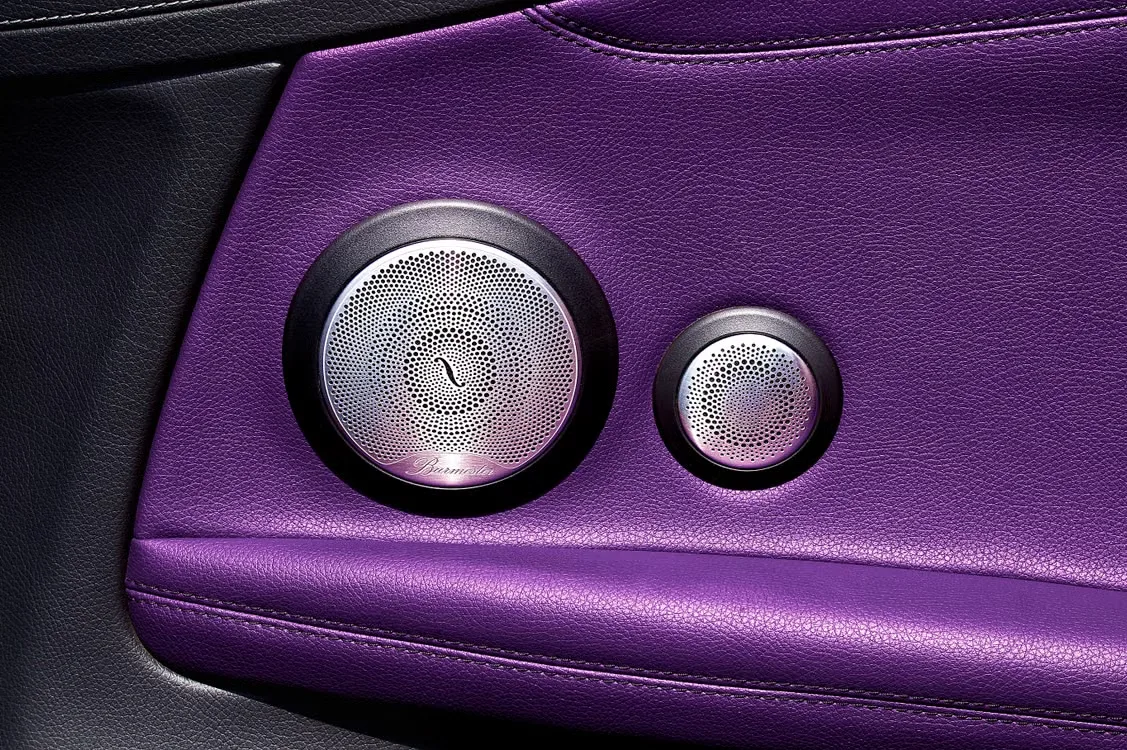
Factory premium systems — Meridian, Bose, Bang & Olufsen, Harman — come as dealer options and offer seamless integration with your vehicle's electrical system, steering wheel controls, and infotainment. According to Strategic Market Research, EV-focused premium audio packages add approximately $285–$620 per vehicle in optional package value, depending on speaker count, amplifier configuration, and software-based sound tuning.
The integration advantage is real: the system is tuned for your specific cabin acoustics. The limitation is equally real — once you take delivery, customization options are largely locked. You can't swap the amplifier without losing integration features, and you depend on the manufacturer for any improvements.
Best for: New vehicle buyers who prioritize a clean factory installation over performance headroom.
Full Aftermarket System Builds
A full build — new head unit, external amplifier, component speakers, and a subwoofer — offers the highest sound quality ceiling of any option. It also demands the most: professional installation, careful compatibility planning, and a budget that typically starts around $600–$800 for mid-range components and rises quickly from there.
Strategic Market Research identifies Pioneer as a key player in this segment specifically for its ability to modernize older or non-premium vehicles with advanced connectivity including Bluetooth and Apple CarPlay. This path makes sense if your factory system is genuinely inadequate, you drive an older vehicle without modern connectivity, or you want measurable performance improvements across every frequency range.
Best for: Enthusiasts, older vehicles, or anyone with a genuinely poor factory system.
Single-Component Swaps
Replacing just the door speakers, or just the head unit, is where most everyday drivers get the best return. A quality set of 6.5-inch component speakers in the $150–$300 range produces a clearly audible improvement over most factory speakers — without requiring amplifier changes or professional wiring. Factory speakers are frequently the weakest link in a vehicle's audio chain, built to a cost standard rather than a performance one.
Best for: Most drivers who want a real upgrade without the research overhead of a full build.
Upgrade Path Comparison Table
| Upgrade Path | Typical Cost | Installation | Customization | Best For |
|---|---|---|---|---|
| OEM Premium Package | $285–$620 (factory) | None (pre-installed) | Low | New vehicle buyers wanting integration |
| Full Aftermarket Build | $600–$2,500+ | High (pro recommended) | Very High | Enthusiasts, older vehicles |
| Single-Component Swap | $80–$400 | Low to Medium | Medium | Most everyday drivers |
The right path depends on three variables: your vehicle type (EV vs. ICE), the quality of your existing factory system, and whether your primary frustration is sound staging, bass response, or connectivity. EV owners face a specific acoustic situation worth addressing separately — we cover that in detail below.
If you're doing a broader vehicle-cost review this year, the Automotive Buyer's Guide 2026: Parts, Tires, Insurance & More puts audio upgrades in context alongside other ownership costs.
Why 2026 Is a Real Turning Point for Car Audio
The car audio market isn't just growing — it's changing in ways that directly affect what you can buy and what you should expect at each price point.
According to Mordor Intelligence, the global car audio market is valued at $13.46 billion in 2026 and is forecast to reach $21.61 billion by 2031 at a 9.93% CAGR. That level of sustained investment means manufacturers are competing on features, not just price — which is good for buyers.
The speaker segment is the single largest component category, projected to hold a 44.48% market share in 2026 according to Fortune Business Insights. This means R&D spending is concentrated in speaker engineering — a shift that directly benefits buyers considering speaker-focused upgrades.
Two technology trends matter most for 2026 buyers:
AI-driven sound processing is moving from premium-only to broadly available. Digital Auto Parts reports that around 67% of new systems are expected to include advanced sound processing features by 2026 — up substantially from prior years.
Over-the-air (OTA) software updates — identified by Mordor Intelligence as a key market trend — now let manufacturers unlock new sound features and tuning profiles post-purchase. A system you buy today can legitimately sound better in 12 months through a software update alone. That changes how you should think about future-proofing.
Sales are also growing: Digital Auto Parts projects a 10% increase in car audio sales from 2025 to 2026, driven by genuine consumer demand. Geographically, Asia-Pacific accounts for 43.23% of global revenue and holds the highest regional growth rate at 11.14% CAGR, while Europe is the fastest-growing region according to The Business Research Company. For buyers: global supply is expanding, which means more product variety and more competitive pricing.
Coaxial Speakers vs. Component Systems vs. Subwoofers: Which Do You Actually Need?
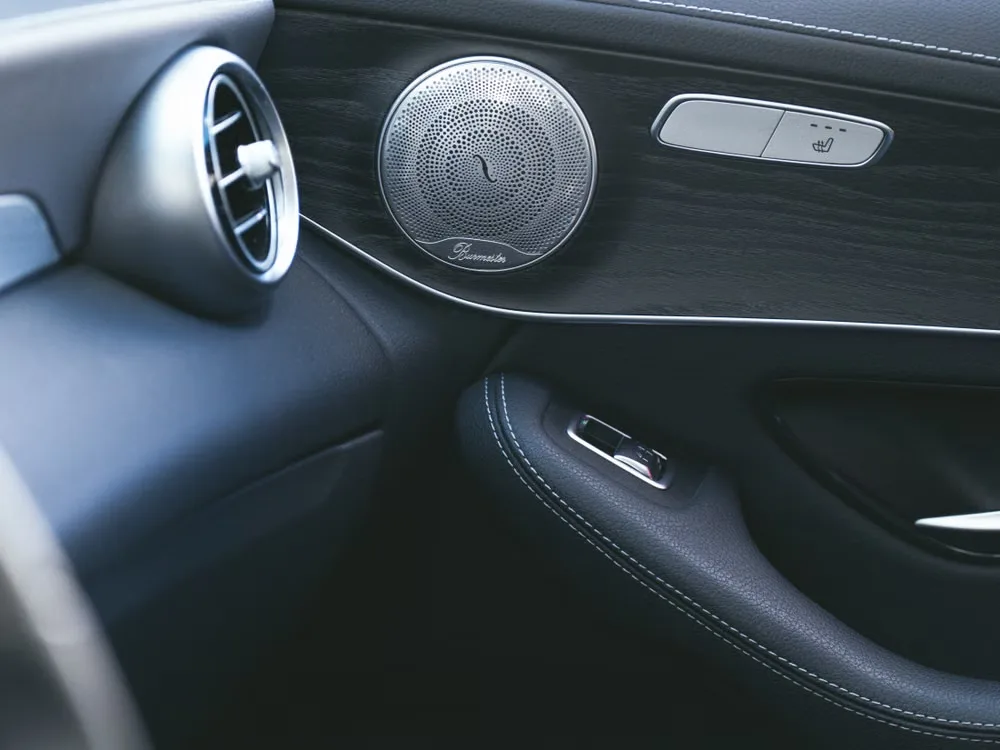
Speakers are where most upgrades begin — and where most of the audible difference is made. Choosing the wrong format is one of the most common (and most expensive) mistakes buyers make.
Coaxial (Full-Range) Speakers
Coaxial speakers mount a tweeter directly on or within the woofer cone, delivering a complete frequency range from a single unit. They're easier to install — typically a direct swap for factory speakers — and cost less. For drivers who want a clear improvement without adding an external amplifier or running new wiring, coaxials are the practical choice.
The trade-off: sound staging. Because the tweeter and woofer share a single mounting point, the spatial separation of high and low frequencies is limited compared to a component setup.
Choose coaxial if: you want an upgrade with minimal installation complexity and no amplifier changes.
Component Speaker Systems
Component systems separate the tweeter, woofer, and passive crossover into individual units — mounting the tweeter at ear level (A-pillar or dash) while the woofer sits in the door. This physical separation produces significantly better sound imaging: instruments and vocals appear to come from specific locations in the soundstage rather than from a single point.
The Rockford Fosgate Punch series, redesigned for 2026, illustrates how tiered component systems work: the P1 line uses coaxial designs for entry-level buyers, while the P2 and P3 lines move into component configurations for progressively higher performance. BestCarAudio.com has published a tested review of the Rockford Fosgate P3V2-65 — a 6.5-inch component speaker representing the upper end of the Punch series.
Choose component if: sound imaging matters to you, and you're willing to handle slightly more complex installation.
Subwoofers
A subwoofer handles frequencies below roughly 80 Hz — the range coaxial and component speakers cannot reproduce accurately regardless of their quality. If your current system sounds thin or lacks physical impact on bass-heavy music, adding a subwoofer is often the single highest-impact upgrade available.
It doesn't need to be loud. A properly tuned 10-inch subwoofer in a sealed enclosure can add real bass depth without the one-note booming quality that gives subwoofers a bad reputation. CarAudioNow publishes a tested 2026 buyer's guide for subwoofers covering both car and truck applications with size-specific recommendations.
One step most buyers skip: verify speaker size compatibility before ordering. Door and dash cutouts vary significantly between vehicle models, and a "6.5-inch" speaker from one brand may not fit a 6.5-inch opening designed for another. CarAudioNow's tested guide for car speakers by size is a useful reference for this compatibility check.
Dolby Atmos in a Car: What It Actually Delivers in 2026 (And What It Doesn't)
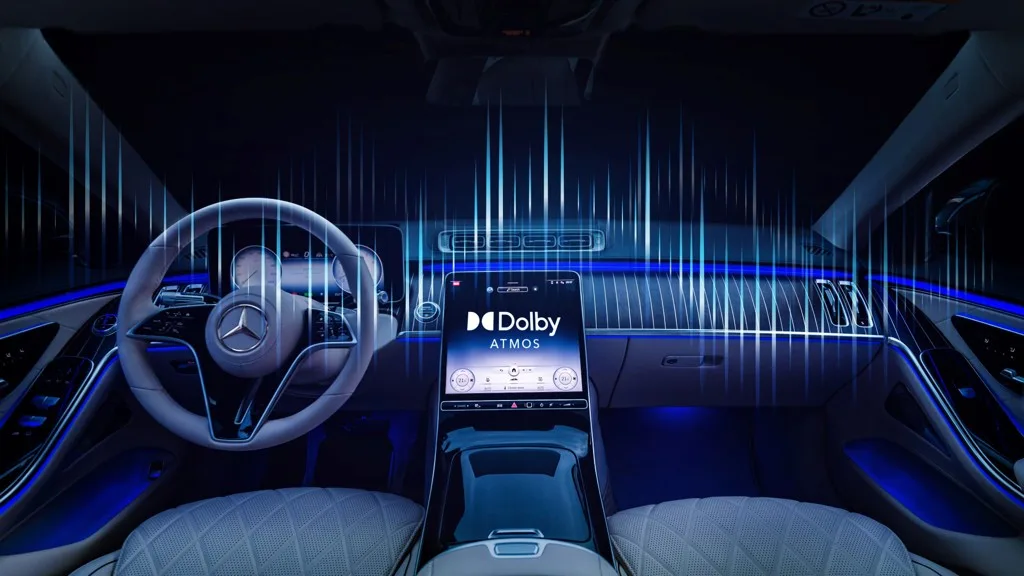
Dolby Atmos in a car is now a shipping product — not a concept. The Pioneer SPHERA, which debuted at CES 2026, is the world's first aftermarket implementation of Dolby Atmos in a car audio system, as reported by MotorTrend. It fits in a single-DIN opening and includes a 10.1-inch high-definition capacitive touchscreen, hands-free CarPlay, Android Auto, and reverse camera support.
But here's what to understand before getting excited:
According to MotorTrend, reproducing Dolby Atmos requires a minimum of four channels of amplification and at least four speakers — and no amount of digital signal processing can simulate Atmos from a stereo source. A track must be natively recorded in Dolby Atmos for the format to function. Standard radio and streaming playback plays in stereo even through an Atmos-capable system.
There's also a platform limitation: Pioneer SPHERA's Dolby spatial audio content is only streamed via Apple CarPlay. If you primarily use Android Auto or a non-streaming source, you won't hear Atmos content regardless of the hardware.
A more broadly applicable technology from CES 2026 is Dirac Live room correction. Rather than requiring specific content formats, Dirac analyzes your specific car cabin's acoustic properties and applies digital correction to optimize whatever you're playing. For most listeners, this type of DSP correction produces a more noticeable everyday improvement than Dolby Atmos, which depends entirely on content availability.
Meridian's 2026 DSP hardware and software updates, noted in the GM Insights Europe Car Audio Market report, reflect the same philosophy at the OEM tier — using software intelligence to extract better performance from existing hardware.
Bottom line: If you're an Apple CarPlay user who streams Atmos-encoded content, the Pioneer SPHERA is genuinely compelling. If you're on Android Auto or primarily listen to radio or downloaded music, Dirac-equipped systems will deliver a more meaningful everyday improvement.
EV Car Audio: Why Electric Vehicle Owners Have Completely Different Needs
This is the section most car audio guides skip — and it matters more than almost anything else if you drive an EV.
EV cabins produce significantly less powertrain noise than ICE vehicles, which means road noise, wind noise, and speaker distortion all become far more audible. According to Strategic Market Research, the lower powertrain noise in EV cabins makes speaker quality, sound staging, and active noise management noticeably more impactful to drivers and passengers. A mediocre speaker that sounds acceptable in a loud ICE vehicle will sound clearly inadequate in a quiet EV cabin.
This acoustic transparency cuts both ways:
- A modest speaker upgrade produces a more perceptible improvement in an EV than in an ICE vehicle — the signal-to-noise ratio of the listening environment is simply better.
- You'll also hear problems more clearly: distortion at high volumes, poor imaging, and frequency imbalances that road noise would otherwise mask.
Active noise cancellation (ANC) serves a different role in EVs. Rather than managing engine noise — which barely exists — EV-specific ANC systems target road and wind noise. When evaluating ANC features, check whether the system is tuned for broadband noise (road and wind) rather than tonal engine noise. That's the relevant capability for EV owners.
Amplifier efficiency matters more in an EV than any other vehicle. Mordor Intelligence notes that Class-D amplifier architectures deliver up to 90% efficiency, reducing battery load and extending driving range compared to less efficient designs. High-current audio equipment can have a measurable impact on range — so when selecting an aftermarket amplifier for an EV, Class-D isn't just a preference. It's a practical specification to prioritize.
OTA update capability is also more relevant for EV owners. Mordor Intelligence identifies OTA updates as a key trend, enabling manufacturers to unlock new sound features and tuning profiles post-purchase. EVs are inherently software-defined vehicles, and audio systems with OTA capability can receive improvements that keep the system current without hardware replacement.
According to Strategic Market Research, approximately 41.8% of new EV and plug-in hybrid models are expected to integrate advanced smart audio or surround-sound systems by 2026, representing nearly $2.15 billion in associated market value. This is a sign manufacturers are treating EV audio as a meaningful product category — not an afterthought.
If you're building out the rest of your EV's tech ecosystem, our guide to the best EV charging networks in 2026 covers the infrastructure side of EV ownership.
Brand Breakdown: What Pioneer, Rockford Fosgate, Meridian, and Sony Actually Specialize In
Brand names in car audio carry real meaning — if you understand what each manufacturer actually focuses on.
Pioneer is the most versatile aftermarket brand in the current market. Its strength is connectivity and integration — Bluetooth, Apple CarPlay, Android Auto — and the SPHERA represents a genuine technology leap. Strategic Market Research identifies Pioneer as a key player in the aftermarket segment specifically for its ability to modernize older or non-premium vehicles. If your primary goal is adding modern connectivity to an older car, Pioneer head units are the logical starting point. The SPHERA's Atmos limitation to Apple CarPlay is a real constraint for Android users, but for CarPlay users, it's a compelling package.
Rockford Fosgate is built around a tiered product philosophy. The Prime, Punch, and Power series let buyers choose a performance level within a consistent ecosystem — you can start with Prime-level speakers and upgrade to Power-level components later without switching brands or losing system coherence. The Punch series redesign for 2026 adds three application tiers within the Punch line itself, giving buyers more granular options. BestCarAudio.com's tested review of the Rockford Fosgate TMS14-65 also highlights the brand's expansion into motorcycle-specific speakers — a sign of engineering depth beyond standard car applications.
Meridian operates at the OEM tier, not the aftermarket. Its 2026 announcements focus on DSP hardware and software updates for vehicle manufacturer partnerships, as noted in the GM Insights Europe Car Audio Market report. If Meridian is offered as a factory option on a new premium vehicle, it's worth the premium for the DSP tuning quality. It is not an aftermarket option you can install in an existing vehicle.
Sony occupies a reliable mid-range position across both head units and speakers. It's not the most exciting brand in the category, but its broad compatibility, consistent quality benchmarks, and competitive pricing make it a sensible choice for buyers who want proven performance without the research overhead of evaluating boutique brands.
A broader trend worth noting: modular component design is reducing brand lock-in across the industry. Digital Auto Parts identifies this as a key 2026 trend — buyers can mix a Pioneer head unit with Rockford Fosgate speakers and a separate Class-D amplifier without compatibility issues, provided they verify impedance and power ratings. A recent study cited by Digital Auto Parts found that 70% of car buyers prioritize sound quality over brand prestige — which means the best-performing combination of components at your budget matters more than staying within a single brand's ecosystem.
What to Prioritize Before You Buy: A Practical Decision Framework
Work through these questions in order. Each one filters out options that won't fit your situation.
1. What vehicle type do you drive? EV owners should prioritize Class-D amplifiers, EV-tuned ANC, and OTA-compatible head units. ICE vehicle owners have fewer power-draw constraints and a wider range of compatible amplifier options.
2. What is your primary audio weakness?
- Thin sound with no bass → start with a subwoofer
- Flat, directionless midrange and highs → component speaker swap
- Poor connectivity (no CarPlay, no Bluetooth) → head unit upgrade
- Across-the-board inadequacy → consider a full aftermarket build
3. What is your realistic budget, including installation? Installation costs for a full aftermarket build typically add $200–$500 to the component cost. Factor this in before comparing option prices on paper.
4. Do you need OTA capability? If you want software-upgradable audio that can improve over time — especially relevant for EVs — confirm OTA update support before purchasing.
5. Are you buying new or upgrading an existing vehicle? New vehicle buyers should evaluate OEM premium options before signing paperwork — retrofitting equivalent quality aftermarket is almost always more expensive.
Car Audio and Your Vehicle's Other Upgrades: What Pairs Well
A great audio system is one piece of a well-equipped vehicle. If you're upgrading multiple systems at once, a few combinations are worth knowing:
- Dash cam + audio head unit: A new head unit with a rear camera input pairs naturally with a dual-channel or 360° camera setup. Our guide to the best dash cams in 2026 covers which configurations work best by vehicle type.
- GPS navigation: If your head unit upgrade is partly motivated by navigation, our breakdown of standalone GPS vs. smartphone navigation in 2026 helps clarify which approach fits your driving patterns.
- Radar detector: For drivers upgrading their vehicle electronics package broadly, see our best radar detectors 2026 guide — including a state-by-state legality breakdown.
- Interior protection: Upgrading audio often involves removing door panels. It's a good time to also evaluate car floor mats and seat covers while the interior is partially disassembled.
Frequently Asked Questions
Is upgrading factory car speakers worth it? For most vehicles, yes. Factory speakers are built to a cost standard, not a performance one — manufacturers allocate most of the vehicle budget elsewhere. A $150–$300 component speaker swap in the front doors produces a clearly audible improvement in most vehicles and is the highest-return single upgrade available to everyday drivers.
Do I need an amplifier to upgrade my car speakers? Not necessarily. Many aftermarket speakers are designed to run off the head unit's built-in amplifier at reasonable listening volumes. If you want significantly higher output, deeper bass, or are running a subwoofer, a dedicated external amplifier will be necessary. Component speaker systems in the $200+ range often benefit from external amplification to reach their full potential.
What's the difference between Dolby Atmos and standard car audio? Standard car audio delivers stereo (two-channel) or basic surround sound. Dolby Atmos adds height channels and object-based audio positioning — music and sound effects appear to come from specific three-dimensional locations rather than from the speakers themselves. In a car, this requires a minimum of four channels of amplification, at least four speakers, and natively Atmos-encoded content. It does not work with standard radio or most streaming audio.
Is car audio worth upgrading in an EV? Yes — and arguably more than in an ICE vehicle. The quieter EV cabin makes speaker quality and sound staging more perceptible in both directions: good speakers sound noticeably better, and poor speakers are more obviously inadequate. Class-D amplifiers are essential for EVs to minimize battery draw.
How do I know what speaker size fits my car? Check your vehicle's owner manual or use an online fitment guide from a reputable car audio retailer. Speaker sizes are standardized (4-inch, 5.25-inch, 6.5-inch, etc.), but mounting depth, basket diameter, and cutout requirements vary between manufacturers. Buying a speaker labeled "6.5 inch" doesn't guarantee it will fit a 6.5-inch factory opening.