Reviewed by the Trusted Buyer Report editorial team. This article was researched and drafted with AI assistance and fact-checked by a human before publishing. Trusted Buyer Report may earn a commission when you use our links to make a purchase, at no additional cost to you.
How this guide was researched: This guide is based on manufacturer specifications, expert sources, and verified customer feedback aggregated from major art communities, specialist retailers, and independent review platforms. It does not reflect hands-on testing by Trusted Buyer Report. Our goal is to synthesize what experienced artists and beginners consistently report — so you can make a confident first purchase without reading through hundreds of reviews yourself.
Here is the honest truth about starting out with art supplies: you do not need much. A sketchbook, a set of graphite pencils ranging from HB to 4B, a kneaded eraser, and one painting medium of your choice will carry you through months of practice before you need anything else. The problem is that the average beginner searching for art supplies online faces more than 400 product listings before scrolling past the first page — a volume engineered to convert inspiration into impulse purchases, not to help you learn faster.
This guide tells you exactly what to buy first for each major medium, which brands consistently deliver quality at the beginner price point, and — equally important — what to skip until you actually need it.
The bottom line upfront: Start with one medium. For drawing, a Staedtler Mars Lumograph pencil set and a 90 GSM sketchbook. For painting, Liquitex BASICS acrylics plus student-grade brushes. For watercolor, a Sakura Koi Travel Set and 300 GSM cold-press paper. Add supplies only when a specific project demands them.
What Medium Should Beginners Start With?
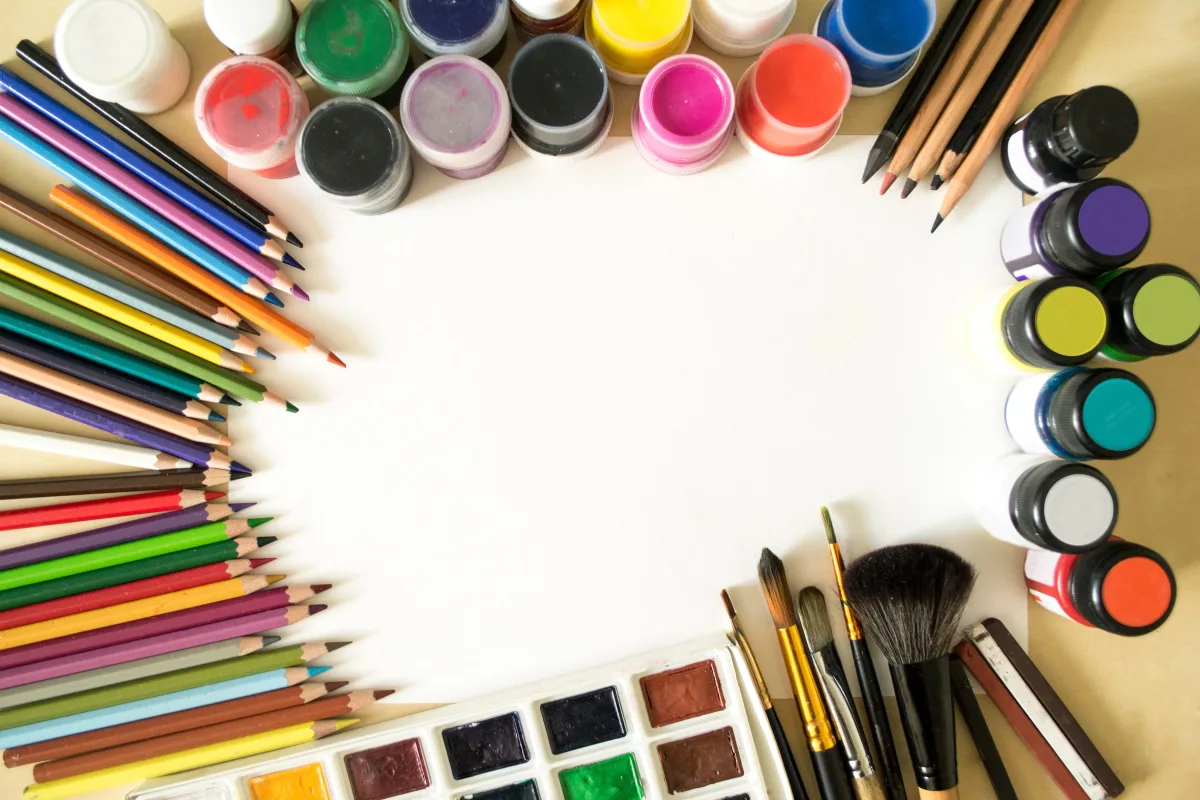
The biggest mistake beginners make is buying across multiple mediums at once. A full drawing kit, a watercolor set, and an acrylic starter pack sitting in a bag together — none of them get enough practice time to build actual skill.
Graphite drawing is the right starting point for most people. Pencils are forgiving, immediately correctable, and cheap enough that using them every day feels low-stakes. The skills you build — observational drawing, value (light and dark), mark-making — transfer directly to every other medium. You will use your graphite skills the moment you pick up watercolor or acrylic paint, because all painting starts with understanding what you are drawing before you paint it.
Acrylic paint is the best first painting medium if you already have basic drawing confidence. It dries quickly, cleans up with water, and is far more forgiving than oil or watercolor — you can paint over mistakes rather than working around them. For anyone who works in a home studio or shares a space, the absence of solvent smell is a genuine quality-of-life advantage.
Watercolor is often marketed as a beginner medium because the materials are portable and inexpensive. In practice, watercolor is harder to control than acrylics — you cannot easily paint over errors, and paper choice dramatically affects results. It rewards patience and is excellent for a certain type of learner, but it is not the most forgiving entry point.
If you are exploring the wider world of creative hobbies and craft supplies — including tools for sewing, paper crafts, and mixed media — the Art, Crafts & Hobbies Buyer's Guide 2026 covers a structured research framework for evaluating any creative purchase category before you spend.
The Best Drawing Supplies for Beginners
Graphite Pencils: Start with a Range, Not a Single Pencil
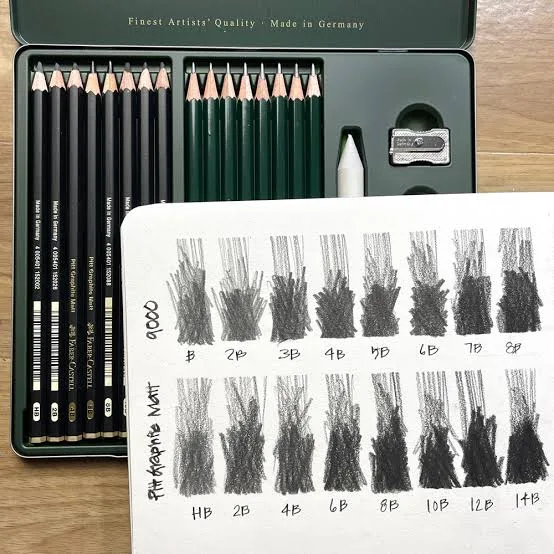
The hardness scale printed on pencils ranges from H (hard, light marks) to B (soft, dark marks). For beginners, a set covering at least HB, 2B, and 4B gives you enough range to practice line work, shading, and tonal variation. Anything beyond a 6B starts to become smudge-prone and difficult to control.
Staedtler Mars Lumograph is consistently recommended for beginners by experienced artists and in specialist retailer reviews. According to JetPens, which has tested pencils across multiple brands, Staedtler Mars Lumograph pencils "erase more cleanly than any of the other pencils we tested" and deliver marks that are "buttery smooth" with strong control for shadow buildup. They come individually in grades from 7H to 12B and in a 24-pencil set covering 10H to 12B — giving beginners a wide range to experiment with without committing to multiple individual purchases.
If budget is the priority, the Amazon Basics Sketching Kit (17 pieces, including pencils from 2H to 3B plus charcoal pencils) is a legitimate entry point. Community feedback confirms it performs adequately for learning fundamentals, though the pencil cores are less consistently smooth than Staedtler's.
What matters more than brand at this stage is range: do not buy a single HB pencil and assume that covers drawing. The difference between light (H) and dark (B) marks is where shading and depth come from.
Sketchbooks: Paper Grade Is Not Optional
The paper in your sketchbook directly affects how every medium performs. For graphite and colored pencil work, 90 GSM (grams per square meter) is the standard minimum — light enough to be practical, heavy enough to handle erasing without tearing. For marker work, look for 160 GSM or above to prevent bleed-through. For watercolor washes over pencil sketches, you need 300 GSM minimum or the paper will buckle.
Canson XL Mix-Media is a widely recommended sketchbook for beginners precisely because its 98 GSM paper handles pencil, light washes, and even markers with reasonable results — reducing the need to buy multiple sketchbooks immediately. Strathmore 400 Series is the next step up in paper quality and worth the price difference once you are filling sketchbooks regularly.
What to skip: Cheap spiral-bound sketch pads sold in art sections of discount stores often use 60–70 GSM paper. The surface feels fine for casual use but causes smearing with graphite and tears under erasing — a genuinely discouraging experience when you are learning.
Erasers: Kneaded Is Not Optional
A kneaded eraser (also called a putty eraser) is the most useful eraser type for drawing. It can be shaped to lift graphite precisely, lighten areas gradually rather than removing them entirely, and does not leave rubber crumbs on the page. The Prismacolor Kneaded Rubber Eraser is the standard recommendation and costs under $3. Keep a white vinyl eraser (Staedtler or Pentel) alongside it for clean, precise removal of specific lines.
Avoid pink rubber erasers for graphite work — they smear fine marks rather than lifting them.
The Best Acrylic Paints for Beginners
Which Acrylic Brands Are Appropriate for Beginners?
Acrylic paints fall into three tiers:
Student-grade paints contain lower pigment concentrations and often use pigment blends (multiple pigments in one color) rather than single-pigment formulations. They are appropriate for learning and for high-volume practice. Liquitex BASICS and Golden Open are the most consistently recommended student-grade acrylics for beginners — both are available at Michaels, Hobby Lobby, and Amazon.
Mid-range paints like Arteza Artist Acrylics offer a step up in pigment quality without the full cost of professional paints. They are a reasonable next purchase once you have worked through a few tubes of student-grade material and understand what colors you actually use most.
Professional-grade paints (Golden Heavy Body, Winsor & Newton Professional) use single-pigment formulations with higher pigment loads and ASTM I lightfastness ratings. They are not necessary at the beginner stage and cost significantly more per tube. Wait until you have a consistent practice before investing at this level.
What Colors Do Beginners Actually Need?
One of the most effective cost-controlling moves in acrylic painting is buying fewer colors and learning to mix. According to art educators and experienced practitioners, six colors cover virtually every mixing need for a beginner:
- Titanium White
- Mars Black (or Ivory Black)
- Cadmium Yellow Medium (or Hansa Yellow for a more lightfast, lower-toxicity option)
- Cadmium Red Medium (or Pyrrole Red)
- Ultramarine Blue
- Phthalo Green
With these six, you can mix secondary colors, neutrals, and a wide range of tints. Buying a 24-color starter set is tempting but counterproductive — it removes the learning that comes from mixing your own colors, and many of the included colors will be duplicated in any palette you build later.
Brushes for Acrylic Beginners
For acrylic painting, synthetic brushes outperform natural hair brushes at the student price point because they are more durable under frequent washing and hold up better to the slightly abrasive quality of acrylic paint. A starter brush set should cover three shapes: a flat wash brush (for backgrounds and large areas), a filbert (a versatile oval shape for blending and general painting), and a small round brush (for detail).
Princeton Catalyst brushes are widely recommended in acrylic painting communities for their durability and value relative to price. The Series 6400 synthetic set is a practical starting point. Avoid very cheap brush sets — bristles that shed mid-painting disrupt work and are genuinely discouraging.
Canvas vs. Canvas Pads vs. Panels
Canvas pads (pads of pre-primed canvas sheets, also called canvas paper) are the most cost-effective surface for practice. They allow you to go through many paintings without the expense of stretched canvas, which is the right approach when you are learning. Strathmore Canvas Pads perform well for this purpose.
Stretched canvas is better for any painting you want to keep and frame. A 5×7 or 8×10 is a practical beginner size — large enough to develop compositions but small enough to complete in a reasonable session.
Avoid painting on unprimed canvas, cardboard, or paper not designed for acrylics. The paint soaks in inconsistently and results are unpredictable.
The Best Watercolor Supplies for Beginners
Pan Sets vs. Tube Watercolors
Pan sets (dry watercolor cakes in a tray) are the practical choice for beginners. They require less setup, are easier to control for color mixing, and are inherently portable. The Sakura Koi 24-color Travel Set is recommended across beginner watercolor communities for its consistent pigment quality, compact form, and water brush included in the set — eliminating the need for a separate water container for initial practice.
Tube watercolors give you access to more pigment and are the standard choice for professional work and large paintings, but they require more setup (a separate palette, controlled amounts) and are less intuitive for beginners managing color quantity.
Watercolor Paper: The Variable That Changes Everything
Watercolor paper differences are not subtle — they are dramatic. The wrong paper turns a reasonable technique into a frustrating result.
300 GSM minimum. Watercolor paper below 300 GSM buckles when wet unless you tape or stretch it first — a process that adds friction to every practice session and discourages daily use. 300 GSM paper handles multiple wet layers without significant buckling.
Cold-press texture. "Cold-press" watercolor paper has a slight texture (tooth) that holds pigment and creates characteristic watercolor effects. "Hot-press" paper is smoother and used for illustration and tight detail work. Beginners should start with cold-press.
Arches is the benchmark professional watercolor paper, and its student-grade equivalent, Fabriano Artistico, offers very similar performance at a lower price. For practice, Canson XL Watercolor pads (140 lb / 300 GSM) are adequate and significantly cheaper — appropriate for the volume of practice that actually builds skill.
What You Almost Certainly Do Not Need Yet
The following are frequently marketed toward beginners but either duplicate what basic supplies already cover or require intermediate skill to use effectively:
Colored pencils (as a first purchase): Colored pencils require a different paper grain than graphite and add complexity before the fundamentals are solid. For beginners, Prismacolor Soft Core (around $25 for a 24-set) is the standard recommendation once you are ready — they blend easily and give immediate results. Faber-Castell Polychromos are oil-based and layer more precisely but require more technique to blend. Start them only after graphite fundamentals feel comfortable.
Specialty markers (Copic, etc.): Alcohol markers like Copic are professional illustration tools with a steep learning curve and high cost. They are not beginner supplies regardless of how they are marketed.
Oil paints: Oil paint's slow drying time, solvent requirements for cleaning, and need for proper ventilation make it a poor starting medium for most home studio settings. Learn to paint with acrylics first.
Expensive easels: A basic tabletop easel ($20–$35) is adequate for beginning work. A full-height studio easel is a considered purchase once you are painting regularly at a scale that makes it necessary.
Where to Buy Art Supplies in 2026
Michaels, Hobby Lobby, and Jerry's Artarama are the standard retail options. Michaels in particular has a wide beginner-oriented assortment and runs 40–50% off coupons regularly through their app and website — making it practical to buy student-grade supplies at close to online prices while being able to assess the product in person. Staff in the framing and fine art sections at these stores vary in expertise; ask specifically for those sections rather than general floor staff.
Amazon has the widest assortment and fastest delivery. The main risk is counterfeit products for premium brands — Winsor & Newton and Faber-Castell products have documented counterfeit issues on third-party Amazon listings. For established brands at the student-grade tier (Liquitex BASICS, Strathmore, Staedtler), buying from the brand's own Amazon storefront or through Michaels's Amazon storefront reduces that risk.
Independent local art supply stores carry professional-grade materials that big-box stores often do not stock and employ staff who are frequently practicing artists with direct product experience. For a first significant investment in a new medium — particularly if you are considering artist-grade rather than student-grade materials — the premium for in-person expert advice pays for itself in avoided mismatched purchases.
Dick Blick and Jerry's Artarama are the major US specialist online retailers for art supplies. Both stock a wider professional range than general retailers and run regular sales. Dick Blick's house-brand materials (Blick Studio) offer a consistent quality-to-price ratio at the student-to-intermediate range.
If you are also considering sewing or fabric crafts alongside drawing and painting, the Best Sewing Machines for Beginners 2026 applies the same longevity-first framework to sewing machine selection — useful if you want tools that grow with your skills rather than forcing an upgrade in six months.
What Beginners Actually Need: A Practical Starter List by Medium
Drawing starter kit (under $50):
- Staedtler Mars Lumograph pencil set (8-piece or 12-piece, HB through 6B)
- Canson XL Sketch or Mix-Media sketchbook (9×12 in)
- Prismacolor Kneaded Rubber Eraser
- Staedtler white vinyl eraser
Acrylic painting starter kit (under $80):
- Liquitex BASICS acrylic tubes in the six colors listed above
- Princeton Catalyst synthetic brush set (flat, filbert, round)
- Strathmore Canvas Pad (8×10 or 9×12)
- Two water containers (one for rinsing, one for clean mixing water)
- A white ceramic plate or plastic palette with wells
Watercolor starter kit (under $60):
- Sakura Koi 24-color Travel Set (includes water brush)
- Canson XL Watercolor Pad, 140 lb / 300 GSM (9×12)
- A round brush, size 6 or 8 (optional — the included water brush is adequate to start)
What Makes an Art Supply Beginner-Appropriate vs. a Waste of Money?
Student-grade is not inferior. Student-grade materials are calibrated for the learning phase: they use similar pigment families to professional products but at lower concentrations, making them more economical for high-volume practice. Experienced artists consistently note that low-quality supplies — scratchy paper, waxy colored pencils that resist blending, chalky watercolors — can make you feel like you are doing something wrong when the problem is the tool. The distinction to draw is between student-grade (appropriate for learning) and budget-tier (materials that actively work against you).
Safety certifications matter more than marketing language. For any art supply used in an enclosed space, look for ASTM D4236 compliance and the AP (Approved Product) seal from the Art and Creative Materials Institute (ACMI). These indicate third-party toxicological review — they are not marketing claims. This matters particularly if you are buying for or near children.
Single-pigment paints mix better. For paints, the pigment code on the back of the tube (PB29 for ultramarine blue, PY83 for diarylide yellow, etc.) tells you what is actually in the paint. Single-pigment formulations mix more cleanly and predictably than multi-pigment blends. Student-grade paints often use blends to reduce cost — acceptable for learning, but worth understanding when you eventually upgrade.
The Skill That Matters More Than Any Supply Purchase
Buy less and use more. A beginner who fills three sketchbooks with a basic pencil set learns more than one who has a complete set of artist-grade supplies used twice. The resistance that matters most at the beginning is not material quality — it is the habit of showing up and practicing.
Before your second supply purchase, ask: have I actually used what I already have? If the answer is yes, what did I run out of or find limiting? That answer tells you exactly what to buy next. That is a more reliable purchasing framework than any product recommendation.
FAQ: Art Supplies for Beginners
What are the essential art supplies every beginner needs? The true essentials are a sketchbook with appropriate paper for your medium, a basic drawing tool (graphite pencils in at least three hardness grades), an eraser, and one painting or coloring medium if you want to explore color. Everything else is optional until a specific project requires it.
Is it worth spending more on artist-grade supplies as a beginner? Generally, no. Student-grade supplies from reputable brands (Liquitex, Strathmore, Staedtler) perform predictably, are affordable enough to use freely without anxiety, and will serve most beginners for one to two years of regular practice. The exception is paper — cheap paper actively works against developing technique, so buying appropriate-grade paper even at the beginning is worth the extra cost.
Should beginners buy art supply kits or individual items? Individual items, with one exception: a pencil set covering multiple hardness grades is more practical than buying pencils individually when starting out. For paints and brushes, buying individual items in the specific types you need beats buying a complete kit that includes materials you will not use for years, if at all.
What is the ASTM D4236 label on art supplies? ASTM D4236 is a US standard for evaluating the chronic health hazards of art materials. Products carrying this designation have been reviewed for long-term health impact in normal use. The ACMI AP (Approved Product) seal indicates the product has been toxicologically reviewed and certified non-toxic — look for it on any paint, ink, or adhesive used in enclosed spaces.
Can I use regular paper for watercolor painting? Technically, but the results will be poor — regular printer or sketchbook paper buckles severely when wet, making controlled painting nearly impossible. The minimum for watercolor practice is 140 lb / 300 GSM paper specifically designated for watercolor. The investment in appropriate paper is more important to your results than the quality of the paint itself.
Trusted Buyer Report is independent, AI-assisted, and human-reviewed. We may earn a commission when you purchase through links on this page. Our editorial recommendations are finalized before any affiliate relationship is considered. Read our full methodology →