Medically reviewed by Kristina Harris Jackson, PhD, RD, Director of Research at OmegaQuant
Reviewed by our editorial team. This article was drafted with AI assistance and fact-checked before publishing. We may earn a commission when you use our links to make a purchase — at no extra cost to you.
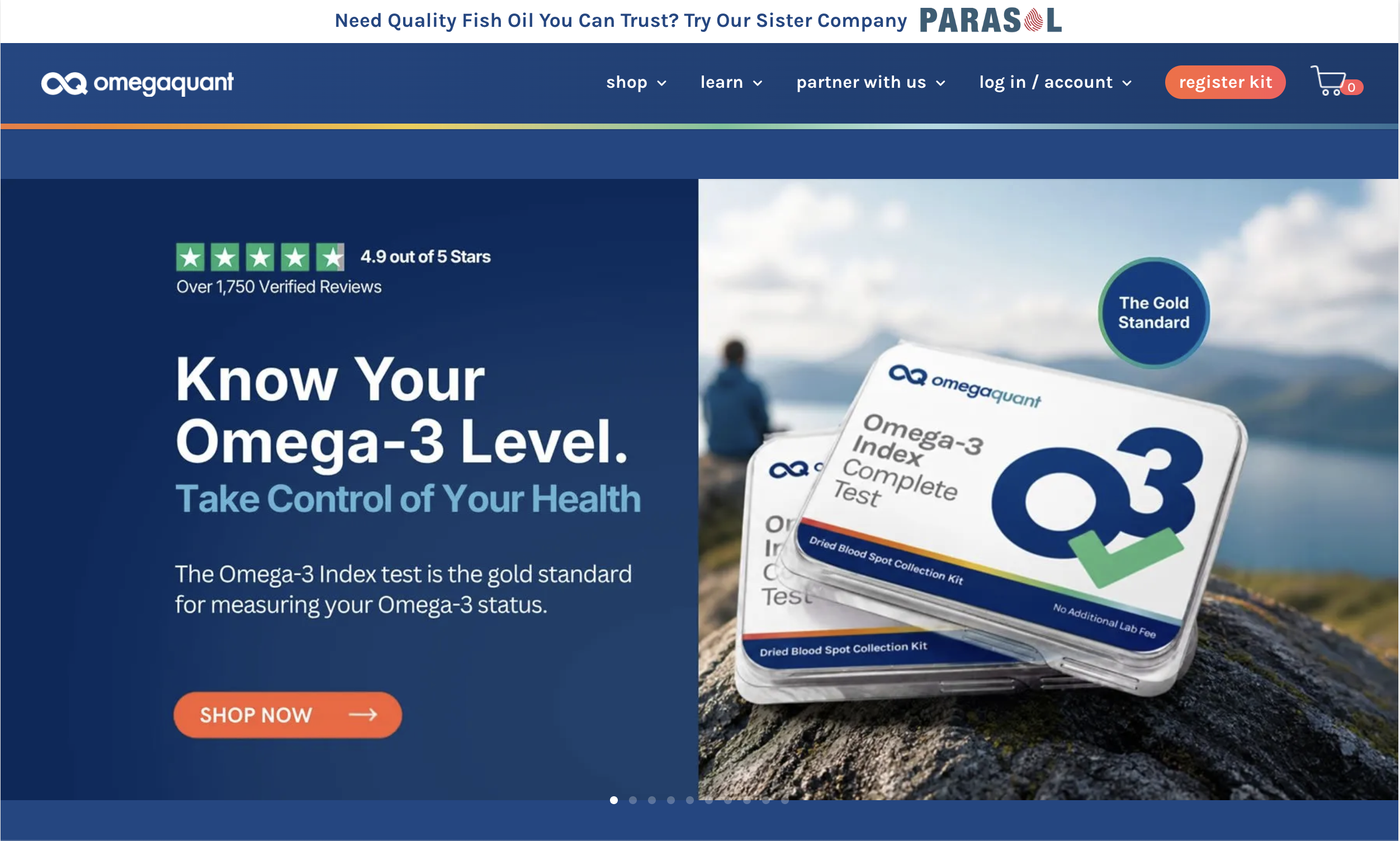
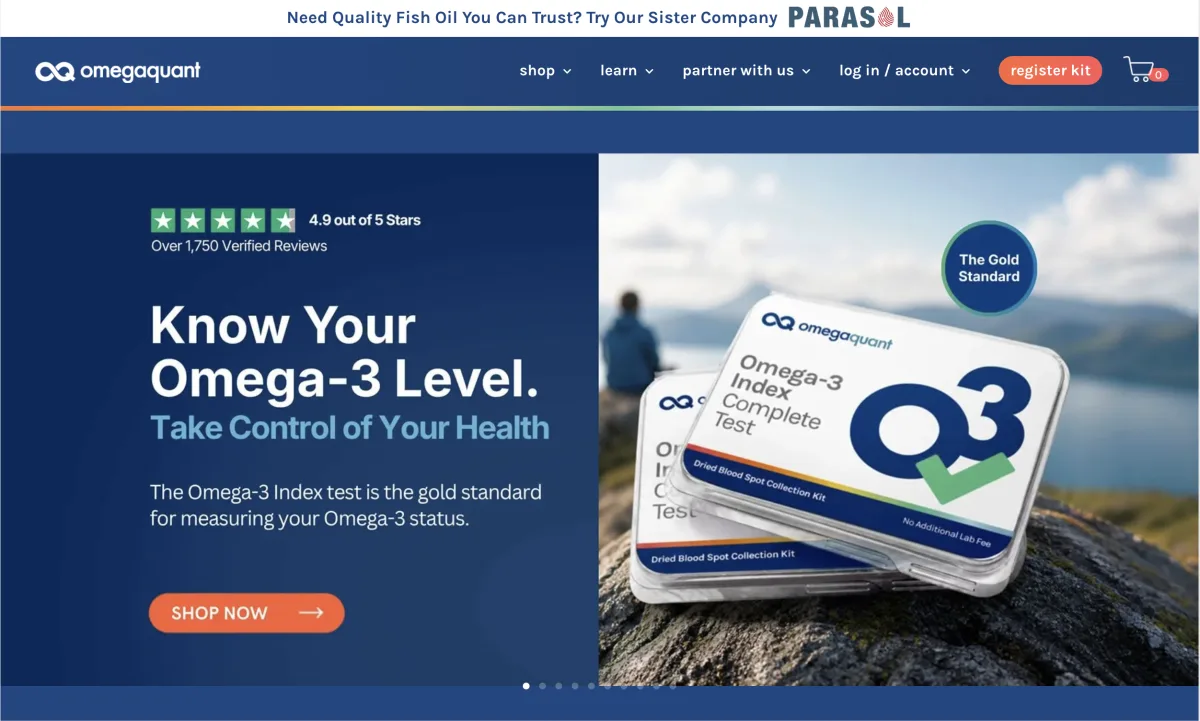
Verdict: OmegaQuant is the most research-backed at-home omega-3 blood test on the market — used in over 200 peer-reviewed clinical studies and founded by the scientist who co-invented the Omega-3 Index in 2004. With more than 1,700 verified Trustpilot reviews averaging 5 stars and pricing starting at $54.95, it's the clearest, most credible way for most Americans to find out if their omega-3 levels are actually working. The main caveat: turnaround involves mail, which adds time. But for the data quality you get, that tradeoff is worth it.
Who should use it: Anyone taking fish oil supplements, eating fatty fish regularly, managing heart or brain health, pregnant women monitoring DHA, or simply curious whether their current diet is moving the needle on omega-3 levels.
Who can skip it: If you already have regular lipid panel testing through your physician that includes EPA/DHA percentages, or if you're not willing to act on dietary feedback, this test adds little value.
Quick Facts
| Price | $54.95 (Basic) · $79.95 (Plus) · $99.95 (Complete) |
| Test method | Dried blood spot — finger prick at home |
| Turnaround | Results in 2–4 weeks after lab receives sample |
| Lab certification | CLIA-certified |
| Research backing | 200+ clinical studies using the Omega-3 Index |
| Trustpilot rating | 5 stars (1,700+ verified reviews) |
| Optimal target | Omega-3 Index ≥ 8% |
| Average American level | ~4–5% (high-risk zone) |
How This Review Was Researched
This is an owner-data report, not a hands-on test from our team. We aggregated verified user reviews from Trustpilot (1,700+ reviews), cross-referenced the scientific methodology behind the Omega-3 Index, and pulled pricing and process details directly from OmegaQuant's official pages. We did not conduct our own blood testing. What we can do that a single reviewer cannot: identify patterns across hundreds of real users — including where the test consistently delivers and where friction shows up.
What Is the Omega-3 Index, and Why Does It Matter?
Before getting into the test itself, it's worth understanding what you're actually measuring.
The Omega-3 Index is the percentage of EPA (eicosapentaenoic acid) and DHA (docosahexaenoic acid) in your red blood cell membranes, relative to all fatty acids present. Unlike a dietary recall or a one-time plasma snapshot, red blood cells reflect your average omega-3 status over the past 3–4 months — the same timeframe that's relevant for understanding your body's actual functional supply of these fats.
The target is a score of 8% or higher. Research associates that threshold with lower risk for cardiovascular issues, better brain health markers, and longer lifespan. A score below 4% is considered the high-risk zone. The uncomfortable truth: most Americans hover around 4–5%, putting the majority of the country in that high-risk range right out of the gate.
The Omega-3 Index was co-invented in 2004 by Dr. Bill Harris, a researcher who went on to found OmegaQuant in 2009. That origin matters: the test you're buying isn't a wellness brand's spin on a lab value — it's the original commercial version of a biomarker that has since been used as the primary endpoint in over 200 clinical studies. No other at-home omega-3 test has that evidence base.
Who Is OmegaQuant?

OmegaQuant Analytics is an independent, CLIA-certified laboratory headquartered in Sioux Falls, South Dakota. It was founded in 2009 by Dr. Bill Harris, who holds a PhD in Human Nutrition from the University of Minnesota and spent decades as a Professor of Medicine at the University of South Dakota.
The company has partnered with more than 100 research institutions and universities. Dr. Harris stepped back from day-to-day operations in late 2020 to run the Fatty Acid Research Institute (FARI), where he continues advancing the science. Research leadership at OmegaQuant now sits with Dr. Kristina Harris Jackson, PhD, RD, who has focused heavily on omega-3s in maternal health and prenatal DHA.
The lab has since expanded internationally, with facilities in Australia and Scotland to serve Asia Pacific and European clients.
For a brand in the supplement and health-testing space — a category often full of inflated claims and thin science — OmegaQuant's credentials are unusually transparent and unusually strong. If you're evaluating whether this test is "legitimate," the answer is clearly yes.
The Test Lineup: Which One Should You Choose?
OmegaQuant currently offers three tiers of the Omega-3 Index test for consumers, each using the same dried blood spot collection method. Here's how they compare:
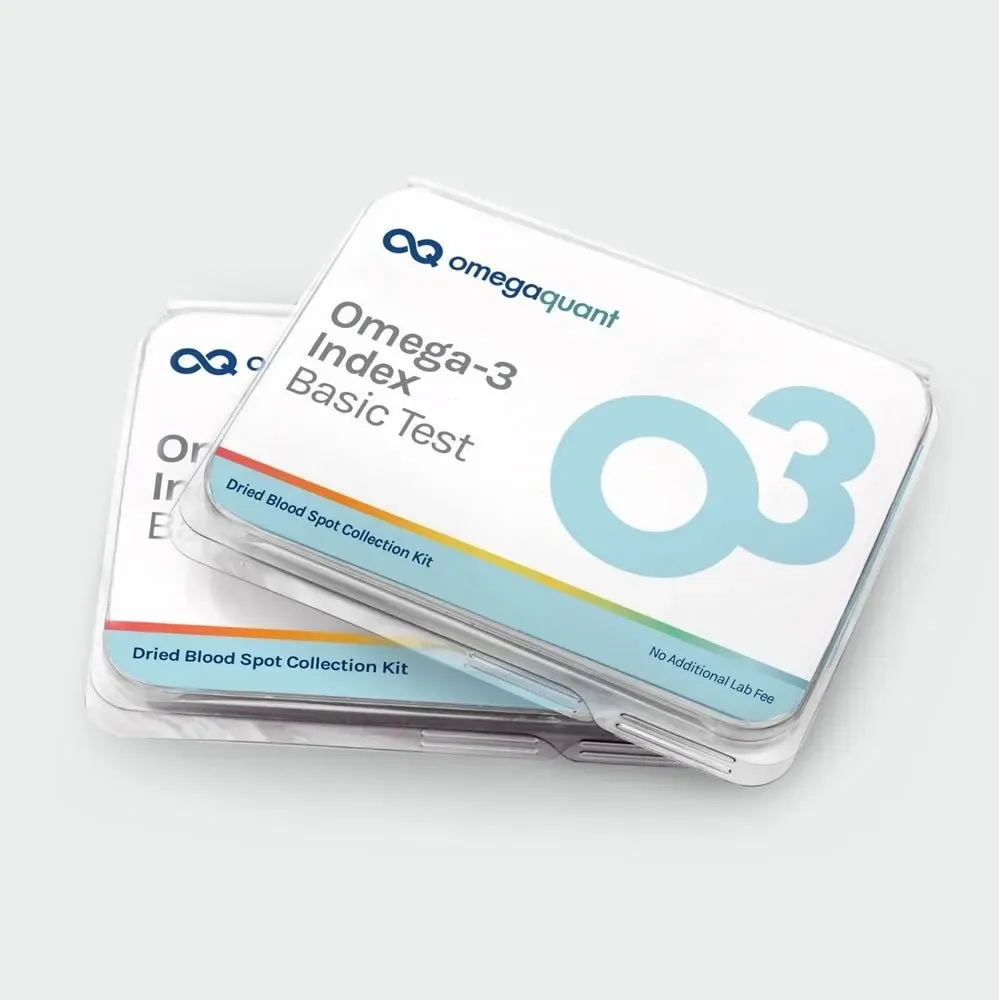
Omega-3 Index Basic — $54.95 Measures only your Omega-3 Index (the combined EPA + DHA percentage in red blood cells). This is the cleanest entry point. If you want to know one number that tells you where your omega-3 status stands relative to the 8% target, this is the one.
Omega-3 Index Plus — $79.95 Adds three additional markers to the Basic results: Trans Fat Index, AA:EPA ratio, and Omega-6:Omega-3 ratio. The AA:EPA ratio is particularly useful for understanding inflammatory signaling. The recommended Omega-6:Omega-3 ratio is 3–5:1; most Americans are significantly higher.
Omega-3 Index Complete — $99.95 Measures all 24 individual fatty acids in the blood, plus the Omega-3 Index, both ratios, and the Trans Fat Index. This is the broadest snapshot of your fatty acid profile available at home. If you're a clinician, a nutrition researcher, or someone deeply invested in optimizing their fat intake across the board, Complete is the one. For a first-time user, Basic or Plus covers what you actually need to act on.
The lab also offers a Prenatal DHA Test (targeting a DHA level of ≥5% for pregnant women), a Mother's Milk DHA test, a Vitamin D test, and a pet Omega-3 test.
How the Test Works: Step by Step
The process is straightforward, and this is consistently the top-rated aspect in user reviews.
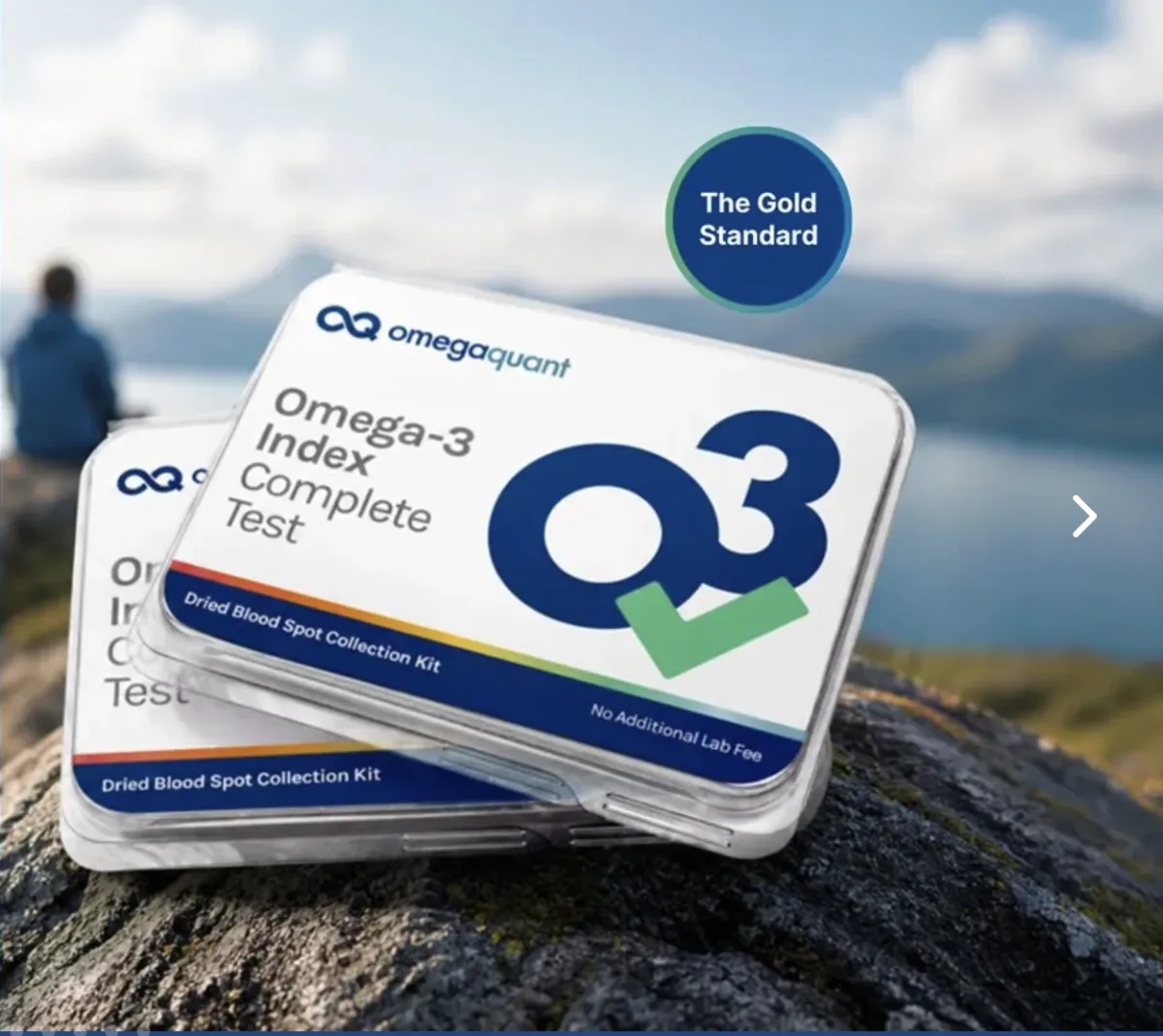
You order online, and the collection kit arrives in 3–5 business days. Inside: a lancet for the finger prick, blood spot cards, a prepaid return envelope, and clear instructions. You prick your finger (typically the ring or middle finger), collect a few drops of blood on the card, let it dry, and mail it back. No lab visit, no prescription, no phlebotomist required.
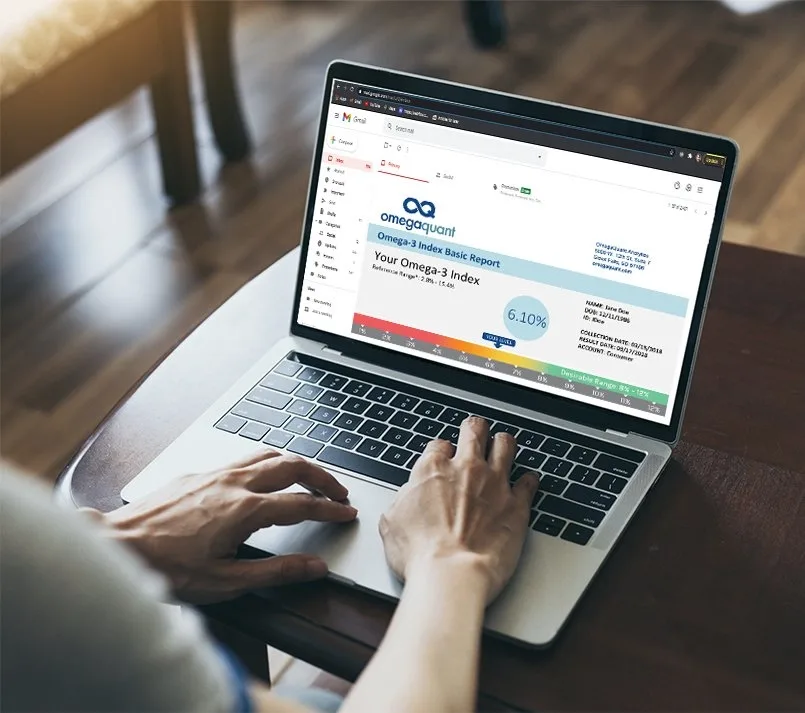
After OmegaQuant receives your sample, results arrive within 2–4 weeks via email, linking to your personalized report. The report uses color-coded zones (green/yellow/red) to show where your Omega-3 Index sits, with dietary recommendations and — if you're below target — a dosage calculator to estimate how much additional EPA+DHA you'd need to reach 8%.
One recurring note in user reviews: some people find collecting three full blood spots on the card challenging. OmegaQuant has a documented policy of sending a second kit at no charge if your sample is insufficient, which comes up frequently in positive reviews.
What Aggregated User Reviews Actually Show
Across 1,700+ verified Trustpilot reviews, five patterns emerge clearly.
What users consistently praise:
The instructions are clear, and the collection process is genuinely easy for most people. Report clarity scores extremely high — users describe the results as easy to interpret and immediately actionable. Turnaround communication (email when sample received, email when results ready) gets consistent praise. Customer service is rated highly, including the no-charge second kit policy for insufficient samples.
One specific pattern worth noting: a significant number of reviewers mention that the test revealed their fish oil supplements weren't working as expected. Multiple users describe taking what they thought were high doses of fish oil, only to find their Omega-3 Index remained in the low range — prompting them to switch products or increase doses. This is a real insight the test provides that no supplement label can tell you.
Another recurring theme: vegetarians and vegans consistently find their scores in the lower range, which aligns with published research. At least one reviewer noted that after testing low, OmegaQuant reached out to offer participation in a study on algae-based omega-3 formulations.
Where users flag friction:
The most common complaint involves timing. The test involves mailing a sample and waiting for lab processing — total time from ordering to results can stretch to 3–4 weeks if mail is slow. For users accustomed to rapid digital health testing, this window feels long.
Some users note that collecting three blood spots can be difficult, particularly for people who don't bleed easily or who are anxious about finger-prick tests. The lancet size draws occasional criticism for leaving a mark that takes days to fully heal.
A smaller subset of reviewers wish for more direct guidance on which specific omega-3 supplement brands to use after receiving low results — OmegaQuant provides dietary frameworks but stops short of product recommendations, which is scientifically appropriate but leaves some users wanting more.
The key pattern for supplement users:
Across reviews from people tracking supplement effectiveness, a notable segment of regular fish oil users discovered their Omega-3 Index was below 6% despite months of supplementation. This strongly suggests that the form, dose, and bioavailability of the supplement they were taking wasn't sufficient — something only a blood test can reveal. If you're spending money on omega-3 supplements and haven't tested, you genuinely don't know if they're working.
Is the OmegaQuant Test Accurate?
Yes — and this is where the lab's credentials matter most.
OmegaQuant uses LC-MS/MS (liquid chromatography–mass spectrometry) methodology, which multiple reviewers identify as the gold standard for fatty acid analysis. This is the same methodology used in the research studies that established the Omega-3 Index as a biomarker. The CLIA certification means the lab is held to federal quality standards for testing accuracy and reproducibility.
A few things can influence results: testing shortly after a high-fat meal, recent illness, certain medications, and individual variation in omega-3 metabolism based on age, sex, genetics, and body composition. OmegaQuant recommends consistency in testing conditions and retesting every 3–4 months when making dietary changes, stabilizing to every 6–12 months once you've hit your target range.
The consensus across the scientific and user communities is that the results are reliable when collection instructions are followed correctly.
How Does OmegaQuant Compare to Alternatives?
A few competing at-home omega-3 tests exist (Carlson, AlgaeCal, Omega DX), but none have the research pedigree of OmegaQuant's Omega-3 Index. The Omega-3 Index as a specific metric has been cited in studies ranging from cardiovascular disease to cognitive aging to maternal health — the competing tests are measuring similar biomarkers but using a less-validated methodology or reporting framework.
For context: if you're looking at broader health optimization, OmegaQuant's test pairs naturally with other health tracking habits. If you're already tracking your supplement regimen using our guide to the best vitamins and supplements that actually work, the Omega-3 Index gives you the one piece of data most supplement regimens are missing — actual blood-level confirmation.
Similarly, if you're following a fitness protocol (say, using resistance bands for strength training or rehab), omega-3 status is increasingly recognized as a relevant variable for muscle recovery and inflammation management. Testing removes the guesswork.
Who Should Get the OmegaQuant Omega-3 Index Test?
Strong fit:
- People taking fish oil or algae-based omega-3 supplements who want to confirm the supplements are actually raising their blood levels
- Anyone with a family history of cardiovascular disease interested in modifiable risk factors
- Pregnant women or those planning pregnancy (prenatal DHA test is specifically designed for this)
- Vegetarians and vegans (who are statistically more likely to have low Omega-3 Index scores)
- People tracking longevity and "healthspan" markers
- Clinicians and health coaches who want objective data for their clients
Lower priority:
- People who eat fatty fish (salmon, mackerel, sardines) 3+ times per week and take a high-quality omega-3 supplement — though testing to confirm is still worthwhile
- Those already receiving comprehensive metabolic panels that include omega-3 fatty acid analysis through their physician
Is OmegaQuant Worth It?
At $54.95 for the Basic test, OmegaQuant is one of the more affordable specialized health biomarker tests available — especially when you factor in that the kit includes shipping and lab processing. For context, a single healthcare visit for a lipid panel often costs more out-of-pocket.
The value isn't just knowing a number. It's that the number is actionable: OmegaQuant provides a dosage calculator, dietary guidance, and a framework for retesting to track progress. Users who found their supplement wasn't working were able to recalibrate — saving money on an ineffective product and replacing it with something that actually moved the needle.
The main honest downside is the mail-based turnaround. If you want same-day results, this isn't the test for you. But if you're managing your health with a longer time horizon — the way you'd track other metrics like cholesterol or vitamin D — the 2–4 week window is perfectly appropriate for the information you're getting.
If you're interested in getting your own test, you can order directly through OmegaQuant's website and see the full test options.
Frequently Asked Questions
Does OmegaQuant require a prescription? No. The tests are available over-the-counter as FDA-cleared general health and wellness products. No doctor's order is required.
How long does it take to see results after changing my diet? Fatty acid levels in red blood cells begin changing within days of dietary shifts, but stabilize over 3–4 months. OmegaQuant recommends retesting after 4 months of consistent changes to accurately measure your new baseline.
Can I take the test if I just ate a fatty meal? Timing around meals can influence some lipid measurements. For most accurate results, OmegaQuant recommends testing under normal, consistent conditions — ideally not immediately after an unusual or high-fat meal.
Is the finger-prick collection really sufficient for accurate results? Yes. OmegaQuant uses dried blood spot methodology that has been validated in hundreds of clinical studies. The collection method was specifically designed for home use without requiring a venous blood draw.
How often should I retest? Once you've hit your target Omega-3 Index (≥8%), retesting every 6–12 months is appropriate. If you're actively adjusting diet or supplements to raise your score, retesting every 3–4 months helps you track progress.
Does OmegaQuant test pets? Yes — OmegaQuant offers an Omega-3 Index test for pets (dogs and cats), using a similar dried blood spot method.
What if I submit insufficient blood on my card? OmegaQuant will send a second collection kit at no charge. This is one of the most frequently praised customer service details in user reviews.
Bottom Line
OmegaQuant's Omega-3 Index Test is the most research-validated at-home omega-3 blood test available. It was developed by the scientist who invented the Omega-3 Index, runs through a CLIA-certified lab, and has been used as the primary endpoint in over 200 clinical studies. That's not marketing copy — it's a genuinely unusual level of scientific backing for a consumer health product.
The user review signal (5 stars across 1,700+ verified Trustpilot reviews) lines up with the science: the test is easy to use, the results are clearly presented, and the actionable guidance is good enough to change behavior. The most consistent real-world finding is that many people taking omega-3 supplements discover their levels are still low — which is valuable data that supplements themselves cannot provide.
If you're investing in your health — through diet, supplements, fitness, or preventive monitoring — knowing your Omega-3 Index is one of the highest signal-to-noise tests available. You can order directly from OmegaQuant here.
Also see our full OmegaQuant store review for additional context on the brand and ordering experience.