

The Booking Dilemma Most Travelers Get Wrong

Here is the misconception worth correcting before anything else: most travelers assume that comparing Airbnb, VRBO, and hotels is a matter of finding the cheapest nightly rate. It is not. The nightly rate is almost never the final price, and the cheapest option at first glance frequently becomes the most expensive option at checkout. The real comparison is about total cost, trip fit, and what each platform is actually built to deliver — and those answers change depending on who is traveling, where, and for how long.
Consider a concrete example. A family of five plans a seven-night stay in the Smoky Mountains in late summer. They search the same dates on Airbnb, VRBO, and a hotel booking site. On Airbnb, a three-bedroom cabin lists at ? per night — attractive until the ? cleaning fee and a 15% service fee are added at checkout, pushing the true nightly cost closer to ?. On VRBO, a comparable cabin lists at ? per night with a lower service fee, but fewer verified reviews and no Instant Book option. The nearest hotel offering a suite large enough for five people runs ? per night with breakfast included — and that is the actual rate, taxes aside, with no surprise charges.
For a seven-night stay, the vacation rental still wins on total cost and space. For a two-night stay, the hotel is more competitive. That distinction — trip length — is one of several variables that should drive this decision, and most comparison articles never address it directly.
According to Triad Vacation Rentals, 30–40% of US travelers now use AI tools extensively to plan trips and research accommodations, with occasional usage approaching 55%. These travelers arrive at listing pages with pre-formed expectations — they are shopping with purpose, not browsing. That means the decision framework matters more than ever, because travelers who choose the wrong platform often do so before they even reach the checkout screen. For a fuller picture of how accommodation fits into your overall travel budget, the Complete Travel Buyer's Guide 2026: Hotels, Flights & Vacations covers how to approach the full trip cost holistically.
How the Vacation Rental Market Has Shifted Heading Into 2026

The short-term rental market looks structurally different in 2026 than it did even three years ago. According to Jetstream Tech, Airbnb accounted for approximately 20% of nights booked in the US in 2023, up from 8% in 2016. That kind of growth does not happen without a genuine shift in how Americans think about where they sleep when they travel.
The global vacation rentals market reached USD 174.84 billion in 2025 and is projected to reach USD 481.8 billion by 2034, growing at a compound annual growth rate of 10.42%, according to Fortune Business Insights. Remote work trends and growing demand for experiential travel are the primary drivers. People are not just choosing vacation rentals because they are cheaper — they are choosing them because they want a different kind of stay.
Supply is still expanding. Available vacation rental listings are projected to grow by 4.6% in 2026, with average daily rates rising by 1.5% and occupancy easing by about 1%, according to data cited by StayFi. More listings mean more choice for travelers, but also more noise — the quality gap between a well-managed rental and a poorly maintained one is wider than ever.
Hotels have not stood still in response. Some properties now list their own units directly on Airbnb and VRBO to capture demand they would otherwise miss. A resort in Hawaii saw a 35% increase in bookings for its three-bedroom villas after listing on Airbnb, with guests citing detailed property descriptions and high-quality images as key factors in their decision, according to Jetstream Tech. That blurring of categories — hotels on vacation rental platforms, vacation rentals with hotel-style amenities — makes the comparison more nuanced than a simple platform-versus-platform debate.
VRBO, meanwhile, has seen notable growth in unconventional property types. According to data from Lodgify cited by BuildUp Bookings, VRBO reported a 55% growth in barn bookings, a 40% increase in houseboat reservations, and a 30% boost in treehouse bookings year over year. Travelers are not just looking for a place to stay — they are looking for the stay itself to be part of the experience.
Airbnb in 2026: What It Does Well and Where It Falls Short

Airbnb's dominance in booking volume is not accidental. According to Triad Vacation Rentals, Airbnb accounted for 2,043 reservations — 58% of total bookings — in a multi-channel vacation rental portfolio analysis. That lead comes from the platform's filtering tools, Instant Book feature, and mobile interface, which drive higher traffic and conversion rates than any competing platform in the vacation rental segment.
Where Airbnb genuinely excels is in unique, personality-driven inventory. Treehouses, converted barns, architect-designed homes, yurts, and properties near national parks all perform well on the platform. StayFi notes a 35% increase in interest in US national park-adjacent stays in 2026, aligned with Airbnb's 2026 travel predictions pointing to growing demand for nature-led travel, solo adventures, and short international getaways. If you want to wake up in a glass cabin overlooking a forest, Airbnb's inventory is deeper and more discoverable than any alternative.
The platform's Superhost badge and verified review system are among the most trusted quality signals in the short-term rental market. A listing with 200+ reviews and a Superhost designation gives travelers a meaningful signal that a traditional hotel star rating cannot replicate — it reflects actual guest experiences, not a third-party inspector's checklist.
The weakness is fee transparency. Airbnb's service fee — typically 14–16% of the booking subtotal — is added at checkout, not shown in the initial search results. Cleaning fees, set by individual hosts, vary enormously and are not prorated by stay length. A one-night stay carries the same ? cleaning fee as a seven-night stay. This is the single biggest source of sticker shock on the platform, and it is the reason that 62% of travelers in an Upgraded Points survey cited fewer fees and greater price transparency as key reasons for preferring hotels, according to PR Newswire.
Airbnb is the right choice for: solo travelers, couples, and small groups seeking distinctive stays in nature-adjacent or internationally interesting locations, booking stays of four nights or longer where cleaning fees amortize reasonably.
VRBO in 2026: The Whole-Home Specialist With a Loyal Niche

VRBO's structural difference from Airbnb is not a detail — it is the entire value proposition. VRBO lists only whole-home rentals. There are no shared spaces, no room-in-someone's-house listings, no situations where a host lives on the property. For families traveling with children or multigenerational groups who want complete privacy, that distinction matters enormously.
According to Hostex, VRBO is best positioned for hosts targeting family travelers with whole-house rentals — villas, estates, farmhouses, lakefront homes, and culturally themed properties like vintage stays. The guest audience that gravitates to VRBO has typically already decided they want a whole-home experience; they are not browsing between room types. That intentionality shows up in booking behavior: VRBO accounted for 10% of total bookings in the multi-channel portfolio analyzed by Triad Vacation Rentals — a smaller share than Airbnb, but a highly targeted one.
The per-person cost math often favors VRBO for larger groups. A four-bedroom lakefront house at ? per night accommodates eight people at roughly ? per person — a figure that becomes difficult to match with hotel rooms, which would require four separate bookings at ? or more each. That arithmetic is why VRBO performs particularly well for holiday travel in states like Arkansas, where an Upgraded Points study found 53.7% of travelers preferred short-term rentals over hotels, driven specifically by cabin and lakefront home inventory, according to Yahoo Finance.
VRBO's fee structure differs from Airbnb's in one notable way: hosts can choose between a per-booking fee model or an annual subscription, which affects how costs are passed on to guests. In practice, VRBO's guest-facing service fee tends to be somewhat lower than Airbnb's, though it still adds meaningfully to the total. VRBO's review ecosystem is smaller than Airbnb's, which means listings with fewer reviews carry more uncertainty — something worth weighing when choosing between platforms for an unfamiliar destination.
VRBO is the right choice for: families of five or more, multigenerational groups, and travelers specifically seeking whole-home privacy in destinations with strong cabin, lake, or rural inventory.
Hotels in 2026: Why 62% of Travelers Still Choose Them — and When That Makes Sense
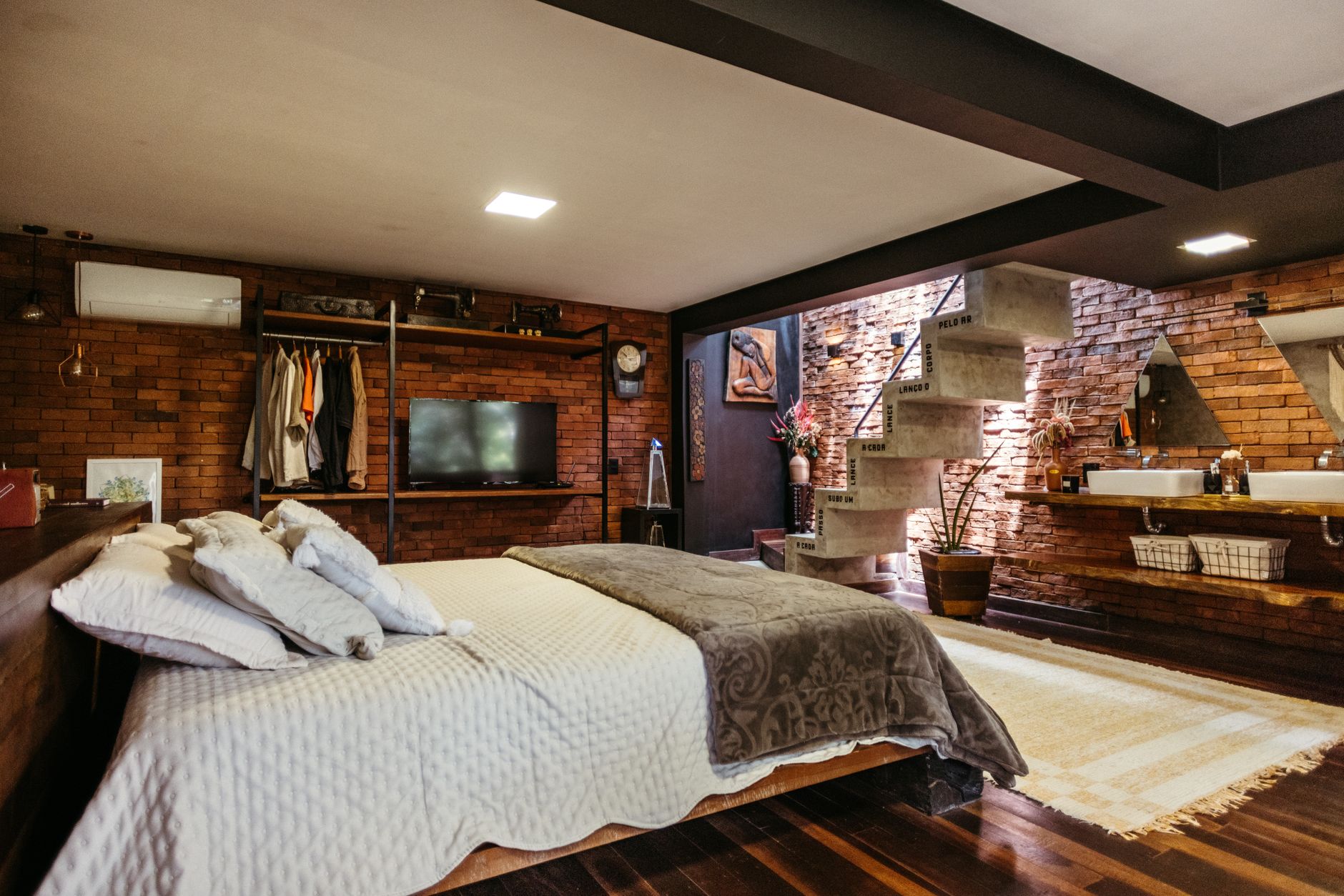
Despite the growth of vacation rentals, hotels remain the most preferred accommodation type overall. A December 2025 survey from Upgraded Points found that 62% of travelers prefer hotels to short-term rentals like Airbnb or VRBO, citing better amenities, fewer fees, and greater price transparency as the top reasons, according to PR Newswire. That preference is not nostalgia — it reflects genuine advantages that vacation rentals have not closed.
Price transparency is the most underappreciated hotel advantage. When a hotel lists a room at ? per night, the final price is ? per night plus clearly itemized taxes. There is no cleaning fee revealed at checkout, no service fee percentage applied to the subtotal. For travelers who have been burned by vacation rental checkout surprises, that predictability has real value. CivicScience notes that hotel users are more likely to be budget-conscious and spend less than ?,000 on a trip — suggesting that price predictability, not just price level, drives hotel preference for cost-sensitive travelers.
For short stays of one or two nights, hotels are frequently more cost-competitive than vacation rentals once cleaning fees are factored in. A ?-per-night Airbnb with a ? cleaning fee and a 15% service fee costs roughly ? for a single night — more than many mid-range hotel rooms in the same market. That math flips for longer stays, but for city breaks and overnight business trips, hotels win on total cost.
Hotels also dominate for luxury travel and corporate travel, where consistency matters as much as cost. A Marriott Bonvoy member booking a two-night stay in Chicago earns points toward free nights, receives a predictable check-in experience, and has access to a gym, room service, and a front desk if anything goes wrong. A vacation rental offers none of those guarantees. For business travelers especially, the reliability of a known brand — Hilton, Hyatt, IHG — is worth a price premium that is difficult to quantify but easy to justify after one bad vacation rental experience.
Hotels are the right choice for: business travelers, short city breaks, luxury travel where curated amenities matter, and any trip where cancellation flexibility or loyalty point accumulation is a priority.
The Real Cost Comparison: Fees, Transparency, and What You Actually Pay
The most practically important question in this comparison is not which platform has better listings — it is what you actually pay. Here is how the fee structures break down across platforms.
Airbnb Fee Structure
- Guest service fee: Typically 14–16% of the booking subtotal, added at checkout
- Cleaning fee: Set by the host, ranges from ? to ?+ depending on property size — not prorated by stay length
- Taxes: Vary by jurisdiction, typically 8–15%
VRBO Fee Structure
- Guest service fee: Generally lower than Airbnb's but still adds to the total, typically in the 6–12% range depending on booking value
- Cleaning fee: Host-set, similar range to Airbnb
- Taxes: Vary by jurisdiction
Hotel Fee Structure
- Room rate: Typically close to the final rate, with taxes clearly itemized
- Resort fees: A legitimate hidden cost at some properties — can add ?–? per night at resort-style hotels
- No cleaning fees, no service fees on top of the rate
To make this concrete: a three-night stay for two people in a ?-per-night Airbnb with a ? cleaning fee and a 15% service fee totals approximately ?. The same stay in a ?-per-night hotel room totals approximately ? before taxes — and taxes are applied to both. The hotel wins on total cost for short stays despite a higher nightly rate.
For groups, the calculation reverses. A ?-per-night VRBO property sleeping six people costs ? per person per night. Six hotel rooms at ? each cost ? per night total. Over seven nights, that is a ?,200 difference — even after VRBO's service fees and a cleaning fee, the rental wins decisively.
Travelers with pets face an additional cost layer. According to AirDNA data cited by StayFi, pet-friendly vacation rental listings command average daily rates running ?.41 higher than non-pet-friendly listings. Pet-friendly hotels often charge a flat fee per stay rather than a nightly premium, which can make them more cost-effective for longer trips with animals.
The rule of thumb: always compare total checkout prices, not nightly rates. Most platforms now show a total price toggle in search results — use it.
Which Platform Wins for Each Type of Trip? A Practical Decision Guide

Rather than declaring an overall winner, here is a scenario-based framework based on the data and platform structures covered above.
Solo Travel or Couples Weekend Getaway
Airbnb wins for unique, nature-adjacent, or internationally distinctive stays of four nights or more. Hotels win for city breaks of one to three nights where location, flexibility, and loyalty points matter. VRBO is not optimized for two-person travel — its whole-home inventory skews toward larger properties.
Family Vacation With Children (Group of 4–8)
VRBO wins for whole-home privacy, kitchen access, and per-person cost efficiency on stays of five nights or more. Airbnb is a strong alternative if VRBO's inventory in the destination is thin. Hotels are competitive only if the family wants resort-style amenities (pool, kids' club, daily housekeeping) and is willing to pay for multiple rooms.
Business Travel or City Short Stay
Hotels win decisively. Predictable check-in, loyalty points, central locations, and on-site amenities (gym, breakfast, room service) are difficult to replicate in a vacation rental. The total cost advantage of rentals disappears on stays under three nights once cleaning fees are applied.
Multigenerational Group or Reunion (8+ People)
VRBO wins on per-person cost and whole-home experience. A large estate or farmhouse through VRBO gives a group of ten a shared living space, multiple bathrooms, and a kitchen — something no hotel configuration can match at a comparable per-person price.
Luxury or Anniversary Travel
Hotels win for curated luxury experiences: spa access, concierge services, fine dining, and the kind of consistent service delivery that individual vacation rental hosts rarely replicate. Airbnb does have a luxury tier, and upscale vacation rental listings have seen ADR grow 5.23% year over year according to AirDNA data cited by StayFi, but the experience consistency of a Four Seasons or Ritz-Carlton is a different product category.
Nature or Adventure Travel
Airbnb wins for proximity to national parks, trail access, and distinctive property types — cabins, A-frames, treehouses — that hotels rarely offer in remote locations. Airbnb's 2026 travel predictions point to a 35% increase in interest in US national park destinations, and the platform's inventory in those areas is the deepest of the three options.
Frequently Asked Questions
Is Airbnb or VRBO cheaper in 2026?
Neither platform is consistently cheaper — it depends on the specific listing, destination, and stay length. VRBO's guest service fee tends to be somewhat lower than Airbnb's, but cleaning fees are set by individual hosts on both platforms and vary widely. Always compare total checkout prices rather than nightly rates. For stays under three nights, hotels are frequently more cost-competitive than either vacation rental platform once cleaning fees are factored in.
Why do most travelers still prefer hotels over Airbnb and VRBO?
According to a December 2025 Upgraded Points survey, 62% of travelers prefer hotels, citing better amenities, fewer fees, and greater price transparency. Hotels show a rate that is close to the final price, offer on-site services vacation rentals cannot match, and provide loyalty programs with real long-term value for frequent travelers.
When does VRBO make more sense than Airbnb?
VRBO makes more sense when you are traveling with a large group or family and want a whole-home rental with guaranteed privacy — no shared spaces, no host on the property. VRBO's inventory skews toward larger properties like lakefront homes, farmhouses, and villas, making it structurally better suited for groups of five or more. If the destination has strong VRBO inventory (beach towns, lake regions, rural areas), it is worth checking both platforms and comparing total costs.
Are vacation rental fees getting better or worse?
The fee structure on both Airbnb and VRBO has remained a persistent friction point. Airbnb introduced a total price display feature to improve transparency, but cleaning fees and service fees are still added on top of the advertised nightly rate. The market is competitive enough in 2026 that travelers have leverage — if a listing's total price is significantly higher than comparable hotels for a short stay, that is useful information, not a reason to book anyway.
What is the best platform for pet-friendly travel?
Vacation rentals generally offer more pet-friendly inventory than hotels, but the cost premium is real. According to AirDNA data cited by StayFi, pet-friendly vacation rental listings run an average of ?.41 higher per night than non-pet-friendly listings. For longer stays, that premium is manageable. For short stays, a